
 Worksheets
Body Systems Practice Quiz
Total questions: 30
Worksheet time: 2hrs 30mins
What is the specific immune response?
a delayed response that includes the 3rd line of defense and targets specific pathogens
an immediate response that includes the 3rd line of defense and targets specific pathogens
a delayed response that includes the first and second lines of defense
an immediate response that includes the first and second lines of defense
What is a non-specific immune response?
a delayed response that includes the 3rd line of defense and targets specific pathogens
an immediate response that includes the 3rd line of defense and targets specific pathogens
a delayed response that includes the first and second lines of defense
an immediate response that includes the first and second lines of defense
This is an example of a specific immune response.
skin
mucus
inflammation
antibodies
This is an example of a non-specific immune response.
skin
T cells
B cells
antibodies
This is part of the first line of defense...
T Cells, B Cells and Antibodies
skin, mucus and tears
WBCs, inflammation and fever
This is part of the second line of defense...
T Cells, B Cells and Antibodies
skin, mucus and tears
WBCs, inflammation and fever
This is part of the third line of defense...
T Cells, B Cells and Antibodies
skin, mucus and tears
WBCs, inflammation and fever
Which line(s) of defense are non-specific?
First and Second
Third
Which line(s) of defense are specific?
First and Second
Third
Vaccines are used to...
treat viruses
prevent viruses
treat bacterial infections
prevent bacterial infections
Antibiotics are used to...
treat viruses
prevent viruses
treat bacterial infections
prevent bacterial infections
A vaccine is considered...
antibodies for a bacteria
blood from a person who has the virus
a weakened virus or antigens from the virus
live, inactive virus
Blood resistance (a) when plaque builds up in the arteries.
Blood viscosity will cause an (a) in blood resistance.
Exercise can ____________ blood flow.
increase
decrease
Plaque build up in the arteries can ____________ blood flow.
increase
decrease
Arteriosclerosis is when the plaque builds up in the arteries and causes a ___________ in blood flow and ________ in blood pressure.
increase, decrease
decrease, decrease
increase, increase
decrease, increase
Which of the two majors parts of the brain include all 4 lobes?
Cerebrum
Cerebellum
What is the purpose of the frontal lobe?
sensory perception
visual processing
thinking, judgement, reasoning
auditory processing
What is the purpose of the parietal lobe?
sensory perception
visual processing
thinking, judgement, reasoning
auditory processing
What is the purpose of the occipital lobe?
sensory perception
visual processing
thinking, judgement, reasoning
auditory processing
What is the purpose of the temporal lobe?
sensory perception
visual processing
thinking, judgement, reasoning
auditory processing
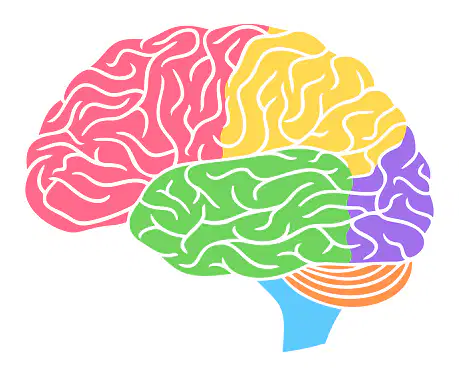
Which part of the brain is colored in red?
Temporal Lobe
Parietal Lobe
Frontal Lobe
Occipital Lobe
Which part of the brain is colored in yellow?
Temporal Lobe
Parietal Lobe
Frontal Lobe
Occipital Lobe
Which part of the brain is colored in green?
Temporal Lobe
Parietal Lobe
Frontal Lobe
Occipital Lobe
Which part of the brain is colored in purple?
Temporal Lobe
Parietal Lobe
Frontal Lobe
Occipital Lobe
Which part of the brain is colored in orange?
Parietal Lobe
Cerebellum
Cerebrum
Which part of the brain is colored in light blue?
Brain Stem
Cerebellum
Cerebrum
Which part of the brain includes all four (Red, Yellow, Green and Purple) parts?
Brain Stem
Cerebellum
Cerebrum
Frontal Lobe
The brain stem consists of 2 parts, which are the _____________.
The Parietal and Temporal Lobes
Cerebellum and Cerebrum
Frontal and Occipital Lobes
Pons and Medulla Oblongata

