
 Worksheets
Cycle 5 Exam Review: Chapters 13 to 14
Total questions: 50
Worksheet time: 3hrs 30mins
The thinning of the ozone layer is also known as the
ozone hole
ozone gap
ozone space
ozone void
Which type of radiation is absorbed by the ozone layer?
infrared
gamma
visible light
ultraviolet
Ozone is made of which chemical element?
Carbon
Hydrogen
Oxygen
Nitrogen
The ozone layer is important because:
It is a turbulence free zone for planes to fly in.
It absorbs the majority of the UV rays produced by the sun
It produces most of the oxygen needed for organisms in the troposphere
Depletion of the ozone layer is caused by:
Methane
Carbon Dioxide
UV rays
Chlorofluorocarbons
The hole in the ozone layer is located
Over the Arctic/North Pole
Over Antarctica/South Pole
UV rays can
Damage the DNA of organisms
Cause cancer
Damage eggs
All of the above
What is the name of the international agreement committing parties to phasing out ozone depleting substances and phasing out chlorofluorocarbons (CFCs)?
Vienna Protocol
Paris Agreement
Montreal Protocol
Antarctic Convention

What is an ozone layer?
a thin protective layer around the earth (in the stratosphere)
a cloud blanket in the sky
water vapors from the ocean
CFCs are responsible for the damage caused to the ozone layer. Select the chemical that causes ozone to breakdown.
Carbon
Oxygen
Fluorine
Chlorine
using fossil fuels
What is the Greenhouse Effect?
As carbon dioxide concentrations increase, temperatures increase
Condition that is caused by carbon dioxide, methane, and water vapor trapping heat in the Earth's atmosphere
causes sea levels to rise because it adds water to the ocean.
The cooling of Earth due to air pollution.
Which of the following events would be MOST likely to add Greenhouse Gases to the atmosphere?
Hurricane
Tsunami
Forest Fire
Ecological Succession
Why is Carbon Dioxide considered to be a Greenhouse Gas?
It is a combination of natural and human forces
It has a biogeochemical cycle
It is a type of weather that occurs during a particular season
It absorbs and reradiates infrared radiation to warm the Earth
Why is the increase of Greenhouse gasses a big issue?
It causes an increase in the global average temperatures which leads to climate change.
It leads to more factories
It causes a major decrease in people
Do we need greenhouse gases on Earth?
Yes - they keep the Earth warm
Yes - they keep all the gases on our planet
No - they only cause terrible climate change
No - they only block some of the Sun's rays
The gradual increase in the temperature of the atmosphere caused by human activity is known as ________________.
Greenhouse Effect
Global Warming
Carbon Dioxide Gases
Methane
How can global warming cause sea levels to rise? Choose the best answer.
by increasing the number of undersea volcanic eruptions
by melting glaciers and ice caps
by creating bigger and more powerful hurricanes
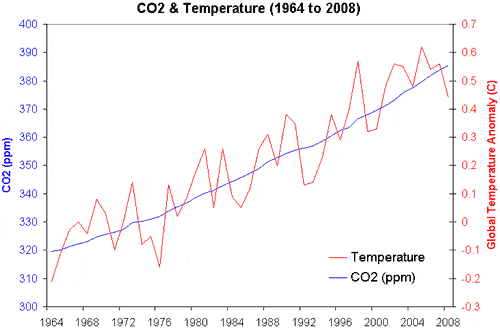
The graph below shows CO2 emissions and temperatures from 1984 to 2009. What conclusion is best supported by the graph?
There is no relationship between carbon dioxide concentrations and temperatures
As carbon dioxide concentrations increase, temperatures increase
As carbon dioxide concentrations increase, temperatures decrease
Which of the following events could increase Earth's temperature?
a decrease in the relative percent of greenhouse gases
planting more trees
widespread removal of tropical forests
a reduction in the use of fossil fuels
This is an area with more than 2,500 people and a governing body.
rural
urban
open space
This term describes basic facilities of a country or region, such as roads, bridges, sewers, and railroads.
infrastructure
urbanization
ecosystem services
The term used for the movement of people from rural areas to cities.
wilderness
urbanization
land-use planning
Term that describes cities having increased traffic jams, substandard housing, and pollution.
urbanization
urban sprawl
urban crisis
Heat islands are most likely to affect local...
weather patterns
water levels
traffic patterns


What can be done to sustain the productivity of rangeland?
limit herd size
eliminate invasive plants
leave the land unused for a time
all of the above
What term refers to a region that is not cultivated and that is not inhabited by humans?
wilderness
rural
infrastructure
open space
Which of the following most effectively allows forests to recover from tree harvesting?
cutting only medium-sized or mature trees
cutting all of the trees and then replanting the area with seedlings
allowing the forest to reseed itself
cutting only young trees and then replacing them with seedlings
What is reforestation?
removing all trees from an area
removing selected trees from an area
replanting trees in an area
None of the above
Which of the following is a side effect of heat islands?
a. drought
b. lower temperatures
c. turns habitats into deserts
d. increased rain
An important environmental benefit of open spaces in cities includes which of the following?
a. contamination of water sources by runoff of soil and animal wastes.
b. hotter, humid summers due to evaporation of water from plant leaves.
c. better air quality resulting from filtering of pollutants by plants
d. All of the above
Why did most people in the U.S. live in rural areas before 1850?
a. Most people worked in factories.
b. Most people depended upon agriculture and worked there
c. Most people depended upon hunting.
d. All the options are correct
Detailed maps showing the locations of sewer lines, roads, and gas lines is possible with_________.
a. GPN
b. TOPO
c. GIS
d. MAP
An area prone to flooding is an example of_______. Building a home in this type of land is not recommended.
A. rangeland.
B. open space.
C. marginal land.
D. rural land.
Which improvement to urban areas moderates temperature, controls
rainwater runoff, and helps reduce air pollution?
a. storm sewers
b. public transportation
c. green spaces
d. fountains
Why is it important to preserve farmland?
A. It provides an important carbon source for urban areas.
B. It provides crops and fruits to support urban and rural populations.
C. It increases the temperature of urban areas.
Select all that apply.
Which of the following are carbon sinks.
soil
fossil fuels
forests
oceans
Which example or examples below are activities that can cause global warming?
Combustion
Deforestation
Agriculture Industry
All the answer choices are correct.
What causes ocean acidification?
carbon dioxide released from burning fossil fuels
Carbon dioxide and ocean water combine to form what?
Increases in the acidity of ocean water __________ marine organisms that make shells.
In a warmer world due to climate change, we would expect more
using more fossil fuels
increasing deforestation
Possible human solutions for limiting global warming and climate change are...
being more energy-efficient
using renewable sources of energy
removing carbon from fossil fuel emissions
all of the above
Select the statement that is correct.
Climate refers to only large regions.
Climate is the average weather over a period of time.
Climate changes from day to day.
Climate only involves temperature and precipitation.

