
 Worksheets
Unit 6 Test Corrections
Total questions: 18
Worksheet time: 13mins
Taxonomy is the branch of biology that classifies organisms and assigns each organism a universally accepted name. To study the diversity of life, biologists use a classification system to ______________________.
identify organisms
understand prey - predator relationship
to prevent unorganized and change species names
group them in a logical manner (evolutionary relationships)
Plants called corn exist in multiple countries, including the United States, England, and Scotland. In each of these locations, however, the term “corn” actually refers to different types of plants – maize, wheat, or barley.This information best shows ―
the fact that common names easily identify organisms
the need for giving organisms a single, scientific name
the importance of grouping organisms into categories
the necessity of using Latin when naming organisms
(a) is the branch of biology that classifies organisms and assigns each organism a universally accepted name.
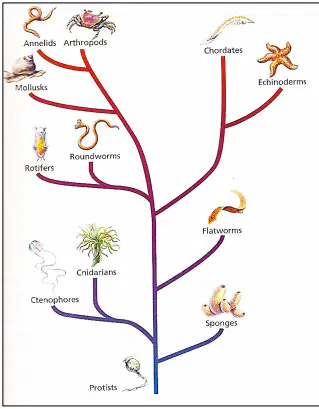
What is the common ancestor of all organisms
shown on this tree?
(a)
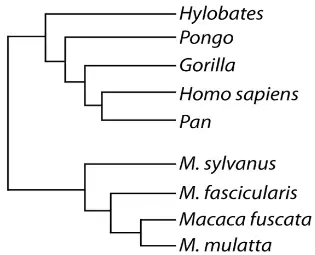
Phylogenetic trees are models that show the ancestral relationships among taxonomic groups based on genetic similarities.
Which taxonomic group has the greatest genetic difference from Homo sapiens?
Pongo
M. sylvanus
Hylobates
Pan
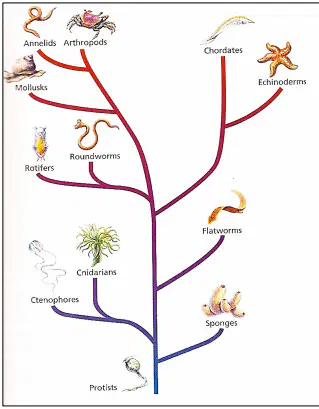
Are the Cnidarians more closely related to the sponges
or to the comb jellies (Ctenophores)?
(a)

Using the chart below, what is the scientific name of the organism Green Algae?
Chara nitella
felis catus
chara nitella
Orinus orca

Using the chart below, what is the scientific name of the domestic cat?
Canis lupus
Felis catus
Chara nitella
felis Catus
Place the following characteristics in their corresponding location on the image below.
Place the following characteristics in their corresponding location on the image below.
Match the following
Heterotroph (definition)
an organism that eats other plants or animals for energy and nutrients
Autotroph
(definition)
an organism that can produce its own food using light, water, carbon dioxide, or other chemicals
Animalia/Fungi/
Protista
Heterotroph
Plantae/Protista
Autotroph
Place the following characteristics in their corresponding location on the image below.
Place the following characteristics in their corresponding location on the image below
Place the following characteristics in their corresponding location on the image below.
A researcher determines an organism to be eukaryotic, unicellular, and autotrophic. In which taxonomic group should this organism be classified?
bacteria
protista
archaea
animalia

Observe the Venn diagram above. Which of the following would not appear in the shaded area?
prokaryotic
unicellular
membrane-bound organelles
asexual reproduction

Using the diagram provided, answer the following questions to complete the sentence.
The rodents and rabbits are most closely related to (a) .
Based on the cladogram below, which characteristic represents the commonality between fish and primates?
Click on the correct answer.

