
 Worksheets
Forms of Energy Study Guide
Total questions: 22
Worksheet time: 11mins
Name
Class
Date
1.
What is energy?
a)
The amount of “stuff” in an object
b)
A way to describe the volume of an object
c)
The ability to do work
d)
A push or a pull
2.
What is work?
a)
Changing the physical properties of an object
b)
Changing the chemical properties of an object
c)
Applying a force to move or change something
d)
Both a and b
3.
What type of energy is associated with an object’s motion or position?
a)
Mechanical energy
b)
Light energy
c)
Electrical energy
d)
Thermal energy
4.
What type of energy is carried by electromagnetic radiation, such as radio waves, UV light and x-rays?
a)
Sound energy
b)
Light energy
c)
Thermal energy
d)
Electrical energy
5.
Sound energy is created when:
a)
An object moves across a long distance
b)
An object absorbs thermal energy
c)
An object vibrates
d)
An object falls to the ground
6.
What type of energy is stored in food and fuel?
a)
Radiant energy
b)
Mechanical energy
c)
Thermal energy
d)
Chemical energy
7.
What unit tells you how much energy is needed, stored or applied to perform work?
a)
Joule
b)
calorie
c)
Calorie
d)
All of the above
8.
What is power?
a)
The total amount of energy in an object
b)
The time is takes to use up all an object’s energy
c)
The rate at which energy is used
d)
The rate at which a force moves an object across a distance
9.
The movement of the SAME form of energy from one object to another is called:
a)
Energy transfer
b)
Energy transformation
c)
Work
d)
Power
10.
The conversion of energy from one form to another is called:
a)
Energy transfer
b)
Energy transformation
c)
Work
d)
Power
11.
What is the source of ALL energy on Earth?
a)
Atoms
b)
Sun
c)
Clouds
d)
Plants
12.
According to the Law of Conservation of Energy:
a)
Energy can be created by not destroyed
b)
Energy cannot be created but it can be destroyed
c)
Energy cannot be created or destroyed but it can change form
d)
Energy can be created, destroyed, transferred or transformed
13.
Which of the following explains why a ball rolling on a table eventually comes to a stop?
a)
Gravity causes the ball to sink into the table and stop moving
b)
Electromagnetic forces slow the ball down
c)
Energy of the ball is dissipated to the surroundings
d)
The ball loses mass, causing it to slow down
14.
Which of the following is energy of motion?
a)
Kinetic energy
b)
Potential energy
c)
Thermal energy
d)
Chemical energy
15.
Which graph best shows the relationship between an object’s velocity and kinetic energy?
a)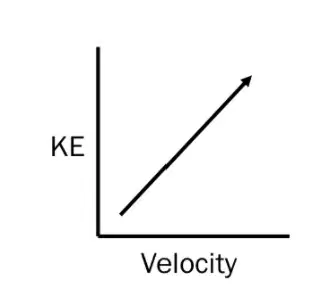
Option 1
b)
Option 2
c)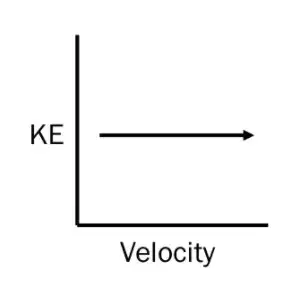
Option 3
d)
Option 4
16.
As an object is raised higher above Earth’s surface, its (gravitational) potential energy:
a)
Increases
b)
Decreases
c)
Stays the same
17.
Which spring below does NOT have elastic potential energy?
a)
Stretched
b)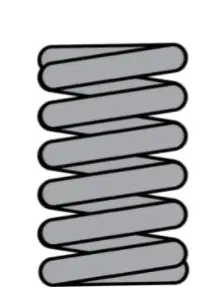
Neutral
c)
Compressed
18.
The total mechanical energy of an object equals:
a)
The kinetic energy minus the potential energy
b)
The potential energy minus the kinetic energy
c)
The sum of the kinetic and potential energy
d)
The kinetic energy multiplied by the potential energy
19.
What is a collision?
a)
A phenomenon during which energy is created from nothing
b)
An interaction between objects that physically touch each other
c)
An interaction between objects that do NOT physically touch each other
d)
The transformation of mechanical energy into sound energy
20.
What happens to energy during a collision?
a)
Energy is lost during a collision
b)
Energy is created during a collision
c)
Energy can be transferred or transformed, but it is always conserved
d)
Some energy is transferred during a collision, but most is destroyed
21.
Two balls move towards each other and collide. They bounce off each other and move in opposite directions with the same speed they initially had. This is an example of:
a)
An elastic collision
b)
An inelastic collision
c)
A collision during which energy is destroyed
d)
A collision during where energy is created
22.
A car traveling at 20 m/s crashed into a tree. The car comes to a complete stop. This is an example of:
a)
An elastic collision
b)
An inelastic collision
c)
A collision during which energy is destroyed
d)
A collision during where energy is created
100 %

