
 Worksheets
Ancient Egypt
Total questions: 27
Worksheet time: 14mins
life after death
afterlife
cataract
delta
hieroglyphics
section of the Nile River with rapids and rocky terrain
afterlife
cataract
delta
hieroglyphics
A fan-shaped region created when soil is deposited at the end of a river is called a (a)
Egyptian writing system that used symbols to communicate sounds, words, and ideas
afterlife
cataract
delta
hieroglyphics
Match the following descriptions with the correct term related to Ancient Egypt.
mummy
body preserved in a way to prevent it from decomposing
Nile River
the longest river in the world, vital to Egyptian civilization
obelisk
a tall, four-sided, narrow tapering monument with a pyramidion on top
papyrus
a plant used to make paper in ancient Egypt
traditionally considered the longest river in the world, with a length of over 4,000 miles, and made civilization possible in Egypt and Kush
mummy
Nile River
obelisk
papyrus
Match the following descriptions with the correct term.
mummy
preserved body wrapped in cloth
Nile River
major river flowing through Egypt
obelisk
tall pillar with four sides and a point at the top
papyrus
ancient Egyptian writing material made from a plant
(a) is a paper material made from the reeds of a plant along the Nile River
ruler of ancient Egypt
pharaoh
pyramid
Rosetta Stone
theocracy
stone tomb with triangle-shaped sides that come together to form a point on top
pharaoh
pyramid
Rosetta Stone
theocracy
large stone slab that was used to decode hieroglyphics
pharaoh
pyramid
Rosetta Stone
theocracy
A system of government ruled by religious leaders is called (a)
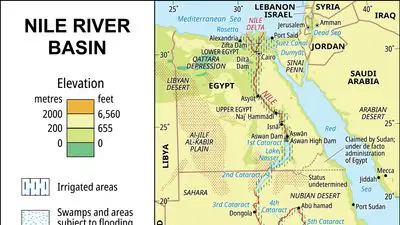
The Nile starts in the south and flows to the __________.
north
south
east
west
The buildup of soil made the land great for _____.
trading
cataracts
agriculture
eating
The Egyptians lived in the desert and could not depend on _____.
flooding
trade
taxes
rainfall
The people believed that the pharaoh was a (a) .
What was the primary reason for mummification in ancient Egypt?
so the spirit can go to the afterlife.
to save their brain
to save their internal organs
to preserve the skin
Why were the pyramids filled with gold, jewelry, and other valuable possessions of the pharaoh?
for the family to sell for money
for the pharaoh to give to their children
for the family to worship
for the pharaoh to use in the afterlife
In a dynasty, the title of pharaoh (ruler) is passed down to _____
a parent
the priest
a younger relative
the oldest grandparent
You will need a small map of Egypt for this question!
Location A is (a) .
You will need a small map of Egypt for this question!
What is location B?
Upper Egypt
Lower Egypt
Nile Cataracts
Nile Delta
You will need a small map of Egypt for this question!
What is location C?
Upper Egypt
Lower Egypt
Nile Cataracts
Nile Delta
You will need a small map of Egypt for this question!
What is location D?
Upper Egypt
Lower Egypt
Nile Cataracts
Nile Delta
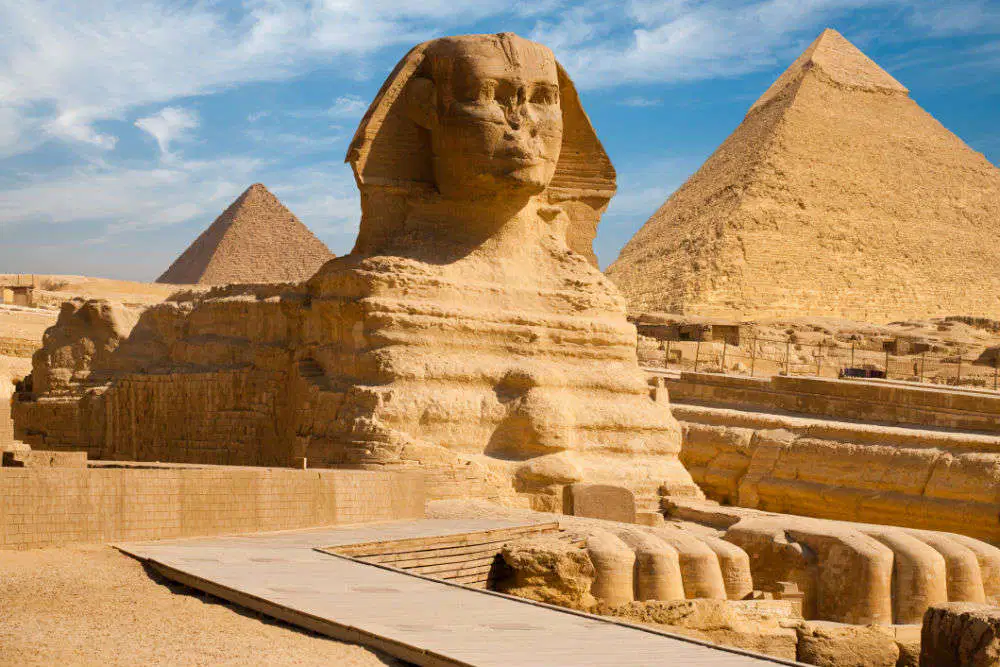
What is the name of the limestone statue in this picture, with the head of a pharaoh and the body of a lion?
Rosetta Stone
The Great Pyramid
Obelisk
The Great Sphinx
Whose tomb was rediscovered in the 20th century with his/her mummy and valuable Egyptian artifacts?
Queen Hatshepsut
King Tut
Ramses the Great
Alexander the Great

Why were tombs filled with art, jewelry, and other treasures?
the tombs served as museums
the tombs were the private storage rooms of the pharaoh
Egyptians believed tombs to be the safest places in the kingdom
Egyptians believed the dead enjoyed such materials in the afterlife
What two things did Egyptians do to prepare for an afterlife?
Build a pyramid; meet the pharaoh
Eat crocodile stew once a year; be buried in purple clothing
Be a good person; have their dead body preserved
Eat crocodile stew once a year; be buried in orange clothing

