
 Worksheets
Sp 1 Autentico page 218 2.0
Total questions: 60
Worksheet time: 51mins
Es un lugar donde las personas bailan. Es un (a) .
lugar = place
donde = where
Cuándo yo voy de (a) , me gusta dormir en la naturaleza.
dormir = to sleep
naturaleza = nature/outside
Es un lugar donde las personas escuchan la música que está tocando una banda (band).
Es un (a) .
lugar = place
donde = where
tocar = to play an instrument
Es un evento donde las personas celebran el cumpleaños de un amigo.
Es una (a) .
evento = event
donde = where
cumpleaños = birthday
Cuándo yo voy de (a) , me gusta ir en un bote gigante.
bote = boat

Cuando Mario juega al (a) , él salta como Kobe Bryant.
saltar = to jump

Cuando tú juegas al (a) , tú bateas con un bate de metal.
batear = to hit/bat
bate= bat
Cuando Eliana juega al (a) , ella corre muy rápido y siempre marca muchos goles.
siempre = always
marcar un gol = to mark or make a goal
Ellos no juegan al (a) americano en Ecuador.
jugar = to play

Mi papá juega al (a) como Tiger Woods.

Mi mamá juega al (a) como Serena Williams.

Preferimos jugar al (a) en la playa, no en el gimnasio.

Vamos a mirar el (a) de Lacrosse esta tarde.
esta = this

La maestra:
"¿Quién sabe la respuesta a número once en la tarea?"
El estudiante:
"Yo (a) la respuesta, Sra. Martinez."
saber = to know info
*Yo form is irregular
La maestra:
"¿Quién sabe la respuesta a número quince en la tarea?"
El estudiante:
"María (a) la respuesta, Sra. Martinez."
saber = to know info
La maestra:
"¿Quién sabe la respuesta a número dos en la tarea?"
Los estudiantes:
"Nosotros (a) la respuesta, Sra. Martinez."
saber = to know info
La maestra:
"¿Ustedes (a) la respuesta a número uno en la tarea?"
Los estudiantes:
"¡Sí, nosotros sabemos la respuesta!"
saber = to know info
Read the description of each character.
Decide which adjective best fits each sentence.
María no tiene mucha energía. María está _.
tener = to have
cansado
cansada
contento
contenta
Read the description of each character.
Decide which adjective best fits each sentence.
Raúl no tiene mucha energía. Raúl está _.
tener = to have
cansado
cansada
contento
contenta
Read the description of each character.
Decide which adjective best fits each sentence.
Raúl no está triste. Raúl está _.
cansado
cansada
contento
contenta
Read the description of each character.
Decide which adjective best fits each sentence.
María no está triste. María está _.
cansado
cansada
contento
contenta
Read the description of each character.
Decide which adjective best fits each sentence.
No es un buen día hoy, es un _ día porque no tengo mi tarea.
mal
cansada
contento
ocupada
Read the description of each character.
Decide which adjective best fits each sentence.
Alina no está contenta, está _ porque no pasa la clase de biología.
triste
cansado
contento
demasiado
Read the situation.
Decide which answer best fits each description.
Alina no va de camping porque está muy mal de salud.
Alina está en casa porque está _.
salud = health
ocupada
cansado
contento
enferma
Read the situation.
Decide which answer best fits each description.
Carlos no va de camping porque tiene mucha tarea.
Carlos está en casa porque está _ y necesita escribir un reporte.
tener = to have
ocupado
cansada
contento
enferma
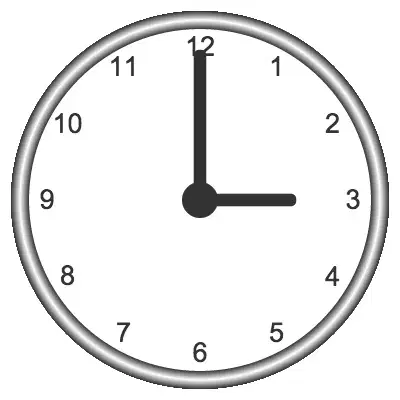
Read the situation.
Decide which answer best fits each question.
¿A qué hora vamos de pesca?
A las siete, vamos a salir.
A las tres, vamos a ir.
A las doce, vamos a ir de pesca.
A las dos, vamos.

Read the situation.
Decide which answer best fits each question.
¿A qué hora vamos de camping?
salir= to leave
A las nueve menos veinte, vamos a salir.
A las ocho y media, salimos.
A las ocho y cuatro, estamos saliendo.
A las nueve y cuarto, vamos a ir.
Read the situation.
Decide which answer best fits each question.
¿A qué hora vamos a jugar al golf?
salir= to leave
A la una, vamos a jugar.
A las ocho y media, voy a trabajar.
A las ocho y cuatro, estamos saliendo para comer.
para = in order to
A las nueve y cuarto, vamos a jugar al béisbol.
¿Cómo se dice "with me" en español?
(a)
Read the situation.
Decide which answer best fits each description.
Nosotros no tenemos clases en la escuela _.
los lunes
los = every
(in this case)
durante el día
durante = during
los fines de semana
los = each/during
(in this case)
hoy
¿Cómo se dice "with you" en español?
(a)
¿Cómo se dice "I want to go with you" en español?
Yo quiero ir (a)
¿Cómo se dice "Do you want to go with me?" en español?
¿Quieres ir (a) ?
Poder = to be able to (or "can")
Poder is a stem changing verb and changes from
O --> UE except in the nosotros and vosotros forms.
Change the verb PODER into the present tense.
Yo (a) leer un libro en español.
Poder = to be able to (or "can")
Poder is a stem changing verb and changes from
O --> UE except in the nosotros and vosotros forms.
Change the verb PODER into the present tense.
Tú (a) jugar al básquetbol con nosotros.
Poder = to be able to (or "can")
Poder is a stem changing verb and changes from
O --> UE except in the nosotros and vosotros forms.
Change the verb PODER into the present tense.
Enrique (a) jugar al golf con sus amigos hoy.
Poder = to be able to (or "can")
Poder is a stem changing verb and changes from
O --> UE except in the nosotros and vosotros forms.
Change the verb PODER into the present tense.
Nosotros (a) jugar al vóleibol con Marta y Ricardo.
Poder = to be able to (or "can")
Poder is a stem changing verb and changes from
O --> UE except in the nosotros and vosotros forms.
Change the verb PODER into the present tense.
Vosotros (a) jugar al fútbol con ellos.
Poder = to be able to (or "can")
Poder is a stem changing verb and changes from
O --> UE except in the nosotros and vosotros forms.
Change the verb PODER into the present tense.
Ellas (a) jugar al tenis con Luiza y Ana.
Jugar = to play
Jugar is a UNIQUE stem changing verb and is the only Spanish verb that changes from
U --> UE except in the nosotros and vosotros forms.
Change the verb JUGAR into the present tense.
Ustedes (a) al tenis los (every) lunes.
Jugar = to play
Jugar is a UNIQUE stem changing verb and is the only Spanish verb that changes from
U --> UE except in the nosotros and vosotros forms.
Change the verb JUGAR into the present tense.
Vosotras (a) al golf con vuestras (your *plural) amigas.
Jugar = to play
Jugar is a UNIQUE stem changing verb and is the only Spanish verb that changes from
U --> UE except in the nosotros and vosotros forms.
Change the verb JUGAR into the present tense.
Vosotras (a) al golf con vuestras (your *plural) amigas.
Jugar = to play
Jugar is a UNIQUE stem changing verb and is the only Spanish verb that changes from
U --> UE except in the nosotros and vosotros forms.
Change the verb JUGAR into the present tense.
Daniela (a) al fútbol los (every) miércoles .
Jugar = to play
Jugar is a UNIQUE stem changing verb and is the only Spanish verb that changes from
U --> UE except in the nosotros and vosotros forms.
Change the verb JUGAR into the present tense.
Nosotros (a) al fútbol americano mucho en La Florida.

Jugar = to play
Jugar is a UNIQUE stem changing verb and is the only Spanish verb that changes from
U --> UE except in the nosotros and vosotros forms.
Change the verb JUGAR into the present tense.
Mi estudiante anterior (former), Michael Mc Avene (a) al béisbol para los CUBS.
Jugar = to play
Jugar is a UNIQUE stem changing verb and is the only Spanish verb that changes from
U --> UE except in the nosotros and vosotros forms.
Change the verb JUGAR into the present tense.
Tú (a) al sófbol para OHS.
Jugar = to play
Jugar is a UNIQUE stem changing verb and is the only Spanish verb that changes from
U --> UE except in the nosotros and vosotros forms.
Change the verb JUGAR into the present tense.
Yo (a) al tenis para OHS.
Querer = to want or to care for
Querer is a stem changing verb and changes from
E --> IE except in the nosotros and vosotros forms.
Change the verb QUERER into the present tense.
HINT***its ok if there are three vowels spelled together...remember the letter "u" supports the "q" to produce the "k" sound.
Yo (a) comer una quesadilla. (I want to eat a quesadilla.)
Querer = to want or to care for
Querer is a stem changing verb and changes from
E --> IE except in the nosotros and vosotros forms.
Change the verb QUERER into the present tense.
HINT***its ok if there are three vowels spelled together...remember the letter "u" supports the "q" to produce the "k" sound.
Tú (a) comer un sándwhich de jamón y queso.
Querer = to want or to care for
Querer is a stem changing verb and changes from
E --> IE except in the nosotros and vosotros forms.
Change the verb QUERER into the present tense.
HINT***its ok if there are three vowels spelled together...remember the letter "u" supports the "q" to produce the "k" sound.
Oscar (a) comer una ensalada.
Querer = to want or to care for
Querer is a stem changing verb and changes from
E --> IE except in the nosotros and vosotros forms.
Change the verb QUERER into the present tense.
HINT***its ok if there are three vowels spelled together...remember the letter "u" supports the "q" to produce the "k" sound.
Tú y yo (a) comer pronto (soon).
Querer = to want or to care for
Querer is a stem changing verb and changes from
E --> IE except in the nosotros and vosotros forms.
Change the verb QUERER into the present tense.
HINT***its ok if there are three vowels spelled together...remember the letter "u" supports the "q" to produce the "k" sound.
Vosotros (a) comer más tarde (later).
Querer = to want or to care for
Querer is a stem changing verb and changes from
E --> IE except in the nosotros and vosotros forms.
Change the verb QUERER into the present tense.
HINT***its ok if there are three vowels spelled together...remember the letter "u" supports the "q" to produce the "k" sound.
Carlos y Juan (a) comer a las once de la tarde.
Read the sentences and then answer the question.
Nosotros comemos a las once. Entonces, vamos a la clase de inglés.
What does "Entonces" mean?
Sometimes
Then
In the afternoon
Always
Read the sentences and then answer the question.
Ella corre demasiado en la clase de educación física y no tiene energía.
What does "demasido" mean?
too much
then
not enough
always
Read the sentences and then answer the question.
Ella corre un poco en la clase de educación física y no está cansada.
What does "un poco" mean?
too much
then
not enough
a little
You meet an exchange student from Argentina. They tell you in Spanish that they feel homesick. Which response would be appropriate to say to them that shows them empathy.
"Oye"
"Qué pena"
"Genial"
"Qué buena idea"
You are helping an exchange student from Argentina find his first class. He is walking ahead of you and is about to go into the wrong classroom.
Which word or phrase would be appropriate to say to them that would get their attention so they don't walk into the wrong class.
"Oye"
"Qué pena"
"Genial"
"Qué buena idea"
You are helping a new student who just moved here from Honduras. They are not sure if the equation that they attempted to solve in math class is correct.
Which word or phrase would be appropriate to say to them that would let them know that they are doing a good job.
"Oye"
"Qué pena"
"Genial"
"Lo siento"
You are helping a new student who just moved here from Honduras. You accidentally step on their foot when moving your desk to work with them.
Which word or phrase would be appropriate to say to apologize?
"Oye"
"Qué pena"
"Genial"
"Lo siento"

