wayground logo

Free Printable Worksheets

Font size

S
M
L
XL
Worksheets

Classification and Evolution Unit Review

Total questions: 56

Worksheet time: 55mins

Name
Class
Date
1.
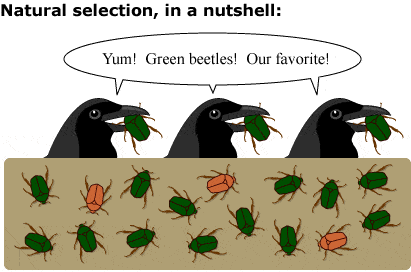
A theory has significant evidence to support it.  True or False
a)
True
b)
False
2.
Why are advantageous traits more likely to be passed onto offspring?
a)

Because they are more likely to help that organism survive and go on to reproduce.

b)

Because they come from dominant alleles.

c)

Because they come from recessive alleles.

d)

Because the trait is an acquired phenotype.
3.
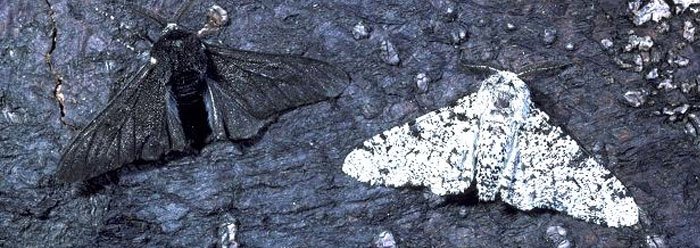
The trees these moths used to live on were white, but have been covered in soot from coal factories. Which moth will be more successful in this environment?
a)

Dark moth

b)

Light moth

c)

Both will be equally successful

d)

Neither will be successful

4.

__________ means the change in a species over time.

a)

Natural Selection

b)

Selective Breeding

c)

Homeostasis

d)

Evolution

5.
Structures with the same parts have different functions; suggests that organisms share a common ancestry
a)

vestigial structures

b)

homologous structures

c)

adaptive radiation

d)

fossil

6.
Study of embryos of various organisms to show a common ancestor because of similarities in development
a)

natural selection

b)

embryology

c)

speciation

d)

evolution

7.
The diagram shows fossils in different rock layers. Which of these statements about the age of these fossils is most likely correct?
a)

Fossil A and C are the same age

b)

Fossil B is older than fossil C

c)

Fossils A is older than fossil B

d)

Fossil D is older than fossil C

8.
What does Darwin's theory of evolution suggest?
a)
species change over time
b)
extinct species are not related to living species
c)
different species can interbreed
d)
animals that look alike are most closely related
9.
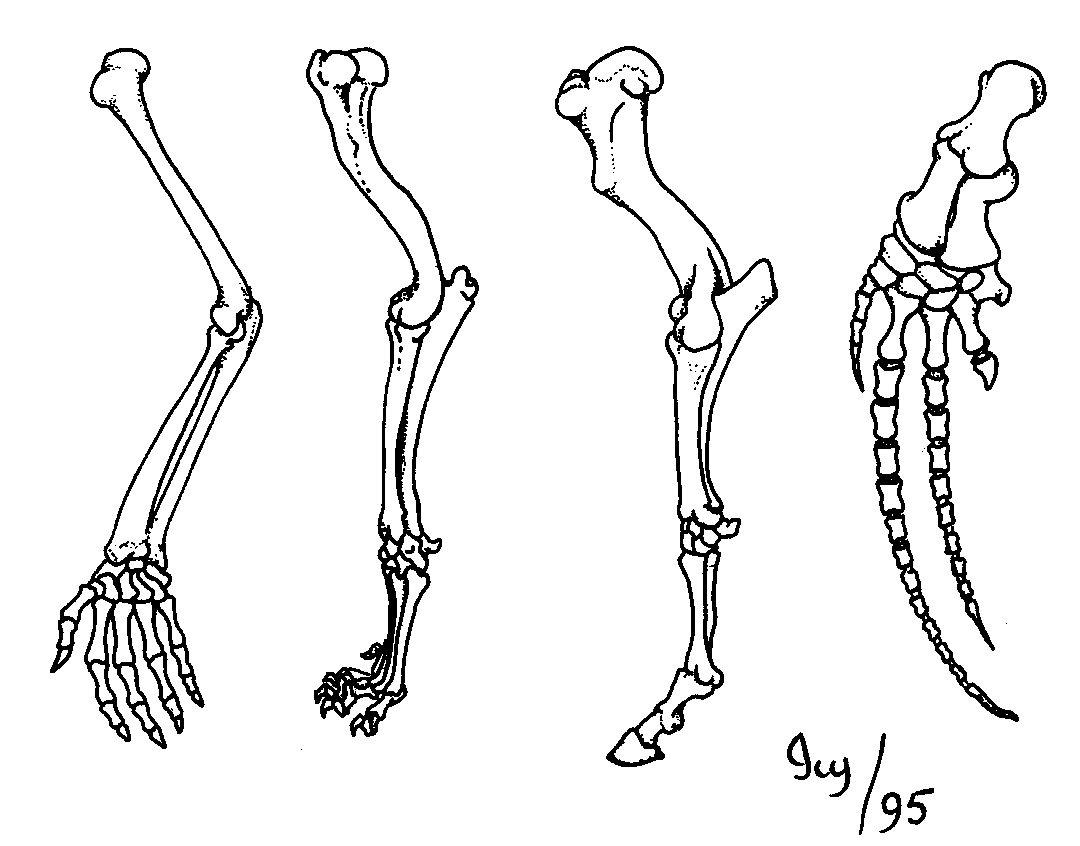
What type of structures are these?
a)
homologous
b)
vestigial 
c)
analogous
d)
fossil
10.

Whales are aquatic mammals that contain a pelvis (hip) bone. Even though it does not aid in its movement, the function must have been used by a common ancestor of the whale. Thus, the pelvis is referred to as a(n)

a)

vestigial structure

b)

analogous structure

c)

homologous structure

11.

The ability of an organism to survive and reproduce in its specific environment is called ______________.

a)

diversity.

b)

evolution

c)

adaptation

d)

 fitness

12.
Where humans have bred organisms together based on traits we like.
a)

Evolution

b)

Natural Selection

c)

Extinction 

d)

Artificial Selection

13.
The difference in the physical traits of an individual from those of other individuals in a group is called a(n)
a)

change

b)

adaption

c)

species

d)

variation

14.

An error in DNA copying that results in a new allele for a new trait...

a)

Homeostasis

b)

Mutation

c)

Natural Selection

d)

Selective Breeding

15.
This is a process by which organisms inherited advantageous traits that tend to reproduce more successfully than the other organisms do. 
a)
Artificial selection
b)
Natural selection
c)
Populations
d)
Environment
16.
This is a process in which organisms gradually change over time.
a)
Environment
b)
Competition
c)
Evolution
d)
Fossils
17.
This is a group of organisms of the same species that live in a specific geographical area.
a)
Environment
b)
Evolution
c)
Biological diversity
d)
Populations
18.
This is an inherited trait that helps an organism survive and reproduce in its environment.
a)
Evolution
b)
Population
c)
Environment
d)
Adaptation
19.
The death of every member of a species.
a)
Competition
b)
Population
c)
Extinction
d)
Evidence
20.
Survival of the Fittest and Evolution were proposed by what scientist?
a)
Charles Darwin
b)
Albert Einstein
c)
Steven Hawking
d)
Isaac Newton
21.
What is the advantage of having different shaped beaks?
a)
To look different from other species.
b)
To be able to eat the food readily available in the environment.
c)
To protect itself against predators.
d)
To protect itself against prey.
22.
Why are advantageous traits more likely to be passed onto offspring?
a)

Because they are more likely to help that organism to survive and reproduce.

b)

Because they come from dominant alleles.

c)

Because they come from recessive alleles.

d)

Because the trait is an acquired phenotype.

23.
Mutations are a change in what?
a)
DNA
b)
tRNA
c)
genotype
d)
phenotype
24.
A fossil of an extinct dinosaur is found and the anatomy of the fossil shows similarities to that of a bird. What could this mean?
a)
This is purely by chance and isn't significant
b)
The extinct dinosaur and modern bird share a common ancestor
c)
All dinosaurs evolved into birds and that's why there aren't any dinosaurs alive today
d)
Dinosaurs choose to fly, and evolved into birds to escape predation and capture food
25.
Which of the following organisms the kingdom animalia are not closely related?
a)
mouse and hagfish
b)
mouse and lizard
c)
mouse and pigeon
d)
mouse and chimp
26.
Two organisms that are closely related would have
a)
very similar DNA sequence
b)
exactly the same DNA sequences
c)
no proteins in common
d)
completely different DNA sequence
27.
Which of the following are examples of evidence for evolution?
a)
Fossils and Cellular Structure
b)
Biological Structures 
c)
Genetics/DNA
d)
All of the Above
28.
True or False?
Generations of a species that are farther apart from each other look the most different.
a)
True
b)
False
29.

Shows how different groups of organisms have changed over time.

a)

fossil record

b)

homologous structures

c)

embryology

30.

Organisms from the same species can vary in…

1) physical appearance

2) genetic makeup

a)

overproduction

b)

variation

c)

selection

d)

adaptation

31.

Species not closely related evolve similar traits due to their similar environment

a)

Convergent evolution

b)

divergent evolution

c)

parallel evolution

32.

All of the genetic information found in a population

a)

population

b)

genetic drift

c)

evolution

d)

gene pool

33.

Genetic Diversity is increased through this process.

a)

Gene Flow

b)

Genetic Drift

34.

If a new trait DOES help an organism survive, what may happen to it?

a)

It dies and its DNA is not passed on

b)

It survives and its DNA is passed on

c)

It changes its traits to adapt and survive

35.

Evolution is

a)

the change in the genetic makeup of a population over successive generations

b)

the variation in genetic makeup or alleles within a population

36.

Forces in the environment that result in a change in the population.

a)

Selective Pressure

b)

Evolution

c)

Niche Partitioning

37.
Which of the following is a factor in natural selection?
a)
Individuals of species compete with one another to survive.
b)
All species are genetically diverse.
c)
Individuals better able to adapt to changes leave more offspring.
d)
All are correct 
38.
Individuals that are better able to cope with the challenges of their environment tend to  
a)
Decrease in population over time.
b)
Leave more offspring than those less suited to the environment.
c)
Leave fewer offspring than those less suited to the environment.
39.

Members of different species

a)

Can reproduce successfully

b)

Differ genetically

c)

Will never live together .

40.
The process in which organisms with traits well suited to an environment are more likely to survive and to produce offspring is
a)
Natural Selection
b)
Origin of Species
c)
Genetic Principles
d)
Trait Mechanism
41.
What is the term for a feature that allows an organism to survive better in its environment?
a)
variation
b)
adaptation
c)
homologous structure
d)
vestigial structure
42.

What is the process of which humans breed organisms for certain traits?

a)

artificial selection

b)

survival of the fittest

c)

inheritance of acquired characteristics

d)

natural selection

43.
Mutations are important because they bring about
a)
death of the organism in which they develop
b)
genetic variation needed for a population to evolve
c)
benefits for the individual, not for the population
d)
Hardey-Weinberg equilibrium within a population
44.

This scientist came up with the idea of natural selection. Considered the Father of Evolution

a)

Jean Baptiste Lamarck

b)

Gregor Mendel

c)

Charles Darwin

d)

Thomas Malthus

45.
Survival of the fittest or when favorable adaptations reproduce faster is called what?
a)
Evolution
b)
Adaptation
c)
Natural selection
d)
Fossilization
46.
This mechanism of evolution occurs when populations migrate.
a)
Extinction
b)
Gene flow
c)
Genetic drift
d)
Natural Selection
47.
A few deer wander out of their native woods into a completely new park where no deer had ever been before. They go on to create an entirely new population.
a)
Genetic Drift
b)
Natural Selection
c)
Non-random mating
d)
Mutation
48.

The female birds of paradise tend to look for the most colorful, best dancing males to make babies together.

a)

Genetic Drift

b)

Non-random mating

c)

Gene flow

d)

Mutation

49.
Since the 1800s humans have stopped burning coal, and the trees have returned to their original color. Which moth will be more successful in this environment?
a)
Dark moth
b)
Light moth
c)
Both will be equally successful
d)
Neither will be successful
50.

Genetic mutations are the direct cause of which of the following?

a)

Aliens

b)

The Avengers

c)

Variations

d)

8th grade behavior

51.

Charles Darwin observed that finches of different species on the Galápagos Islands have many similar physical characteristics, this supports the hypothesis that these finches

a)

are twins

b)

acquired traits through use and disuse.

c)

all eat the same type of food.

d)

descended from a common ancestor.

52.
The struggle for existence against other members of an organisms species is
a)
Competition
b)
Natural Selection
c)
gene flow
d)
genetic drift
53.

The fossil record help scientists

a)

better understand the kinds of organisms that lived in the past

b)

better understand how the environment has changed over time

c)

better understand how organisms have evolved over time

d)

all of the above

54.

What is common ancestry?

a)

When a species no longer exists

b)

When organisms are descended from a single ancestor

55.

What is an example of a vestigial structure in a human?

a)

liver

b)

appendix

56.

Which of the following terms describes when a new species evolves or develops?

a)

Unifornitarianism

b)

Speciation