
Font size
 Worksheets
Mastery Food Web
Total questions: 55
Worksheet time: 50mins
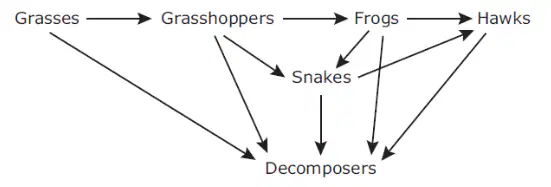
Which organisms in the food web compete for the same food source in this environment?
Grasshoppers and snakes
Frogs and snakes
Hawks and frogs
Decomposers and grasses
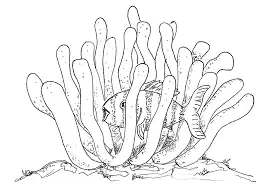
Which statement best describes one way sea anemones depend on clownfish for an abiotic factor in an ecosystem?
HINT abiotic components are non-living factors that impact an ecosystem.
Clownfish move water near sea anemones when dissolved oxygen levels are low
Clownfish consume the remains of organisms paralyzed by sea anemones.
Clownfish decrease competition among sea anemones.
Clownfish protect sea anemones from predatory fish
lants that live on the floors of densely populated forests must compete for sunlight.
Which type of leaves are most likely found on plants that best suited to living on the floor of a dense forest?
Leaves that store the greatest amount of water
Leaves with the greatest amount of surface area
Leaves that are needle-shaped
Leaves that are smallest
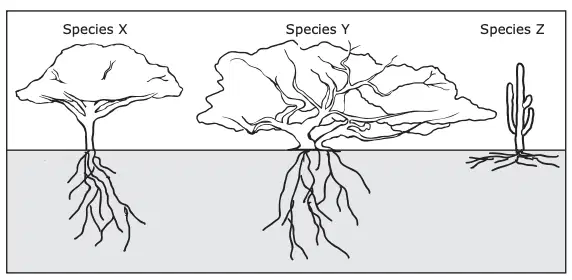
hree different species of plants that live in the desert are shown
Species Z can successfully share the same environment with the other plants shown because species Z absorbs water
near the soil surface, and species X absorbs water near the soil surface
near the soil surface, and species X absorbs water found deep underground
found deep underground, and species X absorbs water near the soil surface
found deep underground, and species X absorbs water found deep underground
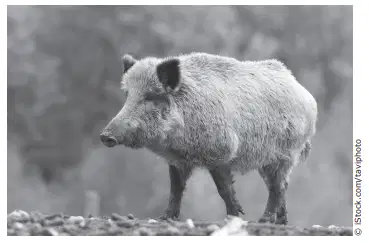
Wild hogs introduced to Texas from Europe became feral after the hogs escaped from the ranches where they lived. Feral hogs are omnivores that feed on native plants, crops, and small animals. Feral hogs can damage an ecosystem by rooting through the soil to look for food and trampling small plants.
Which types of native organisms do feral hogs most likely compete with for food sources?
Carnivores and producers
Decomposers and herbivores
Producers and decomposers
Herbivores and carnivores
Four students were asked to create a graph representing a typical predator-prey relationship.
Which graph shows a situation in which the number of predators in a population depends on the number of prey?


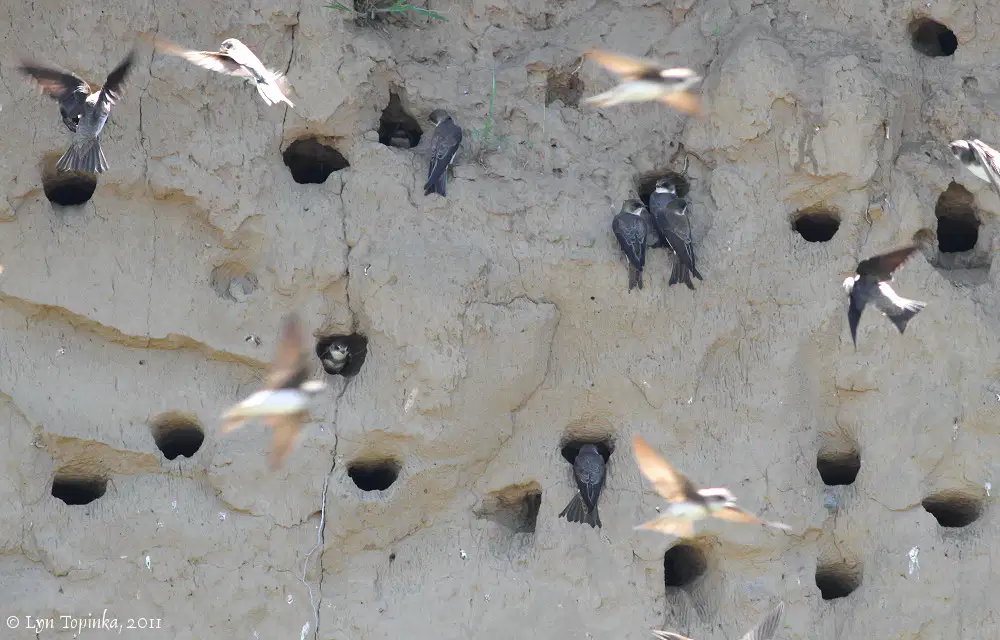
Bank swallows are birds that make their nests on the edges of rivers but can’t swim or breathe underwater. They feed on flying insects and in the spring, they lay four or five eggs.
What change in these birds will likely be brought about by flooding in their habitat?
Laying more eggs in the spring.
Learning to breathe underwater
Eating different kinds of insects.
Building nests higher up the banks
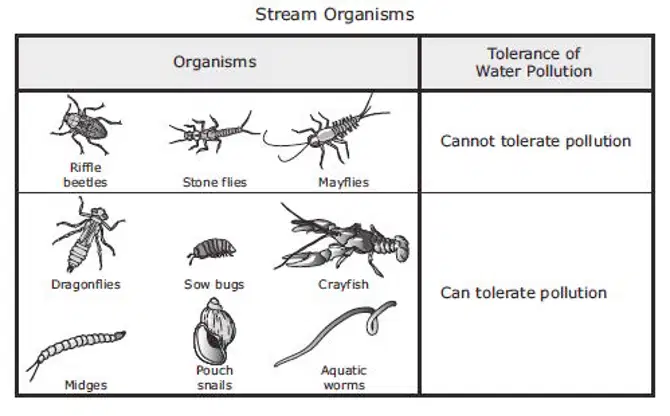
The types of small organisms that live on the bottom of streams can be good indicators of water pollution. The table to the right shows some organism by their tolerance of pollution.
A certain stream that was historically clear and clean has become increasingly polluted with fertilizer waste over the years. Which of these describes a likely result of this pollution?
Mayflies that were previously abundant are no longer present in the stream.
Stone flies and midges thrive and compete for the same food source
Riffle beetles have become more abundant in the stream.
Large numbers of crayfish have suddenly died.
Lakes that are cut off from regular sources of flowing water eventually become fields over long periods of time. What happens to the fish population that lived in the lake originally?
The fish all move to different lakes
The fish evolve into amphibians
The populations of fish in the lake die.
The fish make short trips over land to another source of water.
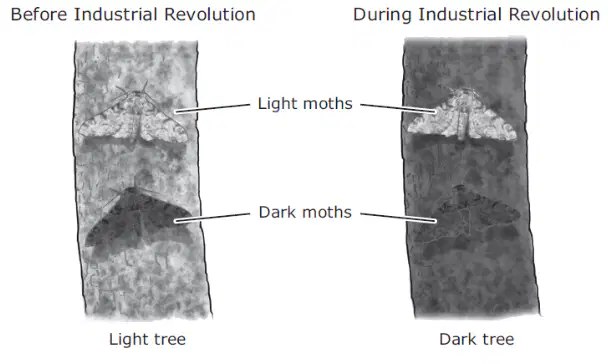
Before the Industrial Revolution, the peppered moth was commonly found on the trunks that had light-colored lichen on the bark. Most of the peppered moths were a light gray-brown color similar to that of the lichen. A few moths had a mutation that made them a dark gray-brown color
During the Industrial Revolution, coal-burning factories produced black soot that covered the trees and killed the lichen in the near cities. In these areas, the number of dark peppered moths increased while the number of light peppered moths decreased. What contributed to this change?
The soot-covered trees camouflaged the dark moths
The dark moths laid fewer eggs than the light moths.
Bird populations increased in the areas near the factories.
The dark moths preyed on the light moths
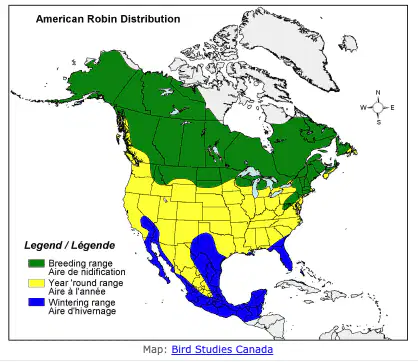
Robins migrate south during the winter months to avoid harsh conditions and then return north during the summer.
What environmental conditions are the robins most likely responding to in order to determine when the seasons are changing?
he tilt of the Earth on its axis
Fluctuations in predator populations.
Increasing availability of water.
Changing length of daylight hours.
Humans depend upon food that comes from the ocean. Some human activities negatively impact these food supplies.
Which statement provides the best evidence that human activities contribute to this impact?
Humans raise fish in a hatchery for commercial sale
Humans construct artificial reefs to attract tourists
Human visitors to coral reef systems break corals growing on rocks
Humans catch marine fish at a faster rate than the fish are able to reproduce
A coastal area that once supported a thriving fishing industry is overfished. The number of species found living in the marine ecosystem decreases.
Which of these activities is most likely to increase the natural biodiversity in the area?
Building artificial reefs and increasing fishing activity
Building artificial reefs and limiting fishing activity
Introducing non-native species to fill unoccupied habitats and banning fishing
Eliminating non-native species and encouraging fishing for large predatory fish

Water lilies are green thin floating plants found mostly on the edges of ponds, lakes, and streams. They have pink, white or yellow flowers that bloom on top of the leaf. Water lilies have a very fast growth rate as their root system is extensive.
If annual rainfall increased and caused the pond in this habitat to become deeper over time, how, after many generations of new plants, might the traits of these water lilies change?
longer stems
wider leaves
Brighter Flowers
thicker roots
Which of the following correctly defines the term "ecology"?
The study of how organisms interact with each other and the physical environment.
The study of living organisms.
The study of the development of human society.
The study of cells.
All of the following are examples of living things interacting with each other EXCEPT ...
birds preying on insects living in the grass
squirrels spreading the seeds of trees by burying them
fish eating plants and other smaller fish
frogs sleeping in the mud at the bottom of the pond
What might happen to an organism if they are unable to respond to a changing ecosystem?
They will die
They will outcompete other organisms
Nothing. They don't need to respond.

Put this food chain in the correct order
Grass
Rabbit
Snake
Hawk
Circle every secondary consumer in red
Giraffes have long necks that help them reach leaves high up in trees. They get all the energy they need from plants such as this. What type of consumer are giraffes.
carnivore
omnivore
herbivore
decomposer
What do the arrows show in a food chain?
They point to the smallest animals
They point to the animal that tastes the best
They point to just the producers
They point in the direction that energy is flowing
Put this food chain in the correct order
Grass
Grasshopper
Shrew
Snake
Mountain Lion
Match each organism with the correct trophic level
Producer
Grass
Primary Consumer
Squirrel
Secondary Consumer
Insect Eating Bird
Apex Predator
Mountain Lion
Decomposer
Bacteria
What is the missing classification of organisms of the four major organisms within an ecosystem?
Primary consumer, secondary consumer, tertiary consumer & (a)

On the ecological pyramid, where would humans who eat cows fall on our consumer list?
Producer
Primary Consumer
Secondary Consumer
Tertiary Consumer
Quaternary consumer
Animals that eat only plants is a (a)

The original source of energy for a food web is...
plants
sun
producers
decomposers

Which of the following would be the most likely effect, if there were a sudden increase in the cricket population?
There would be a decrease in the small bird population.
There would be a decrease in the grass/flowers population.
There would be a decrease in the mice population.
There would be an increase in the grass/flowers population.

Click on the image to make it larger-- Choose all that apply: The hawk gets energy from...
mouse
rabbit
wildflowers
snake

Click on the image to make it larger-- Choose the living things that are producers...
wildflowers
rabbit
snake
grass
Mark all the organisms that are considered producers


Giraffes have long necks that help them reach leaves high up in trees. They get all the energy they need from plants such as this. What type of consumer are giraffes.
carnivore
omnivore
herbivore
decomposer
Mushrooms often grow around dead plants such as decomposing trees. They break down these dead organisms and put energy that stores in the plant back into the ground for other plants to use. What type of consumer are mushrooms?
carnivore
omnivore
herbivore
decomposer
How much energy gets moved to the next trophic level?
100%
10%
90%
.1%

In the following food chain, how much energy would the snake get if the grass's trophic level started with 50,000 kcal?
5,000 kcal
500 kcal
50 kcal
5 kcal

Arrows represent ______________
flow of organisms
what eats what
flow of energy
percent of energy
What is the ultimate source of energy?
food
plants
sun
sugar
What percentage of energy is transferred from one trophic level to the next?
1%
10%
90%
100%
What is the primary consumer?
grass
grasshopper
mouse
snake
red hawk
What is the producer?
grass
grasshopper
mouse
snake
red hawk
What is the tertiary consumer?
grass
grasshopper
mouse
snake
red hawk
What is the secondary consumer?
grass
grasshopper
mouse
snake
red hawk
What is the 4th order consumer?
grass
grasshopper
mouse
snake
red hawk
What is the decomposer?
sun
grasshopper
water
snake
mushrooms
Energy that is not passed from one trophic level to the next is usually lost as?
sugar & undigested food
waste & heat
food & sugar
heat & sugar

Which organism is NOT a producer?
grass
tree
grasshopper
shrub
Where does the rabbit get its energy from?
snake
shrub
cricket
robin
Which organism is a primary consumer in the above diagram?
deer
snake
hawk
shrew
Which organism is a secondary consumer in the above diagram?
deer
rabbit
squirrel
shrew
Which organism gives its energy to 4 organisms?
grass
fungi
shrub
grasshopper
Which organism gets its energy from 3 organisms?
mountain lion
hawk
squirrel
snake
Which organism is at the 3rd trophic level?
grass
grasshopper
mouse
snake
red hawk

Which of the following statements is true of this Waterbird Food Web?
The bald eagle preys upon the wading birds
Small Planktivorous Fish are omnivores
Wading Birds are herbivores
Sea Ducks are predators to Tundra

Which organism is a decomposer?
Grasshopper
Cranefly
Ant
Mayfly
The skylark meadow pipit is a predator to how many organisms?
4
5
6
7

