
 Worksheets
DNA: The Code of Life Practice Test
Total questions: 86
Worksheet time: 43mins
Name
Class
Date
1.
The sides of the DNA are made of (choose all that apply)
a)
Nitrogen Bases
b)
Phosphate
c)
Deoxyribose
d)
Ribose
2.
The rungs (connections in the middle) of the DNA are made of (choose all that apply)
a)
Nitrogen Bases
b)
Phosphate
c)
Deoxyribose
d)
Ribose
3.
The ___________ of the nitrogen bases determines the genetic code.
a)
Deoxyribonucleic Acid
b)
Double Helix
c)
Order
d)
Phosphate
4.
The structure of DNA is a(n) _____________ .
a)
Deoxyribose
b)
Deoxyribonucleic Acid
c)
Double Helix
d)
Nitrogen Bases
5.
In DNA, Adenine always pairs with _____.
a)
Thymine
b)
Guanine
c)
Cytosine
d)
Adenine
6.
In DNA, Thymine always pairs with _____.
a)
Thymine
b)
Guanine
c)
Cytosine
d)
Adenine
7.
In DNA, Guanine always pairs with _____.
a)
Thymine
b)
Guanine
c)
Cytosine
d)
Adenine
8.
In DNA, Cytosine always pairs with _____.
a)
Thymine
b)
Guanine
c)
Cytosine
d)
Adenine
9.
The sugar in DNA is called ______________ .
a)
Codon
b)
Deoxyribose
c)
Nitrogen Bases
d)
Phosphate
10.
______________ is the process in which DNA makes an identical copy of itself.
a)
Deoxyribonucleic Acid
b)
DNA Replication
c)
Order
d)
Phosphate
11.
What is the full name of DNA?
a)
Deoxyribonucleic Acid
b)
Oxyribonucleic Acid
c)
Ribonucleic Acid
d)
Bonucleic Acid
12.
1 mol NaCl = ? g NaCl
a)
58.44 g
b)
609.3 g
c)
28.12 g
d)
21.43 g
13.
What molecules make up the rungs of a DNA molecule? (Choose all that Apply)
a)
Nitrogen Base - Adenine
b)
Nitrogen Base - Thymine
c)
Nitrogen Base - Guanine
d)
Nitrogen Base - Cytosine
e)
Phosphates
14.
What DNA bases pair?
a)
A-T
b)
C-G
c)
A-C
d)
A-G
e)
T-C
15.
What is made in "Replication"?
a)
DNA
b)
RNA
c)
Protein
d)
Amino Acids
16.
Replication happens in the
a)
Mitochondria
b)
Chloroplast
c)
Nucleus
d)
Cytoplasm
17.
Chromosomes are long segments of
a)
DNA
b)
RNA
c)
Proteins
18.
Proteins are made of
a)
Amino Acids
b)
DNA
c)
RNA
d)
Adenine
e)
Thymine
19.
Proteins are made of chains of smaller molecules called ___________________.
a)
Amino Acids
b)
Deoxyribose
c)
mRNA
d)
Ribose
e)
tRNA
20.
In RNA, A pairs with ___.
a)
A
b)
C
c)
G
d)
T
e)
U
21.
The sugar in RNA is _______________.
a)
Amino Acids
b)
Deoxyribose
c)
mRNA
d)
Ribose
e)
tRNA
22.
The genetic code in DNA is copied and carried to the ribosomes by ______________.
a)
Amino Acids
b)
Deoxyribose
c)
mRNA
d)
Ribose
e)
tRNA
23.
The process of DNA coding for mRNA is called
a)
Replication
b)
Transcription
c)
Translation
24.
After an amino acid is added to a protein, the "TRANSFER" RNA picks up another amino acid.
a)
Amino Acids
b)
mRNA
c)
Protein Synthesis
d)
Single
e)
True
25.
RNA is a(n) "DOUBLE" strand.
a)
Single
b)
Amino Acids
c)
mRNA
d)
Protein Synthesis
e)
Transfer
26.
Amino acids are carried to a ribosome by "MESSENGER" RNA.
a)
Transfer
b)
Amino Acids
c)
mRNA
d)
Protein Synthesis
e)
Single
27.
The process of "Replication" is turning RNA into a protein.
a)
Translation
b)
Amino Acids
c)
mRNA
d)
Single
e)
tRNA
28.
tRNA carries "PROTEINS" to the ribosomes.
a)
Amino Acids
b)
mRNA
c)
Protein Synthesis
d)
Single
e)
Transfer
29.
How many bases long is a codon?
a)
3
b)
1
c)
2
d)
4
e)
5
30.
Which comes from the nucleus?
a)
mRNA
b)
tRNA
31.
Which is found floating in the cytoplasm?
a)
mRNA
b)
tRNA
32.
A difference between DNA and RNA is
a)
DNA is single stranded and RNA is double stranded
b)
DNA is double stranded and RNA is single stranded
c)
DNA is triple stranded and RNA is double stranded
d)
DNA is single stranded and RNA is triple stranded
33.
A difference between DNA and RNA is
a)
Adenine is replace by Uracil in RNA
b)
Thymine is replace by Uracil in RNA
c)
Cytosineis replace by Uracil in RNA
d)
Guanine is replace by Uracil in RNA
34.
What does mRNA attach to?
a)
Mitochondria
b)
Golgi Apparatus
c)
Ribosomes
d)
Chloroplast
35.
What does tRNA carry?
a)
Nucleotides
b)
Sugars
c)
Phosphates
d)
Amino Acids
36.
A long chain of amino acids is called
a)
Protein
b)
Sugar
c)
Phosphates
d)
Nucleotides
37.
The use of drugs to treat disease is called ______________ .
a)
Chemotherapy
b)
Added
c)
Chloroplast
d)
Double Helix
e)
DNA
38.
The shape of DNA is a(n) _____________.
a)
Double Helix
b)
Added
c)
Chemotherapy
d)
Chloroplast
e)
DNA
39.
A mutation can be passed to offspring only if it takes place in a(n) _______________ .
a)
Sex Cells
b)
Added
c)
Chemotherapy
d)
Chloroplast
e)
Double Helix
40.
A mutation is any change in the ______________ .
a)
DNA
b)
Added
c)
Chemotherapy
d)
Chloroplast
e)
Double Helix
41.
Cancer is can be treated with ____________________, which uses beams of high-energy waves.
a)
Radiation
b)
Added
c)
Chemotherapy
d)
Chloroplast
e)
Double Helix
42.
A mutation can occur if a base pair is ___________, deleted, or substituted for another.
a)
Added
b)
Chemotherapy
c)
Chloroplast
d)
Double Helix
e)
DNA
43.
Mutations are "SOMETIMES" helpful to the organism.
a)
True
b)
Cell Wall
c)
Chemotherapy
d)
DNA
e)
Radiation
44.
Cancer is a disease in which cells divide "SLOWLY".
a)
Uncontrollably
b)
Cell Wall
c)
Chemotherapy
d)
DNA
e)
Radiation
45.
Cancer causes the growth of "TUMORS".
a)
True
b)
Cell Wall
c)
Chemotherapy
d)
DNA
e)
Radiation
46.
Scientists think that cancer begins when something damages a cell’s "PROTEINS".
a)
DNA
b)
Cell Wall
c)
Chemotherapy
d)
Radiation
e)
Uncontrollably
47.
DNA codes directly for
a)
Amino Acids
b)
Proteins
c)
mRNA
d)
tRNA
48.
mRNA codes directly for
a)
Mitochondria
b)
Proteins
c)
mRNA
d)
tRNA
49.
What are treatments for cancer? Choose all that apply.
a)
Surgery
b)
Radiation
c)
Chemotherapy
d)
Walking
e)
Eating
50.
A deletion is
a)
one base pair is removed
b)
one base pair is added
c)
One base pair is switched for another
51.
An addition is
a)
one base pair is removed
b)
one base pair is added
c)
One base pair is switched for another
52.
A substitution is
a)
one base pair is removed
b)
one base pair is added
c)
One base pair is switched for another
53.
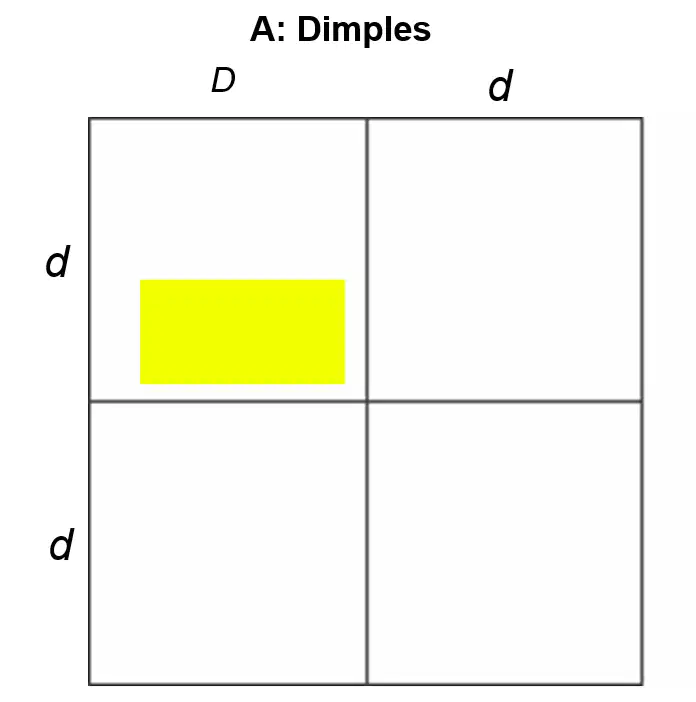
Complete Punnett square A to show inheritance of dimples, a trait controlled by a dominant allele.
a)
DD
b)
Dd
c)
dd
d)
BD
54.
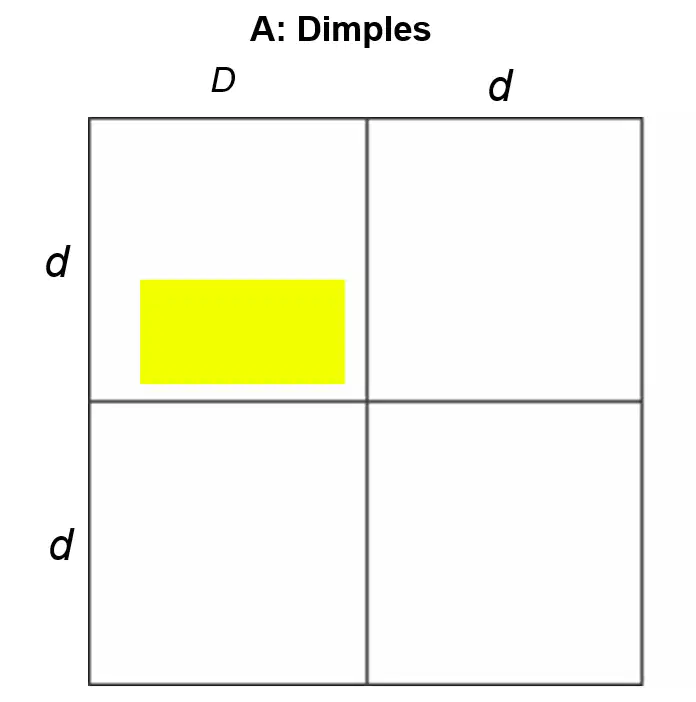
Complete Punnett square A to show inheritance of dimples, a trait controlled by a dominant allele.
a)
Dimples
b)
No dimples
c)
Not enough information
55.
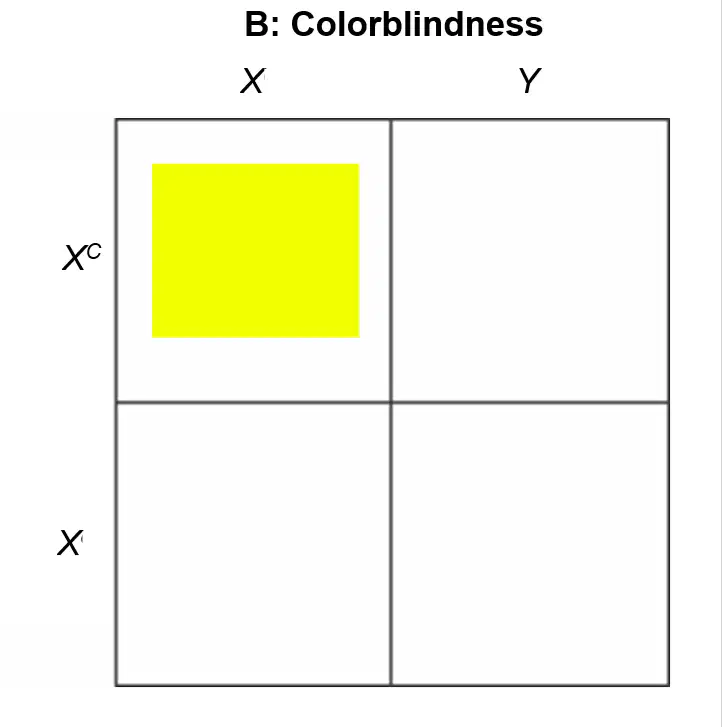
Complete Punnett square B to show inheritance of colorblindness, a trait controlled by a recessive sex-linked allele.
a)
Option 1
b)
Option 2
c)
Option 3
d)
Option 4
e)
Option 5
56.
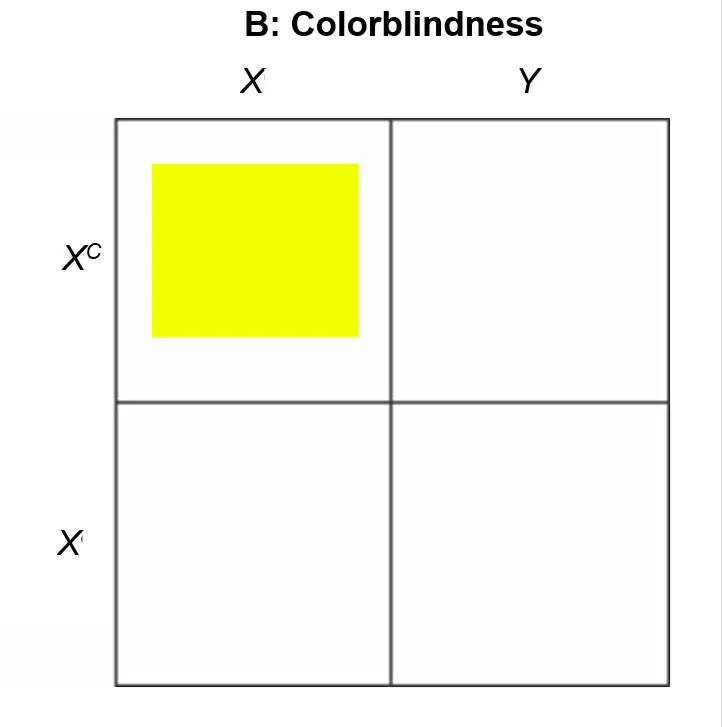
Complete Punnett square B to show inheritance of colorblindness, a trait controlled by a recessive sex-linked allele.
a)
Color blind girl
b)
Carrier girl
c)
Normal vision girl
d)
Color blind boy
e)
Normal vision boy
57.
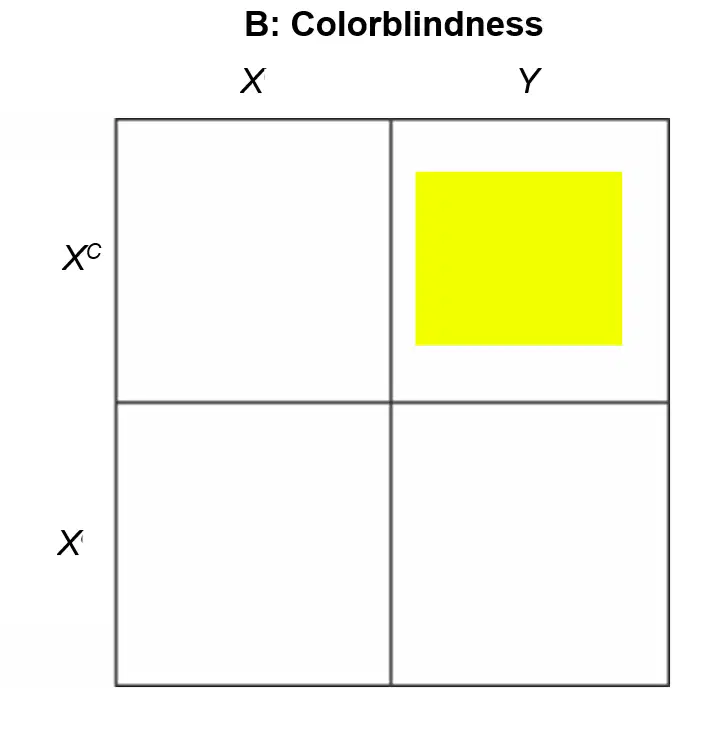
Complete Punnett square B to show inheritance of colorblindness, a trait controlled by a recessive sex-linked allele.
a)
Option 1
b)
Option 2
c)
Option 3
d)
Option 4
e)
Option 5
58.
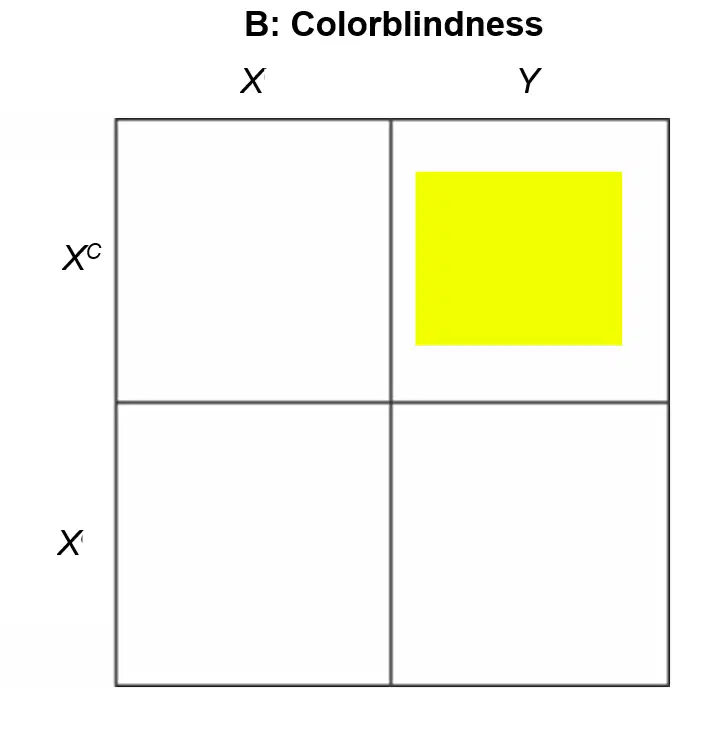
Complete Punnett square B to show inheritance of colorblindness, a trait controlled by a recessive sex-linked allele.
a)
Color blind girl
b)
Carrier girl
c)
Normal vision girl
d)
Color blind boy
e)
Normal vision boy
59.
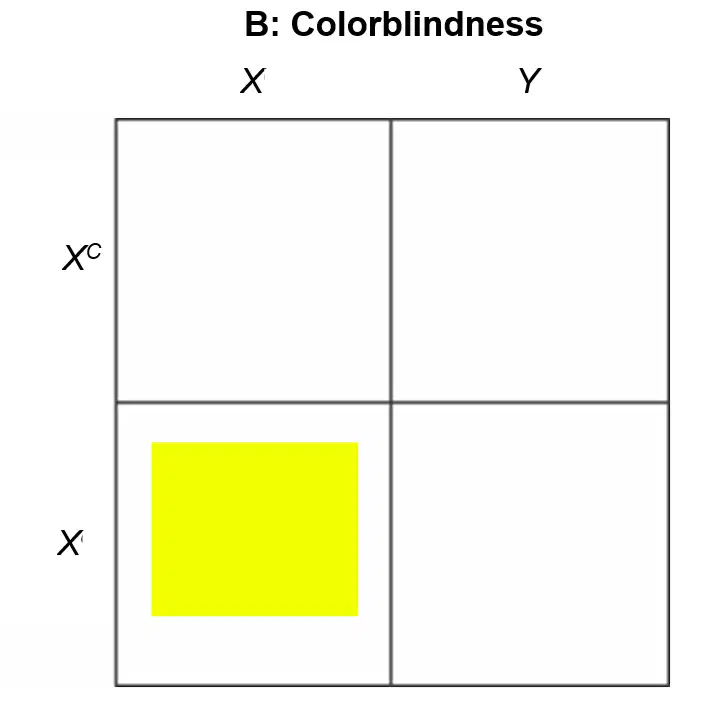
Complete Punnett square B to show inheritance of colorblindness, a trait controlled by a recessive sex-linked allele.
a)
Option 1
b)
Option 2
c)
Option 3
d)
Option 4
e)
Option 5
60.
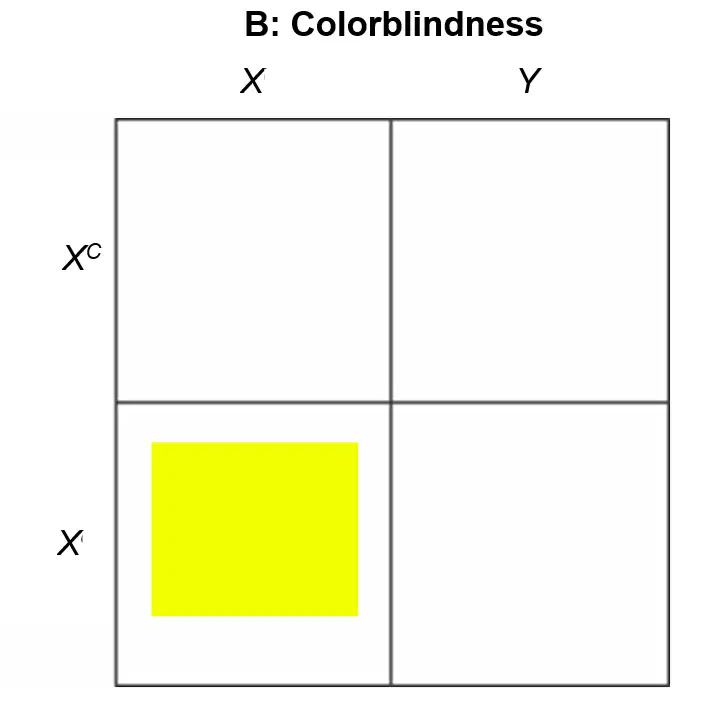
Complete Punnett square B to show inheritance of colorblindness, a trait controlled by a recessive sex-linked allele.
a)
Color blind girl
b)
Carrier girl
c)
Normal vision girl
d)
Color blind boy
e)
Normal vision boy
61.
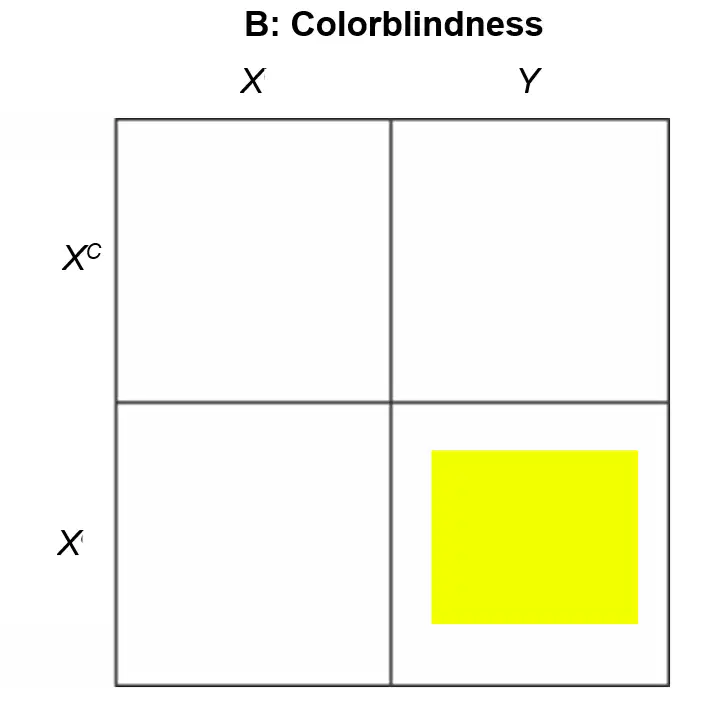
Complete Punnett square B to show inheritance of colorblindness, a trait controlled by a recessive sex-linked allele.
a)
Option 1
b)
Option 2
c)
Option 3
d)
Option 4
e)
Option 5
62.
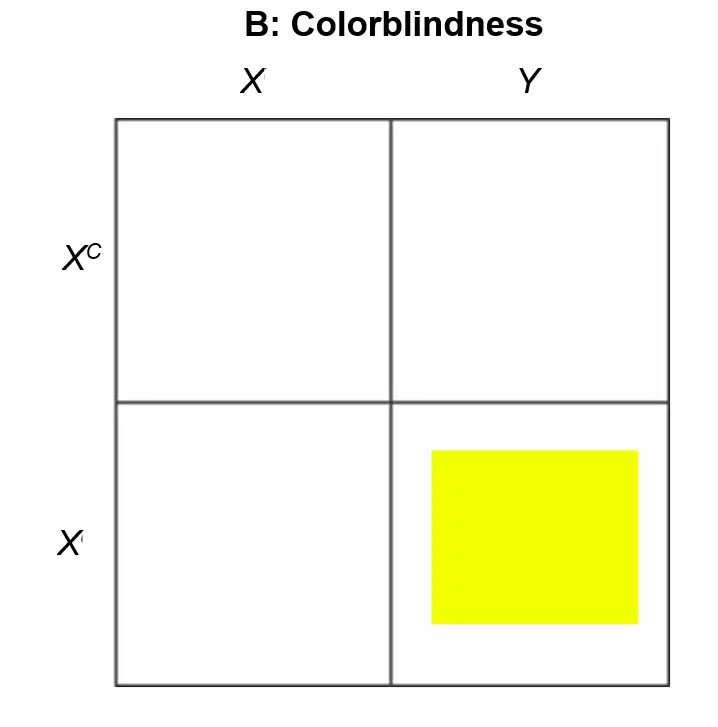
Complete Punnett square B to show inheritance of colorblindness, a trait controlled by a recessive sex-linked allele.
a)
Color blind girl
b)
Carrier girl
c)
Normal vision girl
d)
Color blind boy
e)
Normal vision boy
63.
The body cells of humans contain ___ pairs of chromosomes
a)
23
b)
46
c)
92
d)
5
64.
A widow’s peak (The type of hair line that is either widows peak or a straight hair line) is a trait controlled by _____ gene(s).
a)
1
b)
many
c)
5
65.
In the case of sex-linked traits, only FEMALES can be carriers.
a)
males
b)
no one
c)
True
66.
Females have ___ sex chromosomes
a)
XX
b)
XY
c)
None of the other options
67.
THE ONLY thing determined by the genes carried on a sex chromosome is a person’s gender.
a)
True
b)
False
68.
Colorblindness is a trait controlled by a ______________ allele on the X chromosome
a)
Recessive
b)
Dominant
c)
None of the other options
69.
The sex chromosome carried by a human egg will always be a(n) chromosome
a)
X
b)
Y
c)
None of the other options
70.
A person who has one recessive and one dominant allele for a trait is called a(n) .
a)
Sex Chromosome
b)
Sex-linked trait
c)
carrier
d)
None of the other options
71.
The only pair of human chromosomes that do not always match are the .
a)
Sex Chromosomes
b)
Sex-linked trait
c)
carrier
d)
None of the other options
72.
Genes found on the X and Y chromosomes are often called genes.
a)
Sex Chromosomes
b)
Sex-linked
c)
carrier
d)
None of the other options
73.
Dogs were developed from wolves through
a)
Selective Breeding
b)
Natural Selection
c)
Cloning
d)
Gene Therapy
74.
Having more genetic diversity in a population is good. (Diversity means differences)
a)
True
b)
False
75.
Genetic Engineering helped us to cause bacteria to produce ______________ which is needed by individuals with diabetes.
a)
insulin
b)
sugar
c)
hair
d)
teeth
76.
Golden Doodles are dogs from Golden retriever and Poodle parents. This is an example of
a)
inbreeding
b)
hybridization
c)
cloning
d)
gene therapy
77.
In the process of _____________, breeders cross two genetically different individuals.
a)
hybridization
b)
plasmids
c)
inbreeding
d)
genetic engineering
e)
Cloning
78.
Crossing two individuals that have similar desirable characteristics is called ___________________.
a)
inbreeding
b)
hybridization
c)
plasmids
d)
clone
e)
genetic engineering
79.
In ___________________ , organisms with desired traits are chosen to be parents of the next generation
a)
selective breeding
b)
hybridization
c)
plasmids
d)
clone
e)
inbreeding
80.
The process by which genes from one organism are transferred into the DNA of another organism is called _______________ .
a)
genetic engineering
b)
hybridization
c)
plasmids
d)
clone
e)
inbreeding
81.
Through _______________, a genetic disorder may be corrected by inserting copies of a gene directly into a person’s cells
a)
gene therapy
b)
hybridization
c)
plasmids
d)
clone
e)
inbreeding
82.
__________________ results in an organism that has exactly the same genes as the organism from which it was produced
a)
Cloning
b)
hybridization
c)
plasmids
d)
clone
e)
inbreeding
83.
Small rings of DNA called are found in some bacterial cells.
a)
plasmids
b)
hybridization
c)
clone
d)
inbreeding
e)
genetic engineering
84.
Some people are concerned that of crops may cause harm to the environment or health problems in humans.
a)
genetic engineering
b)
hybridization
c)
plasmids
d)
clone
e)
inbreeding
85.
By using a stem cutting from an African violet, it is easy to produce a new plant, which is a(n)
a)
clone
b)
hybridization
c)
plasmids
d)
inbreeding
e)
genetic engineering
86.
A hybrid organism has two different for a trait.
a)
alleles
b)
hybridization
c)
plasmids
d)
clone
e)
inbreeding
100 %