
 Worksheets
Kucko ConChem Kinetics & Bond Energy
Total questions: 15
Worksheet time: 9mins
The minimum amount of energy needed for colliding particles to react is called
Chemical Energy
Kinetic Energy
Activation Energy
Potential Energy
Why does a higher concentration increase the rate of reaction?
it increases the amount of reactants
it lowers the activation energy
it increases the energy of particle collisions
it increases the frequency of particle collisions
Why does a higher temperature increase the rate of a reaction?
it increases both the frequency and energy of particle collisions
it only increases the frequency of particle collisions
it only increases the energy of particle collisions
it reduces the activation energy of the reaction

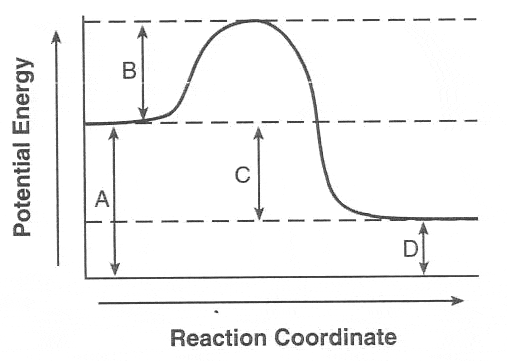
What happens to the energy in this reaction.
The energy needed for the reaction to occur is higher than the energy of the produced by the reaction.
The energy produced is higher than the energy needed for the reaction to occur.
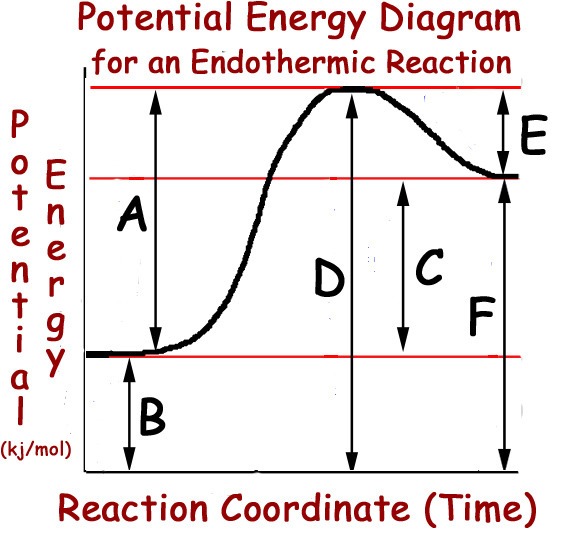

ΔH value in an endothermic reaction is a positive number.
True
False
Which is correct
Breaking bonds takes in Energy and Making bonds releases energy
Breaking bonds takes in Energy and Making bonds takes in energy
Breaking bonds releases Energy and Making bonds releases energy
Breaking bonds releases Energy and Making bonds takes in energy

Using the table of average bond energies below the image, the ΔH for the reaction in kJ is.....
+ 160 kJ
-63 kJ
- 160 kJ
-217 kJ
What is the rate of reaction?
How fast a reaction is
How big a reaction is
How loud a reaction is
How much gas a reaction produces

An experiment is carried out to study the effect of concentration on the rate of reaction between sodium thiosulphate and hydrochloric acid.
Calculate the rate of reaction between .008s and .032s
1.25mol/s
0.00072mol/s
0.8 mol/s
0.75 mol/s

