
 Worksheets
Vibrations and Simple Harmonic Motion
Total questions: 10
Worksheet time: 22mins
The "period" is
the time that it takes a complete cycle or wave oscillation to occur.
the number of cycles or vibrations per unit of time.
the rate of vibration within a wave pattern.
Amplitude
The distance from any point on a wave to an identical point on the new wave
The maximum distance that the particles of a wave's medium vibrate from their rest position
The highest point on a wave
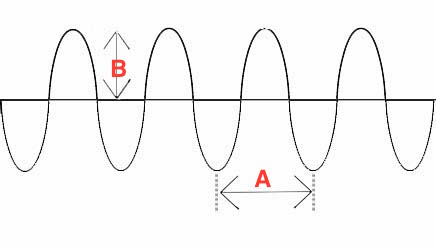
Oscillatory motion is also considered as
non periodic motion
periodic motion
circular motion
In simple harmonic motion (SHM)...
amplitude is dependent on period but not on frequency
period is independent of amplitude
frequency is independent of amplitude
period and frequency is independent of amplitude.


The graph shows the reducing amplitude of a body in SHM. This is known as
dumping
damping
wetting
doodling
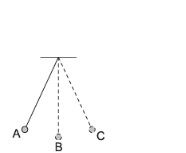
A pendulum oscillates as shown. At which of the following positions is the kinetic energy equal to the total energy?
A
B
C
Not enough information given.

