
 Worksheets
8G L3 Rusting
Total questions: 19
Worksheet time: 19mins
Which metals rusts?
Copper
manganese
iron
potassium
What environmental element assists rusting?
nitrogen
oxygen
carbon
hydrogen

A rusting bicycle
physical change
chemical change

What conditions are required for rusting?
dry cold conditions
dry hot conditions
hot damp conditions
What is the chemical name given to Rust ?
Iron dioxide
Iron oxide
Steel oxide
Carbon dioxide
What prevents Rusting
Painting , Oiling , Galvinising
Washing with water

In which tube will the nail go rusty?
The nail in tube A will go rusty.
The nail in tube B will go rusty.
The nail in tube C will go rusty.
What metal from the list below does not corrode ?
Iron
Steel
Gold
Magnesium
Choose an object that can rust.
Iron spoon
Straw
String
Aluminium pot
Which of the following groups consist of rusty objects?
Nail, key, board and marble
Nail, marble. needle and screw
Nail, key, needle and screw
Marble. rubber band and clothes
Two factors that cause rusting are the presence of ......... and ...........
oxygen
water
hydrogen
carbon dioxide
Which of the following can rust?


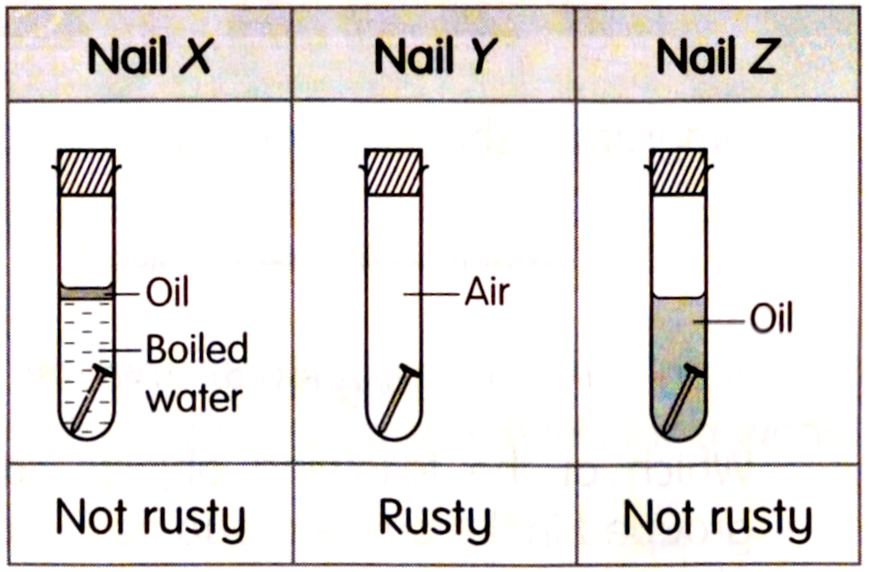
9.An experiment has been carried out by a group of pupils. The results of the
experiment are recorded in Table 2.
What can be concluded from this experiment?
Nail X did not rust because exposed to the air and water.
Nail Y rusts because exposed to the air and water
Nail X did not rust because exposed to the oil layer.
Nail Z did not rust because exposed to water.
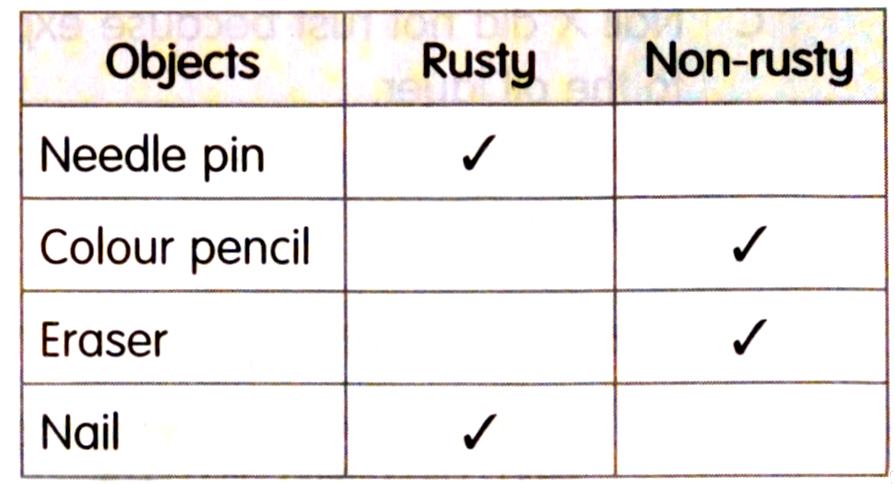
6.Table shows the results of an investigation
by a group of Year 5 Zircon pupils.
What is the conclusion that can be made
from the results of this investigation?
Rusty objects are made of iron.
Non-rusty objects are made of iron.
Rusty objects are brownish colour.
Rusty objects are made of plants.

