
 Worksheets
MCA semester review
Total questions: 222
Worksheet time: 9hrs 44mins
g(x) = 5x-7
Find f(x)+g(x).
g(x) = x-9
Find f(x)-g(x).
g(x)=2x-5
Find f(x)-g(x)
g(x) = x+3,
Find f(x) * g(x)
g(x)=-4x+1
Find f(x)*g(x)
g(x)=3x2-1
Find f(x)*g(x)
g(n)=3n
Find f(n)+g(n)
g(n)=-n-5
Find f(n)+g(n)
g(n)=2x-5
Find f(n)-g(n)
g(x) = x - 2
Find f(g(5))
g(x) = x - 2
Find f(g(0))
q(x) = 2x2
Find q(p(-2))
f(x) = 3x2 + 7x and g(x) = 2x2 - x - 1, find (f + g)(x).
Find the value of y when x = 2.
Find the value of y when x = 2.


y = 400/x
What is the form and vertex of quadratic equation y= 2x2+8x-2?
Vertex form, Vertex (2,-10)
Standard form, Vertex (-8,10)
Vertex form, Vertex (-2, 10)
Standard form, (-2,-10)
What is the form and vertex of quadratic equation y=(x-2)2+4
Vertex Form, (-2,4)
Standard Form, (2, 4)
Vertex Form, (2, 4)
Standard Form, (-2,-4)
What is the form and vertex of quadratic equation y= x2+6x+3?
Vertex Form, Vertex (6,3)
Standard Form, Vertex (-3, -6)
Vertex Form, Vertex (-3, -6)
Standard Form, Vertex (-3, 0)
Identify the Form and Vertex of quadratic equation 2x2+16x-7.
Vertex Form, Vertex (-4, -39)
Standard Form, Vertex (4, -23)
Vertex Form, Vertex (-8, -16)
Standard Form, Vertex (-4,-39)
Identify the Form and the Vertex for the quadratic equation y=6(x-6)2+5.
Vertex Form, Vertex (6, 5)
Standard Form, Vertex (6, -6)
Vertex Form, Vertex (-6, 5)
Standard Form, Vertex (-6,-5)
Identify the Form and Vertex for quadratic equation y=3(x+5)2+5.
Standard Format, Vertex (-5,5)
Vertex Form, Vertex (-5,5)
Standard Form, Vertex (3, 5)
Vertex Form, Vertex (5, -5)
Identify the Format and Vertex of quadratic equation y=4x2-16x+4.
Vertex Form, Vertex (-2, 12)
Standard Form, (2, -12)
Vertex Form, Vertex (4, 16)
Standard Form, Vertex (2, -20)
What is the form and vertex of quadratic equation y=2(x+4)2-2?
Vertex Form, Vertex (4, -2)
Standard Form, Vertex (-4, 2)
Vertex Form, Vertex (-4, -2)
Standard Form, Vertex (4, 2)

Identify the vertex.
(5, 2)
(5, -2)
(-5, 2)
(-5, -2)
Identify the vertex.
(5, 2)
(5, -2)
(-5, 2)
(-5, -2)
What is the y-intercept of the function.
y=3x2−7x+1,000,0000
3
c=−7
c=1,000,000
Does this graph open up or down?
y= −3x2 +7x + 1,000,000up
down
y=ax2+bx+c
What is the y-intercept? x2−3x+9
(9, 0)
(0, 9)
(1, 0)
(-3, 0)
(0, -3)
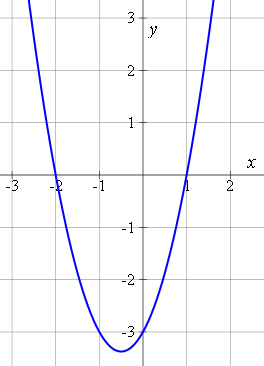
If a is negative in the quadratic function, which way does the parabola open?
up
down
left
right
f(x) = -2x2 + 4x - 6
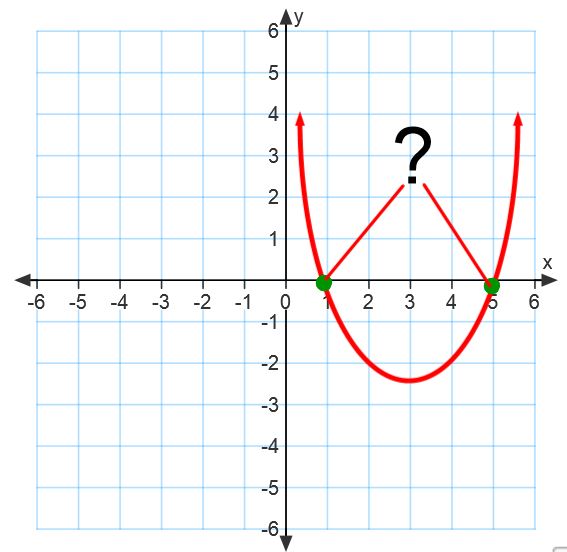
What are the x-intercepts of the parabola?
y = -3(x + 5)(x - 9)
(-5, 0) and (9, 0)
(5,0) and (-9, 0)
(5, 0) and (9, 0)
(-3, 0) and (5, 0)and (-9, 0)
What are the x-intercepts of the parabola?
y = ¼(x + 2)(x - 6)
(-2, 0) and (6, 0)
(2, 0) and (-6, 0)
(-2, 6)
(¼, 0) and (-2, 0) and (6, 0)

Write in exponential form.
71.9545...
e7
e1.945...
1.945...7
Write in exponential form.
71.9545...
e7
e1.945...
1.945...7

Write in exponential form.
e0
e1
10
01

Evaluate to the nearest thousandths.
2.900
2.910
2.913
2.914

Evaluate to the nearest thousandths.
-0.905
-0.904
-0.903
-0.900

Solve for x using the One-to-One property.
3
16
10
8

Solve for x using the One-to-One property.
0
1
14
49

Solve for x using the One-to-One property.
5
-5
±5
21

Solve for x using the One-to-One property.
2,3
-2,-3
-2,3
2,-3

Evaluate to the nearest thousandths.
-23.900
-23.960
-23.965
-23.966

Evaluate to the nearest thousandths.
0.600
0.690
0.693
0.694
3x-2 = 274x
2x(3xy2 + 4x3y)=

51/2x + 4 = 125
16x-3 = 8x-3
24x+1 = √2
Logarithmic form of 3x−4=7
Log7 3 =x−4
Log3 (x−4) =3
Log3 7 =x−4
Log 37=x−4
Logarithmic form of 10x+1=8
Log(x+1)8=10
Ln 10=8(x+1)
Log10(x+1)=8
Log 8 = x+1
Logarithmic form of ex+3=7
Ln 7x=3
Ln 7 = x+3
Ln (x+3)=7
Loge 7 =x+3
Logarithmic form of 35=x−1
Log 3x−1=5
Ln 35=x−1
Log3(x−1)=5
Log5 3 =x−1
Exponential form of Log3(5x)=74
(5x)e=74
374=5x
(74)5x=3
35x=74
Exponential form of Ln (4x+1)=8
e4x−1=8
e8=4x−1
104x−1=8
(4x+1)8=10
Exponential form of Log (2x)=9
109x=2
e9=2x
9x=2
109=2x
Exponential form of Log52(35)=5x
(52)35=5x
(5x)52=35
(35)52=5x
(52)5x=35
Logarithmic form of e3e=ex
Ln ex=3e
Ln (ex)3=e
Log (e)3e=ex
Lne(ex)=3e
The logarithmic form of e43=7x
Log (7x)=43
Log7xe=43
Ln (43)7=x
Ln (7x)=43
Evaluate Log52(3π) .
Round your answer to the nearest hundredth
-2.448
-2.49
-2.45
-2.44
Evaluate 1.5e2π
Round your answer to the nearest hundredth
(a)
Evaluate 5Log3.4(94)
Round your answer to the nearest hundredth
(a)
Evaluate 7Log (8.7)
Round your answer to the nearest hundredth
(a)
Evaluate 4.5e312+Ln 7.8
Round your answer to the nearest hundredth
(a)
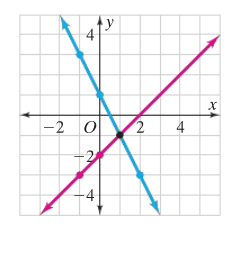
3x + 2y = 16
7x + y = 19
y = 2x + 1
y = 4x - 1
2x + 4y = 450
2x + 4y = 315
3x + 4y = 450
3x - y = 7
2x + y = 3


x+y=87
1.5x+0.5y=87
1.5x+0.5y=87
x+y=87


f(x) = 2x3 - 19x2 + 38x + 24 given that x-4 is a factor.
x3-12x2+47x-60=0 when 5 is a root.
f(x) = x3-3x2-x+3; 3
f(x) = x3-5x2-2x+24; -2
x2 -16x + 48
(x - 5) is one factor.
Find all zeroes given a factor of (x+3).
f(x) = 2x3 + 5x2 - 6x - 9
-1,-3,-3
-1,-3,3/2
3,3,3
-3,2/3,-1
Find all solutions, one factor has been given.
f(x) =x3-3x2-25x+75; (x-5)
5,-3,5
5,5,5
3,-5,5
1,1,1


What are the zeroes of this graph?
x = -2, x = 1, x = 4
x = -4, x = 0, x = 1, x = 2,
x = -2, x = -1, x = 0, x = 4
x = -4, x = -1, x = 2

What are the zeroes of this graph?
x = -3, x = 5
x = -3, x = 0, x = 5
x = -3, x = 2, x = 5
x = 0
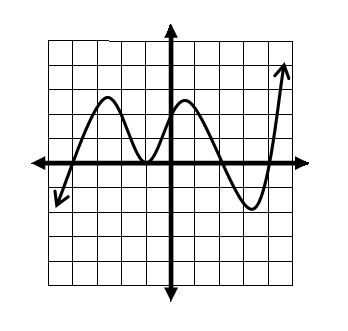


What is the equation of this graph in factored form?
(x - 1)(x + 3)2
(x - 1)2(x + 3)
(x + 1)2(x - 3)
(x + 1)(x - 3)2
What does the h term tell you?
left or right
left or right, opposite sign, axis of symmetry, x-value of the vertex.
axis of symmetry, x-value of the vertex
nothing.
What does the k term tell you?
up.
down.
up/down, y-value in the vertex
nothing
Describe the transformations below: (x+1)2−4
left: 1, up: 4
left: 1, down: 4
right: 1, up: 4
right: 4, up: 1
Describe the transformation below: −(x+3)2+6
reflect over the x-axis
reflect over the x-axis, left: 3, up: 6
stretch, left: 3, down: 6
left: 3, down: 6
Describe the transformation below: −3(x+4)2−1
stretch by 3, right: 4, down: 1
reflect over the x-axis, right: 4, down: 1
reflect over the x-axis, stretch by 3, left: 4, down: 1
stretch by 4, down: 3, left: 1
Identify the a, h, and k term from the following equation: (x+3)2+2
a=-1, h=3, k=2
a=3, h=3, k=3
a=1, h=-3, k=2
a=1, h=-3, k=-2
Identify the a, h, and k terms in the following equation: 2(x+4)2−1
a=2, h=-4, k=-1
a=-2, h=4, k=1
a=2, h=4, k=1
a=-2, h=-4, k=1
Identify the a, h, and k terms in the following equation: (x+4)2−3
a=-1, h=4, k=3
a=-1, h=-4, k=3
a=1, h=4, k=3
a=1, h=-4, k=-3
Determine the vertex from the following equation: −3(x−4)2+1
Vertex: (4,1)
Vertex: (-4, -1)
Vertex: (4, -1)
Vertex: (-4, 1)
Determine the vertex from the following equation: −(x+1)2−1
Vertex: (1,-1)
Vertex: (-1, 1)
Vertex: (-1, -1)
Vertex: (1, 1)
Determine the vertex from the following equation: 21(x+4)2+1
Vertex: (-4, 1)
Vertex: (-4, -1)
Vertex: (4, 1)
Vertex: (4, -1)
Determine the axis of symmetry from the following equation: −(x−2)2+4
A. O. S: 2
A. O. S: 4
A. O. S: -2
A. O. S: -1
Determine the axis of symmetry of the following equation: −2(x+2)2+3
A. O. S: 3
A. O. S: -2
A. O. S: 2
A. O. S: 1
Determine the axis of symmetry of the following equation: (x−3)2+5
A. O. S: 1
A. O. S: -3
A. O. S: 3
A. O. S: 5
Determine if the parabola has a maximum or minimum, if it opens up (+) then it will have a minimum, if it opens down (-) then it will have a maximum. 3(x+3)2−2
Maximum
Minimum
Determine if the following equation has a maximum or minimum: −(x−2)2+7
Maximum
Minimum
Determine if the following function will be narrow (stretch) or wider (shrink): 4(x−3)2+4
Narrow
Wider
Determine if the following is narrow or wider: 32(x+3)2+6
Narrow
Wider
What is a quadratic funtion in the form of f(x)=a(x−h)2+k called?
Factored Form
Standard Form
Vertex Form
f(x) = x2 to the graph of g(x) = (x + 4)2?
What are the transformations of the following polynomial from the parent function f(x)=x3 ?
g(x)=−2(x+1)3
Vertical compression by a factor of 2, and shifted right by 1 unit
Reflected over the x-axis, vertical stretch by a factor of 2, and shift left by 1 unit
Reflected over the y-axis by a factor of 2, and shifted up by 1 unit
Reflected over the x-axis, horizontal compression by a factor of 2, and shifted down by 1 unit
Describe the transformation of the graph y = - ½(x + 4)4- 1
Left 4 and Down 1
Reflected x-axis, Down 1, Left 4, Shrink by 1/2
Reflected x-axis, Down 1, Left 4, Stretch by 1/2
Reflected x-axis, Up 1, Right 4, Shrink by 1/2
List the transformations to the parent function in y = -(x + 4)8- 3
reflect over y, right 4, down 3
reflect over y, left 4 down 3
reflect over x, right 4, down 3
reflect over x, left 4, down 3

f(x) = x2 to the graph of g(x) = (x + 4)2?
a translation shifting f(x) 4 units up
a translation shifting f(x) 4 units down
a translation shifting f(x) 4 units to the left
a translation shifting f(x) 4 units to the right
Describe the transformations from f(x)=x2 to g(x)=−21(x−8) .
Reflection across the x-axis, Vertical compress by 1/2, left 8
Reflection across the x-axis, Vertical compress by 1/2, right 8
Vertical compress by 1/2, left 8
Vertical Stretch by 1/2, right 8
What are the transformations of the following polynomial from the parent function f(x)=x3 ?
g(x)=−2x3+4
Vertical compression by a factor of 2, and shifted left by 4 units
Reflected over the x-axis, vertical stretch by a factor of 2, and shifted up 4 units.
Reflected over the y-axis by a factor of 2, and shifted up by 4 units.
None

Is the power even or odd?
Odd
Even
right 4, down 3
left 4 down 3
reflect over x-axis, right 4, down 3
reflect over x axis, left 4, down 3
In the equation f(x)=5(x+3)2-10 what does the 5 do?
Vertical stretch by 5
Vertical compression by 5
Reflect
Move up 5

f(x) = x2
the red must be...

Which could be the resulting function?
g(x)=1.5(x−3)3+4
g(x)=0.5(x+2)3+8
g(x)= 2 (x - 3) + 4
g(x)=2(x+3)3+4

f(x) = x2 to the graph of g(x) = (x + 4)2?
Write the mathematical equation of the given statement: (no spacing, use / for fraction bar)
f is directly proportional to b and inversely proportional to e
(a)
Write the mathematical equation of the given statement: (no spacing, use / for fraction bar)
The time (t) needed to answer a set of problems is directly proportional to the number (N) of problems, and inversely proportional to the number of students (P) working on the solutions.
(a)
Solve for the constant of variation, k.
A varies directly as D and inversely as F. A=10.5, when D=2 and F=4
(a)
Solve for the constant of variation, k.
D is directly proportional to e2 and inversely proportional to f. D=12, when e=2 and f=7.
(a)
Given that z varies directly with y and inversely with x when x = 12, y=36 and z=15, find the value of z when x= -8 and y=24.
(a)
If a varies jointly as b and c, and inversely as d when a=140, b=5, c=4, and d=3, find a when b=10, c=8, and d=12.
(a)
The volume of gas varies directly as the temperature and inversely as the pressure. If the volume is 180 cu cm when the temperature is 270 K and the pressure is 15 lbs/sq cm, what is the volume when the temperature is 220 K and the pressure is 25 lbs/sq cm? (Write your final answer in this form: _ cu cm )
(a)
The resistance of a wire varies directly as its length and inversely as the square of the diameter. If a 15-ft long wire and a diameter of 1/2 inch has a resistance of 3 ohms, what is the resistance of a wire with a length of 25 ft and a diameter of 2 inches? (Write your final answer in fraction and of the form: _ ohms )
(a)

What type of variation is pictured?
Direct
Inverse
Joint
None

What type of variation is pictured?
Direct
Inverse
Joint
None
What type of variation is represented by this equation?
y=x5
Direct
Inverse
Joint
None
What type of variation is represented by this equation?
k=xy
Direct
Inverse
Joint
None
What type of variation is represented by this equation?
y=7xz
Direct
Inverse
Joint
None
What type of variation is represented by this scenario?
The amount of time that has passed versus how much water is left in a bath as it drains.
Direct
Inverse
Joint
None
What type of variation is represented by this scenario?
The more hours you work versus the money in your bank account.
Direct
Inverse
Joint
None
What type of variation is represented by this scenario?
The number of lottery tickets you buy versus your chances of winning the lottery.
Direct
Inverse
Joint
None
If Y varies directly with X, and Y = 24 when X = 6, find Y when X = 8.
144
32
18
10
If Y varies inversely with X, and Y = 60 when X = 3, find Y when X = 18.
180
20
57
10
If Y varies directly with the product of X and Z, and Y = 320 when X = 8 and Z = 20, what is the value of K?
2
80
40
16
The gallons of water in a pool varies directly with how many minutes the drain has been open. If there are 300 gallons in the pool after the drain has been open for 2 min, how long will it take for there to be 50 gallons remaining?
0.33333 minutes
6 minutes
20 minutes
12 minutes
When 40 people decide to ride the bus to the basketball game it costs $6.50 per person. When 20 people ride the bus to the game it costs $13.00 per person. Find K based on the scenario?
130
260
60
520
The special number, natural base "e", is a ________________ number.
rational
irrational
real
The approximate value of e is (a) . Use two decimal places.
What is the y-intercept for the graph of y=3ex ?
(1,0)
(0, 1)
(0, 3)
(3, 0)
Does the function y=4e−0.75x represent exponential growth or decay?
exponential growth because r>0
exponential growth because r<0
exponential decay because r>0
exponential decay because r<0
Which of the following graphs matches the function y=4e−0.5x ?


Which of the following graphs matches the function y=0.75ex ?
Evaluate the expressions using a calculator/desmos. Rounds to 2 decimal places.
e3⋅e5
(a)
Without graphing, tell if the function below is growth or decay.
y=4e3x−2
Growth
Decay
You deposit $5,000 in an account that earns 3% interest compounded continuously. Which equation could be used to determine how much money would be in the account after 8 years?
A=5000e3⋅8
A=5000e⋅3⋅8
A=5000e⋅0.03⋅8
A=5000e.03⋅8
Tritium is a chemical that decays over time. In a sample of tritium, the amount y(in millligrams) remaining after t years is given by the equation below. What is the initial amount of Tritium?
y=10e−0.0562t
(a)

Sodium-22 is a manmade radioactive isotope that decays over time. The graph shows the amount of Sodium-22 remaining over time. How much Sodium-22 was there initially?
(a)

Based on the Soduim-22 decay table, approximately how much is remaining after 10 years?
1
5
10
20
Solve ln e
10
1
5
3
Solve ln 1
10
4
0
1
Expand ln(4x)
ln4 + lnx
ln 4 - lnx
ln4x
ln 4 - x
Expand ln x5y2
5lnx + ln2y
lnx5y2
5lnx + 2lny
5lnx - 2lny
Using a calculator approximate ln 2.3 to the nearest thousandth
.8322
.8329
.8320
.9238
Using a calculator approximate ln 4.5 to the nearest thousandth
1.5041
1.5
1.5040
1.540
condense 4ln7 + 2lnx
ln74x
ln7x
ln7x2
ln74x2
Expand ln(uw2)
ln u + ln w
2ln uw
ln u + 2ln w
ln (uw) + 2
Expand ln(xyz)
ln x + ln y
ln x + yz
lnx + ln y + z
lnx + lny + lnz
Graph ln (x +1)


Solve the following equation. Round to the nearest ten-thousandth.
ex=30
0.2871
3.4012
2.1842
-9.3587
Solve the following equation. Round to the nearest ten-thousandth.
en=83
4.4188
2.3687
5.2387
8.2356
Solve the following equation. Round to the nearest ten-thousandth.
en=80
6.8975
0.2357
5.2689
4.3820
Solve the following equation. Round to the nearest ten-thousandth.
eb=68
5.8796
4.2195
2.5874
-0.2698
Solve the following equation. Round to the nearest ten-thousandth.
ln(8)+ln(x)=2
4.2598
1.8542
-3.2587
0.9236
Solve the following equation. Round to the nearest ten-thousandth.
ln(x)−ln(6)=2
44.3345
6.2587
24.3987
-67.2587
Solve the following equation. Round to the nearest ten-thousandth. (Challenge Question!)
ln(x)−ln(x−1)=5
4.2587
1.0068
2.6879
0.2879
Solve the following equation. Round to the nearest ten-thousandth.
ln(7)+ln(x)=1
2.3461
1.9687
-1.9563
0.3883
Solve the following equation. Round to the nearest ten-thousandth.
ln(x2+3)+ln(6)=ln(18)
6
1
0
2.3657
Solve the following equation. Round to the nearest ten-thousandth.
ln(2x2)+ln(2)=4
±0.2358
±2.0147
±3.6945
±5.2398
Solve the following equation. Round to the nearest ten-thousandth.
ln(5)+ln(x)=3
1.3969
2.3587
3.2587
4.0171
ln(4x2)−ln(9)=2
±2.3687
±1.0258
±0.2669
±4.0774
Solve the following equation. Round to the nearest ten-thousandth.
ln(x2+7)+ln(5)=ln(40)
±2
±1
0
±2.3587

