
Font size
 Worksheets
India, Japan, and China
Total questions: 35
Worksheet time: 20mins
What is nationalism?
loyalty based on location
feeling of belonging to a group based on education and wealth
sense of belonging based on a written document
loyalty to a group based on common history, culture, and/or religion
Indian nationalism in the 1800s began as a reaction to
British rule
religious conflict
communist revolutions
drought and famine
What was involved in Mohandas Gandhi’s plan of civil disobedience?
Violent demonstrations
Passing new laws in the Indian National Congress
People should refuse to obey a law they felt unfair, but do it without violence.
He felt it was best to go along with the British laws and do nothing.
Which two religious groups could not reach a solution as to how to rule an independent India.
Christians and Buddhists
Hindus and Christians
Christians and Muslims
Hindus and Muslims


What lead to the surrender of Japan and the end of World War II in the Pacific?
The US dropped atomic bombs on 2 Japanese cities.
Japan dropped atomic bombs on Pearl Harbor Naval Base.
Russia defeated the Japanese in North Korea.
The U.S. agreed to help rebuild Japan.
How did the United States and Japan become enemies?
Japan invaded Poland whom the United States had an alliance with
Japan attacked the US Naval Base at Pearl Harbor, Hawaii in 1941
The United States dropped 2 atomic bombs on Japan in 1941
Japan signed an alliance with Nazi Germany, which the United States was at war with
How could Japan be described immediately AFTER WWII
devastated with widespread destruction
economically powerful with a weak military
powerful with the newly gained territory
strong military strength with a weak economy

Who was General Douglas MacArthur
British military officer in charge of repairing relations between US and Japan
US Military Officer responsible for the surrender of the Nazis
US Military Officer in charge of rebuilding Japan after WWII
Russian Military Officer responsible for planning Japanese reparations to China
What form of government did General MacArthur establish for Japan AFTER WWII
Absolute Monarchy
Constitutional Monarchy (Parliamentary Democracy)
Presidential Democracy
Communist Oligarchy
What were Japanese Reparations?
paying for damages they caused during WWII
rebuilding their military after WWII
rebuilding their economy after WWII
being assisted by the US after WWII
The day that Japan surrendered is known as...
D-DAY
VJ Day
VE Day
USA Wins Day
What two cities did the US drop the atomic bombs on?
Tokyo and Okinawa
Seoul and Taiwan
Hiroshima and Nagasaki
Valdosta and Hahira
What was the emperor's role after WW2?
The emperor served as a symbolic figurehead.

Who established the People’s Republic of China in 1949?
Ho Chi Minh
Kim Jung-il
Mao Zedong
Mohandas Gandhi

Which program was designed to make farming more productive in China?
Great Leap Forward
Cultural Revolution
Red Guard
Long March

What was the period of time called when Mao Zedong tried to eliminate anyone that criticized the government?
Great Leap Forward
Cultural Revolution
Red Guard
Long March

Who primarily made up Mao’s Red Guard?
Soldiers
High school students
Government leaders
Peasants

Student protestors were attacked by Chinese government troops and many were killed or arrested here in 1989:
Red Square
World Trade Center
Tiananmen Square
38th Parallel
Nationalists
Communists
Fascists
Capitalists

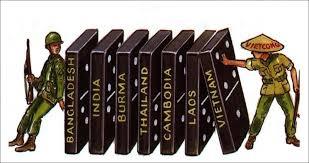


How did the USA get involved in the Korean War?
They dropped nuclear bombs to force North Korea into surrendering.
They saved South Korea after it was invaded, then chased the North Korean forces into China.
They helped to negotiate for South Korea to surrender.
They fought directly with the USSR in Korea.
Before World War II, Korea was ruled by
Russia
China
Japan
USA
Korea was divided along the __________ Parallel after World War II.
35th
36th
37th
38th
Korea was divided into how many parts?
1
2
3
4

