
Font size
 Worksheets
7.3 Pro Check
Total questions: 10
Worksheet time: 12mins
Three-toed tree sloths are mammals which live in the jungle trees of Central and South America. The majority of a sloth’s diet consists of leaves and buds from trees. As rainforest habitats are being destroyed, how will these organisms most likely be affected?
Most sloths will become carnivores.
The sloth population will likely decrease.
Some sloths will start to hibernate.
A cave-dwelling population will appear.

DDT is a pesticide that was once widely used to control agricultural pests and mosquitoes. However, this pesticide caused the eggshells of certain birds, including the brown pelican, to become fragile and thin. The adults would then accidentally crush the eggs while trying to incubate them.
What happened to the brown pelican populations as a result of DDT use by humans?
The populations increased much more slowly
The populations decreased as fewer eggs survived long enough to hatch.
The populations remained stable over time.
The populations increased as pelicans laid more eggs so that more offspring would survive.

Bromeliads are small plants that grow attached to the sides of large trees high above the ground in warm, damp and densely crowded tropical rainforests. Bromeliads do this because they are in competition with other plants for - (a)
If the grasshopper were to be removed completely from the food web, what organism would be most affected?

The peppered moth (Biston betularia) has two forms, a white-bodied and a dark-bodied form. The table provided shows the percentages of each type in a moth population over several yearstime. What environmental change would lead to these changes in the population of peppered moths?
The primary food sources for the peppered moths disappears.
The trees where peppered moths rest become lighter in color.
Predators of peppered moths develop a distaste for dark colored moths.
The climate in the area where the moths live suddenly becomes much cooler.

The inorganic, nonliving aspects of a given area
The specific biome an organism inhabits
The various habitats an organism may inhabit, including seasonal habitats
An organism's place in its community, including where it lives and what it eats
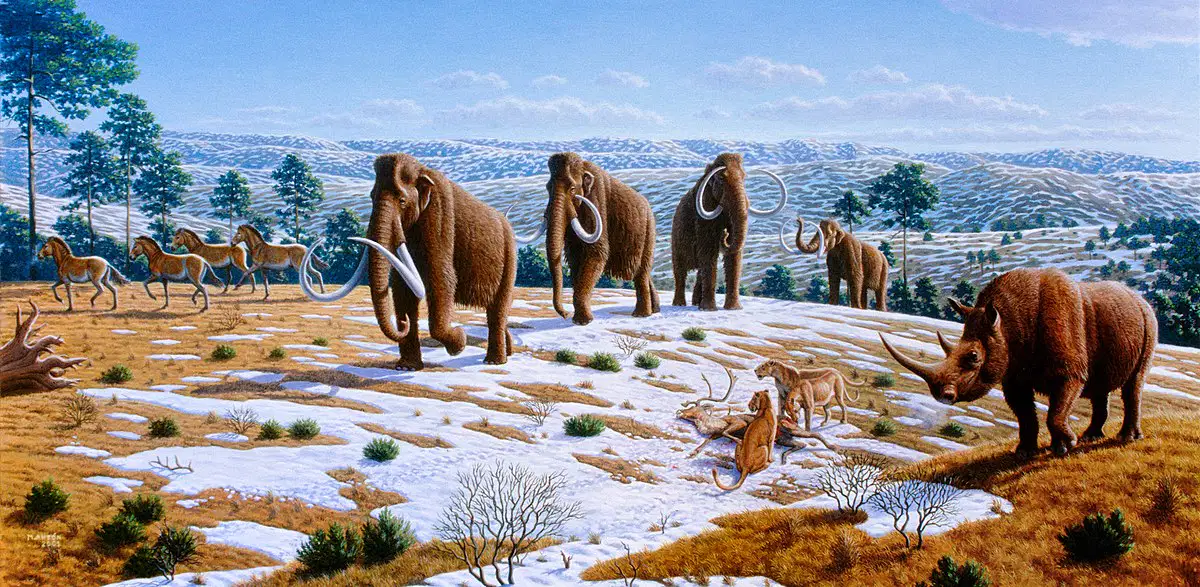
Which of the following are characteristics of Long-term environmental changes?
It can lead to changes in organisms or genetic variations that better suit the environment for survival.
Changes occur slowly overtime.
Changes occur quickly.
It can cause ecosystems to change.
Affects organisms over long periods of time or over several generations.
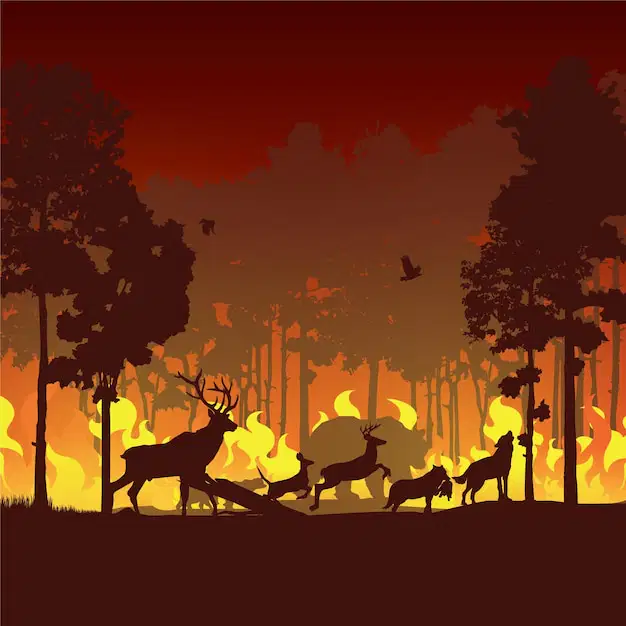
Which of the following are characteristics of Short-term environmental changes?
Organisms do not have the time to develop adaptations.
Changes occur slowly overtime.
Changes occur quickly.
Affects organisms immediately.
Forces the organisms to leave and it can lead to death and extinction.
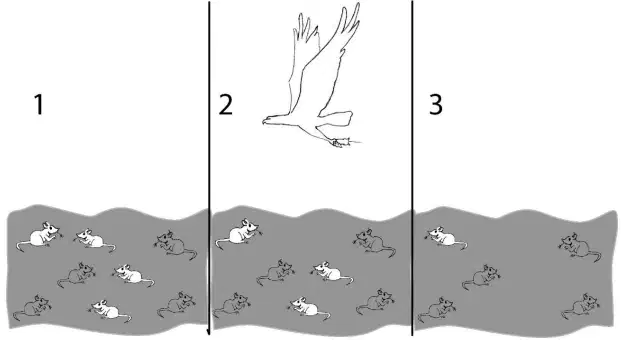
A population of mice lived in a desert with gray sand. These drawings show how the population changed from week 1 to week 3.
During week 1, the number of white mice is (a) the number of gray mice. During week 3, the number of white mice is (b) the number of gray mice. In the future, the number of white mice will be (c) the number of gray mice.

