
 Worksheets
March Study Guide Review
Total questions: 26
Worksheet time: 19mins
What were the main causes that started the Renaissance Period?
Lessening of feudalism
Fall of Constantinople
Rise of Education
All the above

What was the main philosophical idea of the renaissance period and was the pursuit of individualism?
Humanism
Romanticism
Individualism
Minimalism
In the renaissance period, which two musical worlds do we see a fusion of? (a) and Sacred

What was the main characteristic of Renaissance Music?
Text
Word Painting
Rhythm
Instrumentation
A Chanson was any lyric-driven (a) song that was usually polyphonic and (b) .
A madrigal is a musical piece for several voices that originated in (a) .
True or False:
Instrumental music was on the same level as vocal music in the renaissance music.
True
False
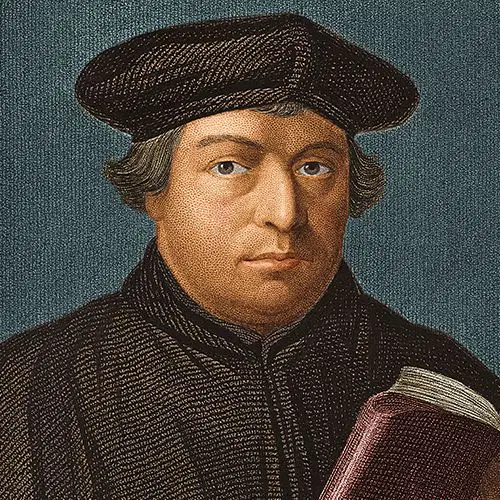
Who started the Protestant Reformation?
Martin Luther King
The Catholic Priests
Martin Luther
Lex Luthor
Which invention helped the Protestant Reformation as well as getting information faster?
The Gutenberg Press
The Codex
The printer
The Internet
Which of these terms best describe a simpler type of secular vocal music compared to a madrigal.
Madrigal
Renaissance (Fa-la) Ballets
Sonata
Concerto
What does the term “Baroque” mean?
Anything art related from the 17th and 18th Century
Anything from the Ancient Greek Period
Anything from the Renaissance Period
Anything from the Medieval Period

Descartes laid the foundation for an analysis and classification of human (a) . (lowercase)
What is a type of trend that appeared in the Baroque period of music?
Definite and regular rhythms in meter
Bar lines
Instrumental music featuring the violin family
All the above

What was the general style of the Baroque period?
Dark
Lavish
Minimalist
Not much detail
True or False:
"Stile Antico" (Ancient Style) was generally used in church.
True
False
True or False:
"Stile Moderno" (Modern Style) had more freedom in dissonance, continuo, recitative
True
False

Who was the composer that was a priest and died poor?
Johann Sebastian Bach
Ludwig van Beethoven
Antonio Vivaldi
Claudio Monteverdi
What type of ensemble was popular during the Baroque period?
Trio Sonata
Quartet Concerto
Duo Sonata
Concerto Quintet
Which of these terms best describe type of musical composition, usually for a solo instrument or a small instrumental ensemble
Sonata
Concerto Grosso
Solo Concerto
Rhapsody
Which of these concertos involve a small ensemble with an orchestra? (a)
The Baroque musical suite consisted of a collection of?
Songs
Hymns
Dances
Plays

Which ancient civilization started the foundation of opera?
Ancient Greeks
Ancient Egyptians
Ancient Italians
Ancient Germans

Claudio Monteverdi contributed what type of music to western music?
Opera
Sonatas
Concertos
Madrigals
Which of these terms best describe where the first section is repeated at the end of the song.
Translates to "from the top"
Da Capo
Acapella
Ternary
Binary
True or False:
An oratorio is a large-scale musical work for orchestra and voices, typically a narrative on a religious theme, performed without the use of costumes, scenery, or action.
(a)
Which of these terms best describe a humorous or comedic opera?
Comic Opera
Verismo
Opera Seria
Grand Opera

