
 Worksheets
Review Quiz 3 MEE
Total questions: 20
Worksheet time: 20mins
Name
Class
Date
1.
What are the 3 things ALL PLANTS NEED.
a)
Soil, Water, and Oxygen
b)
Water, Love, and Sun light
c)
Sun light, Water, and Carbon Dioxide
d)
Water, Carbon Dioxide, and Glucose
2.
Vocab question!!
What is carbon dioxide?
a)
a molecule that organisms can use to release the energy they need to survive
b)
all the living and nonliving things interacting in a particular area
c)
the process by which plants and other producers use energy from sunlight to change carbon dioxide and water into oxygen and glucose (an energy storage molecule)
d)
a molecule made of carbon and oxygen atoms
3.
Chapter 1 Question
Why didn’t the plants and animals in the biodome have enough energy storage molecules?
a)
Claim 1: A change in the amount of carbon dioxide led to a decrease in the amount of energy storage molecules made by producers in the biodome.
b)
Claim 2: A change in the amount of sunlight led to a decrease in the amount of energy storage molecules made by producers in the biodome
4.
Check all that apply
What organisms here can do Photosynthesis?
a)
Tree
b)
Flower
c)
Cat
d)
Human
5.
Vocab question!!
What is photosynthesis?
a)
a type of atom (a tiny piece) that makes up molecules such as carbon dioxide and energy storage molecules
b)
the process by which plants and other producers use energy from sunlight to change carbon dioxide and water into oxygen and glucose (an energy storage molecule)
c)
an organism that needs to eat in order to get energy storage molecules (such as starch and fat)
d)
a molecule that organisms can use to release the energy they need to survive
6.
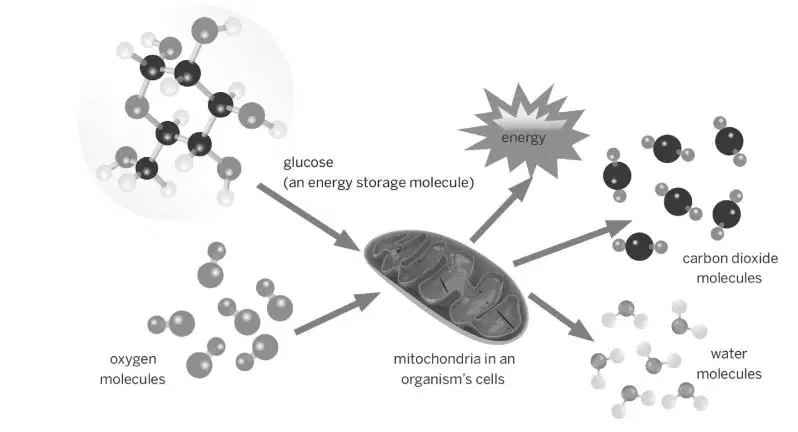
What's this called?
a)
Photo Respiration
b)
Photosynthesis
c)
Cellularsynthesis
d)
Cellular Respiration
7.
Vocab question!!
What is cellular respiration?
a)
a type of atom (a tiny piece) that makes up molecules such as carbon dioxide and energy storage molecules
b)
the process by which plants and other producers use energy from sunlight to change carbon dioxide and water into oxygen and glucose (an energy storage molecule)
c)
an organism that needs to eat in order to get energy storage molecules (such as starch and fat)
d)
the chemical reaction between oxygen and glucose that release energy into cells
8.
Giant kelp are plantlike organisms that grow in clear ocean water. Over the last few hours some kelp has been taking in carbon from the water around it. Is the kelp in sunlight? What has happened to the number of energy storage molecules in the kelp?
The kelp . . .
a)
is in sunlight, and the number of energy storage molecules in the kelp has decreased.
b)
is in sunlight, and the number of energy storage molecules in the kelp has increased.
c)
is not in sunlight, and the number of energy storage molecules in the kelp has decreased.
d)
is not in sunlight, and the number of energy storage molecules in the kelp has increased.
9.
All living organisms do cellular respiration.
a)
True
b)
Flase
10.
Which organelle allows cellular respiration to take place?
a)
Cytoplasm
b)
Mitochondria
c)
Chloroplasts
d)
Lysosome
11.
Scientists are studying photosynthesis in a forest ecosystem that has plants, animals, and decomposers (which consume dead things). Which group or groups of organisms in the forest carry out photosynthesis?
a)
all organisms in the forest
b)
animals and decomposers
c)
plants and decomposers
d)
plants
12.
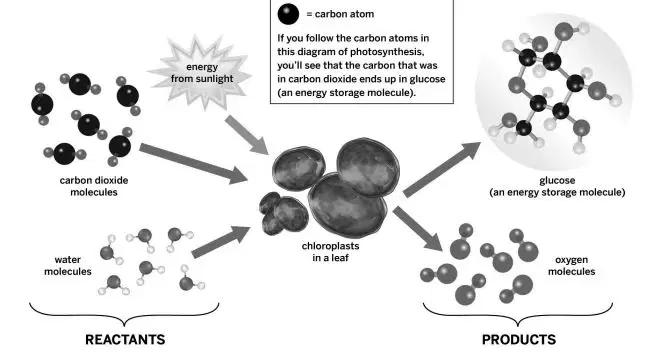
What's this called?
a)
Photo Respiration
b)
Photosynthesis
c)
Cellularsynthesis
d)
Cellular Respiration
13.
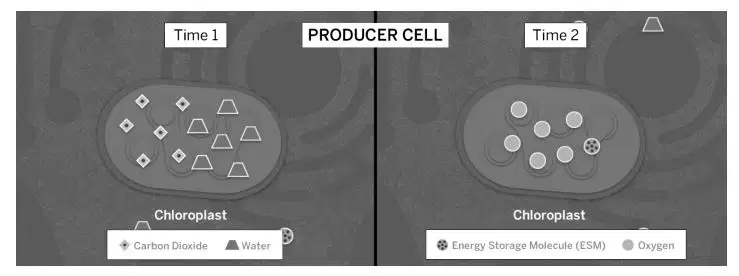
These images from the Sim show the same cell of a producer, but at two different times. What happened?
a)
It copied itself
b)
It became a chloroplast
c)
It went through photosynzthesis
d)
It went from biotic mater to abiotic matter
14.
Which organelle allows photosynthesis to take place?
a)
Cytoplasm
b)
Mitochondria
c)
Chloroplasts
d)
Lysosome
15.
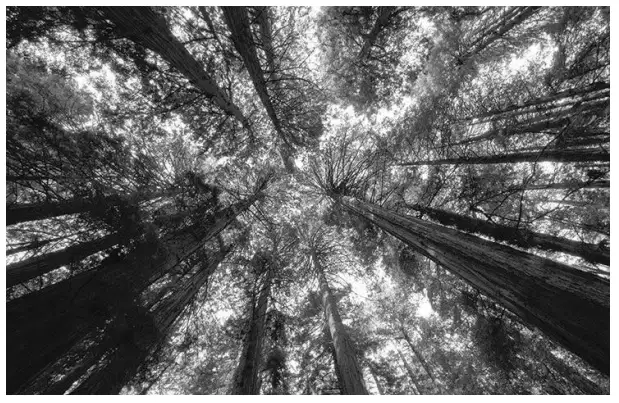
The sun has been up for several hours, and it has been shining on these trees. What can the trees do because they are in sunlight? What does this mean for the number of energy storage molecules in the trees?
The trees can . . .
a)
give off carbon to the air. Giving off carbon allows them to make energy storage molecules.
b)
give off carbon to the air. Giving off carbon uses up energy storage molecules.
c)
take in carbon from the air. The carbon is used to make energy storage molecules.
d)
take in carbon from the air. The carbon is used to break down energy storage molecules.
16.
Check all that apply
What organisms do cellular respiration?
a)
Producers
b)
Consumers
c)
Decomposers
d)
Dead matter
17.
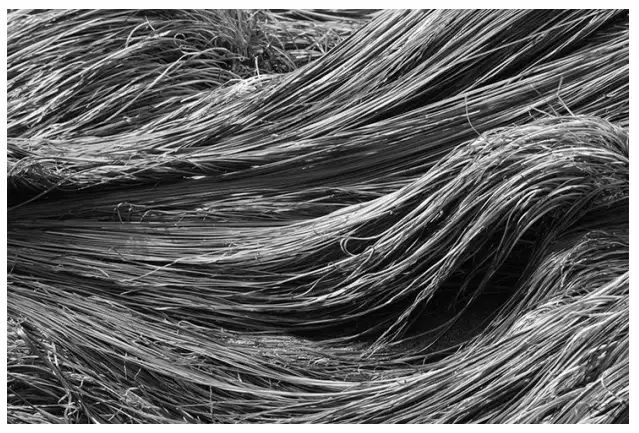
This sea grass has had the sun shining on it for most of the day. What can the sea grass do because it is in sunlight? What does this mean for the number of energy storage molecules in the seagrass?
a)
take in carbon from the air. The carbon is used to break down energy storage molecules.
b)
take in carbon from the air. The carbon is used to make energy storage molecules.
c)
give off carbon to the air. Giving off carbon allows the sea grass to make energy storage molecules.
d)
give off carbon to the air. Giving off carbon uses up energy storage molecules.
18.
Scientists are studying photosynthesis in a desert ecosystem that has plants, animals, and decomposers (which consume dead things). Which group or groups of organisms in the desert carry out photosynthesis?
a)
plants
b)
plants and decomposers
c)
all organisms in the desert
d)
animals and decomposers
19.
An ivy plant has been taking in carbon from the air for several hours. Is the ivy in sunlight? What has happened to the number of energy storage molecules in the ivy? The ivy . . .
a)
is in sunlight. The number of energy storage molecules in the ivy has decreased.
b)
is in sunlight. The number of energy storage molecules in the ivy has increased.
c)
is not in sunlight. The number of energy storage molecules in the ivy has decreased.
d)
is not in sunlight. The number of energy storage molecules in the ivy has increased.
20.
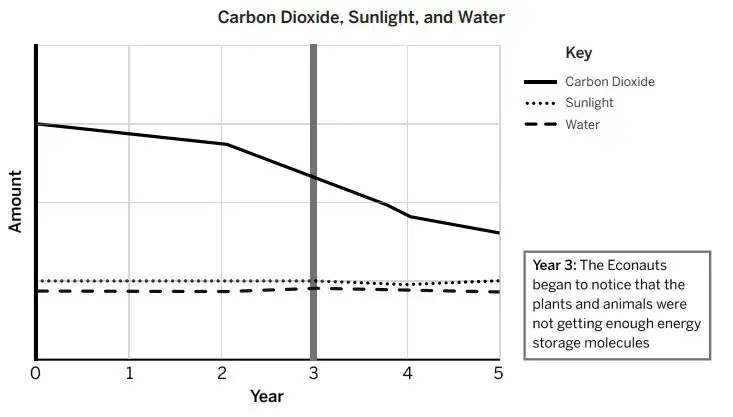
What change happened in the biodome according to this data?
a)
Sunlight increased
b)
Water increased
c)
Carbon Dioxide decreased
d)
Carbon Dioxide incressed
100 %

