
 Worksheets
Quiz 2-2023
Total questions: 20
Worksheet time: 15mins
Which of the following does not kill endospores?
Autoclaving
Incineration
Pasteurization
Hot-air sterilization
All of the answers
Which of these disinfectants does not act by disrupting the plasma membrane?
Quats
Phenol
Halogens
Phenolics
Biguanides
A classmate is trying to determine how a disinfectant might kill cells.
You observed that when he spilled the disinfectant in your reduced litmus milk, the litmus turned blue again. What do you suggest to your classmate?
He takes his work away from yours.
The disinfectant might denature proteins.
The disinfectant might oxidize molecules.
The disinfectant might inhibit protein synthesis.
The disinfectant might inhibit cell wall synthesis.
Bergey’s Manual of Systematic Bacteriology differs from Bergey’s Manual of Determinative Bacteriology in the way that the former:
Groups bacteria into species.
Groups bacteria according to phylogenetic relationships.
Groups bacteria according to pathogenic properties.
Groups bacteria into 19 species.
All of the answers
Which of the following is used to classify organisms into the Kingdom Fungi?
Unicellular; lacking cell wall; eukaryotic
Unicellular; possess cell wall; prokaryotic
Absorptive; possess cell wall; eukaryotic
Ability to photosynthesize; possess a cell wall
Ingestive; lacking cell wall; multicellular; prokaryotic
What would a microbiologist expect to find with Gram-stained bacteria that live in the human intestine?
Gram-positive cocci.
Gram-negative rods.
Gram-negative, nitrogen-fixing bacteria.
Gram-positive, endospore-forming rods.
All of the answers
Which of the following is an intracellular parasite?
Bacillus
Plasmodium
Streptococcus
Mycobacterium
Staphylococcus
Why Legionella was classified with the pseudomonads when it was first discovered.
It is a pathogen.
It is found in water.
It is not accessible to culture.
It is an aerobic gram-negative rod.
None of the answers
Which of the following statements about yeasts are true?
i. Yeasts are fungi.
ii. All yeasts are dimorphic.
iii. All yeasts are pathogenic.
iv. Yeasts can form pseudohyphae.
v. Yeasts are facultatively anaerobic.
vi. Yeasts reproduce asexually by budding.
i, ii, and vi
ii, iii, and iv
i, ii, iii, and vi
ii, iii, iv, and v
iii, iv, v and vi
The ability of a virus to infect an organism is regulated by
The type of cells.
The host species.
The availability of an attachment site.
Cell factors necessary for viral replication.
All of the answers
Which of the following statements is false?
Viruses contain DNA or RNA.
Viruses multiply inside living cells.
A protein coat surrounds the nucleic acid of a virus.
Viruses cause the synthesis of specialized infectious elements.
Viruses multiply inside living cells using viral mRNA, tRNA, and ribosomes.
A viral species is not defined based on the disease symptoms it causes.
Which of the following diseases is the best example?
Polio.
Rabies.
Measles
Hepatitis.
Chickenpox and shingles.
Unlike purple and green phototrophic bacteria, Cyanobacteria:
Do not require light.
Have a membrane-enclosed nucleus.
Use hydrogen sulfide as an electron donor.
Produce oxygen during photosynthesis.
All of the answers
In general, how are helminth infections transmitted?
Arthropod vectors
Ingestion of eggs
Inhalation of spores
Healthcare-acquired infections
How are helminth infections diagnosed?
Serum samples
Presence of eggs in feces
Biochemical tests
Swab tests
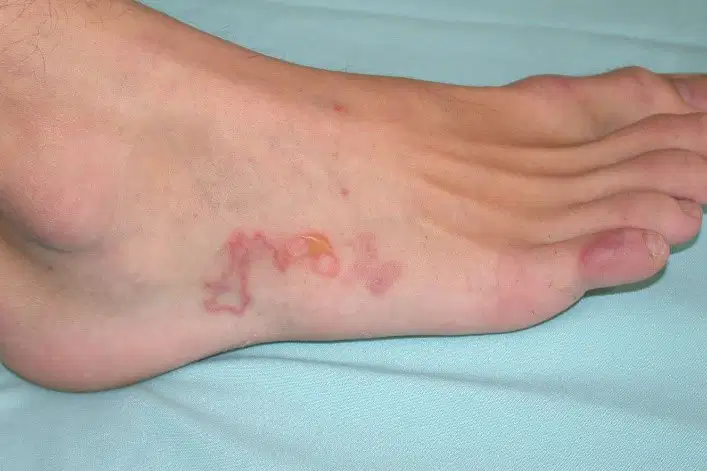
This helminth's larvae penetrate the feet' skin, then travel from the blood to the lungs, sputum, and intestines
Hookworms
Pinworms
Tapeworm
Whipworm
What is the correct order of the lifecycle of a helminth?
Egg -> larvae -> adult
Egg -> proglottid -> adult
Egg -> spore -> larvae -> adult
Proegg -> egg -> proglottid -> larvae -> adult
This helminth infection is associated with children and causes them to have itchy butts, which contributes to the spreading of the helminth eggs.
Hookworms
Pinworms
Flukes
Tapeworms
The Flagellate protozoa parasites enter the body through food/water that was infected by people/animals' feces which is contaminated and attached to the lining of the host's intestines
Chitin
Fungi
Hyphae
Giardiasis
Humans are the intermediate host for the tapeworm Echinococcus spp., and dogs are the definitive host.
Which stage of the parasite could be found in the definitive host?
Adult
Larva
Cysts
Scolex

