
 Worksheets
Grade 5 Science Review-Matter/Force/Motion/Sun-Earth-Moon
Total questions: 148
Worksheet time: 4hrs 39mins
Mercury,Saturn
Jupiter, Uranus, Neptune
Jupiter, Neptune,
Mercury,Saturn,
Uranus
Mars,Jupiter,
Saturn,Uranus
Neptune



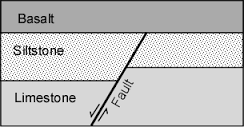
What are the relative ages of the rock layers in order from oldest to youngest?
Limestone, Basalt, Siltstone
Siltstone, Basalt, Limestone
Limestone, Basalt, Siltstone
Limestone, Siltstone, Basalt

Coal is important for Virginia because it —
it can be used for energy
it can be divided into 4 parts
is found in many areas of the country
is formed from plant and animal remains

Which ocean floor feature is labeled "F"?
Continental Shelf
Abyssal Plain
Ocean Trench
Continental Slope

A shallow area of sediment near the shore...
Continental Shelf
Ocean Trench
Continental Slope
Abyssal Plain
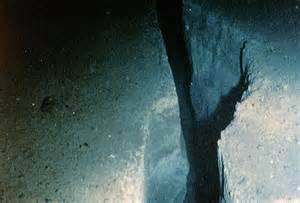
Which of these are the deepest parts of the oceans?
Continental Shelf
Abyssal Plain
Ocean Trench
Continental Rise

"A" on the diagram labels the...
Continental Shelf
Abyssal Plain
Continental Slope
Ocean Trench
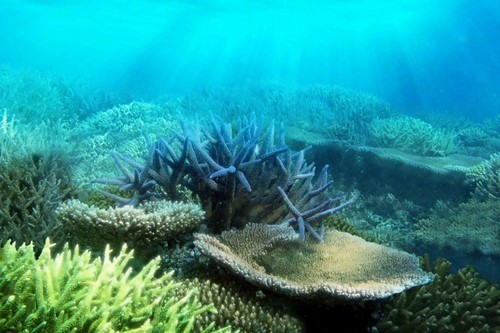
As the depth of the ocean water increases, the temperature...
increases (warmer)
decreases (colder)
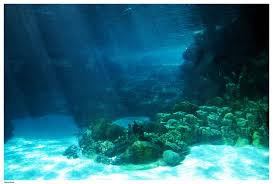
Which would you find covering the ocean floor?
Mud
Ice
Rocks
Sand
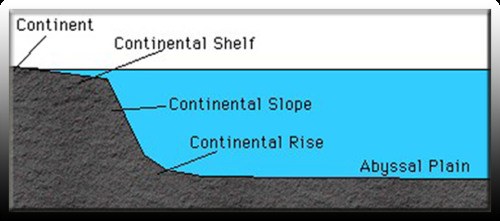
Which ocean floor feature is the steep cliff-like drop beyond the continental shelf?
Continental Shelf
Continental Slope
Abyssal Plain
Ocean Trench

Which part of the ocean floor is labeled "D"?
Mid-Ocean Ridge
Continental Slope
Blue-Ridge Mountains
Abyssal Plain

"C" on the Ocean Floor diagram represents the...
Continental Slope
Abyssal Plain
Continental Rise
Ocean Trench
A gently sloping area that connects the steep walls of the continental slope to the bottom of the ocean floor is called the... (sediments/deposition)
Abyssal Plain
Ocean Trench
Continental Rise
Mid-Ocean Ridges


Loudness decreases as we move __________ an object
toward
away from
Big, strong vibrations produce _______________ sounds.
loud
soft
high pitched
high frequency
All materials reflect the same amount of light.
True
False
Objects that vibrate quickly make sounds with ___________.
a high volume
no sound
a high pitch
a low volume
A sound wave that bounces back to you is ___________.
a whisper
never loud
an echo
always high pitched
A ticking clock would most likely make a __________ vibration.
large
small
If you drop something, what causes the sound?
The floor is hard.
The object is empty.
Big vibrations from the object landing.
The object is full.
Loud, low-pitched sounds are made by ___________ vibrations.
weak and fast
weak and slow
strong and slow
strong and fast
________________ is how loud a sound is.
Volume
Pitch
Frequency
Energy
Objects that vibrate slowly make a sound with a __________ pitch.
quiet
high
low
loud
Which is an example of light energy?
sun
candle
electricity
all of the above
Light is made up of only one color.
True
False
Light energy can be seen.
True
False
Light happens when matter vibrates.
True
False
Sound travels through solids, but not through liquids and gases.
True
False
How high or low a sound is
reflect
refract
absorb
pitch
To bend light
refract
reflect
absorb
vibration
Which state of matter are particles moving the fastest?
solid
liquid
gas
Any object that has a definite size and shape?
solid
liquid
gas
Rust is an example of?
physical change
chemical change
Ripping paper is an example of?
physical change
chemical change
Which of these is a physical change?
baking bread
rust
cutting wood
spoiled milk
Burning wood is an example of?
physical change
chemical change
What process changes a gas to a liquid?
evaporation
condensation
melting
freezing
What will happen when water is heated?
evaporation
condensation
melting
freezing
What will happen when water is cooled to below 0 degrees celsius?
evaporation
condensation
melting
freezing
Which state of matter has molecules that are farthest apart?
solid
liquid
gas
How can you speed up a chemical change?
stir it
separate it
heat it
add ice
What causes a puddle to disappear?
evaporation
condensation
melting
freezing
How are solids and liquids alike?
definite shape
definite volume
definite temperature
What is all matter made of?
atoms
volume
mass
matter
You mix baking soda and vinegar. Bubbles form, and the mixture now weighs less. Why did that happen?
It evaporated.
It melted.
The weight changes in a chemical reaction.
A gas formed and escaped.
Why can't you see salt in water?
The salt melts in the water.
The salt is soluble in water, so it dissolves.
The water is not soluble in water, so it dissolves.
The salt no longer exists.
What's true about the particles that make up matter?
They're too small to see with only our eyes.
They're always locked in place.
They're only in solids.
They're always the same size.
This is a type of mixture where one substance dissolves into another
Solution
Miscibility
Compound
Solubility

This is an example of a
Solution
Mixture

This is an example of a
Solution
Mixture
Sugar dissolved in water is an example of a
Solution
Mixture
A combination of 2 or more substances that cannot be easily separated is called-
a mixture
a solution
a solute
a solvent
Which type of storm causes the most flooding in areas located near an ocean coastline?
tornado
hurricane
blizzard
freezing rain
Which of these best describes a tornado?
A winter storm that produces frozen precipitation
A rotating funnel-shaped cloud with strong winds and thunderstorms
A severe weather condition with low temperatures and blowing snow
A storm that forms over warm ocean water and has extremely strong winds
Which weather term best describes these words?
rain, snow, sleet
humidity
atmosphere
precipitation
barometric pressure
Certain storms form over water near the equator, usually between the months of June and November. Warm, moist air rises quickly over the ocean, causing a strong, whirling storm with high winds and heavy rains. This type of storm is known as a —
tornado
hurricane
blizzard
sandstorm
Which factor is usually recorded when gathering weather data?
number of gases in the air
temperature of the air
type of gases in the air
amount of air in an area
This is the measure of the amount of thermal (heat) energy in the atmosphere.
temperature
wind speed
wind direction
thermometer
This is the weight of air and is determined by several factors including the temperature of the air.
air pressure
front
rain
blizzard
This is the boundary between air masses of different temperature and humidity.
cold
warm
humidity
front
This is associated with warm, wet weather.
high pressure
medium pressure
low pressure
barometer
This is associated with clear, cool weather.
medium pressure
high pressure
low pressure
barometer
This is when a cold air mass pushes out a warm air mass. It often brings thunderstorms along with cooler weather.
stationary front
occluded front
warm front
cold front
This is when warm air pushes out a cold air mass. It often brings a period of rain and fog along with warmer weather.
stationary front
occluded front
warm front
cold front

What front is associated with this symbol?
stationary front
occluded front
cold front
warm front

Which front is associated with this symbol?
stationary front
occluded front
warm front
cold front
A rock is an example of a....
Solid
Liquid
Gas
A glass of water is an example of a....
Solid
Liquid
Gas
A nail is an example of a....
Solid
Liquid
Gas
What forms of energy are related to motion? (SCI.5.1.4)
potential and kinetic
chemical and electrical
heat and light
kinetic and electrical

Based upon the data in the graph, predict how far the car will travel after 13 minutes. (SCI.5.0.8)
3.5 km
4.0 km
5.0 km
14 km

What form of energy is shown as the roller coaster moves down the track? (SCI.5.1.4)
chemical energy
heat energy
potential energy
kinetic energy

What force slowed the golf ball as it rolled downhill? (SCI.5.1.3)
gravity
friction
the force from the golf ball
the force from the golfer
A biker travels at a speed of 12 kilometers per hour. How far does the biker travel in 3 hours? (SCI.5.0.6)
4 kilometers
15 kilometers
18 kilometers
36 kilometers
Which object requires the greatest amount of force to change its motion? (SCI.5.1.2)
bicycle
school bus
rowboat
basketball

Which pair of tools would have been the most useful to the students conducting the experiment? (SCI.5.0.3)
compass and ruler
balance and ruler
meter stick and ruler
meter stick and stopwatch

A student rubs sandpaper against a block of wood. As he rubs, he feels the block become warmer. What force causes the block of wood to get warm? (SCI.5.1.3)
magnetism
conduction
insulation
friction

What is the independent (manipulated) variable in the experiment? (SCI.5.0.5)
the baseball
the different surfaces of the hill
the boy
the time (seconds) it takes the ball to reach the bottom
What is the dependent (responding) variable in the experiment? (SCI.5.0.5)
the baseball
the different surfaces of the hill
the boy
the time (seconds) it takes the ball to reach the bottom
What is the constant in this experiment? (SCI.5.0.5)
the baseball
the different surfaces of the hill
the boy
the time (seconds) it takes the ball to reach the bottom
Which is the BEST conclusion for this experiment? (SCI.5.0.8)
Grass is softer than sand or concrete.
Concrete is stronger than grass or sand.
A ball rolls faster on concrete than on grass or sand.
Gravity and friction work together to move a ball.
What is potential energy? (SCI.5.1.4)
the energy an object has due to movement
the energy an object has when it is heated
stored energy an object has due to its position
released energy from an object

What words would describe this car's motion? (SCI.5.1.1)
mass and volume
direction and speed
speed and color
volume and direction

Which of these objects has kinetic energy?
A
B
C
D
A student rides a bicycle on a flat road and then stops pedaling but does not apply the brakes. The bicycle stops because of __________. (SCI.5.1.3)
friction
attraction
magnetism
balance

Using the diagram, useful friction is created by the _______. (SCI.5.1.3)
spokes
seat
brakes
curved handlebars
Click on all of the ELEMENTS.
Water
Hydrogen
Oxygen
Carbon Dioxide
Carbon
Click on all of the COMPOUNDS.
Water
Helium
Hydrogen
Oxygen
Salt
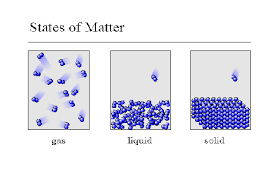
Define a liquid.
No definite shape, No definite volume
Definite shape, definite volume
Found in stars
Definite volume, No definite shape
Define a Solid
No definite shape, No definite volume
Definite shape, definite volume
Found in stars
Definite volume, No definite shape
Define a Gas
No definite shape, No definite volume
Definite shape, definite volume
Found in stars
Definite volume, No definite shape


_________ is a form of energy that travels through the solids, liquids, and gases by vibrating atoms and molecules.
sound
volume
energy
wave

