wayground logo

Free Printable Worksheets

Font size

S
M
L
XL
Worksheets

Question Bank for Grade 5 Science

Total questions: 131

Worksheet time: 2hrs 51mins

Name
Class
Date
1.

Which of the following is a way to reduce energy?

a)

Turn ON all the lights

b)

Turn OFF all the lights

c)

Turn ON the heater to high heat

2.

Which of the following is NOT a way to reduce water?

a)

Take shorter showers

b)

Water your grass everyday day and night

c)

Turn off the water when you brush your teeth

3.

Which of the following is a way you can conserve energy?

a)

Ride your bike

b)

Take the bus

c)

Use the car to go to school everyday

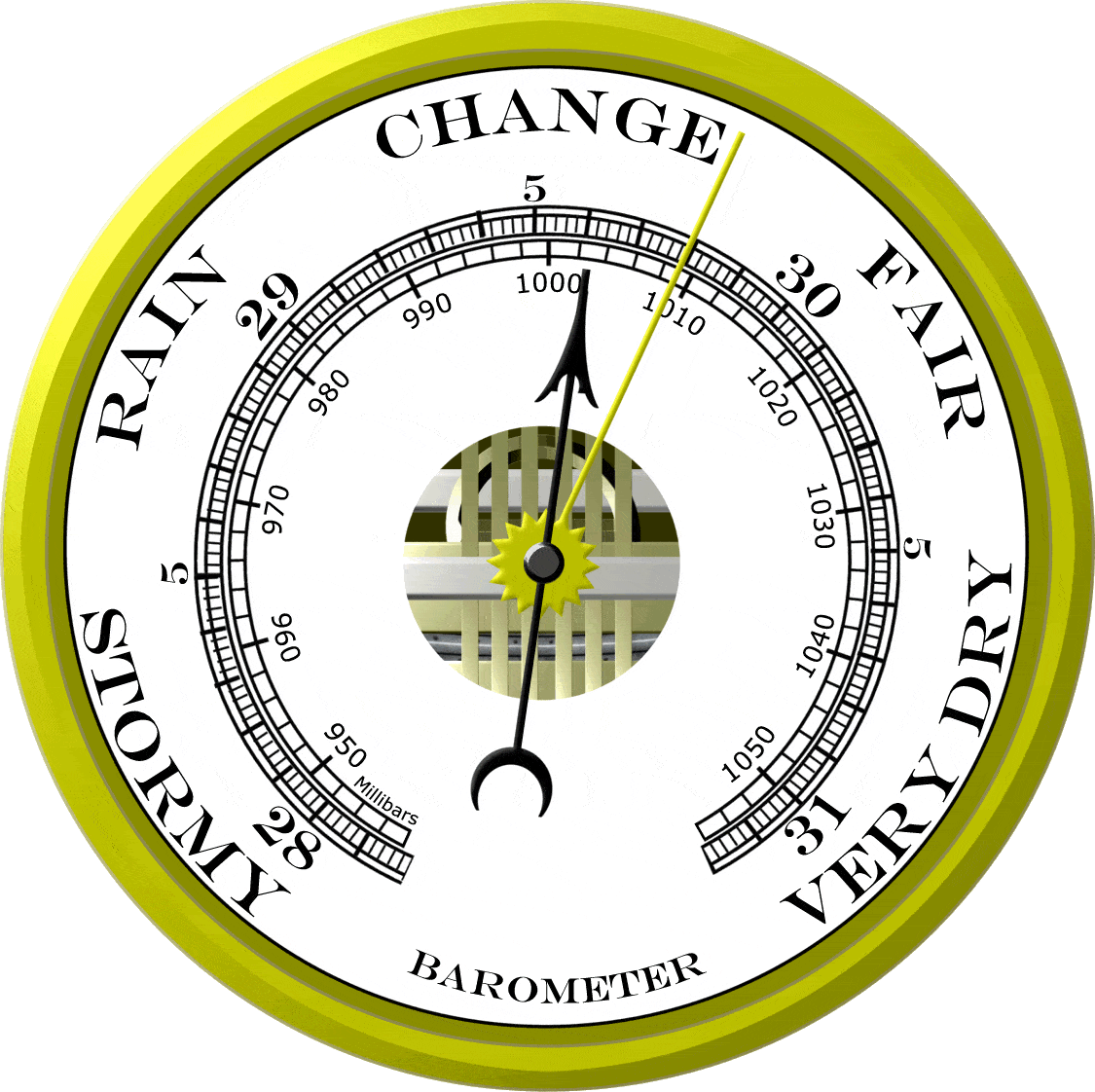
4.

True or false. When you conserve you use less resources to save energy.

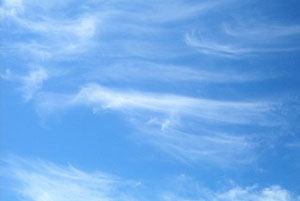
a)

True

b)

False

5.

Which of the following is NOT a method for conserving natural resources?

a)

Leaving the water on while brushing your teeth

b)

Recycling paper

c)

Turning off the light when not in use

d)

packing lunch in a reusable container

6.

True of false. When you reduce, reuse, and recycle you are conserving natural resources?

a)

True

b)

False

7.

What are some things you can do to conserve energy and help protect our environment?

a)

leave water on, leave TV on, run dishwasher with 1 plate

b)

run the washing machine with 1 shirt

c)

leave the refrigerator door open

d)

turn off water, turn off lights, turn off TV

8.

What might happen if we continue burning fossil fuels at the rate we do today? Choose the best answer.

a)

The cost of fossil fuels may drop

b)

Fewer and fewer oil wells and coal mines may be constructed

c)

The earth's climate may change rapidly

d)

Automobiles may become less fuel efficient

9.

Which of the following processes consumes the least energy?

a)

Turning a tree into paper products

b)

Extracting oil from the ground and turning it into a plastic jug

c)

Recycling an old glass bottle so it can be used again

d)

Mining aluminum and shaping it into a soda can

10.

How is an LED lightbulb different from an incandescent lightbulb?

a)

It is smaller

b)

It emits less light

c)

It consumes less power

d)

It doesn't last as long

11.

What does it mean when a product has an Energy Star seal? Choose the best answer.

a)

It draws power from renewable energy sources only

b)

It uses less energy than comparable products

c)

It is safe to use inside your home

d)

It is made from recycled parts

12.

Select the true statement about the data.

a)

The US consumed less energy in 2019 than in 1965.

b)

The energy usage in the US has not changed since 1980.

c)

Between 1990 and 2000, the energy usage in the US decreased.

d)

In 1965, the US consumed about 15,000 TWh of energy.

13.

Select the true statement about the data.

a)

India consumes the most energy per person.

b)

The United States consumes the most energy per person than the other 3 countries.

c)

The US and Sweden's energy consumption has risen since 2000.

d)

Taiwan's energy consumption decreased between 1980 and 2000.

14.

Select the true statement about the data.

a)

By 1950, global energy consumption began to rise rapidly.

b)

The highest global energy consumption was in the 1800's.

c)

There is more global consumption of solar, wind, and hydropower than fossil fuels.

d)

The global use of fossil fuels dropped sharply in 1965.

15.

Choose ALL the energy efficient technologies.

a)
b)
c)

d)

16.

What is Biomass?

a)

Energy from the sun

b)

Any organic matter that can be used as an energy source such as wood or crops

c)

The fuel used by nuclear power plants to produce steam

d)

A solid black fossil fuel that formed from the remains of plants that lived and died millions of years ago

e)

A colorless, flammable gas refined from petroleum and natural gas

17.

What is Coal?

a)

Energy from the sun

b)

Any organic matter that can be used as an energy source such as wood or crops

c)

The fuel used by nuclear power plants to produce steam

d)

A solid black fossil fuel that formed from the remains of plants that lived and died millions of years ago

e)

A colorless, flammable gas refined from petroleum and natural gas

18.

What is Solar Energy?

a)

Energy from the sun

b)

Any organic matter that can be used as an energy source such as wood or crops

c)

The fuel used by nuclear power plants to produce steam

d)

A solid black fossil fuel that formed from the remains of plants that lived and died millions of years ago

e)

A colorless, flammable gas refined from petroleum and natural gas

19.

What is Wind Energy?

a)

A colorless, odorless fossil fuel made mostly of methane

b)

Energy from the heat within Earth

c)

Energy that come from the force of falling water

d)

Energy in moving air

e)

A fossil fuel that looks like a thick, black liquid

20.

What is Natural Gas?

a)

A colorless, odorless fossil fuel made mostly of methane

b)

Energy from the heat within Earth

c)

Energy that come from the force of falling water

d)

Energy in moving air

e)

A fossil fuel that looks like a thick, black liquid

21.

Energy from the heat within Earth is ....

a)

Geothermal

b)

Hydropower

c)

Petroleum

d)

Uranium

e)

Coal

22.

Energy that come from the force of falling water

a)

Wind

b)

Geothermal

c)

Hydropower

d)

Biomass

e)

Solar

23.

Which of the following are RENEWABLE energy sources?

a)

Wind

b)

Coal

c)

Geothermal

d)

Hydropower

e)

Petroleum (Oil)

24.

Which of the following are nonrenewable resources?

a)

Coal

b)

Hydropower

c)

Geothermal

d)

Propane

e)

Natural Gas

25.

Renewable resources are things that we can ________________.

a)

only use once

b)

burn

c)

dig up from the ground

d)

use over and over again

26.

Choose what type of energy is in the photo.

a)

Renewable

b)

Non-renewable

27.

Choose what type of energy is in the photo.

a)

Renewable

b)

Non-renewable

28.

Choose what type of energy is in the photo.

a)

Renewable

b)

Non-renewable

29.

Choose what type of energy is in the photo.

a)

Renewable

b)

Non-renewable

30.

Energy sources can be classified into two groups : renewable energy and nonrenewable energy.

a)

True

b)

False

31.

Coal is..

a)

A non-renewable source of energy

b)

A renewable source of energy

32.

A disadvantage of this energy source is that it pollutes the air with gases.

a)

hydropwer

b)

wind

c)

coal

d)

solar

33.

One disadvantage to this source is that it's not effective in certain weather.

a)

Sun

b)

Coal

c)

Nuclear

d)

Biomass

34.

An advantage of this energy source is that it won't run out and does not pollute.

a)

Nuclear

b)

Wind

c)

Coal

d)

Oil

35.

Energy that cannot be replaced in our lifetime

a)

Nonrenewable Energy

b)

Renewable Energy

c)

Geothermal

d)

Alternative Energy

36.
Ms. S set up an experiment to see how the mass of a ball affects the distance it rolls off a ramp. Identify the independent variable.
a)
Distance traveled by the ball
b)
Height of the ramp
c)
Mass of the ball
d)
Who set up the experiment (Ms. S, etc)
37.
Ms. S set up an experiment to see how the mass of a ball affects the distance it rolls off a ramp. What is the dependent variable?
a)
Distance traveled by the ball
b)
Height of the ramp
c)
Mass of the ball
d)
Where the experiment took place.
38.

A tool that measures air pressure

a)

wind vane

b)

rain guage

c)

barometer

d)

thermometer

39.

Select the answer that displays the picture of a barometer.
a)
b)
c)
40.
_______ are wispy, feathery clouds.
a)
stratus
b)
cirrus
c)
cumulus
d)
cumulonimbus
41.

_______ clouds look like cotton balls.

a)

stratus

b)

cirrus

c)

cumulus

d)

cumulonimbus

42.
A mineral breaks into pieces like are shown in the picture. How would you describe its breakage?
a)
cleavage
b)
fracture
c)
glassy
d)
waxy
43.
What is weathering?
a)
The process by which
water, ice, wind or gravity
moves fragments of rock
and soil.
b)
The process by which
water, ice, wind or gravity
deposit rock sediments
and soil in a new place.
c)
The breaking down of
Earth’s crust into smaller
and smaller pieces.
44.
What is erosion?
a)
The process by which
water, ice, wind or gravity
moves fragments of rock
and soil.
b)
The process by which
water, ice, wind or gravity
deposit rock sediments
and soil in a new place.
c)
The breaking down of
Earth’s crust into smaller
and smaller pieces.
45.
Velocity is both ____ and _____. 
a)
speed , direction 
b)
direction, mass
c)
volume, density 
d)
direction, magnitude 
46.

This picture represents which of the following?

a)

element

b)

compound

47.

What we feel if the humidity is low?

a)

We feel much hotter than the actual temperature.

b)

We feel much cooler than the actual temperature.

48.
What energy do you produce riding your bike? __________
a)
Sound Energy
b)
Mechanical Energy
c)
Light Energy
d)
Electrical Energy
49.

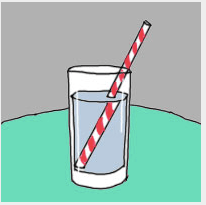
Why does the straw appear to be bent?

a)

light is reflected

b)

light is absorbed

c)

light is turned

d)

light is refracted

50.

The smallest particles of matter are called

a)

neutrons

b)

atoms

c)

electrons

d)

protons

51.
The force that acts in the opposite direction of motion when two surfaces come in contact. 
a)
Force
b)
Friction
c)
Static
d)
Kinetic 
52.
The independent variable is the ONE thing you _____ to test your hypothesis.
a)
change
b)
keep the same
c)
experiment with
d)
investigate
53.
The variable that is measured throughout the experiment is the ________________
Hint: It may change as a result of your testing.
a)
Controlled Variable
b)
Responsive Variable
c)
Dependent Variable
d)
Independent Variable
54.
Catherine is testing which soil will help grass grow the tallest.  The height of the grown grass is the __ variable.
a)
constant (stays the same)
b)
independent (it's what you change)
c)
dependent (it's what you measure)
55.
What would the INDEPENDENT variable be in an experiment testing which  paper airplane design goes furthest?
a)
the paper used
b)
the paper airplane design
c)
the distance of each plane's flight
d)
how hard the plane is thrown
56.

What is the force that slows down or eventually stops an objects motion?

a)

Gravity

b)

Push

c)

Motion

d)

Friction

57.
Which word describes a push or pull on an object?
a)
Position
b)
Hypothesis
c)
Mass
d)
Force
58.
What is the name of a single type of atom?
a)
cell
b)
proton
c)
element
d)
atom
59.
What is the term for combining 2 or more atoms together?
a)
atoms
b)
elements
c)
molecules
d)
compounds
60.
What is the term for combining 2 or more DIFFERENT atoms together?
a)
atoms
b)
elements
c)
molecules
d)
compounds
61.

Mixtures are created when two or more ______ are mixed together.

a)

liquids

b)

substances

c)

changes

d)

rocks

62.

Solutions are a special kind of mixture in which __________.

a)

Each object stays the same in the mixture

b)

substances are dissolved together

63.

Mixture or Solution?

a)

Mixture

b)

Solution

64.

Mixture or Solution?

a)

Solution

b)

Mixture

65.

What makes an electromagnet stronger?

a)

greater number of loops

b)

smaller number of loops

c)

decreasing the current

d)

decreasing the voltage

66.
A circuit that has two or more paths that electricity can follow.
a)
Series Circuit
b)
Electromagnet
c)
Parallel Circuit
67.
Current is...
a)
moving protons
b)
moving electrons
c)
measured in volts
d)
measured in ohms
68.
Which of these colors of visible light has the shortest wavelength?
a)
red
b)
green
c)
violet
d)
yellow
69.
Wax paper or a foggy window is an example of what type of material. 
a)
transparent
b)
translucent
c)
opaque
70.
What is the saying that can help you remember the order of the visible spectrum?
a)
ROYGBIV
b)
RYOBIVG
c)
ROBVIG
d)
RIBYOG
71.
What is the name of the waves in which sound travels?
a)
pulling waves
b)
complementary waves
c)
transverse waves
d)
compression waves
72.
What is being shown by the line between the tops of the waves in figure (a)?
a)
Amplitude
b)
Direction
c)
Trough
d)
Wavelength
73.
Tim made an electromagnet with one d-cell and wrapped an uninsulated wire 30 times.  It did not work.  How could he fix it?
a)
wrap the wire more times
b)
include a switch
c)
use insulated wire
d)
use another d-cell
74.

Which is the correct order scientist should follow in an experiment?

a)

observation. communicate, hypothesis, experiment, claim

b)

hypothesis, observation, experiment, claim, communicate

c)

observation. experiment, hypothesis, claim, communicate

d)

observation, hypothesis, experiment, claim, communicate

75.

Which is an observation about a fish?

a)

the fish's mass is 410 grams

b)

the fish swims in circles around the pond

c)

the fish will freeze in winter

d)

fish like worms so that is good bait

76.

How do scientists communicate their results?

a)

give talks and publish articles for others to read

b)

evidence

c)

confirming their hypothesis

d)

analyzing data in bar graphs

77.

What is another name for hypothesis, or a guess about what will happen when you perform the experiment?

a)

Analyze

b)

Conclusion

c)

Prediction

d)

List

78.

What scientific tool would help you measure the height of a plant?

a)

Graduated Cylinder

b)

Thermometer

c)

Hand Lens

d)

Ruler

79.
Which is an example of an observation ?
a)
He has brown hair
b)
He doesn't like me
c)
He is smart (like Salk)
d)
He looks handsome (like Salk)
80.
There are two types of data. Which type of data involves descriptions that cannot be counted or measured?
a)
qualitative
b)
quantitative
81.
Measuring the number of times a person breathes after exercise involves ____ data. 
a)
quantitative
b)
qualitative
82.
Which vocabulary word means:

The information you collect from an experiment.
a)
Hypothesis
b)
Question
c)
Data
83.
Which vocabulary word means:

A statement that tells the results of an experiment
a)
Question
b)
Hypothesis
c)
Conclusion
84.
Which of the following is an observation of the picture?
a)
The person is wearing a T-shirt
b)
It is a sunny day
c)
The person is going to a birthday party
d)
The gift is a DVD player
85.
What is an observation for this picture?
a)
The man is scared
b)
The man is going to get eaten
c)
There is a man in a kayak
d)
The man is paddling fast
86.
Which of the following statements is an inference of the picture?
a)
A student is roasting a marshmallow
b)
Two students are listening through cups
c)
The teacher is not in the classroom
d)
A student is setting off a rocket
87.
There must be a lot of birthday parties in June
a)
observation
b)
inference
88.
The least amount of students like red juice
a)
observation
b)
inference
89.

A student uses a spring scale to pull a 50-gram block horizontally across a wood desk. Then the student pulls the block the same distance across surfaces of carpet, sandpaper, and glass. Which question is this investigation most likely designed to answer? (5.6D)

a)

How do block of different sizes react to force?

b)

How do different surfaces affect the amount of force needed to move a block?

c)

How do blocks affect spring scales?

d)

How does the mass of a block change when it is pulled across a desk?

90.

A student observes that the craters on the moon are different sizes. The student designs an experiment to study the formation of craters. The materials for the experiment are marbles and a pan of flour. The student makes a hypothesis that the size of the craters made on the surface of the flour will depend on the height from which the marble is dropped. Some of the steps in the student's experiment are described in the picture. Which of these is most likely Step 3 in the student's experiment? (5.6D)

a)

Drop the same marble from different heights into the pan of flour

b)

Drop marbles of different masses from the same height into the pan of flour

c)

Drop marbles of different sizes from different heights into the pan of flour

d)

Drop a single marble one time into the pan of flour

91.
A polar bear slides down an ice covered hill. As he slides, he slows down. Eventually he comes to a stop. What force  acts on an object to slow or stop its motion?
a)
Speed
b)
Friction
c)
Gravity
d)
Direction
92.
A student drops a ball from shoulder height. The ball bounces 5 times before coming to a stop. What force causes the ball to fall to the ground?
a)
Friction
b)
Magnetism
c)
Position
d)
Gravity
93.
Looking at the picture, what two tools would be needed to measure the effect of friction on the ball?
a)
Hand lens and balance
b)
Balance and spring scale
c)
Measuring tape and stop watch
d)
Spring scale and hand lens
94.

The line or path in which an object is moving is its _________________.

a)

movement

b)

position

c)

direction

d)

force

95.
In an activity investigating forms of energy, a student is playing with a motor with a fan on it.  As the fan is moved, the gears in the motor also move.  Which of the following is a correct conclusion about the type of energy being used to move the motor and fan?
a)
When the motor moves mechanical energy is used.
b)
The light energy from the room causes the motor to move.
c)
Heat energy transferred from the gears causes the motor to move.
d)
The movement of the motor is caused by sound energy because the motor makes noise.
96.
Which item below is the best example of heat energy?
a)
Turning on a light switch
b)
Using a ceiling fan
c)
Using an oven to cook pizza
d)
Riding a bicycle
97.

What kind of energy gets STORED inside a parked car on a hot, sunny day?

a)

Mechanical energy

b)

Light energy

c)

Sound energy

d)

Thermal energy

98.

What is the main type of energy that an oven's LIGHT produces?

a)

Thermal energy

b)

Light energy

c)

Mechanical energy

d)

Sound energy

99.
A rocket is sent into space.  When the power dies out, the rocket will just keep floating and moving in space forever (unless an unbalanced force, such as a meteor, runs into it).
a)
Newton's 1st Law
b)
Newton's 2nd Law
c)
Newton's 3rd Law
d)
None of them
100.
At which point is potential energy greatest?
a)
W
b)
X
c)
Y
d)
Z
101.
__________ is stored energy. 
a)
Potential
b)
Kinetic
c)
None of the above 
d)
All of the above 
102.
The faster an object moves, the ________ kinetic energy it has. 
a)
more
b)
less
c)
none of the above
d)
same
103.
What kind of energy is in a moving skateboard?
a)
Potential
b)
Kinetic
c)
Both potential and kinetic energy
d)
none of the above
104.
Gravitational potential energy depends on the ________ and ________ of the object. 
a)
Height and mass
b)
Friction and movement
c)
Mass and Movement
d)
Height and Friction 
105.
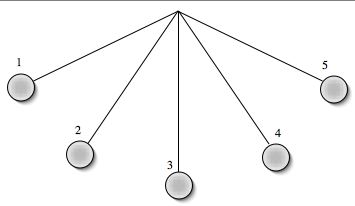
When a pendulum swings, at which point is kinetic energy highest?
a)
1
b)
2
c)
3
d)
4
106.
When a pendulum swings, at which point is potential energy at its greatest?
a)
1
b)
2
c)
3
d)
4
107.
Energy can be _____________ or changed from one type to another.
a)
destroyed
b)
transferred
c)
created
d)
ignored
108.
The things that are kept the same to ensure the results are due to the experiment is called..
a)
Control
b)
Constant
c)
Independent Variable
d)
Dependent Variable
109.
The variable the is changed on purpose is..
a)
Constant
b)
Control
c)
Independent Variable
d)
Dependent Variable
110.
The variable that is being tested, counted, or measured and is responding to the independent variable is known as 
a)
Control
b)
Constant
c)
Independent Variable
d)
Dependent Variable
111.
Its one of the independent variables that is use for comparison, does not get any change, original or plain variable.
a)
Constant
b)
Control
c)
Independent Variable
d)
Dependent Variable
112.
Mrs. Goodwyn wants to see if studying time affects test scores...She gives all 6 classes the same assignment but assigns different study times. What is the independent variable?
a)
Study time
b)
Test score
c)
Same assignment
113.
Mrs. Goodwyn wants to see if studying time affects test scores...She gives all 6 classes the same assignment but assigns different study times. What is the dependent variable?
a)
Study  time
b)
Test Score
c)
Same Assignment
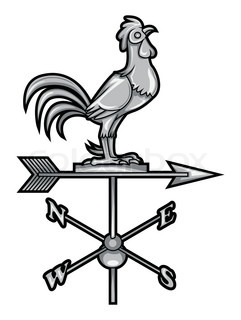
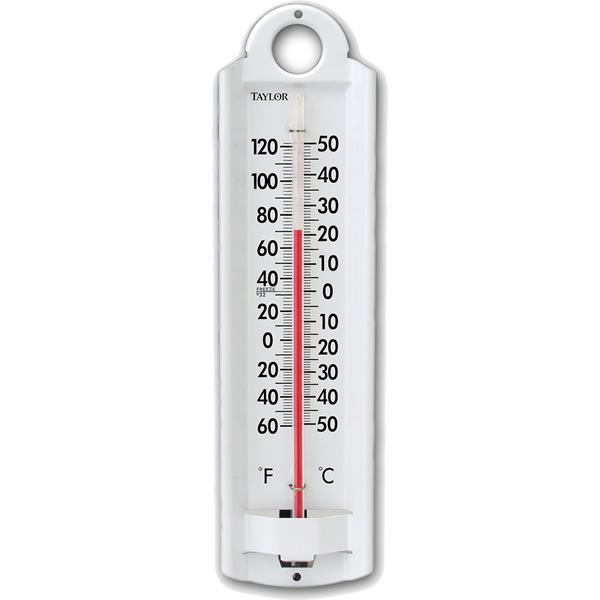
114.
This weather instrument is a...
a)
anemometer
b)
barometer
c)
wind vane
d)
thermometer
115.
What instrument measures air pressure?
a)
barometer
b)
hydrometer 
c)
rain gauge
d)
anemometer 
116.
This type of cloud is thin, wispy, and made of ice crystals
a)
cumulus cloud
b)
stratus cloud
c)
cirrus cloud
d)
cumulonimbus cloud
117.
what type of cloud is shown?
a)
cumulus
b)
cirrus
c)
stratus
118.
Besides color, what is one other observable property that is shown in this photo?
a)
Cleavage
b)
Density
c)
Mass
d)
Hardness
119.
Friction is a force that acts in an ___________ direction of movement.
a)
similar
b)
opposite
c)
parallel
d)
west
120.

Velocity is speed with __________________________.

a)

a unicycle helmet

b)

direction

c)

fight

121.
65 miles per hour North is an example of an objects what?
a)
Speed
b)
Velocity
c)
Average Speed
d)
Constant Speed
122.

What is weathering?

a)

The movement of sediment

b)

The breaking of sediment

c)

The dropping of sediment

123.

What is erosion?

a)

The movement of sediment

b)

The breaking of sediment

c)

The dropping of sediment

124.

Water carrying sediment down a hill is an example of...

a)

weathering

b)

erosion

c)

deposition

125.

Water freezing inside a rock and breaking it into smaller sediment is an example of...

a)

weathering

b)

erosion

c)

deposition

126.

The amount of water vapor in the air is known as ___.

a)

dew point

b)

humidty

c)

relative humidity

d)

rain

127.
Which best describes a compound? 
a)
found on the periodic table 
b)
made from two or more elements
c)
a pure substance 
d)
only 100 in the world 
128.
all matter is made of what 
a)
energy 
b)
atoms 
c)
electrons 
d)
compounds 
129.
Contains only one kind of atom.
a)
Element
b)
Compund
c)
Mixture
130.
Is sugar (C12H22O11) an element or a compound?
a)
Element
b)
Compound
131.

energy associated with the motion or position of an object

a)

mechanical energy

b)

potential energy

c)

kinetic energy

d)

gravity