
 Worksheets
AP BIO Spring Final Review
Total questions: 126
Worksheet time: 2hrs 40mins
Cells that do not have a true nucleus are called (a)
Domain--Kingdom--Phylum--____________





Many species of corals are threatened by the increasing temperatures and decreasing pH of ocean waters. One species, Stylophora pistillata, has been found to thrive in water that is warmer and has a lower pH than the water that corals typically thrive in. Additionally, researchers have found that the tolerance for the new water conditions is heritable.
Which of the following statements best explains the changes seen in S. pistillata in response to the changing water conditions?
The corals’ adaptation is an example of natural selection because the tolerance is in response to a changing environment and has a genetic basis.
The corals’ adaptation is an example of the founder effect because the majority of corals do not have a tolerance for warmer water.
The corals’ adaptation is an example of genetic drift because the change was a chance event and not the result of selection in response to environmental change.
The corals’ adaptation is an example of adaptive radiation because it has resulted in a wide range of species adapting to the new ocean conditions.
A researcher measured the temperature at which two different samples of double-stranded DNA denature (separate into single strands). Sample 1 denatured at a significantly lower temperature than sample 2 did. Based on the data, the researcher claims that the DNA in sample 2 is composed of a higher percentage of guanine and cytosine than the DNA in sample 1 is.
Which of the following best supports the researcher’s claim?
The bonds between guanine and cytosine are covalent bonds, which require more energy to disrupt than those between adenine and thymine
Guanine-cytosine pairs denature at a higher temperature because they have more hydrogen bonds between them than adenine-thymine pairs do.
Adenine-thymine pairs require less energy to separate because adenine and thymine are both single-ring bases.
Guanine-cytosine pairs require more energy to separate because one is a purine and one is a pyrimidine.
Which of the following describes the most likely location of cholesterol in an animal cell?
Embedded in the plasma membrane
Dissolved in the cytosol
Suspended in the stroma of the chloroplast
Bound to free ribosomes
Lactase is the enzyme needed to digest lactose, the sugar found in milk. Most mammals produce lactase when they are young but stop once nursing ends. In humans however, many people continue to produce lactase into adulthood and are referred to as lactase-persistent.
Which of the following mutations is most likely to cause lactase persistence in humans?
A nucleotide substitution in the coding region of the lactase gene that interferes with the interaction between lactase and lactose
A mutation that turns off the expression of transcription factors that activate the expression of lactase
A mutation that increases the binding of transcription factors to the promoter of the lactase gene
The insertion of a single nucleotide into the lactase gene that results in the formation of a stop codon
Modern bananas originated from a cross between a tetraploid banana species and a diploid banana species. The product of this cross was the triploid Cavendish banana strain, a sterile hybrid that is only grown asexually. Recently, the Panama fungus has been observed more frequently parasitizing the Cavendish banana, and scientists claim that this type of banana is on the brink of extinction.
Which of the following provides the best explanation of the scientists’ claim regarding the threat to the Cavendish banana?
The triploid genome of the Cavendish banana makes it susceptible to the negative impact of recessive alleles.
Having three of each chromosome interferes with normal function of the cells and increases the likelihood of contracting a disease.
The lack of genetic diversity of the Cavendish banana decreases the chance that a variation exists in the population that is immune to the fungus.
Asexual reproduction increases the mutation rate during replication, resulting in a greater chance that the offspring have a dysfunctional immune system.
If 30% of the nucleotides in a single-stranded RNA molecule are adenine, then what percent are expected to be thymine?
0%
20%
30%
70%
Which of the following best explains how molecules such as O2 and CO2 can move across the membrane of a cell?
The majority of the cell membrane contains protein channels that allow this type of molecule into the cell.
The majority of the cell membrane is nonpolar, which allows small, nonpolar molecules to freely cross.
The phospholipids of the membrane are tightly packed, so only small molecules and ions can fit between phospholipids.
ATP is hydrolyzed to provide energy to help O2 and CO2 move against their concentration gradient and across the membrane.
Which of the following describes the most direct effect of a mutation in the DNA that encodes a cell’s rRNA?
The cell’s ability to transport the amino acids needed for translation will be reduced.
The cell’s ability to transcribe RNAtranscripts that will be translated will be reduced.
The cell’s ability to properly assemble ribosomes and initiate translation will be reduced.
The cell’s ability to modify proteins after they have been assembled will be reduced.
A massive increase in the growth of a specific species of algae resulted in record-breaking levels of a potentially dangerous toxin being released into the water. A researcher hypothesizes that the unusual growth of this algal species was caused by an increase in water temperature. The researcher designs an experiment to test the hypothesis.
Which of the following is the dependent variable in the researcher’s experiment?
The growth of the algae
The temperature of the water
The concentration of toxin in the water
The different species of algae growing in the water
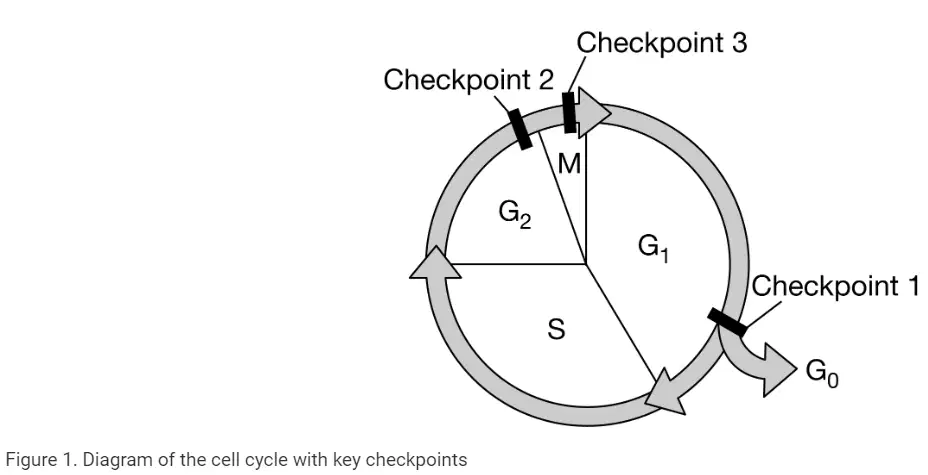
Which of the following describes a mutation that would lead to an increase in the frequency of nondisjunction?
A mutation affecting checkpoint 1 proteins that forces cells to enter G0
A mutation affecting checkpoint 2 proteins that allows cells to divide with DNA damage
A mutation affecting checkpoint 3 proteins that prevents attachment of spindle fibers
A mutation affecting checkpoint 2 proteins that prevents duplication of the chromosomes
Which of the following best explains why ligase is required for DNA replication?
The lagging strand cannot be replicated continuously, and ligase is needed to join the fragments.
Ligase forms the hydrogen bonds between complementary bases in the two strands of DNA.
Ligase facilitates the binding of RNA polymerase to the promoter region.
Ligase enables the newly synthesized DNA to twist into a double helix.
What component of the polypeptide is the next amino acid added forming the peptide bond?
amino group
hydrogen
carboxyl group
R groups
Provide reasoning to explain how evidence qualifies a claim
State
Make a claim
Support a claim
Justify
The process by which protein conformation is lost or broken down is called what?
dehydration synthesis
translation
denaturation
hydrolysis
Which of the following is true about the cytoskeleton? (check all that apply)
A hard protective covering for the cell
Provides reinforcement of the cell's shape
Contains thin filaments that allow contraction of the muscle cells
A mesh of protein fibers
Stores calcium ions
Which channel protein found in the lipid bilayer facilitates the passage of water molecules through the membrane?
aquaporins
glycoproteins
vesicles
ion channels
Which of the following is NOT classified as active transport?
sodium-potassium pump
endocytosis
exocytosis
diffusion
Salivary glands produce a large quantity of enzymes that are transported out of the secretory cells. Which of the following organelles would be abundant in these cells?
nuclei
golgi apparatus
smooth ER
lysosomes
The trp operon in E. Coli is responsible for making 5 polypeptides involved in the tryptophan synthesis pathway. When tryptophan is present, it combines with the repressor protein to block the operator. What type of operon is trp?
Repressible
Inducible
What are the TWO inputs of cellular respiration?
ATP
carbon dioxide
glucose
oxygen gas
water
Which option below is NOT a source of energy?
water
sunlight
ATP
glucose
Which list of components characterizes RNA?
a phosphate group, deoxyribose and uracil
a phosphate group, ribose and uracil
a phosphate group, ribose and thymine
an amino group, deoxyribose and uracil
What is oxidation?
loss of electrons
loss of water
gain of electrons
gain of water
What are the THREE outputs of cellular respiration?
ATP
carbon dioxide
glucose
oxygen gas
water
DNA replication involves many different enzymes. Helicase unwinds the DNA so that the parent strands can be seperated. DNA polymerase adds the nucleotides to synthesize the daughter strands. What is the role of primase?
It adds a small RNA "primer" to allow DNA polymerase to begin
It sorts the prime numbers of RNA into even piles
It removes incorrecly matched nucleotides to avoid mutations
It connects the gaps between nucleotide segments
Describe the difference between competitive and noncompetitive inhibitors.
noncompetitive binds to active site and competitive binds to other site
competitive binds to active site and noncompetitive binds to other site
competitive is irreversible and noncompetitive is reversible binding
noncompetitive is irreversible and competitive is reversible binding
Which process does NOT require oxygen?
Glycolysis
Oxidative Phosphorylation
Krebs Cycle
Aerobic respiration
Which protein structure involves the peptide bonds between amino acids?
primary
secondary
tertiary
quaternary
Match the following molecular terms:
Lipids
The major class of biological molecules that are not polymers
Peptide bonds
Linkages between the monomers of proteins
Alpha helix
A secondary structure of proteins
Cellulose
A structural carbohydrate found in plants
What is the function of the electron transport chain between Photosystem II and Photosystem I?
establish electrochemical gradient of protons
to funnel electrons into photosystem I for the Calvin cycle
transport electrons to oxygen to make water
to synthesize ATP using ATP synthase
All of the following are evidence of endosymbiosis EXCEPT
mitochondria and chloroplast ribosomes are similar to bacterial ribosomes
mitochondria and chloroplast have double membranes
mitochondria and chloroplast are similar in size to bacteria
mitochondria and chloroplast have a nucleus
What are the TWO outputs of photosynthesis?
ATP
carbon dioxide
glucose
oxygen gas
water
Which environmental conditions can cause denaturation of the enzyme?
slight increase in temperature
extreme increase in temperature
decrease in temperature
extreme increase in temperature and pH changes
In a monohybrid cross of complete dominance, what is the phenotypic ratio?
1:2:1
3:1
9:3:3:1
12:4
In a monohybrid cross of incomplete dominance, what is the phenotypic ratio?
1:2:1
3:1
9:3:3:1
12:4
In a dihybrid cross of complete dominance, what is the phenotypic ratio?
1:2:1
3:1
9:3:3:1
12:4
In a population of 100 offspring, how many would you expect to be homozygous dominant in a cross between a homozygous dominant and a homozygous recessive parent?
0
25
50
75
100
In a population of 200 offspring, how many would you expect to be homozygous recessive in a cross between a heterozygous and a homozygous recessive parent?
0
50
100
150
200
In an incomplete dominance cross between a white flower and a red flower, what is the probability of a pink offspring?
0%
25%
50%
75%
100%
In a complete dominance cross between a white, terminal (recessive) and red, axial (dominant) flower, what is the probability of a red, axial offspring?
1/16
3/16
9/16
16/16
In a cross between an individual with type A blood and an individual with type B blood, what is the probability of an offspring with type O blood?
0/4
1/4
1/2
3/4
4/4
In a cross between two roan cows (codominant), what is the probability of a white cow?
0/4
1/4
2/4
3/4
4/4
Identify which of the following descriptions about dominance are correct
Incomplete dominance involves the homozygous dominant and heterozygous looking the same
Incomplete dominance involves the heterozygous offspring resulting in an intermediate between the two dominant traits
Codominance involves the heterozygous offspring resulting in an intermediate between the two dominant traits
Codominance involves the homozygous dominant and heterozygous looking the same
When does DNA replication take place?
Whenever new genes are needed
During the S phase of the cell cycle
In the middle of mitosis or meiosis
Immediately before cytokinesis begins
Match the following enzymes to their roles in DNA replication.
Ligase
Fills in the gaps in the new DNA strands
DNA polymerase
Synthesizes the new strands of DNA
Primase
Adds a small RNA "primer"
Helicase
Unwinds the parent DNA strands
DNA replication involves many different enzymes. Helicase unwinds the DNA so that the parent strands can be seperated. DNA polymerase adds the nucleotides to synthesize the daughter strands. What is the role of primase?
It adds a small RNA "primer" to allow DNA polymerase to begin
It sorts the prime numbers of RNA into even piles
It removes incorrecly matched nucleotides to avoid mutations
It connects the gaps between nucleotide segments
Label the stages of protein synthesis.
Which of the following would lead to an increase in the rate of transcription?
methylation of DNA, particularly the cytosine bases
acetylation of histone proteins
binding of the operator in an operon
negative feedback from accumulating product
Which of the following are part of a bacterial lac operon? (Select all that apply)
Promotor
Genes for lac enzymes
Regulatory genes
Enhancers
Match the following genetic regions to their roles:
Makes a repressor protein
Regulatory gene
Place where transcription begins
Promotor
The on/off switch where the repressor protein binds
Operator
Codes for the main protein / enzymes
Genes of Operon
The trp operon in E. Coli is responsible for making 5 polypeptides involved in the tryptophan synthesis pathway. When tryptophan is present, it combines with the repressor protein to block the operator. What type of operon is trp?
Repressible
Inducible
The operon model was discovered in E. Coli and is almost exclusively found in (a) .
After eukaryotic transcription takes place, mRNA undergoes several modifications before leaving the nucleus to take part in translation. Some sections of mRNA are cut out, and the remaining sections are spliced together to create the finished mRNA molecule. Which of the following mRNA sections are spliced together in the finished mRNA molecule?
introns
exons
operons
ribozymes
The human genome appears to have only about as many genes as the simple nematode worm, C. elegans. Which of the following best explains how the more complex humans can have relatively few genes?
Human genes have unusually long introns involved in the regulation of gene expression
More than one polypeptide can be produced from a gene by alternative gene splicing
The human genome has a high proportion of noncoding DNA
The human genome has a large number of SNPs (single nucleotide polymorphisms) which increases genetic variability
Reorder the following stages of protein synthesis in eukaryotes:
Activators bind to the enhancer
A DNA bending protein folds the enhancer toward the promotor
RNA polymerase transcribes the DNA beginning at the promotor
Introns are removed from the mRNA; a poly-A tail is added
mRNA leaves the nucleus to find a ribosome for translation
What type of molecule helps turn on specific genes?
Inducers
Repressors
Methalation
Morphogenesis
Match the following processes to their associated phrase.
Transcription
The synthesis of mRNA from a DNA template.
Translation
The synthesis of polypeptides from the genetic information coded in mRNA
Transposon
A mobile segment of DNA that can travel from one location on a chromosome to another.
DNA methylation
The addition of chemical groups to certain bases of DNA which regulates gene expression.
The human globin genes are located on two different chromosomes and include variants that are expressed at different times in the life cycle as well as several nonfunctional pseudogenes. Which of the following would best describe this gene family?
All the functional genes in the family have the same transcription control elements
This gene family would be equivalent to the operons of prokaryotes
Mutations in the hemoglobin gene led to its translocation to two different chromosomes
Identical or similar genes have evolved by gene duplication
New traits arise from (a) .
Match the following types of mutations to their descriptions.
A change to one nucleotide results in one different amino acid in a polypeptide.
Missense
A change to one nucleotide results in early termination of a polypeptide.
Nonsense
A change to one nucleotide results in no changes to the amino acids in a polypeptide.
Silent
Additional nucleotides are added to the DNA strand; causes a frameshift mutation.
Insertion
Nucleotides are removed from the DNA strand; causes a frameshift mutation.
Deletion
A marsupial species found only in Australia has evolved to eat tree leaves, be diurnal, and raise its young until they are of reproductive age. A grazing placental mammal in Africa has also evolved to eat tree leaves, be diurnal, and raise its young until they are of reproductive age.
This is an example of which of the following types of evolution?
divergent evolution
species-specific evolution
convergent evolution
neutral evolution
Match the following terms to the most related phrase.
Results in a new population with a limited gene pool, often seen when a smaller population is separated from a larger population
The founder effect
One result of evolution from a common ancestor; exhibited by certain structures with similar features having different functions
Homologous structures
A result of drastic reduction in population size, such as the reduction of the California Condor population to 9 individuals
The bottleneck effect
Features that have evolved independently to serve a similar function but do not represent evolutionary relatedness
Analogous structures
Genetic variation in bacterial populations is introduced in several ways. Select the one process that will NOT introduce genetic variation in bacteria.
transduction
transformation
conjugation
meiosis
Reorder the following Levels of Classification from BIGGEST to smallest.
Kingdom
Phylum
Class
Order
Family
Label each graph with the type of selection it shows.
2 populations of a species are separated by a mountain range and therefore, unable to interbreed. What does this demonstrate?
mechanical isolation
geographical isolation
gametic isolation
temporal isolation
Darwin's theory of (a) is also called "survival of the fittest" where fitness refers to the (b) success of an organism. An organism's traits may be good or bad depending on its (c) .
Sympatric evolution occurs when a new species arises in the same area as an existing ancestral species. Which of the following can lead to sympatric speciation?
A small number of individuals migrate to a geographically remote area
A natural disaster cuts off contact between members of a population
A flood causes a new river to form, separating segments of a population
A mutation event results in offspring that are fertile tetraploids
A population of 200 whales is at Hardy Weinberg equilibrium for fin color. Dark fins (D) are dominant to light fins (d).
If 18 of the whales have light fins, how many whales are heterozygous?
p2 +2pq +q2 = 1
and
p + q = 1

According to the pictured cladogram, what is the closest relative of the reptiles?
amphibians
birds
rodents
fish

Which of the following are density dependent factors?
competition for resources
predation
disease
natural disasters
Which of the following are examples of a density independent factors?
forest fire
seasonal cycles
storms
disease
If the larvae of a particular species of mosquito are to survive to the adult stage, the eggs must be laid in the trapped pool of water of the northern pitcher plant. The mosquito larvae provide no apparent benefit or harm to the pitcher plant. This type of interaction is an example of
commensalism
mutualism
parasitism
competition
Introduced or invasive species are often threatening because:
They contribute to commensalism
They do not adapt well to new environments
They increase biodiversity
They often lack natural predators
habitat loss
invasive species introduction
pollution
all of the above
What is a niche?
A species that outcompetes others in an area
The level on a food chain an organism occupies
An organisms role in an ecosystem and the resources they obtain
A species that disproportionately affects an ecosystem

