
Font size
 Worksheets
Drama
Total questions: 25
Worksheet time: 18mins
What is a script?
A long speech delivered by one character
a written text that tells actors what to say and do in a play, movie, or TV show.
The spoken words between characters
The invisible division between the characters and the audience
What is it called when the audience knows something the character's don't?
Situational Irony
Verbal Irony
Comic Relief
Dramatic Irony
The spoken words between characters are called (a)
What is the lead character or a major character called?
Antagonist
Main character
Protagonist
Narrator
lines
stage directions
cast of characters
dialogue

What is the mood?
peaceful
exciting
lonely
hot

The color red symbolizes what two emotions?
sadness
happiness
love
anger

TRUE OR FALSE:
Setting includes the time of day.
True
False
What is the time, place, or environment where a story takes place called?
Setting
Plot
Character
Conflict
Monolouge is a long (a) delivered by a character.
Plays are broken up into and
characters and lines
monologues and dialogues
settings and props
acts and scenes
What refers to the choice and use of words in speaking or writing.?
grammar
syntax
diction
punctuation
A (a) is when a character speaks their thoughts out loud, usually alone on stage, as if talking to themselves. It can give the audience insight into the character's inner feelings and motivations.
What are the people or animals in a story called?
Characters
narrators
actors
settings
The struggle between opposing forces is called (a)
a series of events that make up the story.
setting
characters
rising action
plot
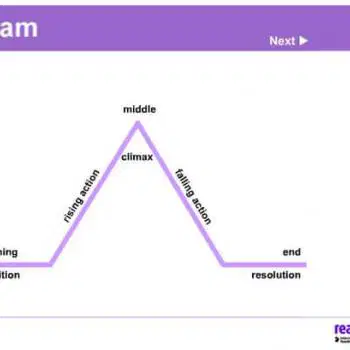
This is an example of what?
climax
plot
antagonist
conflict
A parallel or smaller plot that coexists with the main action of the play
conflict
small plot
setting
sub-plot
A (a) is a type of script specifically written for movies or TV shows that includes details about camera angles, lighting, and other technical elements.

Pun
Allusion
Verbal Irony
The arrogant pride in a character that will ultimately lead to his/her downfall
hubris
humility
confidence
self-esteem
(a) is when someone says the opposite of what they actually mean, often to be sarcastic or humorous.
The invisible division between the characters and the audience
conflict
stage curtain
audience seating
fourth wall

