
 Worksheets
Ch. 9 Quadratic Equations
Total questions: 47
Worksheet time: 2hrs 15mins

A parabola has a vertex at (2,-3).
Where is the axis of symmetry?
y = -2
y = 3
x = -3
x = 2

f(x) = -x2 - 4x + 12.
What is the vertex?
f(x)=(x−4)2+3(-4,3)
(4,3)
(-4,-3)
(4,-3)
Which equation would shift the quadratic function
f(x)=x2 up 3 units and to the right 4 units.f(x)=(x+3)2+4
f(x)=3(x−4)2
f(x)=(x−4)2+3
f(x)=(x+4)2+3
Describe the transformation:
f(x)=(x+3)2−2right 3, down 2
up 3, left 2
left 3, up 2
left 3, down 2
Write an equation of a quadratic that is translated down 2 units.
f(x)=(x−2)2
f(x)=x2−2
f(x)=−x2+2
f(x)=(x+2)2
Which quadratic would be the narrowest?
f(x)=21x2
f(x)=x2
f(x)=3x2
f(x)=5x2
Given f(x)=41x2 how did we transform from the parent function?
Vertical compression (wider)
Vertical stretch (narrower)
Vertical compression (wider) and reflection over x-axis
Vertical stretch (narrower) and reflection over x-axis
What steps transform the graph y = x2 to y = 2(x+2)2 - 5?
Compress by 2, shifted 2 units left and 5 down
Stretch by 5, shifted 5 units left and 2 down
Stretch by 2, shifted 2 units left and 5 down
Compress by 5, shifted 2 units left and 2 down
In the vertex form f(x) = a(x - h)² + k , what does the 'a' value do?
Shifts the function left or right
Changing 'a' value has no affect on the parent function
Vertical stretch or compression
Shifts the function up or down
Given f(x) = ax² , if 0 < a < 1 , the graph will transform by
becoming wider or vertically compressed
becoming narrower or vertically stretched
In the vertex form f(x) = a(x - h)² + k , what does the 'h' value do?
Shifts the function left or right
Reflection over the x-axis
Vertical stretch or compression
Shifts the function up or down
In the vertex form f(x) = a(x - h)² + k , what does the 'k' value do?
Shifts the function left or right
Reflects over the x-axis
Vertical stretch or compression
Shifts the function up or down
How did we transform from y=x2?
y = -3x2
vertical reflection and vertical shift down
vertical reflection and vertical stretch
horizontal stretch
vertical reflection and vertical compression
Given f(x) = -x² , how did we transform from the parent function?
Horizontal shift left
Reflection over the x-axis
Vertical shift down
Vertical compression
x2 - 8x + 15
Factor x2 - 25
( x + 5 ) ( x - 5 )
( x - 5 ) ( x - 5 )
( x + 25 ) ( x - 25 )
Prime
1 The discriminant is
aX2 + bX + c
b - 4ac
b2 - 4ac
b2 + 4ac
1 What does the discriminant tell us?
The maximum or minimum
The y-intercept
The number and type of solutions
The axis of symmetry
2 For the function below, is the discriminant positive, negative, or zero?
y = x² + 4x + 4
Positive
Negative
Zero
2 A function has a discriminant of 4.
How many x-intercepts does it have?
0
1
2
4
What is the discriminant and how many solutions would this quadratic have?
4x2 + 6x - 4 = 0
-28, No Solutions
28, 2 Solutions
100, 2 Solutions
-100, No Solutions
What is the discriminant and how many solutions would this quadratic have?
3x2 + 3x + 4 = -3
-75, No Solutions
-75, 2 Solutions
-39, No Solutions
-39, 1 Solution

REMEMBER MAXIMUM IS THE HIGHEST AND MINIMUM IS THE LOWEST.
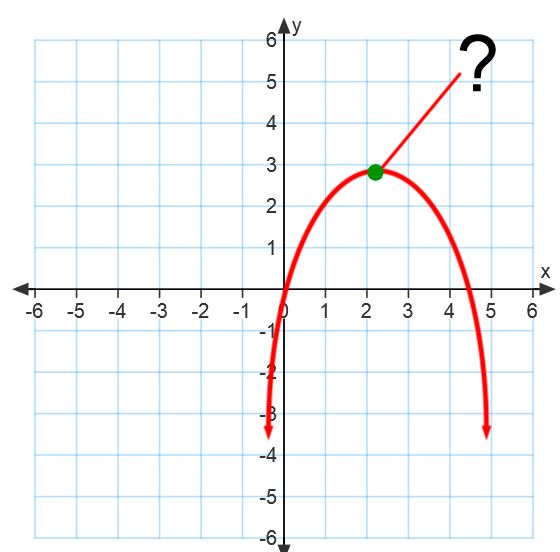

12. Solve using any method.
(x - 2 )2 -49 = 0
5, 9
-9, -5
9, -5
9, -9
Solve the following quadratic equation...
x2 + 3x + 2 = 0
x = -1
x = -2
x = 1
x = 2
x = -1
x = 2
x = 1
x = -2

-x2-2x+3=-5.
What is another word for zeros?
y-intercepts
roots
vertex
axis of symmetry
Solve using the Quadratic Formula:
x2 + 6x + 9 = 0
x = −3, 3
x = −3
x = 3
No Solution
x2 + 6x + ____
x2 + 12x + ____
Given the equation x2+18x=0 how do you find the number to add to both sides to help you complete the square?
Divide 18 by 2, then square that number and add it to both sides of the equation
Square 18 and then add it both sides of the equation
It already is a perfect square
Subtract 18x from both sides and then divide both sides by x to find the answer
You jump off a 24 foot high cliff and your fall is modeled by the function:
h(t) = -16t2 + 8t + 24
How long would it take you to hit the water?
8 seconds
1 second
1.5 seconds
1/4 second
Heather dropped a water balloon over the side of her school building from a height of 80 feet. The approximate height of the balloon at any point during its fall can be represented by the following quadratic equation:
h = -16t2 + 80
About how long did it take for the balloon to hit the ground?
1.73 seconds
2.24 seconds
2.45 seconds
2.83 seconds

