
 Worksheets
Honors Review - Phases of Matter, Energy Flow (SPS5ab, SPS7abcd)
Total questions: 136
Worksheet time: 4hrs 11mins
Which characteristics describe liquids?
definite volume
very little particle motion
not easy to compress
fluid motion
Which characteristics describe solids?
constant, fast particle motion
definite shape
no definite volume
not easy to compress, it at all
Which characteristics describe gases?
easily compressed
constant, fast particle motion
no definite shape
very little particle motion

Consider the four phases of matter. How do the characteristics of a liquid differ from a solid? ALL but one applies
Temperature has increased
Molecules begin to vibrate.
Energy has increased.
Intermolecular attraction decreased.
The fourth state of matter, plasm, exists when what happens?
The atoms in a gas become ionized (electrons are removed)
The atoms in a gas undergo nuclear fission.
When electromagnetic forces causes the atoms to stop colliding with one another.
The atoms in a gas lose all intermolecular attraction for one another.

Which particle has the most energy?
ice
there is no difference in particle energy
water
steam
The most abundant state of matter in the universe is also the state with the most kinetic energy. That is
gas
plasma
solid
liquid
What is happening when my ice cream changes from a solid to a liquid?
freezing
melting
burning
evaporation

the particles break away from one another


How are liquid particles different than gas particles?
they are bonded in place
they are the same
they are in close contact and move over and around
they fly freely through space
What happens to the motion of liquid particles when the liquid gets hot?
slow down
speed up
no change
they stop moving
How are particles in a solid different from a liquid or a gas?
they are bonded but vibrate in place
they aren't different
they move freely through space
move over and around other particles

Which scenario would BEST explain the phase change shown in the picture?
A pot of water boils and forms steam.
Pond water freezes on a cold winter day.
Water droplets form on grass on a cool morning.
Snowman melts on a sunny day.
Which state of matter is described below?
1. Particles are packed closely together
2. Particles vibrate
3. Strong molecular attraction between particles
solid
liquid
gas
plasma
Which state of matter is described below?
1. Particles are less densely packed
2. Particles slide around past each other
3. Not a strong molecular attraction between particles
solid
liquid
gas
plasma
Which state of matter is described below?
1. Particles move freely
2. High energy
3. Very weak molecular attraction between particles
solid
liquid
gas
plasma
A hot air balloon rises because its ___.
particles are less attracted by gravity when heated
particles move slower and closer together when heated
particles move faster and farther apart when heated
particles become charged and repel each other when heated
The three states of matter are different. However, liquids and gases do have some things in common. One of these is ____.
the liquids and gases are both more dense than solids
the liquids and gases both take the shape of their container
that liquids and gases have the same densities as solids
that liquids and gases do not take the shape of their container
The level of Mercury inside of a thermometer rises when placed in hot water. Why does the level of liquid rise?
Heat molecules push the molecules of the liquid downward.
Heat causes the molecules of the liquid to get farther apart.
The molecules of the liquid break down into atoms and take up more space.
Water molecules are pushed into the thermometer.

Which letter represents the portion of the phase change diagram during which the temperature of the liquid is rising?
E
C
B
D

Which letter represents the point at which a solid changes to a liquid?
C
B
A
D
When ice melts, the temperature increases. Which of the following describes what happens to the arrangement of the water molecules as the temperature increases?
Water molecules lose all contact with one another and intermolecular forces are non-existent.
Water molecules become less orderly and they spread out.
The kinetic energy of the water molecules decreases proportionally to the temperature change.
Water molecules separate into hydrogen and oxygen atoms.
How does plasma, the fourth state of matter, differ from a gas?
Plasma has indefinite shape and volume; gas does not.
Plasma has definite shape and volume; gas does not.
Plasma cannot conduct electricity; gas can.
Plasma has electrically charged particles like the Northern Lights; gas does not.

Which substance in the picture has the highest density?
Honey
Corn syrup
Lamp oil
Water

Which of the samples will probably float on top of the oil?
Sample A
Sample B
Sample C
Sample D
Which phase change occurs when dry ice changes from a solid to a gas?
condensation
vaporization
sublimation
melting
Why does solid water (ice) float when placed in liquid water?
Ice is less dense than liquid water.
Ice is more dense than liquid water.
Ice has less mass than the water in which it is floating.
Ice has less volume than the water in which it is floating.
The diagrams show the particle arrangement of the same material in three different states of matter. Which diagram most likely represents the state in which particles are moving fastest?


Particle speed is not related to state of matter.

The diagram shows particles in three states of matter.
What do each of the states of matter have in common?
The particles are locked into position.
The particles in each are in constant motion.
The particles take the shape of their containers.
The particles have the same volume in each container.

A lamp that plugs into a wall socket draws energy, which flows through a thin wire in the bulb, causing it to heat up until it glows. What energy transformations are taking place?
Chemical → light → electrical
Mechanical → sound → light
Thermal → solar → electrical
Electrical → thermal → light
An electric pencil sharpener uses electricity to make its motor spin. The pencil sharpener also makes noise and heats up. Which observation of the pencil sharpener demonstrates the law of conservation of energy?
The amount of electrical energy used equals the total amount of mechanical, sound, and thermal energy produced.
The amount of energy used by the electric pencil sharpener is greater than an electric lamp.
The electric pencil sharpener only uses energy when it is being used to sharpen a pencil.
The electric pencil sharpener is easier to use than the older version that was cranked by hand.

Turning the handle makes a current that causes the light bulb to glow. What are the energy transformations that happen in this hand generator?
Thermal → solar → light
Mechanical → electrical → light
Electrical → mechanical → light
Solar → light → electrical
When energy enters a system and then comes out of the system later, the law of conservation of energy states that–
some of the energy that entered the system will remain in the system.
the energy will always create a change in the properties of the parts of the system.
the form of energy that comes out of the system must be the same form that entered.
the amount of energy coming out of the system must equal the energy that entered the system.
In which of the following scenarios would this energy transformation be observed?
chemical → light → heat
Plucking a guitar string
Lighting a match
Turning on a fan
Starting a car
Which of the following is a form of potential energy?
sound energy
chemical energy
mechanical energy
thermal (heat) energy
During energy transformations, energy is never ___.
released as heat
used to increase an object's potential energy
created or destroyed
completely transformed
A baseball is hit into the air with a bat. When does baseball have the greatest gravitational potential energy?
when it hits the ground
when it reaches its highest point
when it leaves the bat
when the mechanical and kinetic energies of the baseball are equal
___ is energy stored by things that stretch or compress.
Gravitational potential
Elastic kinetic energy
Chemical kinetic energy
Elastic potential energy
Calculate the gravitational potential energy of the object.
GPE = mgh
mass: 50
gravity: 10
height: 6
5320J
300J
66J
3000J
Calculate the kinetic energy.
KE=21mv2
mass: 200
velocity: 5
2,500J
250J
500,000J
none of the above

What type of energy is stored in a battery?
electrical
thermal
radiant
chemical
Which energy transformation occurs in a toaster?
electrical → thermal
chemical → thermal
nuclear → electrical
thermal → electrical
A battery converts what type of energy to another?
electrical → thermal
chemical → electrical
kinetic → nuclear
light → heat
Which items would have this energy transformation: chemical → mechanical
a candle burning
eating a big breakfast before a race
a ball bouncing
using a hairdryer
Which of the following is not a source of stored chemical energy that can be turned into a form of kinetic energy?
a battery in a toy car
food
the nucleus of an atom
fossil fuels

Which energy transformation happens when the blades are spinning as shown?
Electrical to mechanical
Chemical to electrical
Mechanical to electrical
Chemical to mechanical

Which statement describes the energy changes that occur when water in a tea kettle is heated on a stove that uses natural gas?
Chemical energy to thermal energy to sound energy
Thermal energy to sound energy to light energy
Electrical energy to thermal energy to sound energy to light energy
Light energy to chemical energy to kinetic energy to sound energy

Which description of the energy conversions in this process is correct?
The chemical energy in the fuel-air mixture is converted to thermal energy, which is then converted to mechanical energy
The mechanical energy in the fuel-air mixture is converted to electrical energy, which is then converted to thermal energy
The electrical energy in the fuel-air mixture is converted to mechanical energy, which is then converted to thermal energy
The thermal energy in the fuel-air mixture is converted to electrical energy, which is then converted to mechanical energy

Students build a circuit that has wires that connects a battery to a switch and a fan.
Which energy transformations happen when the students close the circuit and the blades of the fan begin to spin?
Chemical to mechanical to electrical
Electrical to chemical to mechanical
Chemical to electrical to mechanical
Mechanical to electrical to chemical

A cook heats a meal in a microwave oven. What energy transformations occur between the microwave oven and the meal?
Electrical energy to light energy to chemical energy
Chemical energy to thermal energy to light energy
Electrical energy to electromagnetic energy to thermal energy
Chemical energy to electromagnetic energy to chemical energy

A teacher rubbed a match against a piece of sandpaper. The match started to burn. Which statement best describes the energy changes that occurred?
The chemical energy stored in the match changed to thermal energy and light energy
The thermal energy stored in the match changed to light energy and chemical energy
The light energy and thermal energy stored in the match changed to mechanical energy
The light energy and thermal energy stored in the match changed to chemical energy

When a lion eats a zebra and then uses the energy from the zebra to run, the lion's body converts =-
chemical energy to mechanical energy
electrical energy to chemical energy
chemical energy to light energy
mechanical energy to chemical energy

Chemical Energy

Thermal Energy

Light Energy

Mechanical Energy
Solar or light energy
radiant
chemical
mechanical
Energy caused by moving electrons
radiant
chemical
electrical
Energy caused by fusion or fission of atoms' nuclei
mechanical
nuclear
chemical
Heat energy
thermal
radiant
sound
All of the following are good conductors of heat EXCEPT
Copper
Iron
Plastic
Aluminum
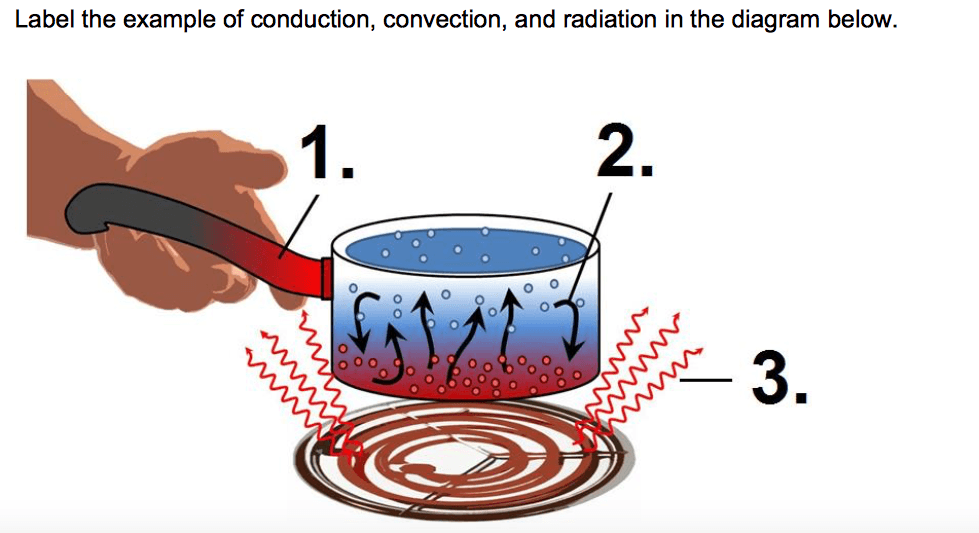
What type of thermal energy transfer is number 1 pointing to?
Convection
Conduction
Radiation
Insulation

What type of thermal energy transfer is number 3 pointing to?
Convection
Conduction
Radiation
Insulation
What is the definition of CONVECTION
When heat transfers through waves.
When heat transfers from objects that are touching.
a hot liquid or air that expands, becomes less dense, and rises or becomes more dense, and sinks.
Heat traveling from the sun
A lava lamp contains colored liquids. These liquids form globs that break off and rise to the top of the liquid. The globs rise due to
Conduction
Convection
Radiation
Insulation
A house burns down. On the house across the street, all of the vinyl siding is twisted and warped by the heat. The heat was transferred across the street by..
Conduction
Convection
Radiation
Insulation
The metal skewer gets so hot you drop your marshmallow into the campfire because of....
Conduction
Convection
Radiation
Insulation
Warm air over the beach rises while cooler dense air from the ocean rushes in this is due to..
Conduction
Convection
Radiation
Insulation
Which type of heat transfer (if any) would be possible in the vacuum of space?
Conduction
Convection
Radiation
No form of heat transfer can happen in space
Which of the following statements about convection is true?
all types of currents are convection currents
Convection occurs between solids only at high temperatures
Convection can only occur during the process of boiling
Convection always involves the circulation of liquids and gases
A boy sits to the side of a campfire. He is 10 feet away but still feels warm. This is an example of ....
Conduction
Convection
Radiation
Insulation
A metal spoon was placed in a dish of ice cream and became cool. Which correctly describes the heat transfer process that resulted in the cooling of the spoon?
Conduction, because the spoon was in contact with the cold ice cream
Convection, because the spoon was in contact with the cold ice cream
Conduction, because the cold air currents affected the temperature of the spoon
Convection, because the cold air currents affected the temperature of the spoon
Scoopy McScooperson places a spoon in warm water for a few minutes. Then, he uses it to easily scoop out ice cream. This is because the warm spoon (a) heat to the ice cream, melting it and making it easier to scoop.
Select all that apply. Which of the following are examples of radiation?

microwave

Sunlight

Fire

touching a piece of hot metal
Select all that apply: Which of these are examples of conduction?


warming a spoon makes it easier to dip

steak on a hot pan

sunlight feels warm
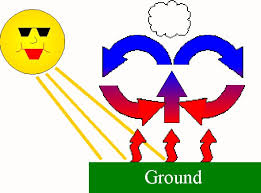
Select 4 answers. Which of the following is an example of Convection?

Convection currents

The energy driving the water cycle

lava lamp ^v

water boiling

hitting hot metal

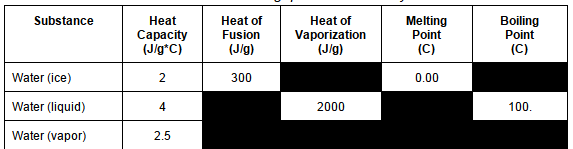

Which one will have the SMALLEST change in temperature?
Which one will have the SMALLEST change in temperature?

According to the ESRT, which material would require the most heat energy to increase the temperature of 1 gram of the material one Celsius degree?
Ice
Water
Basalt
Granite

Which material would require the greatest amount of heat energy to raise its temperature from 5oC to 10oC? [Refer to the Earth Science Reference Tables.]
Iron
Lead
Granite
Dry Air

If the same amount of heat is added to each sample, the smallest change in temperature will occur in the
Iron
Dry Air
Granite
Water
Why does water heat heat up and cool down VERY SLOWLY?
High Specific Heat
Low Specific Heat
It's solid
It's always cold


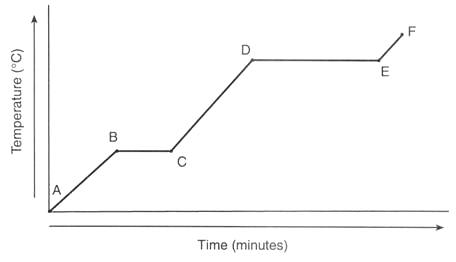

The melting point of the sample is
-60 ºC
-100 ºC
60 ºC
100 ºC

Given the heating curve of a solid being heated at a constant rate, what is the boiling point of this substance?
20°C
50°C
110°C
170°C

Given the heating curve of a solid being heated at a constant rate, how much total time was required to boil this substance after it reached its melting point?
3 minutes
4 minutes
10 minutes
14 minutes

NaCl(s) was heated up starting at an initial temperature of 0°C. The heating curve is shown in the picture. What is the melting point of this substance?
0°C
801°C
1000°C
1465°C

Given the heating curve of water, what is happening to potential and kinetic energy during segment CD?
the potential energy and kinetic energy both increase
the potential energy increases while the kinetic energy decreases
the potential energy is constant while the kinetic energy increases
the potential energy increases while the kinetic energy is constant

Given the heating curve for water, during which line segment could I find water in both the solid and liquid phase at the same time?
AB
BC
CD
DE
EF
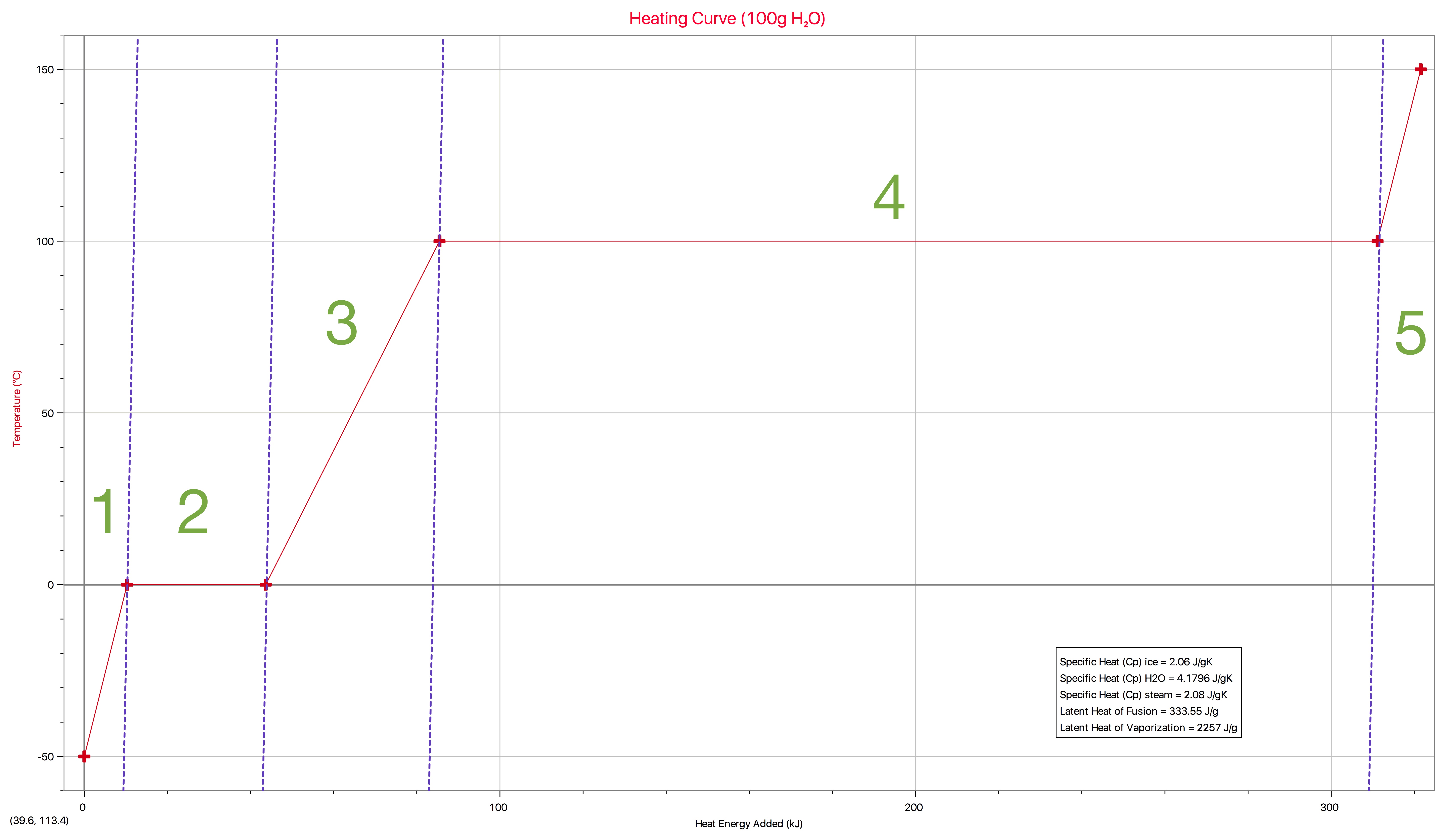

This curve indicates what about the heat energy?
Heat energy is being added or absorbed
Heat energy is being released
In which region(s) of the graph would the substance be a liquid and a gas at the same time?
Region 1
Region 2
Region 3
Region 4
Region 5

In which region(s) of the graph would the substance be melting?
No melting occurs on this graph
Region C-E
Region E-G
Region G-I
Region I-K
What is the freezing point of the substance?
0oC
60oC
120oC
180oC

A substance is cooled for sixteen minutes according to the cooling curve shown. What phase of matter is present for the first two minutes?
(a)

Heat is being removed from a substance at a constant rate starting in the liquid phase at 75°C and ending at 15°C. The graph shows the temperature change during cooling. What phase change is occurring?
melting
freezing
boiling
condensation

The graph shows the heating curves for benzene and water.
Which substance has a higher boiling point?
benzene
water

What does point B represent?
Triple point
Critical point
Equilibrium point
Normal melting point
The temperature and pressure conditions at which the solid, liquid, and gas phases of a substance exist at the same time is called the
Critical point
Triple point
Melting point
Boiling point
What is the normal melting point of this substance?
150°C
100°C
-50°C
0°C

What is true regarding CO2 for temperatures above 31°C?
It does not exist
It decomposes
It cannot be condensed back into a liquid
It is a plasma
What phase change occurs from F to E?
Sublimation
Deposition
Melting
Condensation
What phase change occurs from C to D?
Condensation
Vaporization
Melting
Sublimation
What phase change occurs from E to C?
Sublimation
Freezing
Melting
Vaporization

What phase would this substance be in at 1 atm of pressure and 80°C?
Solid
Liquid
Gas
Normal freezing/melting and boiling points occur at standard pressure, which is
1 atm
5 atm
10 atm
15 atm
What is the normal boiling point of this substance?
0°C
100 °C
-50°C
150°C

