wayground logo

Free Printable Worksheets

Font size

S
M
L
XL
Worksheets

US History LEAP 2025 - Unit 2 Review

Total questions: 112

Worksheet time: 1hrs 29mins

Name
Class
Date
1.
This political cartoon best illustrates Roosevelt's attempt to--
a)
assert the United Stats' right to interfere in European Economic matters.
b)
prevent Europeans from intervening in Latin American affairs
c)
maintain peace between Europe and Latin America
d)
remain neutral and not interfere in foreign affairs
2.
How did the United States' Open Door Policy impact China?
a)
It prevented Europe from opening China to trade 
b)
It ended all foreign control or influence over China
c)
It allowed Chinese immigrants to enter the United States
d)
It allowed all nations to trade with China
3.

Wanted the US to have a strong navy (overseas)

a)

Alvin York

b)

John J. Pershing

c)

Sanford B. Dole

d)

Alfred T. Mahan

4.
The United States government supported the overthrow of a government in this country: 
a)
Cuba
b)
Puerto Rico
c)
Hawaii
d)
Congo
5.
Which nation had denied the U.S. the ability to build the Panama Canal?
a)
Mexico
b)
Venezuela
c)
Nicaragua
d)
Colombia
6.
What was the purpose of the Open Door Policy in China?
a)
End the Boxer Rebellion
b)
Ensure trading rights with China
c)
Win leaseholds in China
d)
Establish a sphere of influence
7.
All of these territories came under the control of the United States following what conflict?
a)
Mexican War
b)
World War I
c)
War of 1812
d)
Spanish-American War
8.
As a result of the peace treaty with Spain, the United States gained
a)
Honduras, Colombia, and Cuba
b)
Samoa, the Philippines, and Hawaii 
c)
Mexico, Venezuela, and Chile
d)
The Philippines, Cuba, Guam, and Puerto Rico
9.
The explosion of this ship was one of the causes of the Spanish-American War
a)
U.S.S. Missouri 
b)
U.S.S. Maine
c)
U.S.S. McKinley
d)
 U.S.S. Moore
10.
Which policy sought to further American interests in Latin America by using the financial power of American business?
a)
Policy of "Watchful Waiting"
b)
Big Stick Policy 
c)
Balance of Power
d)
Dollar Diplomacy
11.
"Destruction of the War Ship Maine was the Work of an Enemy"
This headline is an example of--
a)
yellow journalism
b)
muckraking literature
c)
investigative reporting
d)
government censorship
12.

One nation dominating another nation.

a)

diplopmacy

b)

imperialism

c)

immigration

d)

dominacy

13.

The Roosevelt Corollary to the Monroe Doctrine was issued to guarantee the right of the U.S. to

a)

intervene in Latin American affairs

b)

trade with Asian countries

c)

expand towards the Pacific Ocean

d)

build a wall to protect their borders

14.
What US President was most influential in starting the Panama Canal?
a)
FDR
b)
JFK
c)
Teddy Roosevelt
d)
Taft
15.
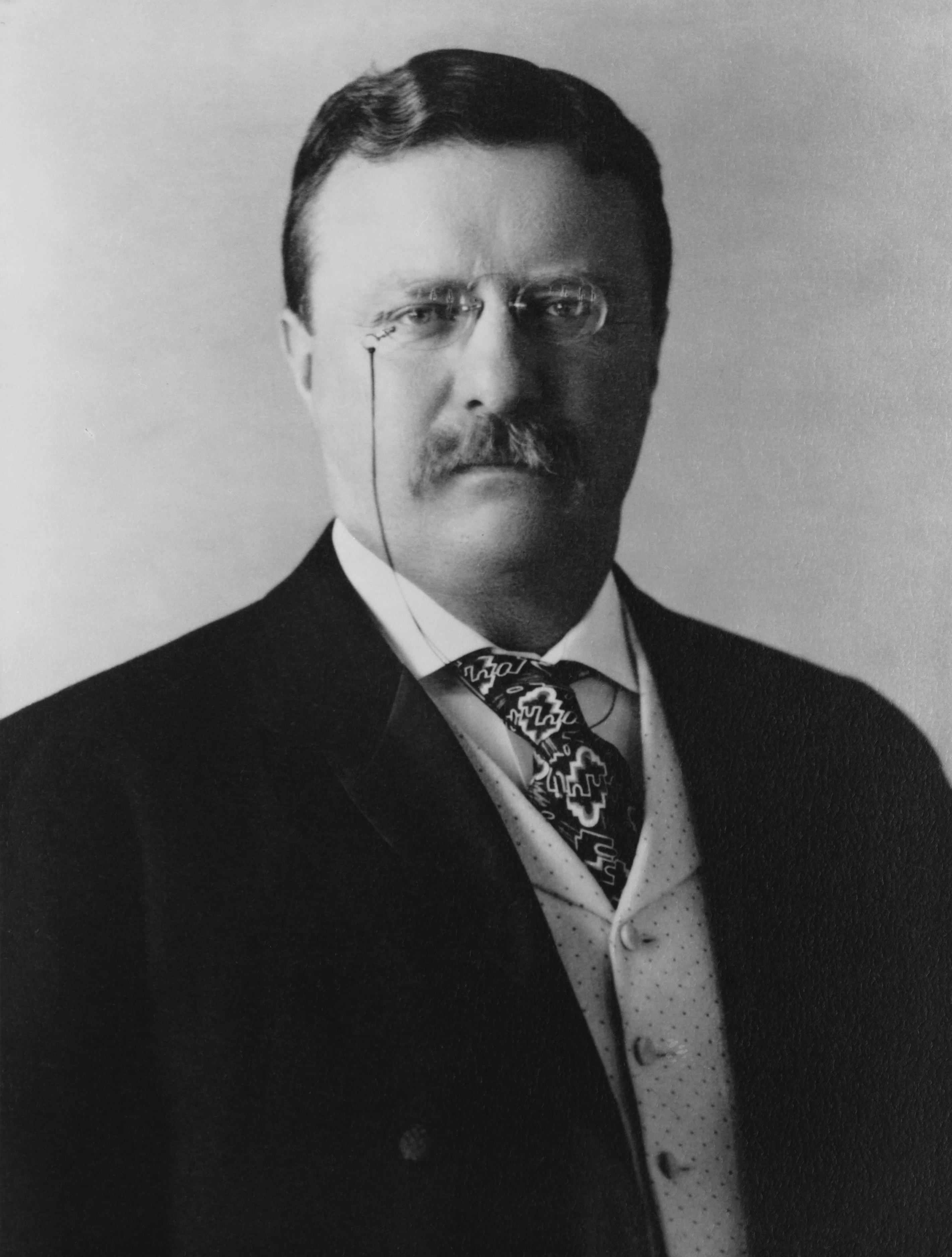
Which President featured in the picture fought in the Spanish-American War?
a)
Upton Sinclair
b)
Grover Cleveland
c)
James Garfield
d)
Teddy Roosevelt
16.

Who was the leader of the independence movement in the Philippines?

a)

Emilio Aguinaldo

b)

Teddy Roosevelt

c)

Hernan Cortes

d)

Pancho Villa

17.

This is the letter written which included insults of President McKinley which upsets Americans

a)

Fourteen Points

b)

De Lome Letter

c)

Scarlet Letter

d)

Zimmerman Telegram

18.

Teddy Roosevelt's "Big Stick Diplomacy" involved

a)

negotiating with the threat of military force behind it

b)

refusing to negotiate at any time

c)

never using the military as a threat

19.
The passing of what piece of United States legislation sparked the Boxer Rebellion?
a)
the Emancipation Proclamation
b)
the Monroe Doctrine
c)
the Open Door Policy
d)
the Quota System
20.

Sanford B. Dole contributed to US expansion by advocating the annexation of-

a)

Puerto Rico

b)

The Panama Canal

c)

Hawaii

d)

The Philippines

21.

What was the group which Teddy Roosevelt led during the Spanish American War?

a)

Rough Riders

b)

Legionaires

c)

Expeditionary Force

d)

Rebels

22.
Leader of Hawaii when the American businesses over threw the government
a)
Sanford Dole
b)
Queen Liliokahlani
c)
Emilio Zapata
d)
Jose Marti
23.
What area is known as "Seward's Folly"?
a)
Hawaii
b)
Cuba
c)
Alaska
d)
Puerto Rico
24.

Who led a revolution in Cuba against the Spanish?

a)

Pancho Villa

b)

Jose Marti

c)

Emilio Zapata

d)

Fidel Castro

25.
What is the type of sensational reporting where writers exaggerated or even invented stories?
a)
muckraking
b)
yellow journalism
c)
journalism
d)
reporting
26.

What was the main crop the United States was interested in from Hawaii?

a)

Sugar

b)

Apples

c)

Tabacco

d)

Wheat

27.

Who became President of the regime after Queen Liliuokalani surrendered?

a)

John L. Stevens

b)

George Washington

c)

Sanford B. Dole

d)

President McKinley

28.

The US insisted Hawaii grant it exclusive rights to a naval base where?

a)

Guadalcanal

b)

Pearl Harbor

c)

Honolulu

d)

At Miday

29.

Country with its own government but under the control of an outside power

a)

Protectorate

b)

Colony

c)

Exploit

d)

Sepoys

30.
General John J. Pershing chased the Mexican rebel leader __________.
a)
Francisco "Pancho" Villa
b)
Antonio Lopez de Santa Anna
c)
Hernan Cortez
d)
Benito Juarez
31.
The __________ determined the form of government in Puerto Rico
a)
Roosevelt Corollary
b)
Foraker Act 
c)
Platt Amendment
d)
"moral diplomacy"
32.

Spreading Democracy and having good morals when working with other countries most sounds like who's foreign policy?

a)

Teddy Roosevelt

b)

William H. Taft

c)

Woodrow Wilson

d)

William Mckinley

33.

Who was in control of Panama before America intervened before building the Panama Canal

a)

Columbia

b)

Mexico

c)

China

d)

Dominican Republic

34.

Since more Americans died by disease rather then actual battle during the Spanish American War... the nickname for the Spanish American War is?

a)

"The Splendid Little War"

b)

"World Easiest War"

c)

"American Domination"

d)

"No Chance France"

35.

The most significant Battle during the Spanish American War won by Teddy Roosevelt's cavalry was called what

a)

The Battle of Bunker Hill

b)

The Battle of Bull Run

c)

The Battle of Gettysburg

d)

The Battle of San Juan Hill

36.
The new territories gained because of imperialism affected the U.S. by
a)
satisfying the complaints of anti-imperialists
b)
providing strategic naval bases and new opportunities for trade
c)
leading the U.S. into permanent alliances with European countries
37.
How did the Roosevelt Corollary alter or change  the Monroe Doctrine?
a)
the corollary completely destroyed the Monroe Doctrine
b)
The corollary had no effect on the Monroe Doctrine
c)
The corollary strengthened the Monroe Doctrine by allowing the U.S. to act as an international police force
38.
The idea that the European peoples had a unique duty to "civilize" the non-white races of the world has often been referred to as:
a)
The Scramble for Africa
b)
Social Darwinism
c)
Manifest Destiny
d)
The White Man's Burden
39.
Teddy Roosevelt's policy was to "Speak softly and carry a big stick." What did he mean by this?
a)
Debate calmly, and always be willing to negotiate
b)
Speak quietly, but yell if necessary.
c)
Negotiate peacefully, but always have the threat of the military to back you up.
d)
Never back down when there is conflict.
40.
Why was building the Panama Canal so important to the United States? 
a)
It allowed endangered animals to expand their territory
b)
It allowed U.S. families to stay connected with each other
c)
It increased Canada's military capability.
d)
It would be a major shipping canal connecting the Pacific & Atlantic Oceans
41.
1. Means “to take/claim” territory (e.g., Hawaii)
a)
Cede
b)
Annex
c)
Conquer
d)
In
42.
5. Reason the U.S. wanted Hawaii as a territory
a)
Pineapples and Sugar
b)
New sugar taxes
c)
Pearl Harbor as a naval base
d)
Protect U.S. settlers
43.
12. Panama Canal ____________ prices of shipping goods and people. 
a)
increases
b)
decreases
44.

It established a civil government in Puerto Rico:

a)

Foraker Act

b)

Social Darwinism

c)

Platt Amendment

d)

None of the above

45.
The goal of the Boxer Rebellion was to 
a)
drive all foreign influences from China
b)
to defeat Japan and control Korea
c)
to stop buying Opium
d)
colonize Japan
46.

Identify reasons for American Imperialism

a)

Economic Interests

b)

Military Interests

c)

Cultural Superiority

d)

Self Interests

47.

Why did Secretary of State William Seward buy the territory of Alaska?

a)

He saw England in North America as a strategic threat.

b)

He saw France in North America as a strategic threat.

c)

He saw Russia in North America as a strategic threat.

d)

He saw Germany in North America as a strategic threat.

48.

This foreign policy idea promotes staying out of world affairs.

a)

Imperialism

b)

Isolationism

c)

Globalism

d)

Communism

49.

Which American Secretary of State promoted an 'open door ' policy with China?

a)

John Kennedy

b)

John Lennon

c)

John Wayne

d)

John Hay

50.

Why was the purchase of Alaska criticized at the time?

a)

It was too expensive.

b)

It was too far away.

c)

It was seen as worthless.

d)

It was seen as too cold.

51.

This American organization was opposed to the U.S. becoming an empire.

a)

Anti-nationalist league

b)

Anti-immigration league

c)

Anti-imperialist league

d)

Anti-internationalist league

52.

How did America end up getting the land it needed to build the Panama Canal?

a)

We supported a revolution in Columbia.

b)

We supported a revolution in Cuba

c)

We supported a revolution in Croatia

d)

We supported a revolution in Cambodia

53.
Payments for war damages were known as
a)
nationalism
b)
separatism.
c)
reparations.
d)
retaliations.
54.
Choose the correct definition for stalemate.
a)
The Central Power won in victory
b)
The Allied won in victory
c)
No side wins in victory
d)
The Neutral countries won in victory
55.
What was the Zimmerman Note?
a)
The German policy of attacking all ships entering or leaving Britain
b)
Wilson's speech concerning why the U.S  should enter WWI
c)
A proposal by Germany that Mexico attack the US in return for territory
d)
a note left behind by a Serbian Nationalist in Austria-Hungary
56.
Who was the President of the United States during WWI?
a)
Woodrow Wilson
b)
Grover Cleveland
c)
Teddy Roosevelt
d)
Franklin D. Roosevelt
57.
What event led Great Britain to declare war on Germany?
a)
The Germans sank British supply boats
b)
The Germans sank American ships
c)
Germany invaded Russia
d)
Germany invaded Belgium 
58.
A war based on wearing the other side down by constant combat is called...
a)
War of Attrition
b)
Trench Warfare
c)
No-Man's Land
d)
World Studies II
59.
Which of Woodrow Wilson's proposals was included in the Treaty of Versailles?
a)
the League of Nations
b)
reparations from Germany
c)
removal of all trade barriers
d)
restoration of the Russian monarchy
60.

When World War I began, the official United States policy was

a)

to enter on the side of the Allied Powers

b)

the enter on the side of the Central Powers

c)

to remain militarily and politically neutral

d)

to support the Central Powers by providing war materials

61.
According to Woodrow Wilson, the purpose of the League of Nations was
a)
to remove threat of future wars.
b)
to prevent nuclear proliferation.
c)
to help the US gain more territories.
d)
to help promote prohibition in other countries.
62.
On May 7, 1915, a German submarine torpedoed and sank
a)
the Maine
b)
The Titanic
c)
The Lusitania
d)
The Queen Mary
63.
What empires were eliminated after World War I?
a)
Russian and French
b)
German and Ottoman
c)
Austria-Hungry and Ottoman
d)
Austria-Hungry and Russia
64.
Why did many Americans not want to sign the Treaty of Versailles?
a)
It forced us to join the League of Nations
b)
It forced us to ally with Germany
c)
It forced us to sell supplies to Russia
d)
It forced us to fight against John Cena in the Wrestlemania
65.
Which of the following countries was not an Allied Power in World War 1?
a)
Germany and Italy
b)
the United States and France
c)
Britain and France
d)
Germany and Austria-Hungary
66.
Militarism means....
a)
Building up armed forces and getting ready for war
b)
Having pride in your nation
c)
Trying to build an empire
d)
Agreements to help others
67.
9)  WWI began when Austria-Hungary declared war on Serbia one month after:
a)
Serbia tried to take more of Austria-Hungary's land.
b)
Serbia burned their flag.
c)
Archduke Ferdinand and his wife were killed.
d)
Serbia won more Olympic medals.
68.
Which of these is a type of fighting used in World War One?
a)
Trench Warfare
b)
Atomic Bomb
c)
Guerilla Warfare
d)
No-Man's Land
69.
What action on November 11, 1918, brought World War I to and end?
a)
An armistice was signed
b)
A surrender was given
c)
A propaganda campaign was waged.
d)
The allies won a major battle.
70.
What is the most probable link between militarism and imperialism?
a)
A country gains colonies, its military grows to protect them
b)
Army expands, the country wants colonies to recruit troops
c)
Colonies, grow, the military stages training exercises there
d)
Army expands, a country seeks colonies to prevent protesting
71.
Formal friendship between nations are called:
a)
treaties
b)
alliances
c)
clubs
d)
democracies
72.

What is another name for the Selective Service Act?

a)

Draft

b)

Drawing

c)

Drifter

d)

Drought

73.

Whose side does the US join in 1917?

a)

Allies

b)

Central Powers

74.

The War Industries Board was responsible for what?

a)

Regulating American industry

b)

Industries profiting from the war

c)

rationing & Victory Gadens

75.

The Food Administration was responsible for what?

a)

Regulating American industry

b)

Industries profiting from the war

c)

rationing & Victory Gadens

76.

How was the war financed? (Select 2)

a)

Liberty Bonds

b)

Increased Taxes

c)

Propaganda

d)

Victory Gardens

77.

What laws made it illegal to criticize war efforts?

a)

Espionage and Sedition Acts

b)

Alien and Sedition Acts

c)

Intolerable Acts

d)

Wilson Acts

78.

What were US soldiers called?

a)

Dough boys

b)

Tarzans

c)

Cowboys

d)

Winners

79.

What effect does the war have on African Americans?

a)

Mass movement from the south to the north

b)

took many jobs left behind by the soldiers

c)

19th amendment

d)

15th amendment

80.
What did the Treaty of Versailles do to Germany? 
a)
It took the blame for starting the war. It had to pay for the cost of the war. It lost land
b)
It gave all its land to France and England
c)
They had to give up the fancy spear on top of their helmits
d)
It made them give up their leaders for war crimes.
81.
What was the peace treaty signed at the end of World War 1?
a)
Treaty of Versailles
b)
Treaty of Paris
c)
Treaty of Tordesillas
d)
Treaty of Ghent
82.
What was the name of the peace keeping organization of world governments? 
a)
League of Nations
b)
League of Legends
c)
League of Assassins
d)
League of Justice
83.
What was President Wilson’s plan for peace called?
a)
Fourteen points
b)
League of Nations
c)
Treaty of Versailles 
d)
Treaty of Paris
84.
Which weapon was NOT a new technology introduced in WWI?
a)
atomic bomb
b)
submarine
c)
tank
d)
poison gas
85.
"Unrestricted submarine warfare" and "Zimmermann note" may be categorized as which of the following?
a)
Wilson's Domestic Strategies
b)
1914 Causes of World War I
c)
Causes of America's entry in the Great War
d)
Part of Wilson's 14 Points
86.

When the soldiers exit the trench they are in...

a)

Man's land

b)

The middle sector.

c)

The open.

d)

No Man's land.

87.

What was the signal to attack?

a)

The officer yelled "Go!"

b)

The officer blew a whistle.

c)

The men went on their own.

d)

None of the above.

88.

What weapon did the Germans utilize during their last push?

a)

Flamethrower

b)

poison gas

c)

portable machines guns

d)

Artillery

89.

Where did the assassination that triggered World War I occur?

a)

Bosnia

b)

Belgium

c)

Alsace-Lorraine

d)

the Ottoman Empire

90.

Which of the following was a result of the Selective Service Act?

a)

African Americans could not become Army officers

b)

Women could serve in combat positions.

c)

Troops were segregated by race.

d)

Men were required to register for military service.

91.

Which weapons of mechanized warfare were introduced in World War I?

a)

battlefront trenches

b)

airplanes and tanks

c)

hydrogen bombs

d)

pistols and bayonets

92.

Which of the following nations suffered the FEWEST casualties?

a)

France

b)

Great Britain

c)

Austria-Hungary

d)

the United States

93.

What reason did Senators give for opposing U.S. membership in the League of Nations?

a)

It would lead to international instability.

b)

It would drain American finances.

c)

It would interfere with free-trade agreements.

d)

It would drag the United States into European conflicts.

94.

After defeating Russia on the eastern front, the Central Powers concentrated on fighting in France.

a)

True

b)

False

c)

IDK

d)

Both True and False

95.

Because militarism had been a major cause of the war, the framers of the Treaty of Versailles

a)

required Germany to pay reparations for war damages.

b)

barred Germany from maintaining an army.

c)

stripped Germany of its colonies in the Pacific.

d)

forced Germany to accept sole responsibility for the war.

96.

Of the following, the most compelling reason for the United States to enter the war was

a)

a moral obligation to halt the refugee crisis in Belgium.

b)

concern over the repayment of Allied debts to American banks.

c)

a desire to become more involved in the affairs of Europe.

d)

the outrage of American citizens over German submarine warfare.

97.

The Espionage and Sedition Acts affected freedom of speech because they

a)

forced restaurant owners to offer "liberty sandwiches" rather than "hamburgers."

b)

allowed the government to silence ideas that challenged its authority.

c)

forced the repeal of the First Amendment.

d)

promoted biased ideas designed to sway people's thinking.

98.

Labor leaders were targeted by the Espionage and Sedition Acts because they

a)

demanded better conditions for workers, even during a war crisis.

b)

questioned whether war was right under any circumstances.

c)

preferred the Russian system of government to the American system.

d)

refused to work in industries that supported the war effort.

99.

Gains made by American women during World War I include

a)

acceptance as full-fledged members of the U.S. Army.

b)

the beginnings of a movement for woman suffrage.

c)

equal pay for equal work in many war industries.

d)

increased support for women's right to vote.

100.

The Treaty of Versailles overlooked the importance of

a)

identifying the guilty party in a war.

b)

treating all nations justly, including the losers of a war.

c)

including powerful nations like the United States in international peace-keeping organizations.

d)

crippling any nations that might prove dangerous in the future.

101.

His assassination sparked World War I.

a)

Woodrow Wilson

b)

Count Alfred von Schlieffen

c)

Archduke Franz Ferdinand

d)

Emperor Francis Joseph I

102.

These people opposed World War I because they perceived all wars as evil.

a)

pacifists

b)

hawks

c)

tigers

d)

rivals

103.

This contained a suggestion of an alliance between Mexico and Germany that deeply angered the American people.

a)

Zimmermann note

b)

Dylan note

c)

McCarthy note

d)

Rommel note

104.

He commanded the American Expeditionary Force (AEF).

a)

General John J. Pershing

b)

Captain Eddie Rickenbacker

c)

General Alvin York

d)

General Douglas MacArtur

105.

This term describes a person who opposes warfare on moral grounds.

a)

war hawk

b)

pigeon

c)

Federalist

d)

conscientious objector

106.

Having shot down at least 29 enemy planes, he was America's leading ace pilot in the war.

a)

Captain Eddie Rickenbacker

b)

Manfred von Richthofen (Red Barron)

c)

Lieutenant Pete "Maverick" Mitchell

d)

Lieutenant Tom "Iceman" Kazansky

107.

This involved merchant vessels traveling in large groups with naval ships acting as guards.

a)

convoy system

b)

buddy system

c)

big brother act

d)

duck and cover

108.

What new weapon did the Germans utilize during their last push (as seen in the Lost Battalion)?

a)

Flamethrower

b)

poison gas

c)

portable machines guns

d)

Artillery

109.

How did the American commanders eventually find the Lost Battalion?

a)

runners made it back to base

b)

captured soldiers passed on the location

c)

radio workers fixed the cut lines

d)

they were spotted by airplane

110.

How does commander Whittlesey get back to base?

a)

he is taken by ambulance

b)

he rides with the General

c)

he walks back with his men

d)

he waits for trucks to take all the men back

111.

Even though there were so many new weapons, it was this old weapon that help stop the artillery from firing on its own soldiers.

a)

a mirror

b)

a runner

c)

a kite

d)

a pigeon

112.

Which of the following did NOT appear in "The Lost Battalion" film?

a)

Trenches

b)

Flame Thrower

c)

Machine Gun

d)

Poison Gas