
 Worksheets
14 Acid&alkali PP MCQ Drilling
Total questions: 14
Worksheet time: 4hrs 30mins
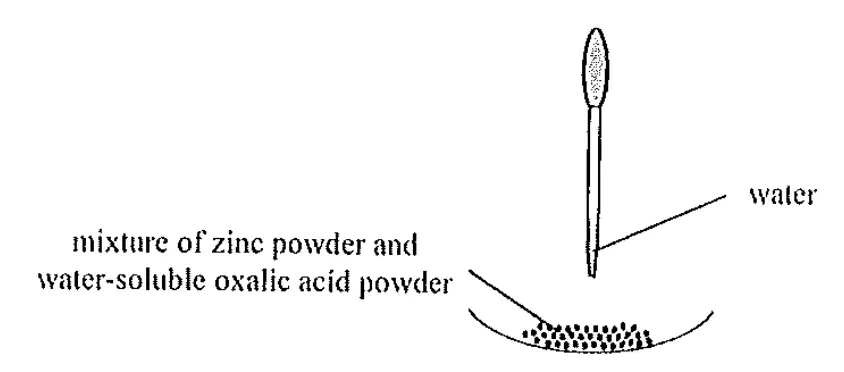
Consider the experimental set-up in the picture.
A colourless gas is given out when water is dropped to the mixture. Which of the following statements is correct?
A. Oxalic acid ionizes in water to give hydrogen ions.
B. Zinc ionizes in water to give zinc ions.
C. Water reacts with oxalic acid to give the colourless gas.
D. Water reacts with zinc to give hydrogen gas.
Which of the following statements about potassium hydroxide solution is INCORRECT?
A. When potassium hydroxide solution is added to iron(II) sulphate solution, a dirty green precipitate is formed.
B. When potassium hydroxide solution is heated with ammonium chloride solution, ammonia gas is liberated.
C. When a small amount of potassium hydroxide is added to zinc sulphate solution, a white precipitate forms and redissolve.
D. Concentrated potassium hydroxide solution is corrosive.
In which of the following processes would a colourless gas evolve?
(1) Magnesium is added to dilute sulphuric acid.
(2) Ammonium chloride is heated with calcium hydroxide.
(3) water is added to a solid mixture of citric acid and sodium hydrogencarbonate.
A. (1) and (2) only
B. (1) and (3) only
C. (2) and (3) only
D. (1), (2) and (3)
A salt is a mixture of (NH4)2SO4 and hydrated FeSO4. Which of the following is/are the expected observation(s) when an aqueous solution of this salt is treated with aqueous sodium hydroxide solution?
(1) Formation of a dirty green precipitate
(2) Formation of a brown precipitate
(3) evolution of a gas with a pungent odour
A. (1) only
B. (2) only
C. (1) and (3) only
D. (2) and (3) only
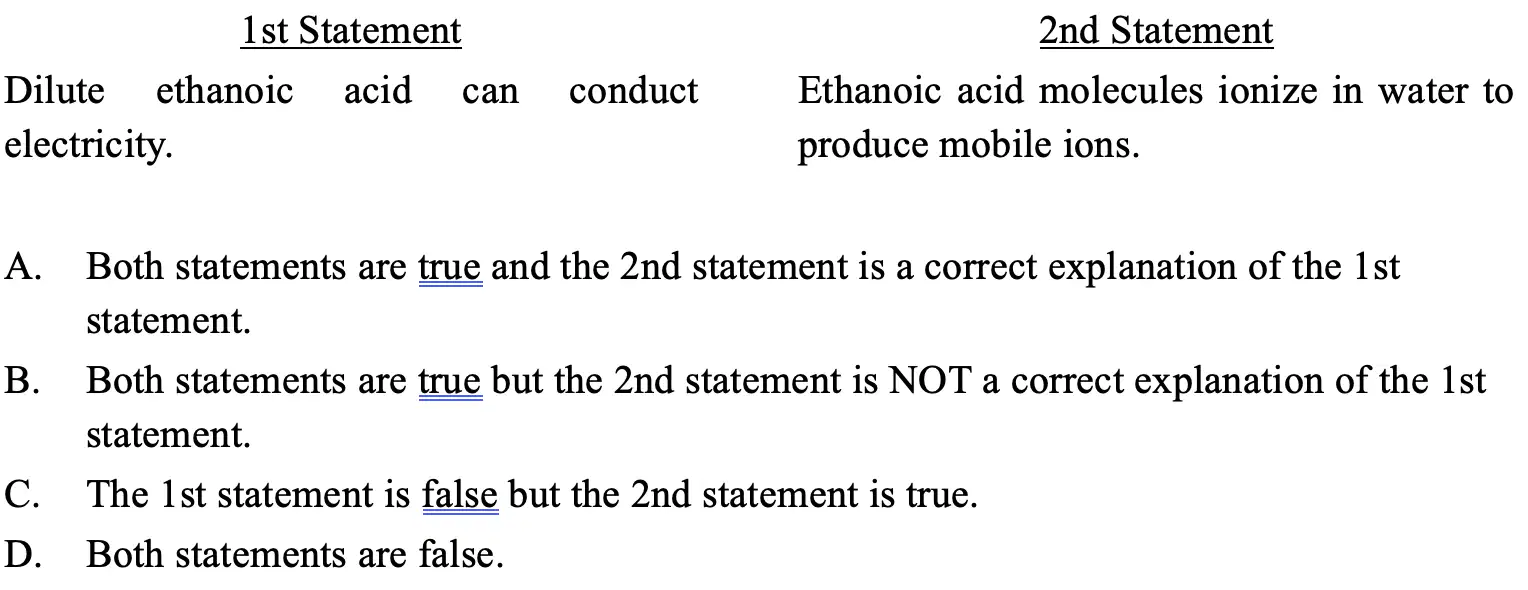
A
B
C
D
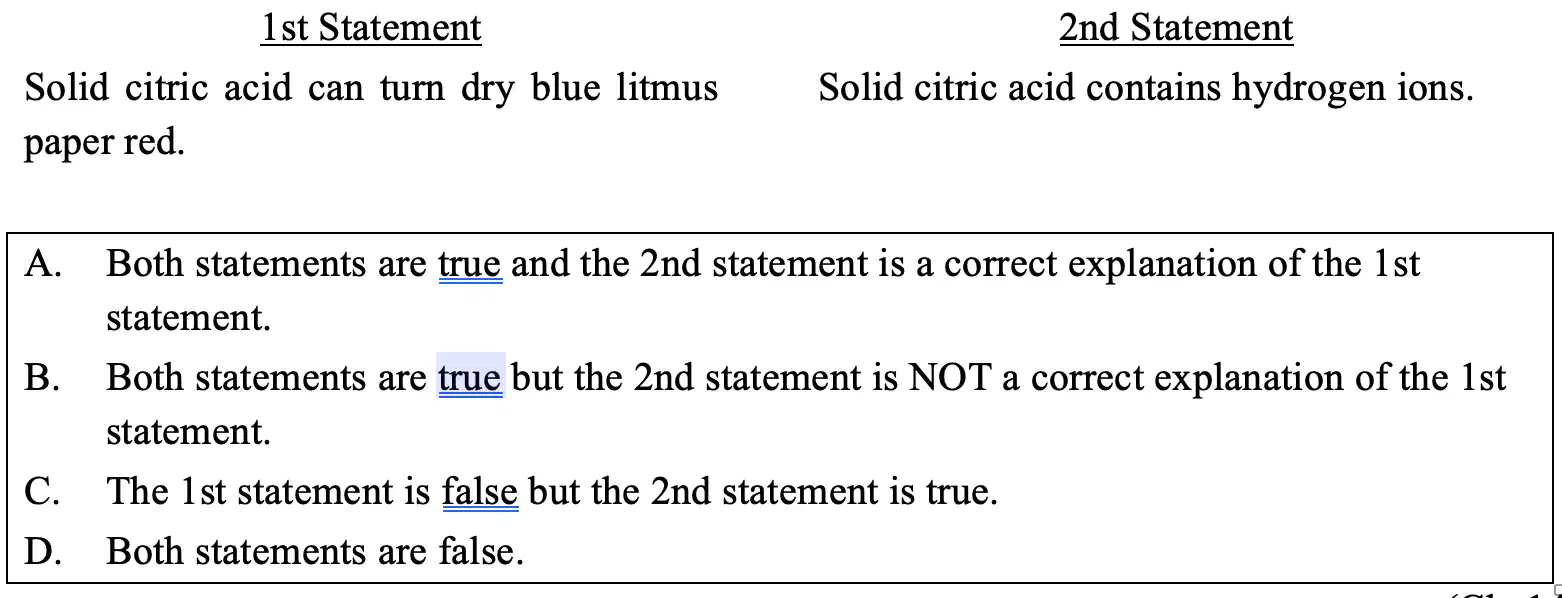
Read the picture, choose the best answer.
A
B
C
D
The basicity of an acid is
A. a value to express the concentration of the acid.
B. the number of hydrogen atoms in one acid molecule.
C. the number of moles of any base which can completely react with one mole of the acid.
D.the number of hydrogen ions which can be produced by complete ionisation of one acid molecule.
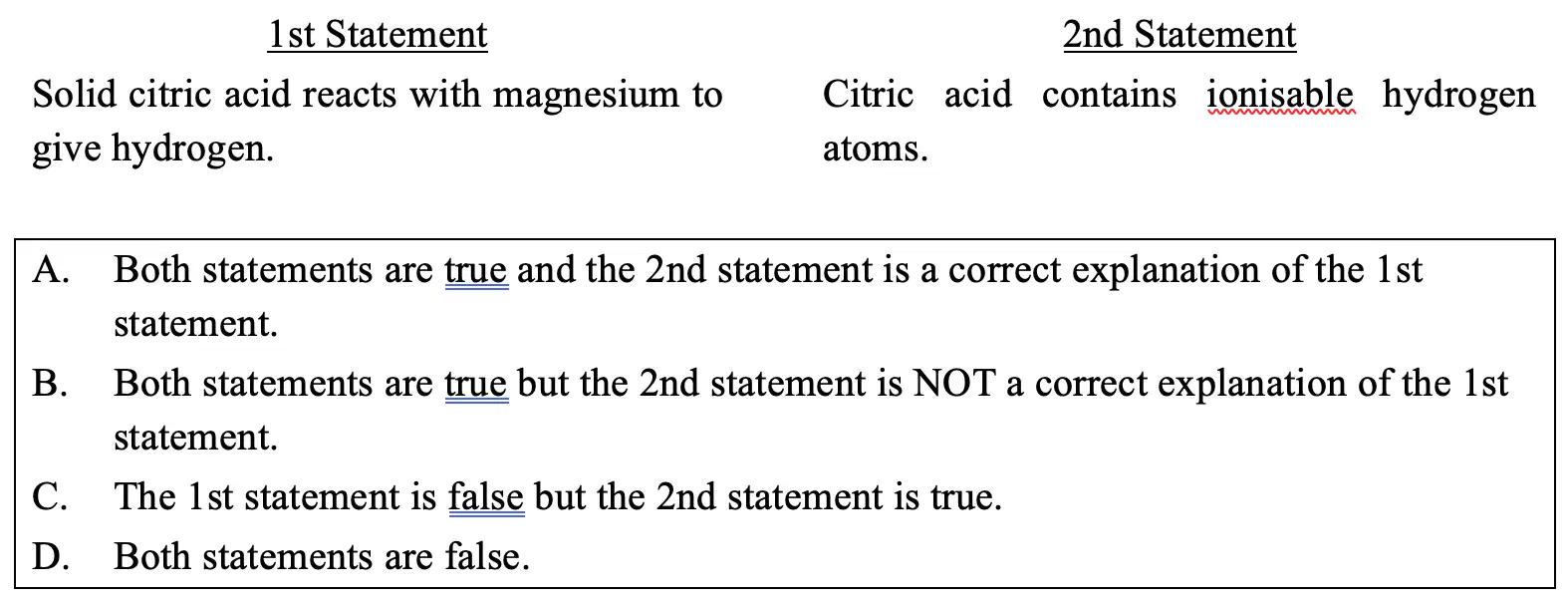
Read the picture, choose the best answer.
A
B
C
D
Which of the following compounds has the highest basicity?
A. HCl
B. HCOOH
C. H2SO4
D. CH3COOH
Which of the following solutions does NOT react with sodium hydroxide solution?
A. ammonium chloride solution
B. potassium carbonate solution
C. copper(II) nitrate solution
D. zinc sulphate solution
Which of the following substances would react with sodium hydroxide solution?
(1) Ammonium chloride solution
(2) Copper(II) sulphate solution
(3) Ethanoic acid
A. (1) and (2) only
B. (1) and (3) only
C. (2) and (3) only
D. (1), (2) and (3)
Metal X reacts with dilute nitric acid to give a colourless solution. When sodium hydroxide solution is added to the solution, a white precipitate which dissolves in excess sodium hydroxide solution is formed. X is probably
A. Copper
B. Iron
C. Lead
D. magnesium
Which of the following statements about a solution of hydrogen chloride in water is correct?
A. The hydrogen chloride exists as molecules in the solution.
B. The hydrogen chloride is slightly ionized in water.
C. The solution formed reacts with metal to form carbon dioxide and water.
D. The reaction between the solution and aqueous ammonia is exothermic.
Which of the following hydroxides is insoluble in BOTH excess sodium hydroxide solution excess aqueous ammonia?
A. Cu(OH)2
B. Zn(OH)2
C. Fe(OH)2
D. Al(OH)3

