
 Worksheets
East Asia
Total questions: 120
Worksheet time: 3615secs


When an earthquake occurs in the ocean, what type of natural disaster can form?
Tsunami
Tornado
Hurricane
Typhoon
75% of Japan is covered by...
Plains
Deserts
Rivers
Mountains
Which of the following East Asian countries is an example of a peninsula?
Japan
China
The Koreas
Taiwan
In their early history, Japan and Korea were both strongly influenced by...
The United States
Russia
China
India
Japanese land owning warriors who supported the Shogun were known as...
Tsunami
Samurai
Loess
Communists
Today, Japanese companies are some of the world's leading manufacturers of what type of products?
Oil and gasoline
Textiles(clothes)
Agricultural
Electronics and cars
What form of government does South Korea currently have?
Democratic
Monarchy
Communist
Dictatorship
The area that separates North and South Korea is known as...
The iron curtain
No man's land
The demilitarized zone
The point of no return
What did the Silk Road connect?
The United States and China
China and Japan
Europe and Australia
China, Europe, and everything in between
Besides merchant goods, what else traveled along the Silk Road?
Ideas
Technology
Religions
All of the above
Which country enacted a "one-child" poliocy to help slow its population growth?
China
Japan
Mongolia
South Korea
Which term describes the large movement of people from rural areas(the country) to cities?
Desertification
Globalization
Deforestation
Urbanization
What East Asia Country is an archipelago?
China
Japan
South Korea
Mongolia
What type of economy would a capitalist society/country have in place?
Mixed Economy
Market Economy
Command Economy
When an economy goes from being based on agriculture to being based on manufacturing and other industries...this is called what?
Communism
Urbanization
Socialism
Industrialization
Which of these describes where most Chinese want to live?
In cities
In suburbs
Leave the country
In villages
The Three Gorges Dam in China was built to control flooding but has negative consequences like ....
causing the economy to suffer
causing a water shortage
causing citizens to move because their homes are now underwater
causing political unrest
Dams provide a range of economic and environmental benefits, including recreation, flood control, water supply, and ...........
solar power
geothermal power
hydroelectric power
What religion is practiced by the people of Tibet?
Islam
Judaism
Christianity
Buddhism
What type of economic system exists when the ruler/government has total control of the economy?
Capitalist
Communist
Mixed
Socialist
What is the name given to the trade route that connected China to the Mediterranean Sea?
Spice Road
Ivory Road
Silk Road
Quin Road
Who were the fierce nomads and expert horsemen of the Eurasian Steppes?
Zhous
Hans
Mongols
Qins
Which one is a main characteristic of communism?
government owns all property
having free enterprise
private ownership of businesses
unions controlled labor
Who controls the factors of production in communism?
government
people
workers
labor unions
The most popular fast-food chain in China is Kentucky Fried Chicken. KFC was one of the first American fast-food chains to open in China. One reason this originally American company is so popular is that they change their menu to local chinese tastes. It is normal for a KFC in China to have many different menu items than you might see in the United States such as shrimp sandwiches, egg tarts, and soy sauce wings. There are now more KFCs in China than there are in the United States.
The process above can best be described as --
cultural diffusion
cultural adaptation
cultural confluence
cultural disruption
The “Great Wall” is located in which of the following countries?
China
Japan
Russia
South Korea
developed a military force that was stronger than China’s.

What country is this?
China
Japan
North Korea
Mongolia

What physical feature is this?
Himalayas
Ural Mountains
Gobi Desert
Korean Peninsula

What island is this?
Japan
Taiwan
North Korea
South Korea

What physical feature is this?
Gobi Desert
Tibetan Plateau
Huang He (Yellow) River
Mount Fuji

What body of water is this?
Mississippi River
Nile River
Ganges River
Huang He (Yellow) River

What body of water is this?
Pacific Ocean
Arctic Ocean
Atlantic Ocean
Indian Ocean

What physical feature is this?
Gobi Desert
Himalayas
Ural Mountains
Mount Fuji

What country is this?
North Korea
Taiwan
Japan
Mongolia

What country is this?
South Korea
North Korea
Japan
Mongolia

What country is this?
South Korea
North Korea
Japan
China

What is the capital of China?
Shanghai
Beijing
Chongqing
Guangzhou

What is the capital of Japan?
Tokyo
Osaka
Sapporo
Nagoya

What physical feature are North and South Korea located on?
archipelago
isthmus
volcano
peninsula

Japan is an example of....
a peninsula
an archipelago
an isthmus
a desert
China is having problems with the Gobi desert growing. What is that called?
Deforestation
Desertification
Dirtification
Diamondification
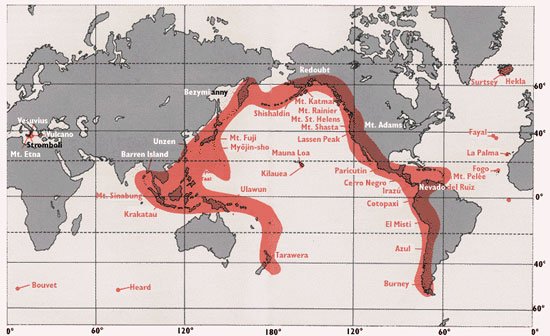
Approximately 75% of the world's volcanoes are located around the Pacific Ocean in a region called the ____________.
Ring of Fire
Volcano Ring
Nucleus of Volcanoes
Center of Fire

the business of trading goods and services
commerce
isolationism
porcelain
to bring a group together after it has been divided
adapted
haiku
reunify

a chain of islands
ondol
khanate
archipelago
competition or opposition between people
reunify
rivalry
embassy
to adjust or modify to fit
adapted
archipelago
kabuki
one of several separate territories into which Genghis Khan's empire was split, each under the rule of one of his sons.
rivalry
embassy
Khanate
a large family-based unit with loyalty to the group
clan
noh
dynastic cycle
a policy of non-participation international economic and political relations
embassy
isolationism
reunify
a diplomatic center that a nation maintains in a foreign country
archipelago
celadon
embassy
Which of these countries is NOT in East Asia?
China
South Korea
Iraq
Japan
Mountains and oceans are great examples of which kind of border?
Physical
Political
Terrace farming is an example of:
Modification
Adaptation
The Ring of Fire is an area in the Pacific Ocean where there are many volcanoes and earthquakes are frequent. What country is in the Ring of Fire?
China
North Korea
South Korea
Japan
What is the border between North and South Korea called?
No Go Zone
Great Wall of China
Demilitarized Zone
No Man's Land
What event happened from 1950 to 1953 that led to the official split of North Korea and South Korea?
Cold War
Korean War
World War 2
DMZ
Korea is what type of land formation?
Peninsula
Island
Archipelago
Plateau
Which of the following is not a country in East Asia?
Japan
Thailand
China
Korea
Macau
What is China's full name?
Republic of China
People's Republic of China
Democratic State of Shianghai
Provincial Capital of China
Hong Kong is a former colony of what country?
China
Great Britain
Spain
America
What are the official languages of Hong Kong?
Chinese and Japanese
Japanese and Hong Kong English
Chinese and English
Fookien and Chinese

Just like our (USA) government, North Korea's government is Limited.
Correct, they both have Limited governments
False, Kim Jong Un has Unlimited power over his people
True, in both countries people can vote for anyone they want

WW II ended shortly after
The Russians captured Berlin, Germany
Adolf Hitler fled to Antarctica
The Japanese attacked Pearl Harbor
2 atomic bombs were dropped on Japan

Protesting in China is
encouraged and supported by the government
not allowed under their Communist form of government
protesting?... this man is just asking the tank driver for directions

Totalitarianism, like in North Korea allows
free use of personal technology like phones, internet, etc.
freedom of speech
the people to elect all their government officials
very few human rights

Terrace farming like the Chinese farm in the picture is and example of
adapting the environment
rebuilding the environment
modifying the environment

Since 1949, who runs China's government?
The King
The President
The People
a group of upper Communist leaders

There is no way to stop natural disasters like earthquake and tsunamis. However, how can we adapt to them?
building sea walls
having early warning systems
building "earthquake proof" buildings
all of these are ways we can adapt
What natural disaster is common in Japan because of it's location on the Ring of Fire?
Earthquakes
Tsunamis
Volcanoes
All the above

What is Japan's main natural resource?
Fruit
Fish
Fresh water
Gold

During the 1970s, China shifted to a ____________ economy.
Command
Market
Communist
Free
What was the result of China shifting to a market economy?
China's economy grew quickly
China suffered a severe famine
China became an isolated country
Mrs. Collins became the president of China

What was the result of the Korean War?
The Korean Peninsula was split into 2 countries
North Korea became a US colony
South Korea adopted communism
Mrs. Collins became the leader of North Korea

Why are Chinese goods generally cheaper than US goods?
China has a smaller population
China has more factories
China has a lower minimum wage
Chinese people work faster
Largest continent in the world
Asia
China
Japan
Europe

Most people live near sources of _________________.
Water
Oil
Diamonds
Coal

