
 Worksheets
AP BIO UNIT 8
Total questions: 30
Worksheet time: 20mins
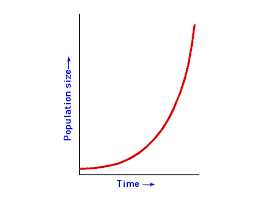
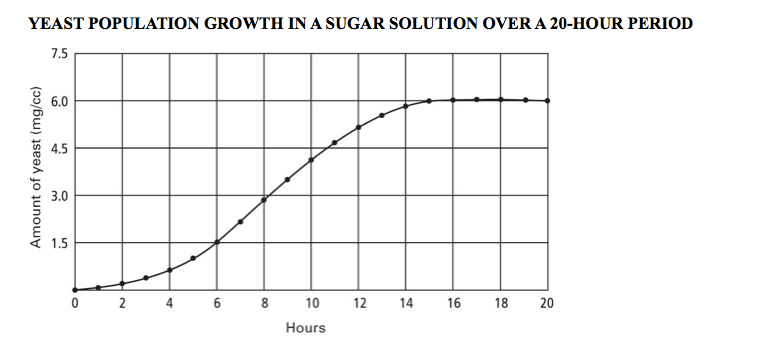
What type of growth is shown in the diagram?
exponential growth
logistic growth
predator-prey cycle
boom-bust curve
Largest number of individuals of a population that the environment can support...
carrying capacity
population
biome
mutualism
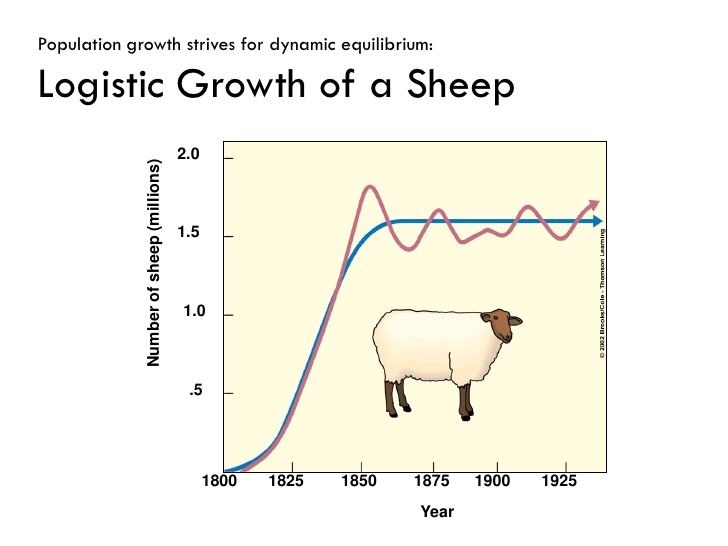
What is the carrying capacity for this sheep population?
2.0 million
1.0 million
1.6 million
0.5 million

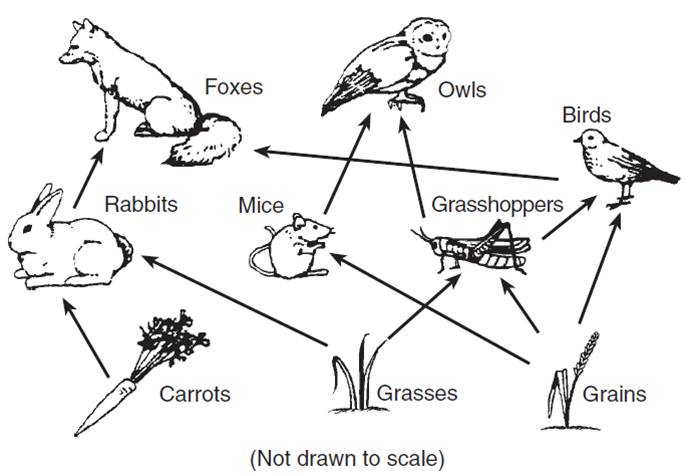
If a disease destroying wheat plants in a field swept through an ecosystem, what would happen to the bird population that feed off of the wheat in the the field ?
The bird population would stay the same
The bird population would increase
The bird population would decrease
If the larvae of a particular species of mosquito are to survive to the adult stage, the eggs must be laid in the trapped pool of water of the northern pitcher plant. The mosquito larvae provide no apparent benefit or harm to the pitcher plant. This type of interaction is an example of
commensalism
mutualism
parasitism
competition

Organisms with low birthrates and increased care of young, would follow which of the following survivorship curves?
Type I
Type II
Type III
Scientists found, that over a period of 200 years, a mountain pond was transformed into a meadow. During that time, several communities of organisms were replaced by different communities. What is this process called?
limiting factors
climax community
pioneer organism
ecological succession

Predator population lags behind prey population because......
Increase in predators leads to decrease in prey
Increase in predators leads to increase in prey
Increase in predators leads to decrease in producers
Increase in producers leads to increase in prey
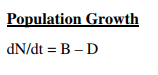
There are 300 falcons living in a certain forest at the beginning of 2013. Suppose that every year there are 50 falcons born and 30 falcons that die.
What is the population growth rate (include units)? Interpret the value.
100
50
20
10
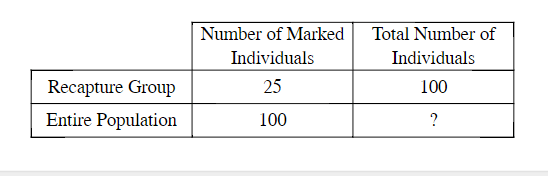
Researchers used the mark-recapture method to estimate the number of individuals in a population. Using the results presented in the table below, estimate the total number of individuals in the population. Give your answer to the nearest whole number.
50
250
400
450
If the producer level of an ecosystem has 750,000 J of energy, how much energy would be passed on to the secondary consumers?
75,000 J
7,500 J
750 J
75 J
Which of the following pose a threat to biodiversity? Choose all that apply.
invasive species
habitat destruction
population growth
pollution
Humans burn fossil fuels and wood, releasing carbon dioxide into the atmosphere. This carbon dioxide is then absorbed by trees for photosynthesis. These processes are contributory to which chemical cycle?
The carbon cycle
The water cycle
The nitrogen cycle
The phosphorous cycle
how a behavior occurs or how it is modified
Proximate Cause
Ultimate Cause
Innate Behavior
Learned Behavior
why a behavior occurs (in context of natural selection)
Proximate Cause
Ultimate Cause
Innate Behavior
Learned Behavior
Hereditary, born behaviors, do not need to learn them
Proximate Cause
Ultimate Cause
Innate Behavior
Learned Behavior
Experiences DO affect these behaviors
Proximate Cause
Ultimate Cause
Innate Behavior
Learned Behavior
movement in response to light
Geotaxis
Chemotaxis
Phototaxis
a regular, long-distance change in location
Proximate Cause
Migration
Kinesis
Taxis
movement in response to chemical signals
Chemotaxis
Phototaxis
Geotaxis
What is a fixed action pattern?
Innate, highly stereotypic behavior, which when begun is continued to completion
evolutionary reason for behavior
the cause of a behavior
scientific study of how animals behave

