
 Worksheets
Fingerprint REVEW
Total questions: 125
Worksheet time: 2hrs 5mins

What pattern is this? (Right hand)
Ulnar Loop
Radial Loop
Plain Whorl
Tented Arch
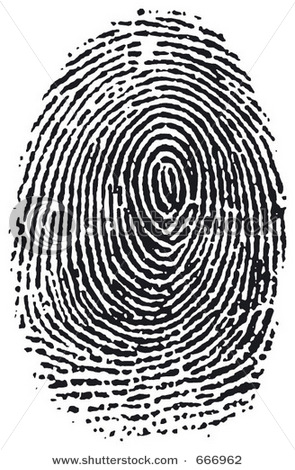
What pattern is this? (Left Hand)
Radial Loop
Ulnar Loop
Plain Whorl
Plain Arch


What pattern is this? (Right Hand)
Tented Arch
Plain Arch
Ulnar Loop
Plain Whorl

What type of fingerprint is this?
Central Pocket Whorl
Plain Whorl
Accidental Whorl
Double Loop Whorl

What type of fingerprint is this?
Central Pocket Whorl
Plain Whorl
Accidental Whorl
Double Loop Whorl

What type of fingerprint is this?
Plain Arch
Tented Arch
Accidental Whorl
Radial Loop

What type of fingerprint is this?
Central Pocket Whorl
Ulnar Loop
Accidental Whorl
Double Loop Whorl

What is the name of this minutiae?
Bifurcation
Splitting Ridge
Delta
Y

What is the name of this minutiae?
Enclosure/Eye
Island
Dot
Bifurcation

What is the name of this minutiae?
Ending Ridge
Spur
Half-Ridge
Partial Ridge

What is the name of this minutiae?
Bridge
Junction
Connector
Zigzag

What is the name of this minutiae?
Island
Speck
Dash
Hyphen

What is the name of this minutiae?
Spur
Hanging Ridge
Overhang
Mini-fork
What is the most common type of fingerprint? (65%)
Arch
Loop
Whorl


What are the red triangles?
deltas
useless
forks
loops
How many Deltas does each fingerprint pattern have
Arches: 0
Loops: 2
Whorls: 1
Arches: 0
Loops: 1
Whorls: 2
Arches: 2
Loops: 2
Whorls: 1
Arches: 1
Loops: 3
Whorls: 2

True or False?
The ridges of a radial loop exits AWAY from the thumb.
TRUE
FALSE

Which Fingerprint pattern is shown in the picture
Loop
Whorl
Arch
Which picture displays a Central Pocket Whorl?


Which general type of print are you looking at here? (Be advised: the print is sideways!)
loop
whorl
arch
accidental
ridge

Which general type of print are you looking at here?
loop
whorl
arch
accidental
ridge

This print is a ______.
central pocket loop whorl
plain whorl
double loop whorl
accidental whorl
tented arch

This print is a ______.
central pocket loop whorl
plain whorl
double loop whorl
accidental whorl
tented arch

This print is a ______.
central pocket loop whorl
plain whorl
double loop whorl
accidental whorl
tented arch

This print is a ______.
central pocket loop whorl
plain whorl
double loop whorl
accidental whorl
tented arch

This print is a ______.
plain arch
radial
ulnar
accidental whorl
tented arch

This print is a ______.
plain arch
right loop
left loop
accidental whorl
tented arch

This print is a ______.
plain arch
radial loop
ulnar loop
accidental whorl
tented arch
Identical twins have identical fingerprints. True or False?
True
False
Fingerprints are left at a scene because of oils that the skin secretes.
True
False
Fingerprint types can change over time. For example, someone's thumb could go from being a double loop whorl to a central pocket loop whorl.
True
False
A print that can be traced as lines that go in one side and out the other is a(n)______.
loop
whorl
arch
Finding a fingerprint at a crime scene proves that a suspect is guilty of the crime you are investigating.
True
False
A visible three dimensional fingerprint made in clay or molding is classified as ___________.
a plastic print
a patent print
a latent print
an arch
a whorl
An invisible fingerprint that needs to be developed through chemicals or dusting is classified as ___________.
a plastic print
a patent print
a latent print
an arch
a whorl
A visible fingerprint (usually on a smooth surface) that is photographable is classified as ___________.
a plastic print
a patent print
a latent print
an arch
a whorl
What purpose do scientists believe fingerprints serve for primates?
immune response
sweating
keeping the skin healthy with oils
very faint touch and grip
Your fingers won't all have the same prints, but both of your index fingers will always match, both of your thumbs will match always each other in type, etc.
True
False

The area of the red circle is a(n)____.
ridge square
delta
dimple
island
left loop

What type of fingerprint evidence is this?
Latent
Patent
Plastic
Potent
Lateral

What type of fingerprint evidence is this?
Latent
Patent
Plastic
Potent
Lateral

What type of fingerprint evidence is this?
Latent
Patent
Plastic
Potent
Lateral
Match the following print evidence types.

latent

plastic

patent

Identify feature at Location 1
fork / bifurcation
central core
ending ridge
short ridge
Identify feature at Location 2
fork / bifurcation
central core
ending ridge
short ridge
Identify feature at Location 3
fork / bifurcation
central core
ending ridge
short ridge
Identify feature at Location 4
fork / bifurcation
central core
ending ridge
short ridge

Identify the feature:
hook
eye
crossover
delta


The number of deltas found in an arch pattern is ______.
zero
one
two
three
The number of deltas found in a loop pattern is ______.
zero
one
two
three
Friction ridges are located on which layer of skin?
The Epidermis
The Dermis
The Hypodermis
What does AFIS an acronym for?
American Fingerprint Identification System
Association of Fingerprint Identification Systems
Automated Fingerprint Identification System
Anatomical Finger Identification System


What are the lines on your fingers that leave impressions called?
follicle
ridges
print marks
roots
What do you call the number of ridges from the core to the delta?
ridge count
ridge index
core to delta count
index
These prints came from the suspects left hand. (Yes he has six fingers) Click on an example of a tented arch.
What are the red triangles?
deltas
useless
forks
loops
Please label the fingerprints with the correct label. All these prints came from right hands of suspects.

Enclosure
Island (pick me! pick me! you know you want to)
Bifurcation (fork)
Ridge ending

Sludge
Island (dot)
Bifurcation (fork)
Pore

Identify the minutiaes in this print:
1. (a)
2. (b)
3. (c)
4. (d)
5. (e)

Name this minutiae type
Enclosure
Island
Bifurcation (fork)
Ridge ending

Ridge Count: how many lines are there in between the delta and the core?
(a)
No two people have been found with exactly the same fingerprint pattern.
True
False
How many times will your fingerprint pattern change throughout your life?
Three times
Your fingerprint pattern will change anytime you get a scar or due to skin disease.
The pattern will never change.
It will change as you grow from a baby to an adult.
Identify the WHORL fingerprint pattern.


Identify the arch fingerprint pattern.


What percentage of the population have a whorl pattern?
60% of the population
5% of the population
65% of the population
About 30% of the population
Which fingerprint pattern is the most common?
Loop
Arch
Whorl
Ridge
Which fingerprint pattern is the most rare?
Delta
Loop
Arch
Whorl
The core of a fingerprint can be found in:
the centre of a whorl or loop
the centre of a delta
the centre of a ridge

Label the diagram.
A: Ridge count area
B: Delta
C: Core
A: Delta
B: Ridge count area
C: Core
A: Core
B: Ridge count area
C: Delta
A: Core
B: Delta
C: Ridge count area
What is a delta?
A triangular region near a loop.
The centre of a whorl or loop.
It distinguishes one fingerprint from another.
A circular region near a loop.
What is the loop that opens towards the little finger called?
Radial loop
Ulnar loop
Delta loop
Recurring loop

What type of whorl is this?
Accidental
Double loop
Central pocket loop
Tented

What type of whorl is this?
Double loop
Central pocket loop
Accidental
Tented

What are the two patterns found in arches?
Circles and spirals
Plain and tented
Tented and looped
Right loops and left loops
How do you permanently erase fingerprints?
You can use chemicals.
You can use sandpaper.
You can only erase them temporarily, they will grow back.
If you have skin problems, they will be erased.
What is a latent fingerprint?
An impression left in soft material such as putty, wax or soap.
A fingerprint made by paint.
A fingerprint made by blood.
A fingerprint that is invisible to the eye.
What is a plastic print?
A fingerprint that is invisible to the eye.
A fingerprint that leaves an impression in wax, soap or dust.
A fingerprint made by touching paint.
A fingerprint made by touching plastic.
Fingerprints are formed
shortly after birth
at about two years of age
10 weeks' gestation
17 wees' pregnancy
Fingerprints contain many different patterns and detailed shapes known as ridge characteristics or ________.
ridges
arches
minutiae
whorls
The quality (and accuracy) of fingerprints in identification is dependent on...
the persons ridge patterns
the fingerprint examiner
the eyewitness
the judge
The most rare fingerprint pattern is the
loop
whorl
arch

What is this minutiae pattern called?
eye
double bifurcation
fork in the road
ridge ending
A small triangular region found in a fingerprint is called what?
delta
arch
core
eye

What type of fingerprint is shown here?
this is not a fingerprint
loop
whorl
arch

What type of fingerprint is shown here?
Loop
Arch
Whorl
What type of fingerprints are not seen, they are hidden prints left by transfer of oils or other body secretions?
Latent
Patent
Plastic
What type of fingerprints are indentations left in some soft material such as clay, putty or wax?
Plastic
Patent
Latent

What type of minutiae is this?
Dot
Island
core
delta
This chemical will lift fingerprints off paper
Iodine Fuming
Water
Silver Nitrate
Ninhydrin
This will lift fingerprints from wood or styrofoam
Silver Nitrate
Super Glue
Ninhydrin
Water

What is this minutiae pattern shown?
Whorl
Eye
Island
Ridge Ending

The red circleidentifies a______ on this print.
ridge ending
ridge island
bifurcation
ridge dot
lakes

The red circles identify ______ on this print.
ridge endings
ridge islands
bifurcation
ridge dots
lakes

The red circle identifies a ______ on this print.
ridge ending
ridge island
bifurcation
ridge dot
lake

Name this minutiae type
Enclosure
Island
Bifurcation (fork)
Ridge ending
What component of a fingerprint is highly specific to an individual?
Class
Minutiae
Subclass
Class and subclass


Identify circle 2
short ridge
bridge
lake
ridge ending

Identify circle 3
bifurcation
ridge ending
spur
lake

Identify circle 4
spur
short ridge
bridge
ridge ending

Identify circle 6
lake
bridge
bifurcation
spur

Identify circle 4
Short Ridge
Bridge
Ridge Ending
Spur

Identify circle 2
dot
Spur
Bifurcation
Bridge

Identify circle 3
Ridge ending
Bridge
Dot
Bifurcation

Which of the following is a double loop whorl?


Which print matches this one?


