
Font size
 Worksheets
Diffusion
Total questions: 20
Worksheet time: 10mins
What is diffusion?
The movement of particles from low concentration to high concentration.
The movement of particles from high concentration to low concentration.
Active movement of particles, requiring energy from respiration.
Which process is responsible for gas exchange in the lungs?
Diffusion
Osmosis
Active transport
Why do large multicellular organisms need transport systems while simple unicellular organisms do not?
Large organisms have a much smaller surface area to volume ratio compared to smaller ones.
Diffusion does not work in large multicellular organisms.
Unicellular organisms have a much smaller surface area to volume ratio than multicellular organisms.
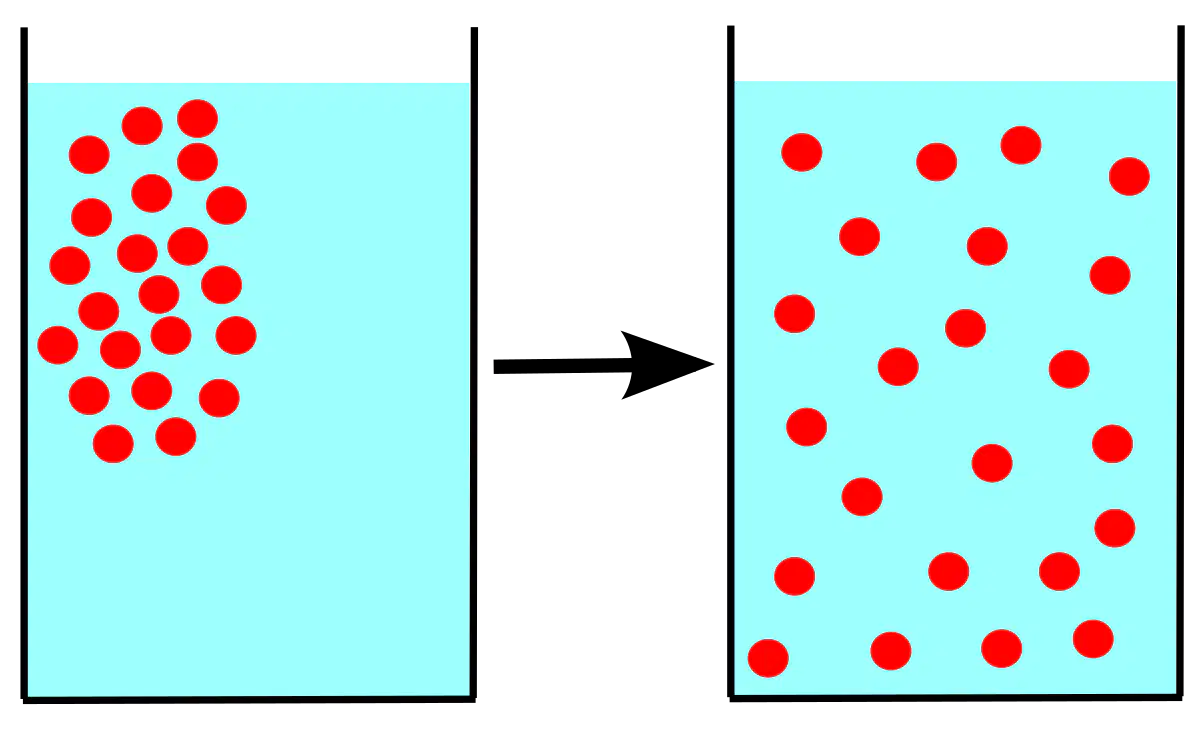
the movement of particles from an area of high concentration to an area of low concentration
diffusion
infusion
solution
active transport
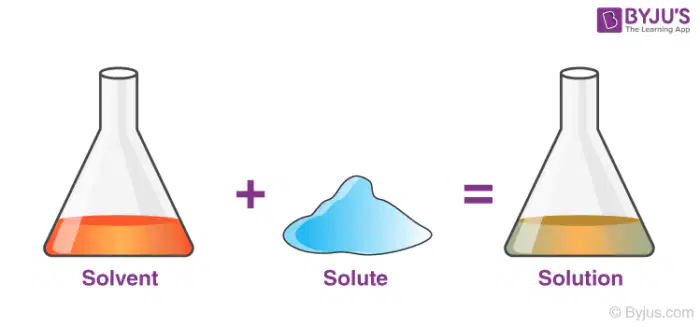
the substance that is being dissolved for example, salt or sugar
solution
solute
solvent
The amount of particles in an area is know as
mutation
constant
isolation
concentration
A cell does not need to use energy during
active transport
passive trasport
Passive transport occurs when small particles move from
areas of lower to areas of higher concentration.
inside a cell to outside a cell.
areas of higher to areas of lower concentration.
outside a cell to inside a cell.
A cell moving particles with the use of energy is called
passive transport.
active transport.
osmosis.
endocytosis.
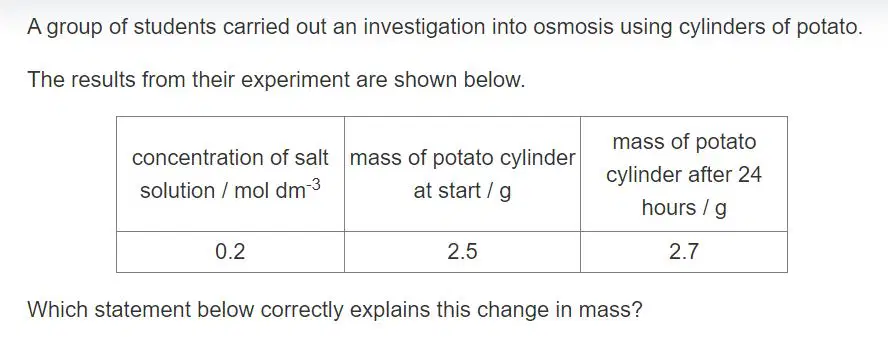
the salt solution has a lower water potential than the potato cells
the salt solution has a higher water potential than the potato cells
the salt solution has a lower water potential thank the potato cells
the salt solution has a higher water potential than the potato cells.
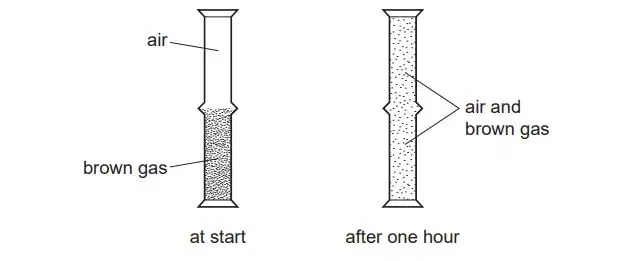
A jar of air was placed upside down on top of a jar containing a brown gas as shown.
Which process has taken place?
diffusion both upwards and downwards
diffusion downwards only
diffusion upwards only
diffusion and osmosis
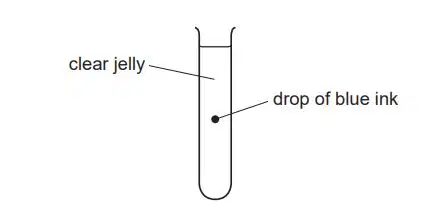
The diagram shows a test-tube containing clear jelly. A drop of blue ink is injected into the middle of the jelly
The blue colour of the ink spreads throughout the jelly. By which process does the blue ink spread through the jelly?
active transport
catalysis
diffusion
osmosis
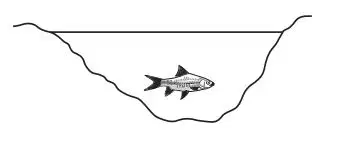
The diagram shows a fish in a pond.
Why does oxygen diffuse from the air into the water before reaching the fish?
Oxygen is more concentrated in the air than in the water.
Oxygen is more concentrated in the water than in the air.
Oxygen is needed by the fish for aerobic respiration.
Oxygen is needed by the fish for anaerobic respiration.
How do carbon dioxide and oxygen move in and out of a mesophyll cell?
active transport
diffusion
respiration
transpiration
If we increase the kinetic energy of molecules of a gas or a solution...
the rate of diffusion will decrease
the rate of diffusion will increase
the rate of diffusion will depreciate
the rate of diffusion will cease
The movement of molecules from an area of high concentration to an area of low concentration is
diffusion
passive transport
osmosis
all of the above
Small changes of particles moving across the membrane that sum together to produce no net change.
equilibrium
dynamic equilibrium
net movement
How does the body remove carbon dioxide from the cells?
The body cells converts carbon dioxide into carbon monoxide
The body cells don't expel the waste, they store them for future use
The body cells expel the carbon dioxide through the use of the nucleus
The carbon dioide diffuses out of the body cells and into the bloodstream due to differences in the concentration gradient

The relative amount of a given substance contained within a solution or in a particular volume of space; the amount of solute per unit volume of solution. The higher the concentration, the more solute is present.
concentration gradient
concentration
[high] --> [low]

