
 Worksheets
Classification Review
Total questions: 40
Worksheet time: 28mins
Why is the most specific taxonomy category?
Kingdom
Domain
Species
Order
What kingdom would a human belong to?
Plant
Animalia
Protist
Fungi
Who created the system of Taxonomy?
Albert Einstein
Carolus Linnaeus
Aristotle
Copernicus


Binomial Nomenclature takes which two taxons to name a species?
Genus and Kingdom
Phylum and Class
Family and class
Genus and species
Canis lupus
What would the scientific name of this organism be?
Kingdom: Animalia
Phylum: Chordata
Class: Mammalia
Order: Carnivora
Family:Canidae
Genus: Canis
species: mesomelas
Mammalia carnivora
Canidae mesomelas
Canis mesomelas
Animalia chordata
This scientific name is HANDWRITTEN correctly.
Phoca Vitulina
TRUE
FALSE
This scientific name is TYPED correctly.
Orcinus orca
TRUE
FALSE
What language is used to create scientific names?
English
Greek
Latin
French
Scientists who classify organisms are known as taxonomists.
TRUE
FALSE
What level comes before class?
phylum
domain
order
family
The 4 eukaryote kingdoms are Animals, Plants, Fungi, and
Bacteria
Archaea
Humans
Protists
What is a prokaryote?
an organism that has nuclei in its cells
an autotroph
a heterotroph
an organism without a nucleus in its cells
A heterotroph
cannot make its own food.
is able to make its food.
Which of these is an autotroph?
mushroom
rose
seal
tiger
What is the correct order of classification?family
kingdom, domain, phylum, class, order, family, genus, species
domain, kingdom, phylum, class, order, family, genus, species
domain, phylum, class, order, kingdom, family, genus, species
species, genus, family, phylum, order, class, domain, kingdom
I am prokaryotic
I am found in extreme ecosystems
What kingdom do I belong to?

The image shows an organism growing on the surface of the bread. Which kingdom would this organism belong to?
Kingdom Fungi
Kingdom Protista
Kingdom Animalia
Kingdom Plantae
Which list of characteristics describes organisms classified as animals?
Unicellular, prokaryotic, autotrophic
Multicellular, eukaryotic, heterotrophic
Unicellular, eukaryotic, heterotrophic
Multicellular, eukaryotic, autotrophic
Which of the following sets of animals would be the most closely related?
Animals in the same order
Animals in the same genus
Animals in the same class
Animals in the same family
Which of the following sets of insects would be the most closely related?
Insects in the same class
Insects in the same family
Insects in the same order
Insects in the same species
Black panthers (Panthera onca) are a color variant of a species of large cats. Black panthers would be most closely related to what organism listed below?
Tiger (Panthera tigris)
Cheetah (Acinonyx jubatus)
Puma (Puma concolor)
Jaguar (Panthera onca)

G. Atlantica and G Stehlini are the least closely related
G. Simonyi and G. Bravoana are the most closely related
G. Galloti eisentrauti and G galloti palmae are the most closely related
G galloti eisentrauti and G. galloti galloti are the least closely related

A
B
C
D
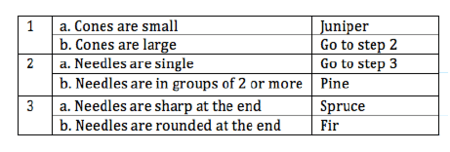
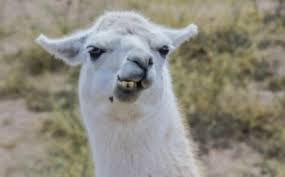
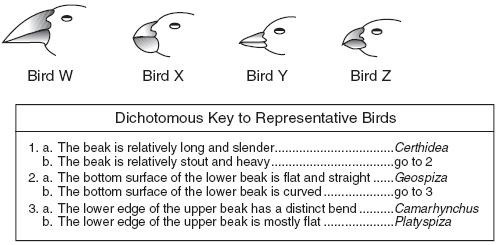
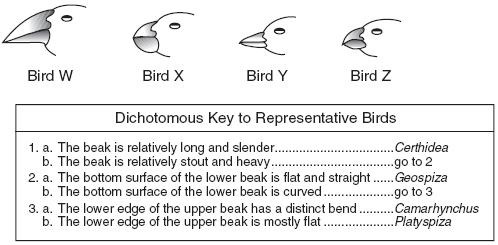
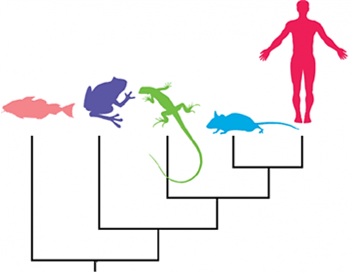
What is the human most closely related to?
Fish
mouse
Salamander
Human
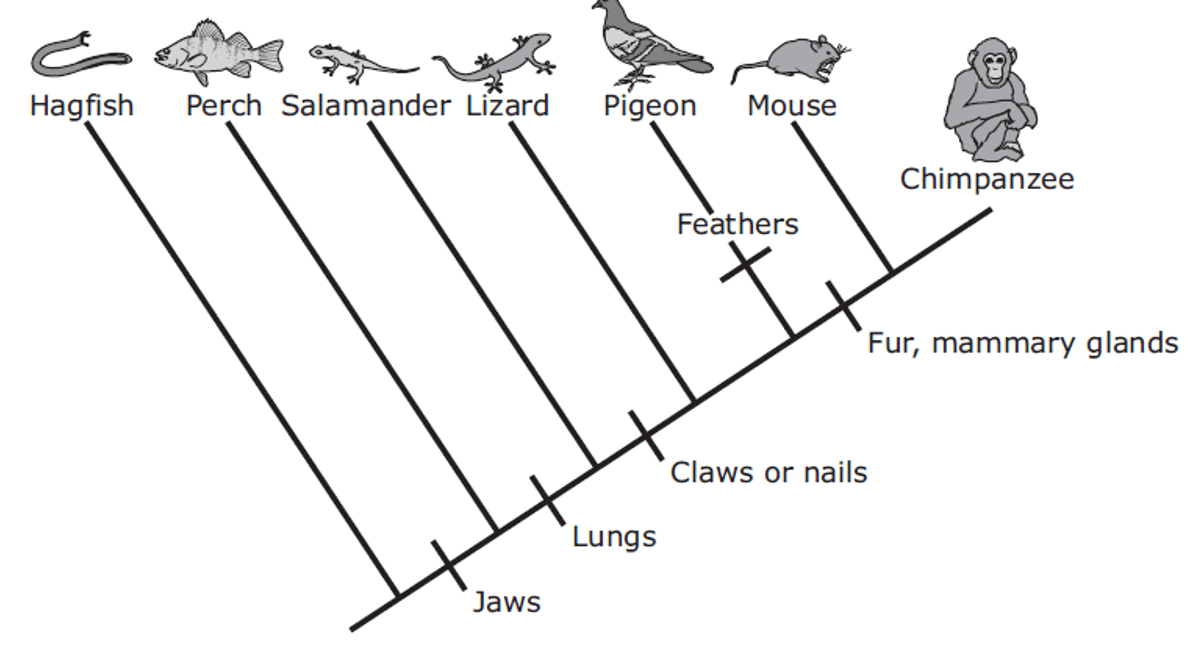
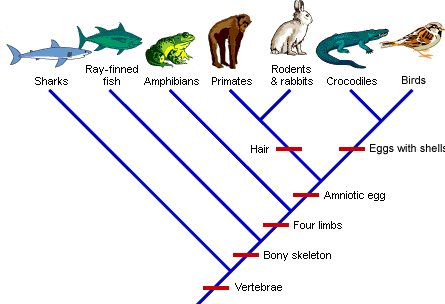

What characteristics do all of these animals have in common?
Vertebrate
Lungs
Endothermic
Mammal
Which best describes derived characteristics?
They appear in all the ancestors.
They appear at the end of each branch.
They are newly evolved traits.
They stem from primary characteristics.

Which trait(s) do conifers have?
vascular tissue only
vascular tissue and seeds
vascular tissue, seeds and flowers
seeds only

This dichotomous key can be used to distinguish white wildflowers found in Virginia. According to this key, what type of flower is shown?
Gillenia trifoliata
Fragaria virginiana
Trientalis borealis
Stellaria media

