
 Worksheets
Domain 1: Atoms, Nuclear, and the Periodic Table
Total questions: 55
Worksheet time: 46mins
An element that scientists are trying to classify is shiny, conductive, loses electrons, and forms a +1 oxidation state. This element is:
A nonmetal in the halogen family
A metal in the alkaline earth metals
A nonmetal in the chalcogens (Oxygen) family
A metal in the alkali metal family (Group 1A)

The atomic number of Beryllium is 4. Its mass number is 9.0122. How many neutrons does an atom of Beryllium have in its nucleus?
4
4.0122
5.0122
6
Isotopes of an element have different number of ___________ and therefore have different masses.
Proton
Neutron
Electon
What is the difference between Neon-20 and Neon-22?
They have different numbers of electrons.
They have different numbers of neutrons.
Only 1 is radioactive.
No difference.
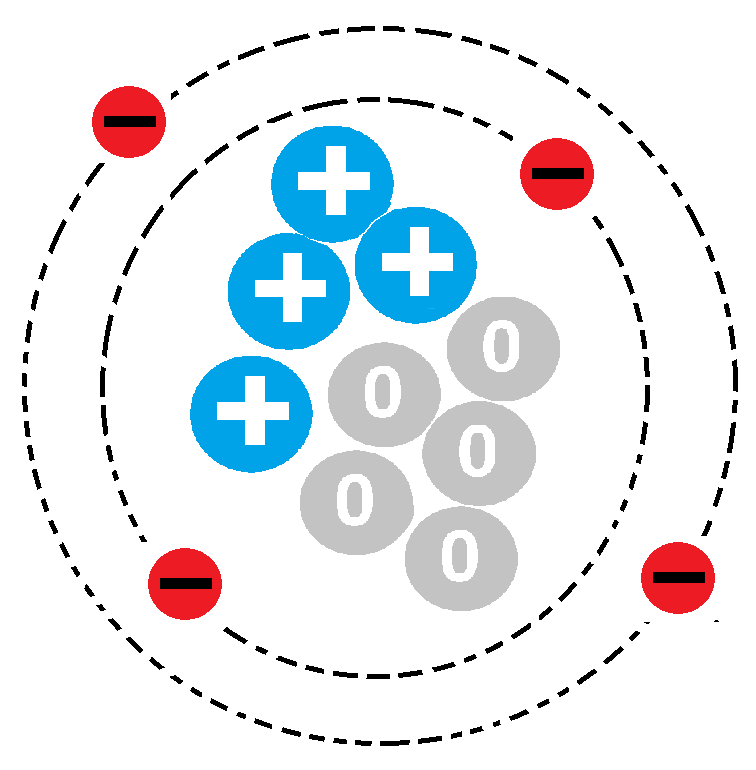
How many dots would you put around carbon, a group 14 element?
4
6
8
18

This is a correct dot diagram for neon (Ne)
true
false
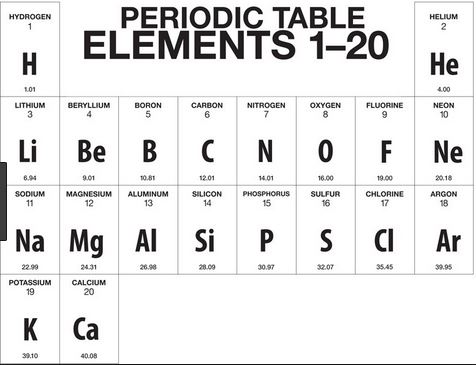
How many valence electrons does Aluminum Have?
1 Valence electron
2 Valence electron
3 Valence electron
4 Valence electron
5 Valence electron
Which is the correct molecular structure for carbon dioxide?


How many valence electrons does Phosphorus Have?
1 Valence electron
2 Valence electron
3 Valence electron
4 Valence electron
5 Valence electron
How many valence electrons does Sodium Have?
1 Valence electron
2 Valence electron
3 Valence electron
4 Valence electron
5 Valence electron
How many valence electrons does Boron Have?
1 Valence electron
2 Valence electron
3 Valence electron
4 Valence electron
5 Valence electron
Has a mass of 4, with 2 protons.
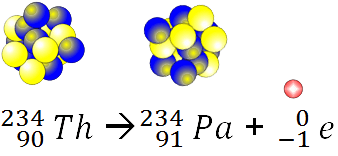


Which of the following is an example of a situation in which exothermic chemical reactions occur?
Ice cubes melt into water
Boiling pots of water turn to steam
Fireworks explode during a holiday.
Pieces of KCl dissolve in water.
What number should precede H2 in the chemical equation below in order for the equation to be balanced?
___ H2 +N2 -----> 2NH3
1
2
3
4
As you move from left to right across a row of elements in the periodic table, what happens to the number of neutrons in a typical atom?
It stays the same
It increases
It decreases
It decreases until you reach the middle and then it increases.
Aluminum oxide, Al2O3, is produced by combining Al3+ and O2-particles. What type of compound has been formed?
covalent
ionic
metallic
molecular
An ionic bond typically forms between certain types of elements. Which pair of elements will form an ionic compound?
Na and Cu
K and Cl
Ne and O
Li andMg
To use radioactive dating for a substance, you must know the substance's
melting point
half-life
rate of weathering or erosion
heat of reaction
Which group of has eight valence electrons in its elemental form?
noble gases
alkaline earth metals
halogens
alkali metals
Determined whether the following equation is balanced or unbalanced. Ag + O2 ---> 2Ag2O
Balanced
Unbalanced
In order for an equation to be balanced, there must be ...
an equal amount of atoms on both sides
a greater mass on the product side
a greater mass on the reactant side
elements with the same atomic # on both sides
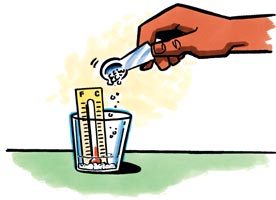
Fe + O2 -> Fe2O3
Balance the following chemical equation:
____KClO3 → ____KCl + ____O2
2KClO3 → 4KCl + O2
4KClO3 → 2KCl + 3O2
2KClO3 → 2KCl + 3O2
Which type of chemical reaction has two or more reactants to make one product?
combustion
single displacement
double displacement
synthesis
decomposition
Identify the following chemical reaction.
2 NaBr + 1 Ca(OH)2 ----> 1 CaBr2 + 2 NaOH
Synthesis (or combination)
Decomposition
Single displacement
Double displacement
Identify the following chemical reaction.
3 HBr + 1 Al(OH)3 ----> 3 H2O + 1 AlBr3
Synthesis (or combination)
Decomposition
Single displacement
Double displacement
Identify the following chemical reaction.
Pb + FeSO4 ----> PbSO4 + Fe
Synthesis (or combination)
Decomposition
Single displacement
Double displacement
What reaction has the following general formula:
AB --> A + B
Synthesis
Decomposition
Single Replacement
Double Replacement
Combustion
What reaction has the following general formula:
A + CD --> C + AD
Synthesis
Decomposition
Single Replacement
Double Replacement
Combustion
What reaction has the following general formula:
AB + CD --> CB + AD
Synthesis
Decomposition
Single Replacement
Double Replacement
Combustion
What reaction has the following general formula:
A + B --> AB
Synthesis
Decomposition
Single Replacement
Double Replacement
Combustion
Which phrase describes what happens to atoms in a chemical reaction?
never lost or gained, just rearranged
sometimes lost, never rearranged
sometimes lost, gained, or rearranged
lost or gained, never rearranged
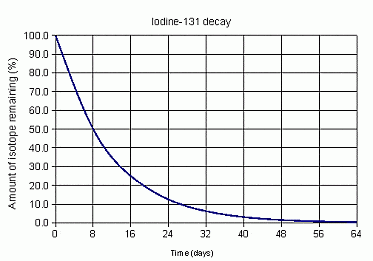
The % of the parent isotope remaining after 1 Half Life.
50%
25%
12.5%
6.25%
The % of the parent isotope remaining after 2 Half Lives.
50%
25%
12.5%
6.25%

After the third half-life, how much of the sample is left?
1/2
1/3
1/16
1/8
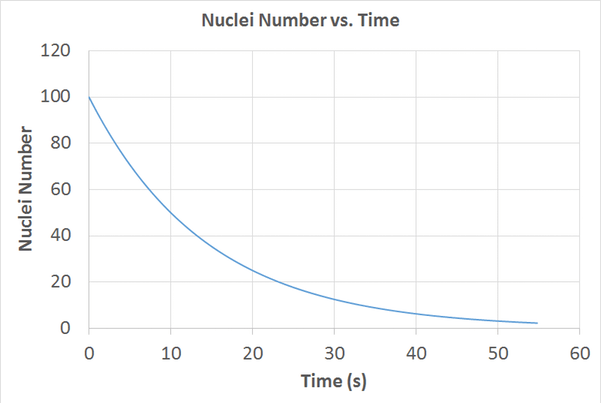
What is the Half life of this isotope?
5 seconds
10 seconds
15 seconds
20 seconds
N2O4
NF3

The positive ions tend to _____________ electrons.
lose
gain
The negative ions tend to _____________ electrons.
lose
gain

