
Font size
 Worksheets
EOG Review 5/1-5/5
Total questions: 80
Worksheet time: 40mins
John is a boy scout. VS John was a boy scout.
Jill sees a bird. VS Jill saw a bird.
The dog runs fast. VS The dog ran fast.
Each of these opposing sentences shows a change from a verb in the present tense to a verb in the (a) tense.
John is a boy scout. VS He was a boy scout.
Jill sees a bird. VS She saw a bird.
The dog runs fast. VS It ran fast.
In each of the opposing sentences a noun in the first sentence is replaced by its matching (a) in the second sentence.
My friend is sometimes hasty when he does his homework. He does it too quickly and is careless.
The word hasty can be figured out using several types of clues. The tone of the two sentences tells us that the author considers being hasty a (a) quality.
My friend is sometimes hasty when he does his homework. He does it too quickly and is careless.
Another type of clue to help us figure out the meaning of hasty is its function/purpose in the sentence. Here, it is used to (a) my friend "when he does his homework."
My friend is sometimes hasty when he does his homework. He does IT too quickly and is careless.
What is IT in the second sentence?
(a)
My friend is sometimes hasty WHEN he does his homework. He does it too quickly and is careless.
WHEN is a signal word indicating the sentence's structure is a (a) . WHEN shows that he is doing his homework at the same time he is hasty.
My friend is sometimes hasty when he does his homework. He does it too quickly and is careless.
The second sentence give us a definition of hasty. He does his homework (a) . This makes him hasty.
What did Jackie Robinson do that allowed him to block out (ignore) the names he was called while playing baseball?
To answer this question you must see a (a) relationship between what Jackie did and the result he got when he did it.
1. I heard Mrs. Jones ask me to stop talking. I was confused since I wasn't, so I asked her why she thought I was talking.
2. Jimmy looked confused when Mrs. Jones asked him to stop talking. He politely asked her, "Why do you think I'm talking?"
These 2 examples show the same event, but from different (a) .
What is the most likely reason Jessica pretends not to see Carl when he walks by?
What reading skill does this question ask you to use to get the correct answer?
(a)
Whose wife made speeches with Amelia Earhart?
What type of question (QAR) is this?
(a)
In paragraph 10, what is the meaning of the word impressed?
As you figure out the meaning of this word, make sure you go back to paragraph 10 and read several (a) before and several after to get as much context as possible.
What is the main idea of the selection?
What type of question (QAR) is this?
(a)
What is the meaning of “always kind of kicked the idea around a little bit” in
paragraph 5?
As you answer this question, you must recognize that “always kind of kicked the idea around a little bit” is not literal but (a) .
What does Charlie’s reaction to the frozen switch show about him?
What type of question (QAR) is this?
(a)
Which quote from the text supports the theme of bravery?
By reading the questions for each passage before reading the passage, you can gain insight about it. Here, you find out that the author wants to teach about bravery. Reading questions first is one type of (a) .
According to the text, why were the dinosaurs in Dinosaur Cove unable to move to
a warmer place?
What type of question (QAR) is this?
(a)
A chef uses many utensils in the kitchen such as a knife, a spatula, and a thermometer.
What type of context clue helps you to figure out what utensils are?
(a)
If a question asks you how two characters are similar, the skill you are being asked to use is your ability to (a) .
If the question asks you "What is the author's attitude toward a character?", the skill you are being asked to use is your understanding of (a) .
What does the action Libby took to save the team show about her character?
What type of question (QAR) is this?
(a)
When you read texts about subjects (people, places, things) you already know a lot about, you will comprehend more of what you read. Therefore you should always Access Your (a) before you begin reading.
Which statement from the text supports the idea that being a chef is more than
just cooking?
What type of question (QAR) is this?
(a)
Definition
to be an important factor; help to cause something. Synonyms = add to, strengthen, support, help.
Sentence
How does Trigger learning how to stop a train (a) to the end of the text?
According to the text, why were the dinosaurs in Dinosaur Cove unable to move to
a warmer place?
The question asks you to use your understanding of the concept of (a) in order to answer it.
Why was Amelia Earhart asked to be a career counselor?
What type of Question (QAR) is this?
(a)
Reading the questions for each passage (a) you read the passage can help you to learn important information which may help you to understand it better!
What is Paragraph 3 mostly about?
This question is simply asking you to demonstrate you understanding of what reading skill?
(a)
Bamboo is light yet durable.
What is the sentence structure you can use to help you figure out what durable means?
(a)
Lines, stanzas, rhyme, and figurative language are all elements of (a) ?
1. The man ate his food.
2. The greedy man selfishly ate his food as starving children watched.
3. The compassionate man tearfully ate his food, and he shared as much as possible with the needy children.
These sentences share the same event but with very different (a) toward the man who is eating.
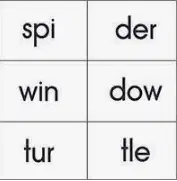
When you come to a word you don't recognize by sight as you read, you should try to figure it out by (a) . To do this, you break it into syllables and try to pronounce each syllable.

Many words you know have common word (a) , so they have similar meanings. For example cycl means circle. Bicycle, recycle, and cyclone all contain this root.
Definition
make (an idea, situation, or problem) clear to someone by describing it in more detail or revealing relevant facts or ideas.
(a)
Definition
To figure something out in order to get an answer. For example, you can (a) the meaning of a word by looking it up in a dictionary.
Definition
to tell about or explain using characteristics or features or to show using examples or visual images. For example, if I wanted to (a) my dog, I might say he is small, black and white, and hairy.
Definition
to recognize or find a particular person or thing. For example, you can (a) a poisonous snake by its fangs and triangular shaped head.
Definition
to mention while speaking or writing. Example: Mr. Smith would often (a) to his dog as the best in the world.
"I saw my fingers and couldn't believe they were mine." This is called first (1st) person narration.
"He saw his fingers and couldn't believe they were his." This is called (a) person narration.
Sometimes questions will ask you to "make an inference" and sometimes they will ask you to " (a) a conclusion."
Almost all nonfiction paragraphs have a main idea which may or not be directly stated in a topic sentence. If the paragraph does have a topic sentence, it is most likely the (a) sentence.
Information from a text which supports your argument (opinion) is called (a) .
All fictional stories have events which happen to the characters. These events are part of the story's (a) .
When you show how two or more things are different, you are showing how they (a) .
The order in which events happen is called their (a) .
Man vs Man, Man vs Self, Man vs Nature, Man vs Society are all types of (a) .
The person who tells the story, and who is sometimes a character in that story, is called the (a) .
Donnie's sophomoric (immature) behavior got him into a lot of trouble with his teachers.
What type of context clue is used to help you figure out the meaning of sophomoric.?
(a)
Mr. Smith has a heart of gold.
Since it is impossible for a human to actually have a heart made out of gold, this sentence must be (a) language.
The monarchy 1 in Great Britain is as old as the country itself.
The raised number 1 is called a (a) and it lets you know that the word "monarchy" is defined or explained at the bottom of the page.
Avoid random guessing on multiple-choice tests. If you simply cannot determine the correct answer, (a) at least one or two choices before taking an educated guess.
Reading the title of an informational article can help you figure out its central idea. Other great places to get help figuring out the central idea are in the (a) and the conclusion of the article.
Ricky was loquacious, and his sister, Ruth, was also talkative. The type of context clue used is this sentence to help you figure out the meaning of the underlined word is (a) .
Big and small are (a) because they have opposite meanings.
Main ideas are supported by (a) .
A conversation between characters in a book, story, or play.
(a)
Clues which help you describe a character (called characterization) can be found in what he says, what he does, and what he (a) .
Cause and Effect, Comparison/Contrast, Sequence, and Description are all common text (a) you will encounter as you read.
1. I would gladly die again for the country I love.
2. He loves his country enough to die for it.
3. I regret that I have but one life to give for my country.
These 3 sentences all mean the same thing. Number 2 is a (a) .
Characters, setting, conflict, plot, theme, resolution are all terms we associate with which type of writing?
(a)
Someone's exact words. In fiction it might be what a character says to another. In nonfiction it might be what someone being interviewed said when asked a question.
(a)
Information an author uses to explain Who? What? When? Where? Why? How? They support main ideas.
(a)
When you shorten a paragraph or text by only telling the main idea and the most important supporting details, you are giving a (a) .
Where and when a fictional story takes place is called its (a) .
(a) can mean the position of the narrator (part of the action or just an observer) OR it can mean how someone views the situation (their opinion).
One key characteristic of informational writing which helps you tell it apart from fiction is that it uses bold section dividers called (a) .
What is the Question Answer Relationship (question type) for this question? Based on paragraph 3, why did Bess quit her job?
(a)
What type of context clue is given in the following example? Jane is articulate while Russ has a very small vocabulary.
(a)
When taking a multiple-choice test, you should always try to answer the question without looking at the answer choices before you try to use the (a) to get your answer.
If you want to comprehend what you read, you must read (a) . This means that you read at a comfortable pace, making sure to pay attention to punctuation which will cause you to pause or stop.
An educated guess made while reading and which is based on evidence from the text is called a(n) (a) .
Writers of fiction want their story to teach a moral, message, or lesson about life to readers. This is called a story's (a) .
All writers view what they write about (topics, subjects, characters, settings, etc.) in a certain way. These attitudes called (a) can be generally described as positive, negative, or neutral.
What a paragraph is mostly about is called its (a) .
In a poem the narrator is called the (a) .
According to the text, who was the town's mayor? This type of question is called a (a) Question.
What are the reasons George gives to explain why he was not at the party? This type of question is called a (a) Question.
What conclusion can you draw from the fact that John did not shake Paul's hand after the game? This type of question is called a (a) Question.
The first step to answering any question is to make sure you understand what it is asking. To do this, you must first (a) the question.
If you are asked to determine the "central idea" of an informational text, there are several strategies you should use. However, the first place you should look to help you figure out the BIG IDEA of a text is the (a) .

