
NEW
Font size
 Worksheets
Science SC Ready Astronomy Review
Total questions: 21
Worksheet time: 39mins
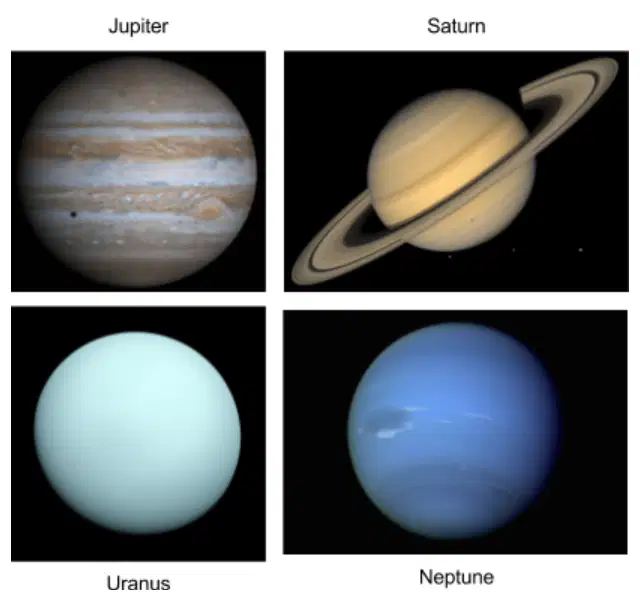
What do the following planets have in common?
They are all gas planets.
They are all small planets.
They are all rocky planets.
They are closest to the Sun.
Which diagram best illustrates the order of the planets in the Solar System?


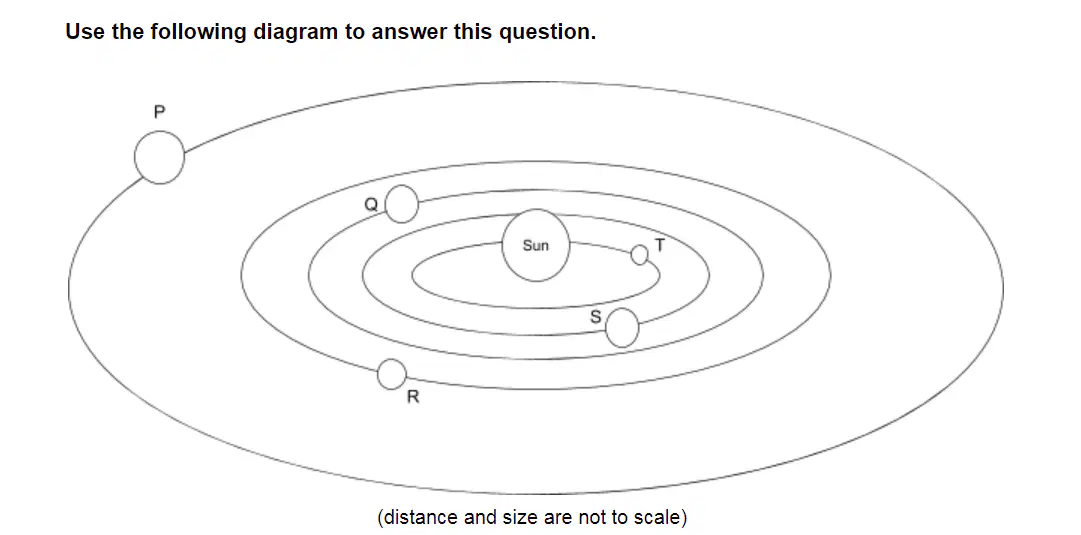
What is the name of the planet at location R in this Solar System model?
Earth
Mars
Mercury
Venus
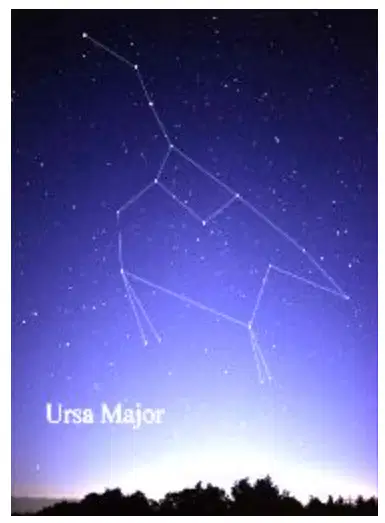
Although some constellations only appear in the night sky during certain times of the year, the constellation Ursa Major is visible in the night sky throughout the entire year.
What is the best explanation for why Ursa Major is visible in the night sky all year?
Ursa Major does not move in the night sky.
Ursa Major revolves around the Sun at the same rate as the Earth.
Ursa Major is closer to the Moon, which is also visible throughout the year.
Ursa Major is in the part of the sky that lines up with the Earth’s North Pole axis.
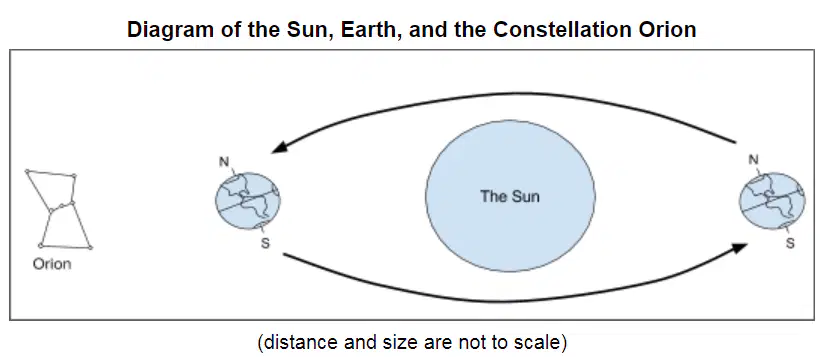
What does this diagram best illustrate about the constellation Orion?
Orion revolves around the Sun similar to the Earth.
Orion is visible in the night sky during the Winter in the Northern hemisphere.
Orion is visible during daytime during the Summer in the Northern hemisphere.
Orion rises in the east at night and sets in the west in the Northern hemisphere.
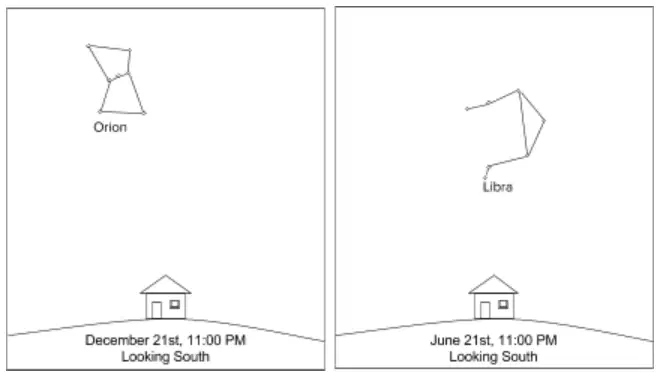
What is the best explanation for why the constellation Orion is visible in the night sky
at 11:00 PM on December 21st
but not at 11:00 PM on June 21st?
As the Earth spins on its axis, Orion rises in the East.
The Full Moon makes the sky too bright to see Orion during the June.
The constellation Orion is closer to the Earth and easier to see during December.
As the Earth revolves around the Sun, we see those stars in the night sky in December.
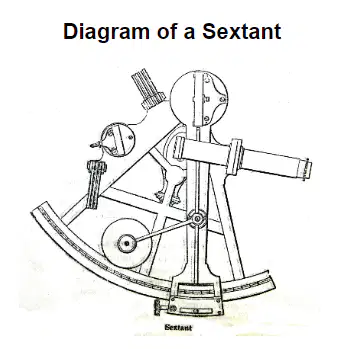
Which of the following evidence best supports the claim astronomy was important in
early navigation and exploration?
Sailors would use sextants to find magnetic North Pole while on a boat at sea.
Sailors would use sextants to measure the distance between land and the Full Moon.
Sailors would use sextants to figure out the time by measuring the position of the Sun.
Sailors would use sextants to measure the angle between the horizon and the North
Star.

What claim is best supported by the information?
Sailors needed to know how to read maps for navigation.
Lots of different devices were used for navigation and exploration.
Knowledge of astronomy was important for navigation and exploration.
Explorers were very clever people who know a great deal about the ocean.

What claim is best supported by the information?
Telescopes gather visible light from far away objects.
Telescopes are essential tools in navigation and exploration.
Telescopes are complex instruments that require specialized training.
Telescopes have contributed to a deeper understanding of astronomy.
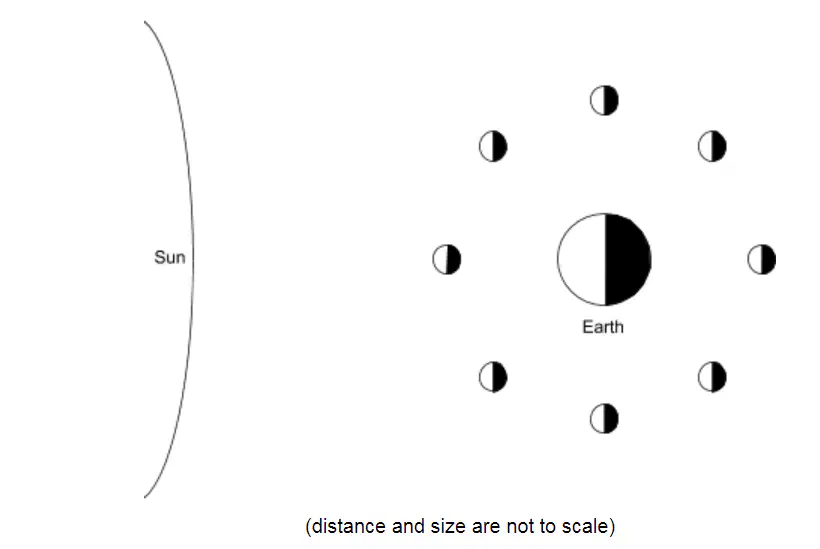
Based on the diagram above, what is the best explanation for why the appearance of
the Moon changes?
The Moon always orbits the Earth on the nighttime side of the planet.
The amount of sunlight the Moon reflects changes over the 29½ day lunar cycle.
As the Moon orbits the Earth, we see different amounts of the side reflecting sunlight.
At different times, part of the Moon’s surface reflecting sunlight is blocked by the Earth.
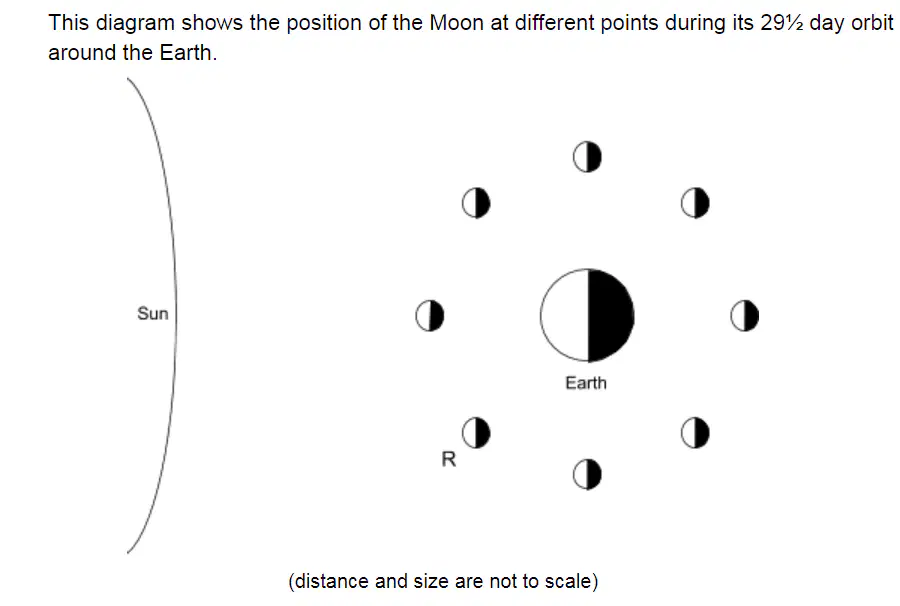
Based on this diagram, what phase of the Moon would a person see at point R?


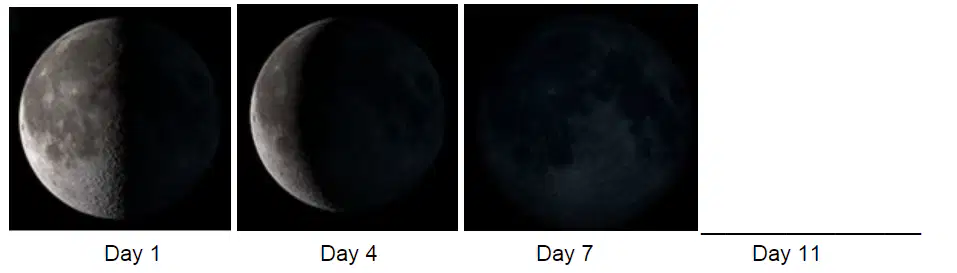
Which picture best represents the Moon’s appearance on Day 11?


Which of the following explanations best describes why the Earth has day and night?
The Sun and Moon are always on opposite sides of the Earth.
The Moon blocks light from the Sun, causing the shadow that creates night.
As the Sun rotates around the Earth, different parts of the Earth receive light.
As the Earth rotates, the part of the Earth’s surface facing the Sun moves into shadow.
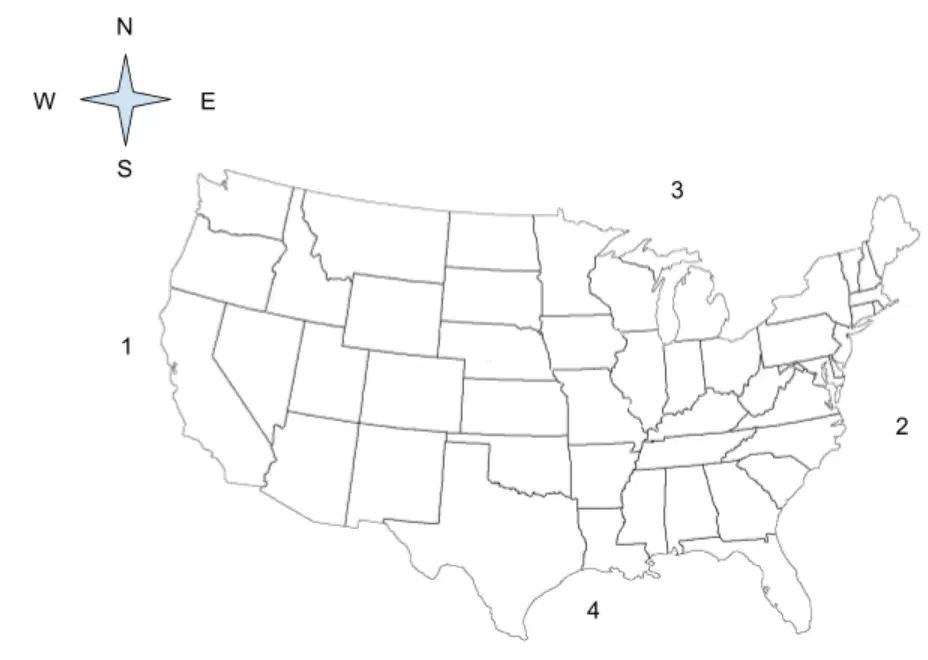
Based on this map, which part of the United States will experience sunrise first?
1
2
3
4
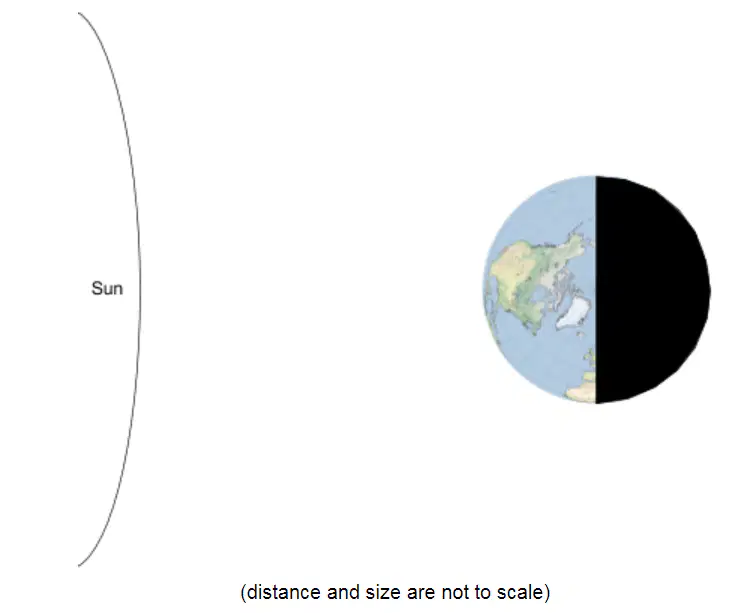
Based on this diagram, what is the best explanation for why the Earth has day and
night?
The Sun rotates on its axis, shining sunlight on different parts of the Earth.
The Earth rotates on its axis, causing different parts to face towards the Sun.
The Sun revolves around the Earth, shining sunlight on different parts the Earth.
The Earth revolves around the Sun, causing different parts to face towards the Sun.
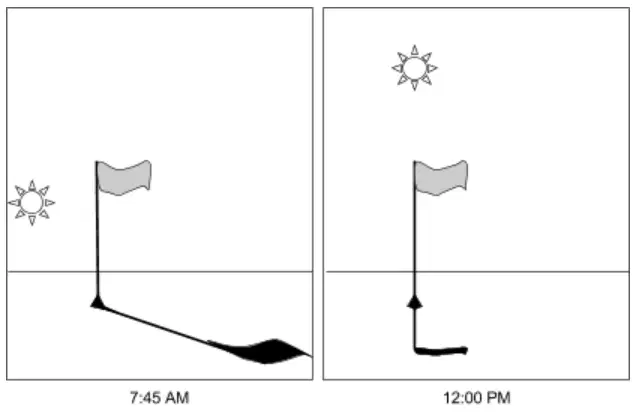
Based on this diagram, what is the best explanation for why the the size and shape of
the shadows changed?
As the Earth rotations, the Sun to appears to move across the sky.
As the seasons change, the position of the Sun in the sky changes.
As the Sun revolves around the Earth, it appears to move across the sky.
As the Earth gets closer to the Sun at noon, the Sun appears to climb higher the sky.
Which diagram best illustrates how the shadow will appear at sunset?


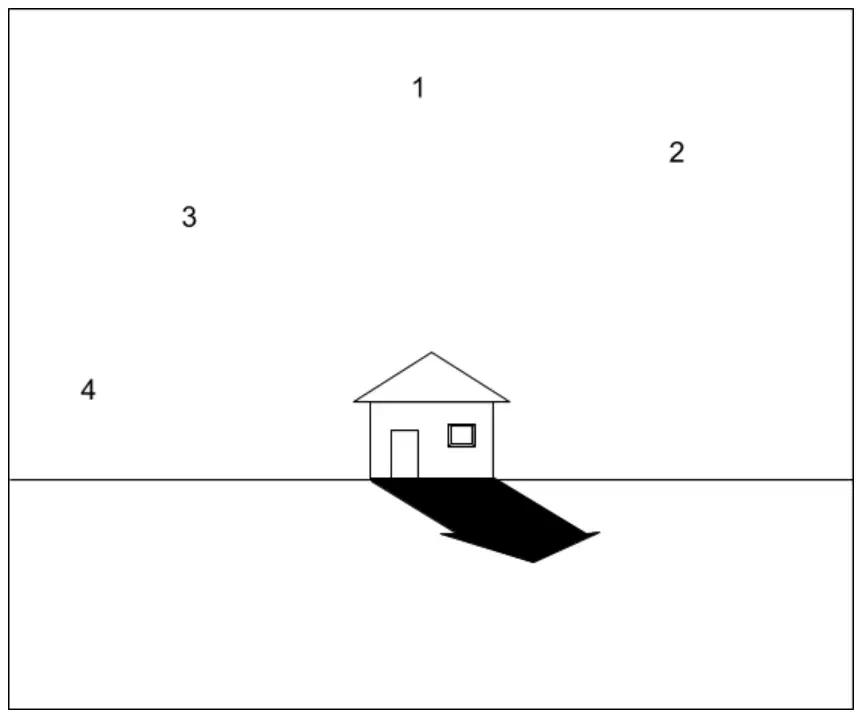
Select the number that best shows the position of the Sun in the sky that would cast
the shadow in the diagram above?
1
2
3
4
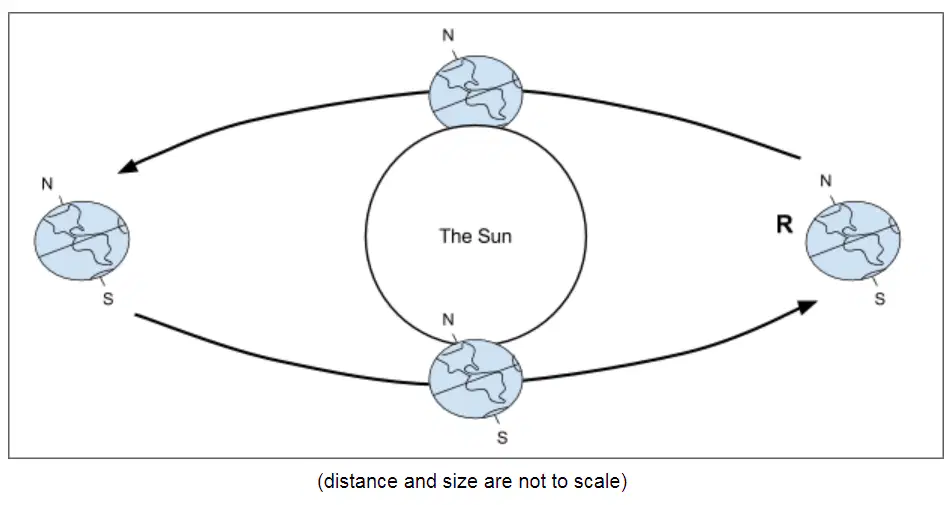
Based on the diagram above, what season is shown at location R for the Earth’s
Northern Hemisphere?
Winter
Spring
Summer
Fall
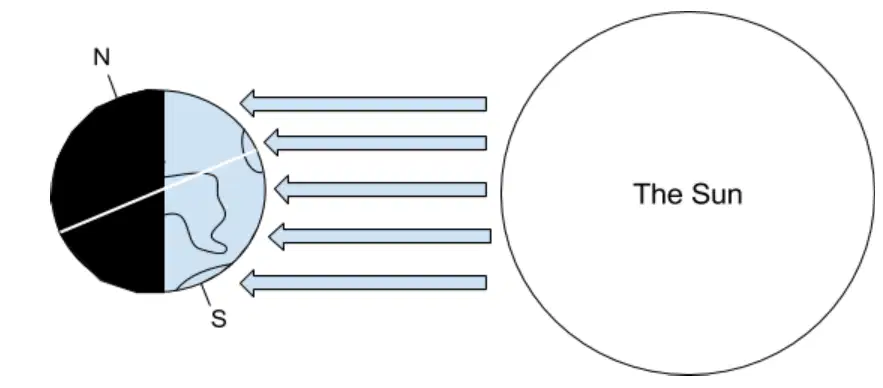
What explanation is best supported by the diagram?
The amount of daylight hours and hours of darkness are equal.
The tilt of the Earth’s axis results in fewer hours of daylight during the Winter.
The most direct sunlight (90° angle) strikes the Earth’s surface at the equator.
The South pole receives no hours of sunlight during Summer in the Southern
Hemisphere.
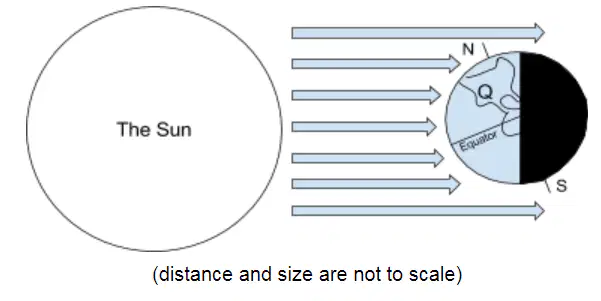
Which diagram best illustrates the angle of sunlight for location Q?



