
NEW
Font size
 Worksheets
STAAR REVIEW 2023
Total questions: 19
Worksheet time: 10mins
Which of the following best describes the producers in a terrestrial food web?
They obtain their energy from consumers.
They are at the top of the energy pyramid.
They are unaffected by decomposers.
They convert energy from the sun to chemical energy.
Which type of biomolecule is used as a catalyst in chemical reactions to lower activation energy?
Lipid
Carbohydrate
Protein
Nucleic acid
Scientists have observed many close similarities in the DNA sequences of whales and dolphins. This observation is evidence of which idea?
Whales and dolphins are members of the same species.
Whales are ancestors of modern dolphins.
Whales and dolphins both evolved from a recent, common ancestor.
Dolphins are ancestors of modern whales.
Which of the following processes involves the endocrine system and digestive system working together?
The brain sends signals to the muscles to chew food.
Oxygen is carried to blood cells as food is digested in the stomach.
When the hand touches hot food, it is quickly moved away.
Hormones stimulate the pancreas to release enzymes needed to break down food.
Which type of biomolecule is RNA ?
Nucleic Acid
Lipid
Carbohydrate
Protein
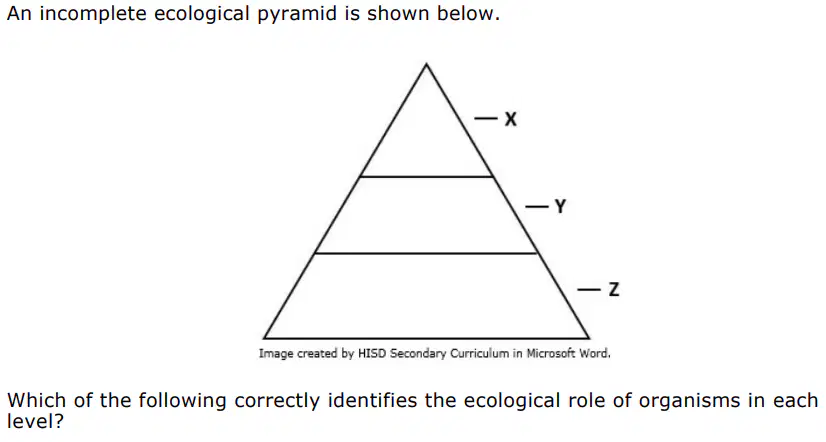
ECOLOGY
X – producers
Y – primary consumers
Z – secondary consumers
X – primary consumers
Y – secondary consumers
Z – producers
X – secondary consumers
Y – decomposers Z – primary consumers
X – secondary consumers
Y – primary consumers
Z – producers
Which of the following Punnett squares correctly shows the possible results from the genetic cross: RR x Rr?


Fish, birds, frogs, and monkeys all have an embryonic stage in which structures called pharyngeal slits appear on the sides of the throat. In fish, these slits develop into gills, but in birds, frogs, and monkeys, these slits develop into other structures. Based on this information, which of the following is the best conclusion about the evolutionary histories of fish, birds, frogs, and monkeys?
The animals evolved from a common ancestor.
The animals are not adapted to eat the same kinds of food.
The animals did not develop lungs for breathing.
The animals have evolved at similar developmental rates from fertilization to birth.
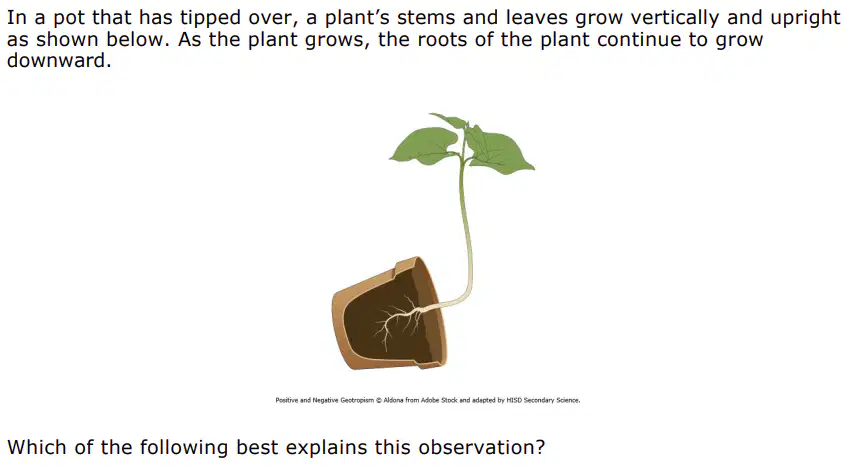
Tropism
Phototropism
Thigmotropism
Gravitropism
Phloem
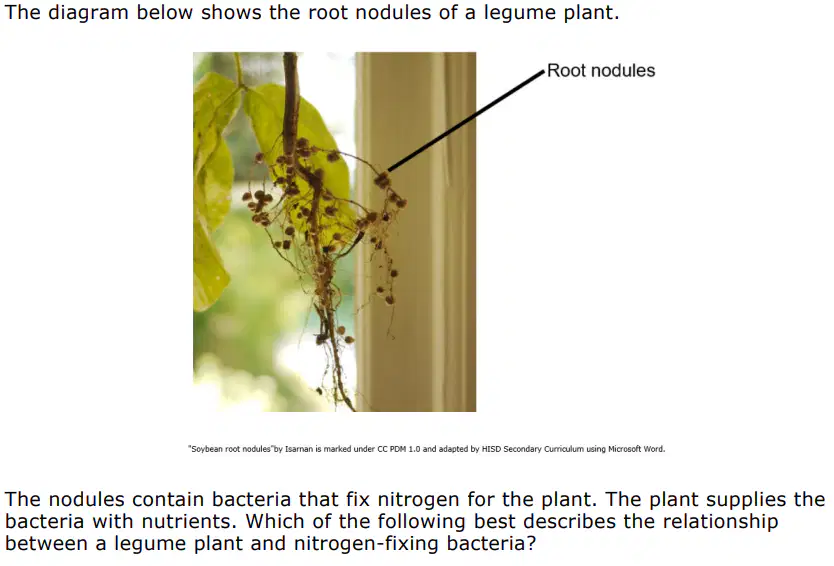
Symbiosis
Mutualism
Parasitism
Predation
Commensalism
Which of the following interactions of body systems is a direct example of the body maintaining homeostasis?
The nervous system stimulates muscles to move the left leg.
The excretory system helps other systems respond to danger in the environment.
When blood pressure is low, hormones stimulate a chain reaction to constrict blood vessels and increase blood pressure.
Muscles help move food through digestive organs.
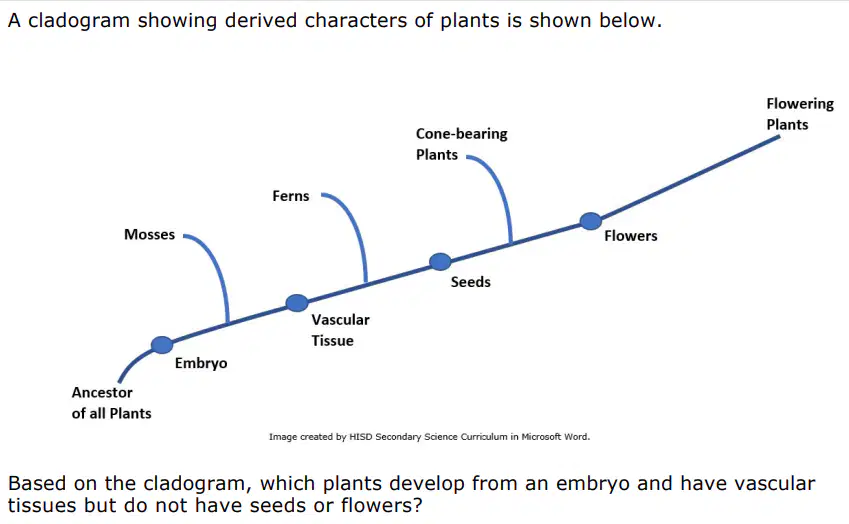
Cladogram
Mosses
Cone-bearing plants
Ferns
Ancestors of plants
A geneticist wants to determine what mutation in a DNA molecule changed the structure of a specific protein. What would the scientist need to know before planning the investigation?
The normal sequence of bases that code for the protein
How many thymine bases are in the DNA molecule
Whether the mutation was a substitution, insertion, or deletion
The total number of bases in the DNA molecule
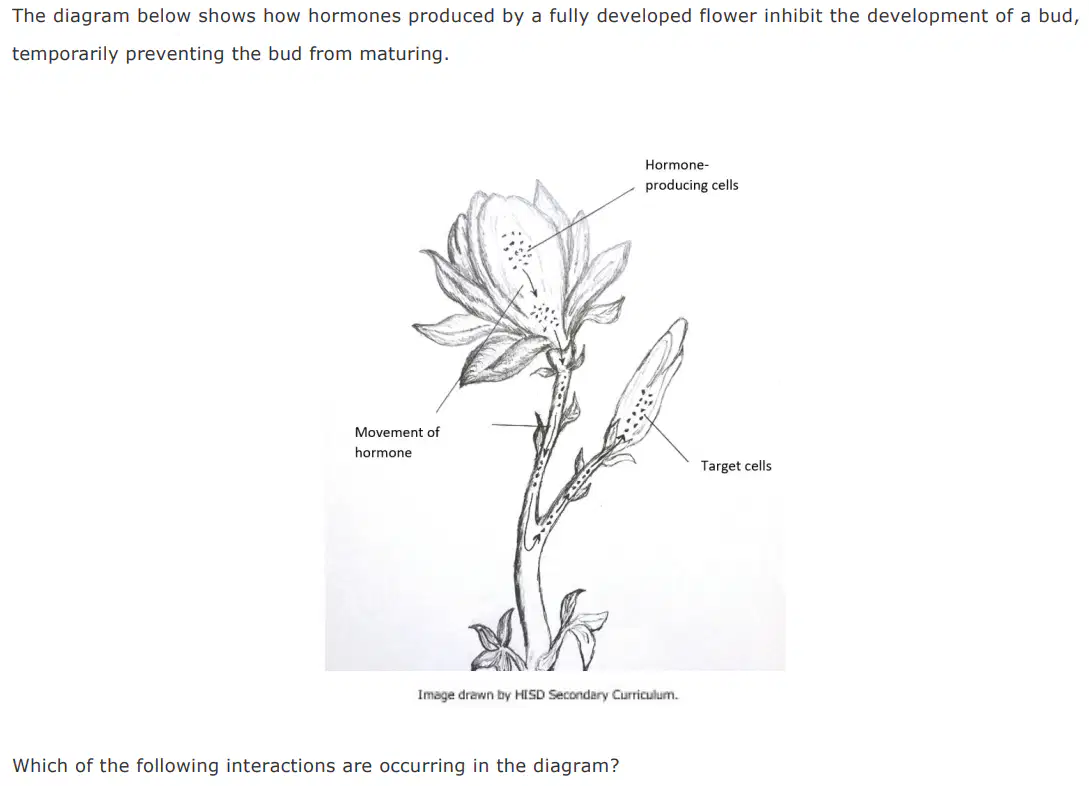
Shoot and root systems
Reproductive and vascular systems
Root and reproductive systems
Vascular and root systems
As cattle, horses, and other livestock graze in a field, their movements stir up various insects. As the insects are stirred up, egrets follow the livestock to catch and eat the insects, leaving the livestock unaffected. Which of the following best describes the relationship between the egrets and the livestock?
Mutualism
Parasitism
Commensalism
Competition
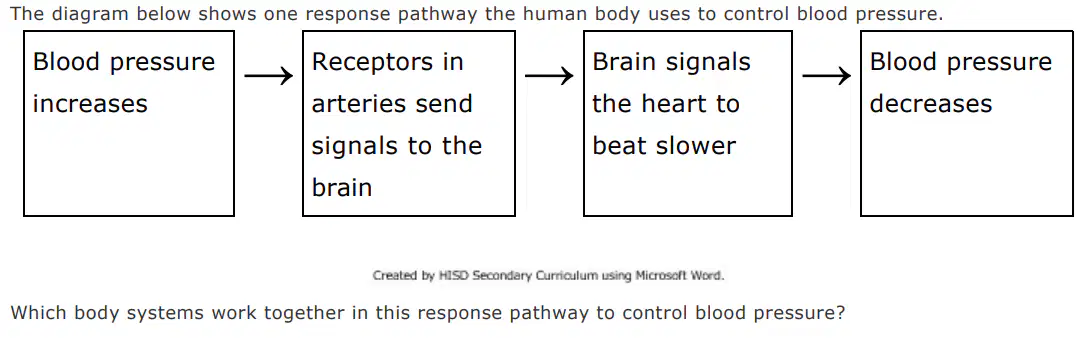
System Interaction
Digestive and muscular
Circulatory and nervous
Excretory and digestive
Skeletal and circulatory
Which of the following biomolecules are primary sources of energy for cells?
Carbohydrates
Lipids
Proteins
Nucleic acids
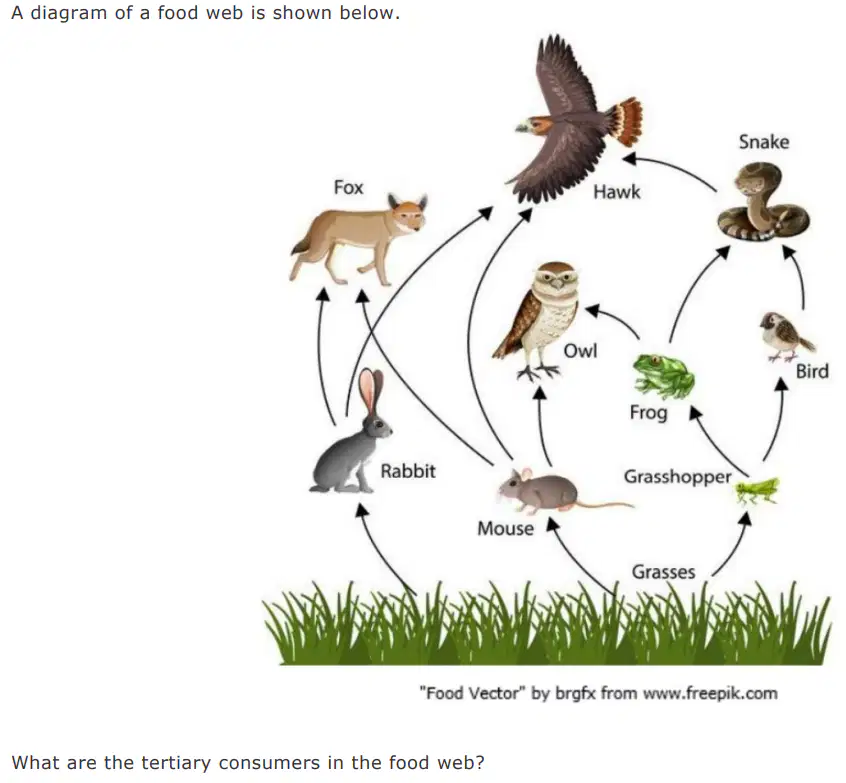
Decomposers and grasses
Hawks and owls
Deer, mice, and crickets
Frogs, owls, and snakes
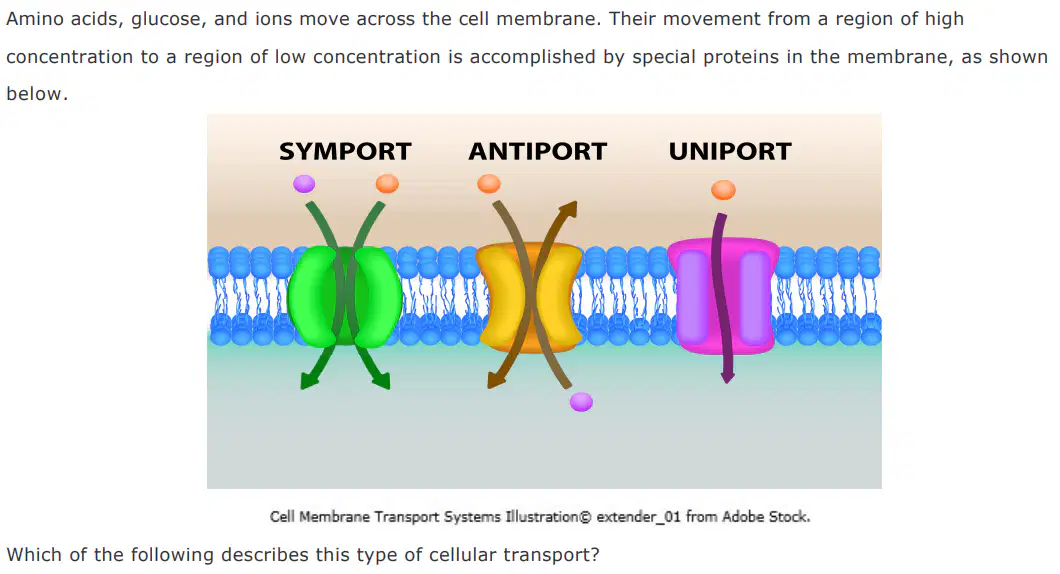
Active transport
Facilitated diffusion
Osmosis
Translation

