wayground logo

Free Printable Worksheets

Font size

S
M
L
XL
Worksheets

7th grade review Day 3 (Probability and stats)

Total questions: 266

Worksheet time: 17hrs 25mins

Name
Class
Date
1.

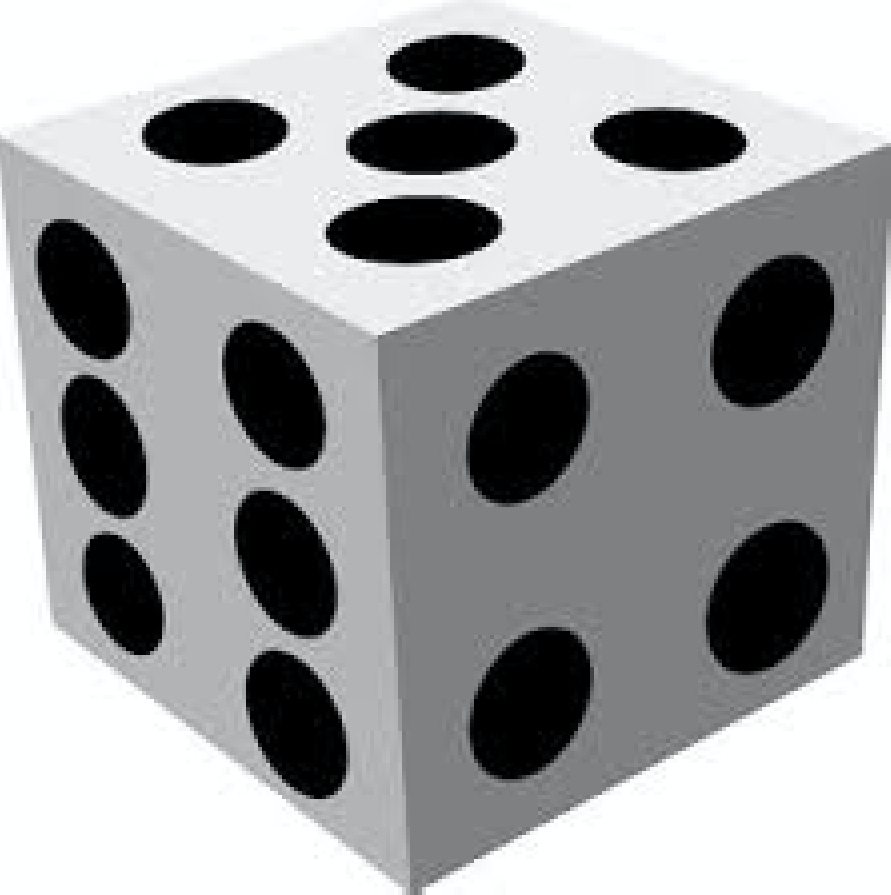
A regular 6-sided die is to be rolled once. What is the probability that a number less than 3 is rolled?

a)

1/3

b)

1/6

c)

1/2

d)

2/3

2.

A regular 6-sided die is to be rolled once. What is the probability that a number less than or equal to 4 is rolled?

a)

1/2

b)

1/4

c)

5/6

d)

2/3

3.

A spinner has 8 equal regions. Each region is marked with one of the following numbers: 10, 20, 30, 40, 50, 60, 70, 80. What is the probability of an even number being spun on the first roll?

a)

1/8

b)

1/2

c)

1

d)

3/8

4.

There are 3 red marbles, 4 blue marbles, 2 green marbles, and 6 clear marbles in a burlap bag. One marble is randomly pulled from the bag. What is the probability the marble was green?

a)

1/2

b)

1/7

c)

2/15

d)

2/17

5.
Bag A contains 9 red marbles and 3 green marbles. Bag B contains 9 black marbles and 6 orange marbles. Find the probability of selecting one green marble from bag A and one black marble from bag B.
a)
3/20
b)
1/4
c)
3/31
d)
2/27
6.
A box contains 5 purple marbles, 3 green marbles and 2 orange marbles. Draws are made without replacement. P(1st orange then green)
a)
1/15
b)
2/15
c)
3/31
d)
1/5
7.
A box contains 5 purple marbles, 3 green marbles and 2 orange marbles. Draws are made without replacement.P(both marbles are purple)
a)
2/9
b)
1/3
c)
1/2
d)
1/4
8.
A basket contains four apples and six peaches. You randomly select one piece of fruit and eat it. Then you randomly select another piece of fruit. What is the probability that both pieces of fruit are apples.
a)
2/15
b)
3/17
c)
1/19
d)
6/21
9.

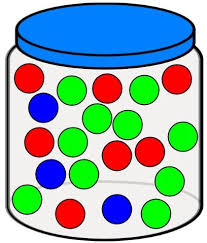
If you select a marble without looking, how likely is it that you will pick a black one?

a)

certain

b)

probable

c)

unlikely

d)

impossible

10.

If you select a marble without looking, how likely is it that you will pick a black one?

a)

certain

b)

probable

c)

unlikely

d)

impossible

11.

Kevin is making an omelet. There are 7 types of meat and 2 types of cheese to choose from. How many different omelets can Kevin make using exactly one of each item?

a)

7

b)

14

c)

9

d)

24

12.
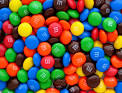
The following M & M colors are in the bowl:
4 yellow, 6 orange, 3 green, 5 blue, 2 brown.
What is the probability of selecting a brown candy?
a)
2/18
b)
1/9
c)
2/20
d)
1/10
13.
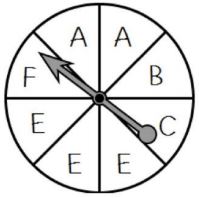
What is the probability of getting any letter that is not A?
a)
6/8
b)
3/4
c)
2/8
d)
1/4
14.
A jar contains 2 pink, 6 red, and 4 blue marbles. If you pick one marble without looking, what is the probability that the marble you pick will be red or blue?
a)
5/6
b)
1/2
c)
1/3
d)
1/6
15.
A box contains 3 black pens, 7 blue pens, and 5 red pens. Without looking, P(red or black)
a)
8/15
b)
15/225
c)
5/15
d)
3/15
16.
You flip a coin 20 times and record the results. Is this experimental or theoretical probability?
a)
Experimental
b)
Theoretical
17.
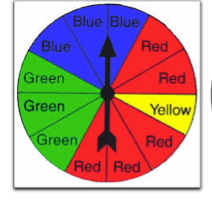
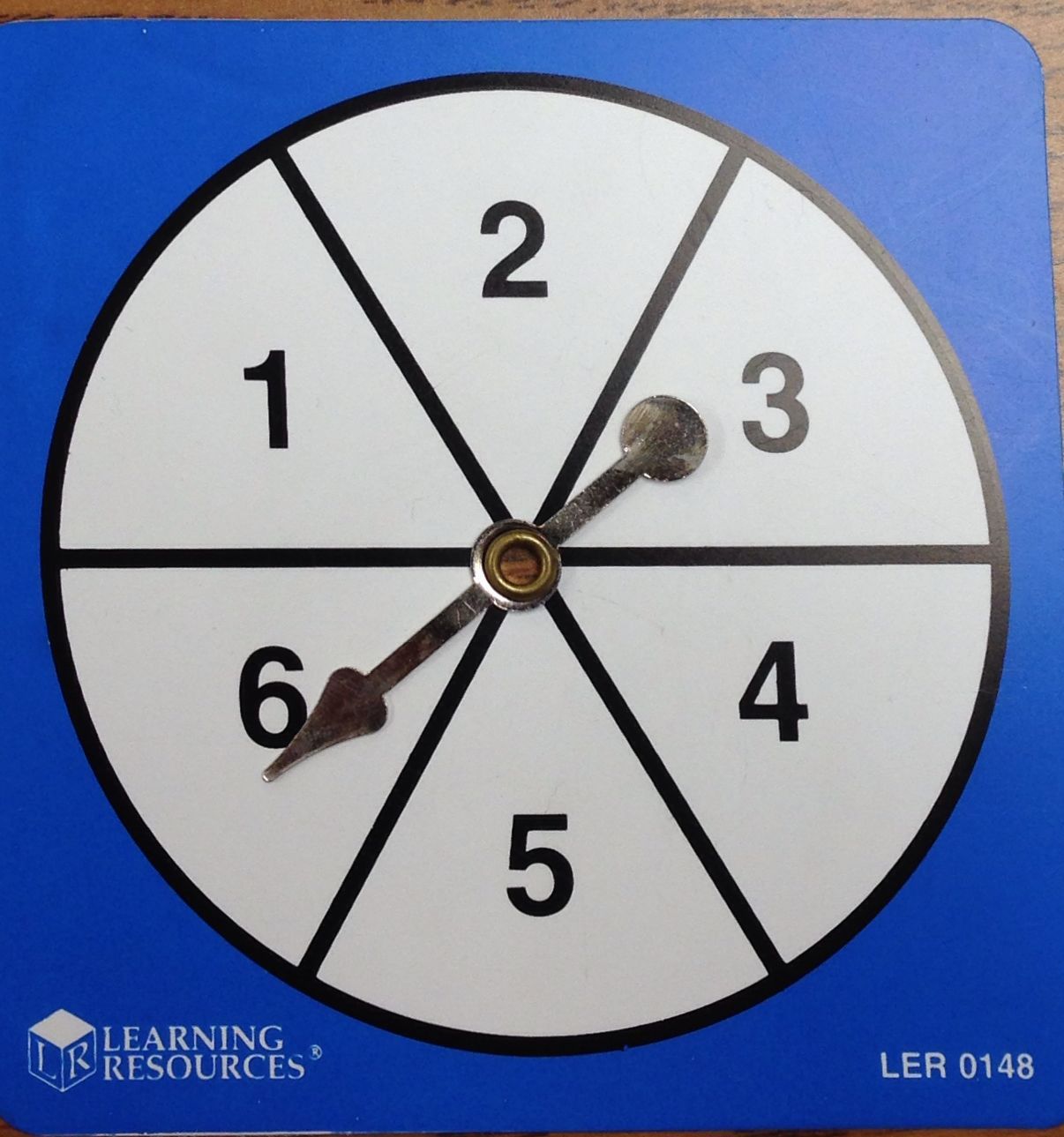
You spin this spinner 3 times.
Find the probability of these 3 events.
P(red, odd, 3)
a)
1/216
b)
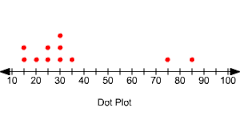
1/72
c)
1/36
d)
1/12
18.
Probability is ...
a)
the chance that some event will occur.
b)
a game that involves coins.
c)
a guarantee.
19.
P(not A) = 
*Remember to simplify.*
a)
6/8
b)
3/4
c)
2/8
d)
1/4
20.
The probability of it raining today is 30%.  What is the probability that it will NOT rain?
a)
30%
b)
70%
c)
100%
d)
0%
21.
What is an outcome?
a)
The result of an experiment
b)
The chance or likelihood of an event
c)
A fraction, decimal, or a percent
d)
An activity that gives various results
22.

What is the P( not purple) on this spinner?

a)

2/5

b)

1/5

c)

4/5

d)

3/5

23.
Find the probability of rolling a 7 on a single die.
a)
1/6
b)
7/6
c)
0
d)
7/7
24.
What is the probability of spinning green?
a)
0
b)
1/4
c)
1/2
d)
3/4
25.
What is the probability of spinning red?
a)
0
b)
5/12
c)
1/2
d)
3/4
26.
What is the probability of spinning green or blue?
a)
0
b)
5/12
c)
1/2
d)
3/4
27.

The letters that form the word ALGEBRA are placed in a bowl. What is the probability of choosing a letter other than “A”?

a)

2/7

b)

1/6

c)

5/7

d)

25/26

28.

The letters that form the word MATHEMATICS are placed in a bowl. What is the probability of choosing a letter that is a vowel?

a)

7/11

b)

4/11

c)

2/11

d)

5/26

29.

A bag has 3 red marbles, 2 blue and 4 green and 1 yellow. What is the theoretical probability of pulling a red?

a)

3/10

b)

3/9

c)

1/9

d)

1/3

30.
A jar contains 2 pink, 6 red, and 4 blue marbles. If you pick one marble without looking, what is the probability that the marble you pick will be red or blue?
a)
5/6
b)
1/2
c)
1/3
d)
1/6
31.

The chart below represents the number of marbles in a jar.

P(green) =

a)

5/19

b)

1/5

c)

5/14

32.
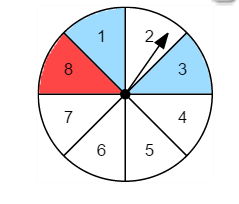
The spinner is divided into eight equal parts. Find the theoretical probability of landing on the given section of the spinner.P(white)=
a)
1/8
b)
5/8
c)
7/8
d)
3/7
33.
Andrew picks one marble at a time from a box and replaces it. He repeats this process 25 times and records the results in the table. Based on the table, which color marble has an experimental probability of 1/5?
a)
Yellow
b)
Red
c)
Blue
d)
Green
34.

If you choose from the following M & M colors, what is the probability that you choose blue?

5 green

6 yellow

8 blue

7 brown

a)

1/4

b)

4/13

c)

8/25

d)

1/3

35.

A spinner is spun twice. What is the probability of spinning green both times?

a)

1/16

b)

1/4

c)

1/2

d)

1/8

36.

The letters that form the word ALGEBRA are placed in a bowl. What is the probability of choosing a letter other than “A”?

a)

2/7

b)

5/49

c)

5/7

d)

10/49

37.

A box contains 5 purple marbles, 3 green marbles and 2 orange marbles. Marbles are taken one at a time without replacement. P(both marbles are purple)

a)

2/9

b)

1/3

c)

1/2

d)

1/4

38.
A jar contains 4 white chips, 5 purple chips, and 1 black chip. Chips are selected randomly one at a time, and are not replaced.
P(white, then purple, then black)
a)
1/36
b)
2/39
c)
5/41
d)
6/43
39.
A bag contains 30 pieces of candy. There are 15 grape, 7 cherry, 3 lemon, 5 strawberry. What is the probability of drawing a lemon?
a)
3
b)
1/10
c)
3/10
d)
30%
40.
A bag has 3 red marbles, 2 blue and 4 yellow. What is the theoretical probability of pulling a red?
a)
3/10
b)
3/9
c)
1/9
d)
1/3
41.

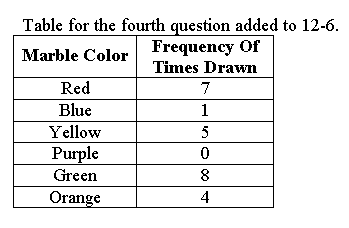
Based on the chart, what is the experimental probability of pulling a green marble?

a)

1/8

b)

8/25

c)

8/100

d)

7/8

42.
If you choose from the following M & M colors, what is the probability that you choose blue?
5 green
6 yellow
8 blue
7 brown
a)
8/26
b)
4/13
c)
8/25
d)
1/3
43.
A set of all possible outcomes is known as - 
a)
a list
b)
a complement
c)
a sample space
d)
an event
44.

If 33% of the students at Warren Middle School have a pet, then what is the probability of the students who do not have a pet?

a)

33%

b)

77%

c)

67%

d)

50%

45.
A jar contains 2 pink, 6 red, and 4 blue marbles. If you pick one marble without looking, what is the probability that the marble you pick will be red or blue?
a)
5/6
b)
1/2
c)
1/3
d)
1/6
46.
What is the probability of pulling a red marble
out of a jar of marbles that have 10 green marbles, 7 red marbles and 3 blue marbles?
a)
1/7
b)
7/20
c)
7/10
d)
3/10
47.

What is the probability of getting an odd number on the first roll and less than 3 on the second roll?

a)

1/6

b)

2/6

c)

3/5

d)

3/6

48.

What is the probability of spinning green (as a percent)?

a)

30%

b)

20%

c)

25%

d)

50%

49.

While Tim is waiting for class to start, he pulls a quarter from his pocket. How many outcomes are possible if he flips the quarter 3 times?

a)

3

b)

6

c)

12

d)

8

50.
a)

23

b)

25

c)

35

d)

50

51.
Jillian rolled a number cube 360 times. About how many times do you expect her to roll a 2?
a)
20 
b)
180
c)
60 
d)
120
52.
Josefina pulled 3 red marbles, 5 green marbles, 8 pink marbles, and 12 yellow marbles out of a bag. If she repeats this experiment 200 times, about how many pink marbles should she expect to pull from the bag?
a)
55
b)
57
c)
59
d)
53
53.
The following M & M colors are in the bowl:
4 yellow, 6 orange, 3 green, 5 blue, 2 brown.
What is the probability of selecting a brown candy?
a)
2/18
b)
1/9
c)
2/20
d)
1/10
54.
What is the probability of rolling an even number on a dice. The dice is numbered 1-6.
a)
3/6
b)
1/2
c)
1/6
d)
5/6
55.
Based on the chart, what is the probability of pulling a green marble?
a)
1/8
b)
8/25
c)
8/100
d)
7/8
56.
What is the probability of getting any letter that is not A?
a)
6/8
b)
3/4
c)
2/8
d)
1/4
57.
A jar contains 2 pink, 6 red, and 4 blue marbles. If you pick one marble without looking, what is the probability that the marble you pick will be red or blue?
a)
5/6
b)
1/2
c)
1/3
d)
1/6
58.
A jar contains 8 marbles: 3 are red and 5 are blue. What is the probability of selecting a red marble, replacing it, and then selecting another red marble?
a)
9/64
b)
6/56
c)
15/64
d)
25/64
59.
A box contains 3 black pens, 7 blue pens, and 5 red pens. Without looking, P(red or black)
a)
8/15
b)
15/225
c)
5/15
d)
3/15
60.
A bag has 3 red marbles, 2 blue and 4 yellow. What is the probability of pulling a red?
a)
3/10
b)
3/9
c)
1/9
d)
1/3
61.
The following M & M colors are in the bowl:
4 yellow, 6 orange, 3 green, 5 blue, 2 brown.
P( Yellow or green)
a)
1/40
b)
7/20
c)
6/19
d)
1/38
62.
A bag of marbles contains 5 red, 7 purple, and 3 blue marbles. If one marble is chosen at random, what is the probability that the marble is NOT blue?
a)
4/5
b)
1/5
c)
3/5
d)
2/5
63.
Deion has two bags of marbles. In the bag labeled ‘A’, he has 3 green, 4 blue and 10 yellow marbles. In the bag labeled ‘B’, he has 13 green, 5 blue, and 12 yellow marbles. Deion wants the bag with the highest probability of selecting a blue marble. Which of the following statements is true?
a)
It does not matter which bag he chooses because the probabilities are the same.
b)
He should choose Bag B because there are fewer blue marbles.
c)
He should choose Bag A because the probability of selecting a blue marble is higher.
d)
He should choose Bag B because the probability of selecting a blue marble is higher.
64.
If a dice is rolled 300 times, how many times would you predict a roll of a 1 or a 6?
a)
50
b)
100
c)
150
d)
75
65.
A dice (numbered 1-6) is rolled 20 times.  How many times will a number less than 4 show?
a)
5
b)
10
c)
15
d)
Never
66.
If I flip a coin 10 times, how many times should I get heads?
a)
1
b)
10
c)
3
d)
5
67.
If you spin the spinner 90 times, how many times should the number 3 be selected?
a)
9
b)
15
c)
16
d)
30
68.
A jar contains 2 pink, 6 red, and 4 blue marbles. If you pick one marble without looking, what is the probability that the marble you pick will be red or blue?
a)
5/6
b)
1/2
c)
1/3
d)
1/6
69.
A bag has 3 red marbles, 2 blue and 4 yellow. What is the theoretical probability of pulling a red?
a)
3/10
b)
3/9
c)
1/9
d)
1/3
70.
Experimental Probability is:
a)
What Will happen 
b)
What actually happens
c)
What should happen
d)
What I think Happens
71.
Theoretical Probability is?
a)
What Should happen
b)
What does happen
c)
What Will Happen
d)
What I want to Happen
72.
P(not A) = 
*Remember to simplify.*
a)
6/8
b)
3/4
c)
2/8
d)
1/4
73.

Find the experimental probability:

Roll dice: 1, 3, 3, 4, 4

P(1) =

a)

3/5

b)

1/6

c)

2/5

d)

1/5

74.

A letter from the word MATH is chosen at random, then a coin is flipped. What is the probability of choosing the letter 'm' then getting tails?

a)

17/26

b)

1/8

c)

5/13

d)

1/6

75.
Which shows the sample space for flipping two coins?
a)
H, T
b)
HH, HT, TH, TT
c)
HH, TT
d)
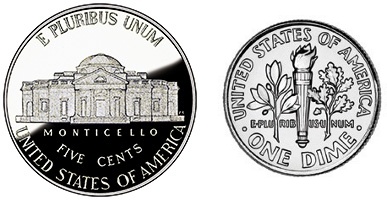
Dime, Nickel
76.
Bag A contains 9 red marbles and 3 green marbles. Bag B contains 9 black marbles and 6 orange marbles. Find the probability of selecting one green marble from bag A and one black marble from bag B.  P(green, black)
a)
3/20
b)
1/4
c)
3/31
d)
2/27
77.
You roll a pair of number cubes (dice). Which equation represents how to find the probability of rolling a 2 and an odd number?
P(2, then odd)
a)
⅙ x ½ = 1/12
b)
⅙ + ½ = 2/8
c)
 ½ x ½ = 1/4
d)
⅓ + ½ = 5/6
78.
If you choose 1 scoop of ice cream from 12 flavors and any 1 topping from a choice of 8, how many different ice-cream sundaes can you make?
a)
58
b)
96
c)
20
d)
192
79.
The cafeteria is serving three kinds of sandwiches:  tuna (T), chicken, (C), and peanut butter (P).  They are also serving a choice of two drinks:  milk (M) or water (W).  Which shows the complete set of possible combinations?
a)
TW, CW, PW
b)
TW, TM, TC, CW, PW
c)
TW, TM, CW, CM, PW, PM
d)
TCP, MW
80.
You pick a marble from this bag.
What is the probability you will choose either a black or a white marble?
*remember to simplify* 
a)
3/5
b)
4/10
c)
3/10
d)
6/10
81.
A compound event is..
a)
an event that directly causes another
b)
the probability of all the outcomes
c)
1 event that creates 2 results
d)
when 2 or  more independent events work together
82.
What is the probability of pulling a red marble out of a jar of marbles that have 10 green marbles, 7 red marbles and 3 blue marbles?
a)
1/7
b)
7/20
c)
7/10
d)
3/10
83.
If you were to roll the die one time what is the probability of it landing on a 2?
a)
2 out of 6
b)
2 out of 2
c)
1 out of 6
d)
1 out of 1
84.

What is sample space?

a)

a process with an uncertain result

b)

a possible result of an action

c)

a list of all possible outcomes of an event

d)

a single outcome or group of outcomes

85.

Draw a tree diagram on a separate sheet of paper. Then answer this question. A girls' choir is choosing a uniform for their concert. They can pick red, green, or purple sweaters, and they can pick tan, white, or black skirts. The shoes they need come in gold and black. Assuming all the colors go together, how many different combinations can the choir pick?

a)

3 combinations

b)

12 combinations

c)

8 combinations

d)

18 combinations

86.
What is the probability of rolling an even number on a die?
a)
impossible
b)
unlikely
c)
equally likely
d)
likely
87.
What is the probability of rolling 15 with a pair of dice?
a)
impossible
b)
unlikely
c)
equally likely
d)
likely
88.
A jar contains 2 pink, 6 red, and 4 blue marbles. If you pick one marble without looking, what is the probability that the marble you pick will be red or blue?
a)
5/6
b)
1/2
c)
1/3
d)
1/6
89.
The chart below represents the number of marbles in a jar.
P(green) = 
a)
5/19
b)
10/28
c)
5/14
90.
A bag has 3 red marbles, 2 blue and 4 yellow. What is the theoretical probability of pulling a red?
a)
3/10
b)
3/9
c)
1/9
d)
1/3
91.
Experimental Probability is:
a)
What Will happen 
b)
What actually happens
c)
What should happen
d)
What I think Happens
92.
What is the probability of flipping a coin and getting heads?
a)
1/2
b)
1/3
c)
1/4
d)
Never, Tails never fails.
93.
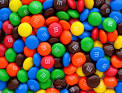
What is the probability of selecting an orange candy?
a)
0%
b)
25%
c)
50%
d)
100%
94.
Determine the likelihood of the following event: 
Drawing a red card from a standard deck of cards
a)
1/2
b)
13/52
c)
1/4
d)
4/52
95.
A bag contains 30 pieces of candy. There are 15 grape, 7 cherry, 3 lemon, 5 strawberry. What is the probability of drawing a lemon?
a)
3
b)
1/10
c)
3/10
d)
30%
96.
P(not A) = 
*Remember to simplify.*
a)
6/8
b)
3/4
c)
2/8
d)
1/4
97.
Rolling a 15 on a number cube is 
a)
Impossible
b)
Certain
c)
Unlikely
d)
Equally Likely
98.
Clare picks a marble at random, puts it back, and then picks another marble at random.
a)
Dependent
b)
Independent
99.
Clara picks a card at random, puts it back, and then picks another card at random.
a)
Independent
b)
Dependent
100.
Pablo chooses a colored marble from a mixed bag and writes down the color. Pablo leaves it out and then draws another.
a)
Independent
b)
Dependent
101.
Christopher picks a marble at random. Without putting the first marble back, he picks a second marble at random.
a)
Independent 
b)
Dependent
102.
A jar contains 4 white chips, 5 purple chips, and 1 black chip. Chips are selected randomly one at a time, and are not replaced.
P(white, then purple, then black)
a)
1/36
b)
2/39
c)
5/41
d)
6/43
103.
A box contains 5 purple marbles, 3 green marbles and 2 orange marbles. Draws are made without replacement.P(both marbles are purple)
a)
2/9
b)
1/3
c)
1/2
d)
1/4
104.
During P.E. class, one team is picking softball gloves from the class bucket. Lindsey chooses a glove first, followed by Megan.
a)
Dependent
b)
Independent
105.
Reid picks a card at random. Without putting the first card back, he picks a second card at random.
a)
Dependent
b)
Independent
106.
Allie downloads a song from an online service. A few minutes later, a customer in another city searches for a song on the same site.
a)
Dependent
b)
Independent
107.
Clara brings a box of donuts to work that contains one donut in each flavor. First the secretary chooses one. Then the office manager makes a selection.
a)
Dependent
b)
Independent
108.
What is the range?
a)
average
b)
biggest-smallest
c)
the middle #
d)
# happening the most
109.
What is the mode?
a)
# occurring the most
b)
the average
c)
biggest - smallest
d)
the middle #
110.
At Donald's Donuts the number of donut holes in a bag can vary. Help Donald find the mode.
12,10,10,10,13,12,11,13,10
a)
13
b)
12
c)
11
d)
10
111.
Roger bowled 7 games last weekend. His scores are: 155, 165, 138, 172, 127, 193, 142. What is the range of Roger's scores?
a)
193
b)
127
c)
60
d)
66
112.
find the median of
20 30 40 50 60
a)
50
b)
40
c)
1
d)
5
113.
To find the mean of a set of numbers, add up all the items and divide by...
a)
2
b)
The least number
c)
The maximum or biggest number
d)
The number of items in the data set
114.
What is the mean?
a)
# happening the most
b)
the number in the middle
c)
biggest-smallest
d)
the average
115.
Find the mean of these numbers:
5,11,2,12,4,2
a)
4.1
b)
6
c)
4.5
d)
4
116.
Find the median, mode and range: 
3, 5, 7, 9, 11, 8, 3
a)
median:7  mode:3  range:8
b)
median:6  mode:3  range:7
c)
median:7  mode:3 range:8
117.
Find the mode.
7, 1, 1, 7, 1, 4, 1
a)
7
b)
3
c)
1
d)
4
118.
In order to find the median, the data must be sorted from least to greatest first.
a)
True
b)
False
119.
What is the median?
a)
biggest- smallest
b)
average
c)
the middle #
d)
# that happens the most
120.
What is the median of this data?
0, 2, 4, 6, 8, 9
a)
5
b)
4
c)
6
d)
4.5
121.
a)
A
b)
B
c)
C
d)
D
122.
a)
A
b)
B
c)
C
d)
D
123.
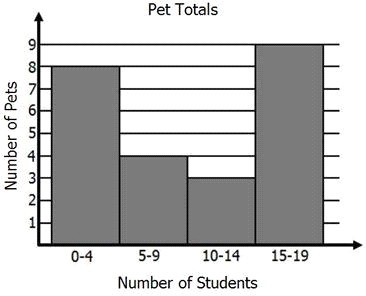
Which interval shows the greatest number of pets?
a)
15-19
b)
0-4
c)
5-9
d)
10-14
124.
In the last 5 games, Kevin Durant scored 22, 22, 18, 12, and 21 points. What is Durant's Mean (Average) score per game?
a)
 19 points per game
b)
95 points per game
c)
18.6 points per game
d)
22 points per game
125.
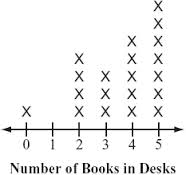
How many people have two or less books in their desk?
a)
4
b)
5
c)
6
d)
7
126.
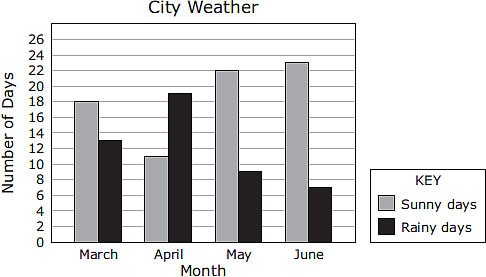
The graph below shows the number of sunny days and rainy days in a city during four months.

Based on the graph,how many more sunny days than rainy days did this city have during the months of April, May, and June?
a)
21
b)
56
c)
26
d)
20
127.

For how many weeks was the data collected?

a)

48

b)

50

c)

52

d)

54

128.
How many people purchased no food and no drink?
a)
60
b)
10
c)
20
d)
200
129.
How many students spent over 40 minutes but under 60 minutes studying?
a)
22 Students
b)
30 Students
c)
8 Students
d)
5 Students
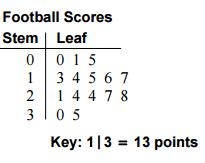
130.
How many scores are listed in this Stem and Leaf Plot?
a)
3
b)
6
c)
9
d)
18
131.
In how many games did the team score more than 20 points?
a)
8
b)
7
c)
10
d)
9
132.

How many times did Mary score below a 60 on her tests?

a)

4

b)

5

c)

3

d)

0

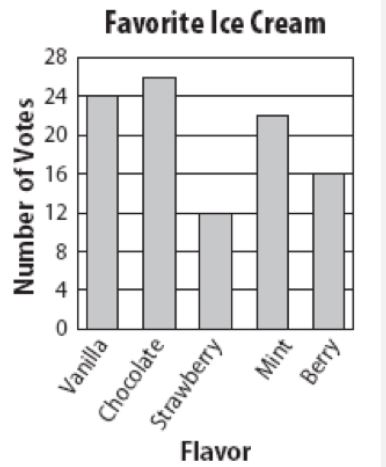
133.
How many total people took the survey?
a)
50
b)
150
c)
100
d)
200
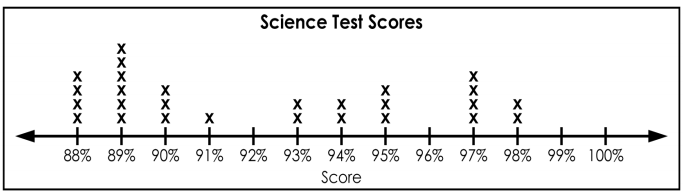
134.
What is the highest score in the class?
a)
88%
b)
100%
c)
13
d)
98%
135.
How many students scored 93% or less?
a)
6
b)
16
c)
14
d)
13
136.
How many total students are in the science class?
a)
13
b)
6
c)
27
d)
25
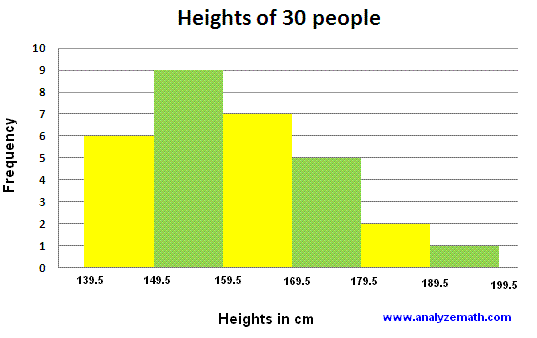
137.
Which interval has 400 employees?
a)
33-43
b)
0-10
c)
77-87
d)
66-76
138.
How many students are between 60 and 63 inches tall?
a)
3
b)
0
c)
12
d)
7
139.
How many students have more than 1,000 songs on their MP3 player?
a)
5
b)
16
c)
10
d)
4
140.
What is an interval?
a)
A single number
b)
A range of numbers
c)
A percentage
d)
A total amount
141.
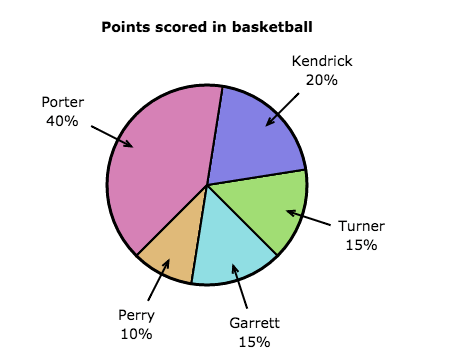
The team scored 50 points. How many points did Kendrick score?
a)
12 points
b)
20 points
c)
10 points
d)
72 points
142.

Which table represents the data in the graph?

a)
b)
c)
d)
143.

Is this an example of a population or a sample?


The number of pets in all households in a city.

a)

population

b)

sample

144.

Is this an example of a population or a sample?


The number of pets in one household in a city.

a)

population

b)

sample

145.

Is this sample biased or unbiased?


A sample of 50 students who currently have an A in math.

a)

Biased

b)

Unbiased

146.

Is this sample biased or unbiased?


A sample of 50 randomly selected students.

a)

Biased

b)

Unbiased

147.

Solve to find the equivalent fraction.


4/5 = x /15

a)

8/15

b)

12/15

c)

10/15

148.

solve to find the equivalent fraction.


1/3 = x/6

a)

1/6

b)

3/6

c)

2/6

149.

On a plate of wings, there are mild and hot wings. In a sample of 10 chicken wings, 4 are hot wings. If there are 50 wings on the platter, estimate how many are hot.

a)

25/50

b)

20/50

c)

16/50

150.

Look at the bar graph.


How many dogs do the students have?

a)

7

b)

6

c)

5

151.

Do they have more fish or cats?

a)

Fish

b)

Cats

152.

Which class had the highest test score?

a)

1st period

b)

2nd period

153.

Which class had the highest median?

a)

2nd period

b)

1st period

154.

Use the data in the graph to make an inference.


If Hector has to close his shop either Thursday, Friday, Saturday, or Sunday, what day should he close it?

a)

Friday

b)

Sunday

c)

Thursday

d)

Saturday

155.

Find the approximate mean absolute deviation of the following temperatures

{62, 54, 49, 62, 48, 53, 50}

a)

5.7

b)

4.6

c)

3.5

d)

6.8

156.

The table shows the recorded speeds of several cars on Wendover Avenue last Saturday afternoon.

Estimate the mean absolute deviation.

a)

4.8

b)

5.7

c)

5.3

d)

4.5

157.

The students in Mrs. Lewis' class took the reading benchmark in the spring of 2022. The following were the grades of the first 7 students in her homeroom.

54, 74, 80, 72, 88, 79, 64

What is approximate mean absolute deviation?

a)

8.3

b)

8.9

c)

9.2

d)

9.6

158.

Find the difference in the ranges in the double box plot.

a)

7

b)

8

c)

2

d)

1

159.

Determine the difference in the interquartile ranges.

a)

25

b)

20

c)

30

d)

15

160.

The table shows the quiz scores for two students.

Find the difference in the averages.

a)

4

b)

5

c)

7

d)

6

161.

How much greater is the median for men than the median for women?

a)

5

b)

4

c)

3

d)

2

162.

Find the difference in the ranges.

a)

6

b)

10

c)

8

d)

5

163.

The table shows the amount of money raised by the PTA on 12 different days.

How much greater is the median amount earned this year than the median amount eared last year?

a)

19.5

b)

18.5

c)

17.5

d)

20.5

164.

How much greater is the range for Oxford than the range for Newport?

a)

4

b)

10

c)

8

d)

6

165.
a)

A

b)

B

c)

C

d)

D

166.
a)

A

b)

B

c)

C

d)

D

167.

Which statement is NOT supported by the information in the dot plots?

a)

A

b)

B

c)

C

d)

D

168.

Alex wants to have an average of 90 in her math class On the first 4 assignments she received 95, 85, 75, 100. What must she score on the 5th assignment to get an exact average of 90?

a)

85

b)

90

c)

95

d)

100

169.

Find the difference in the medians.

Put the numbers in order from least to greatest first.

a)

18.5

b)

19.5

c)

20.5

d)

21.5

170.

What is the mean of this set of data?

2, 15, 7

a)

24

b)

3

c)

6

d)

8

171.
What is the range in gas mileage for cars?
a)
2
b)
3
c)
4
d)
6
172.

Find the mode:

3.8, 4.2, 4.0, 4.2, 4.2

a)

4.2

b)

3.8

c)

4.0

d)

4

173.

What is the mean?

4, 5, 6, 7, 3, 4, 10, 1

a)

7

b)

4.5

c)

5

d)

8

174.
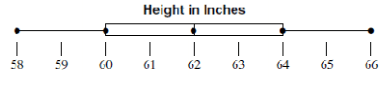
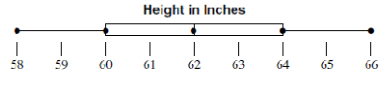
What is the interquartile range (IQR)?
a)
4
b)
64
c)
60
d)
8
175.
What value is the lower quartile?
a)
66
b)
58
c)
60
d)
64
176.
What is the median?
a)
62
b)
58
c)
66
d)
60
177.
What is the range of the data shown?
a)
85
b)
90
c)
80
d)
70
178.

What is the median for this list: 3, 9, 17, 11, 17, 3, 1

a)

9

b)

17 and 3

c)

8.71

d)

16

179.

What is the mean for the dot plot?

a)

35

b)

30

c)

70

d)

85

180.

What is the mean of this set of data?

2, 15, 7

a)

24

b)

3

c)

6

d)

8

181.
Find the median of these numbers:
2, 3, 4, 5, 5, 7
a)
4
b)
5
c)
4.5
d)
6
182.
If you score 76, 85, 97, and 83 on your math tests, what would your median score be? 
a)
84
b)
90
c)
85
d)
88
183.
A data set can have more than one median?
a)
True
b)
False
184.
A data set can have more than one mode
a)
True
b)
False
185.

To find the average or mean of a set of numbers, add up all the items and divide by...

a)

2

b)

The minimum

c)

The maximum

d)

The number of items

186.
What is the range?
a)
average
b)
biggest-smallest
c)
the middle #
d)
# happening the most
187.
What is the mode?
a)
# happening the most
b)
the average
c)
biggest - smallest
d)
the middle #
188.
Find the range.
5, 15, 10, 20, 15, 10, 15
a)
5
b)
10
c)
15
d)
13
189.

Find the median, mode and range:

3, 5, 7, 9, 11, 8, 3

a)

median:7 mode:9 range:8

b)

median:6 mode:3 range:7

c)

median:7 mode:3 range:8

190.

Calculate the MODE for the data set: 6, 7, 12, 8, 7, 4, 8, 8, 7

a)

7

b)

7.44

c)

8

d)

7 and 8

191.

What is the mean (average) of this data? Round to the nearest tenth.

a)

8.0

b)

8.3

c)

7.5

d)

9.0

192.
What does "mean" mean?
a)
average
b)
middle
c)
repeats the most
d)
variation
193.
What does "mode" mean?
a)
average
b)
middle
c)
repeats the most
d)
variation
194.
What is a the meaning for "median"?
a)
fair share
b)
middle
c)
repeats the most
d)
variation
195.
How do you find the range?
a)
order least to greatest, then slash from each side until you reach the middle
b)
add the numbers in your data set, then divide by the amount you added
c)
look for the number that repeats the most
d)
highest number minus the lowest number
196.
How do you find the mode?
a)
order least to greatest, then slash from each side until you reach the middle
b)
add the numbers in your data set, then divide by the amount you added
c)
look for the number that repeats the most
d)
highest number minus the lowest number
197.
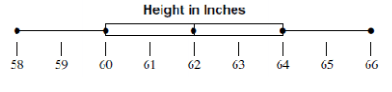
What is the median?
a)
62
b)
58
c)
66
d)
60
198.
What is the range of the set of data?
a)
70
b)
65
c)
80
d)
55
199.
What was the highest score on the math test?
a)
53
b)
79
c)
97
d)
90
200.
Another word for average is
a)
sample 
b)
mean
c)
data
d)
numerical data
201.
The entire pool; the total set of people/objects that can be studied
a)
population
b)
sample
c)
datum
d)
probability
202.
What is the mean of test scores?
{70, 70, 80, 85, 85, 90, 95, 95, 100, 100}
a)
87
b)
85, 95, and 100
c)
30
d)
85 and 90
203.
The entire group of objects or individuals considered for a survey.
a)
biased sample
b)
population
c)
random sample
d)
sample
204.
A sample in which each individual or object in the entire population has an equal chance of being selected.
a)
biased sample
b)
population
c)
random sample
d)
sample
205.
A part of the population.
a)
biased sample
b)
population
c)
random sample
d)
sample
206.
A bar graph used to display data grouped into intervals.
a)
bar graph
b)
line graph
c)
stem and leaf plot
d)
histogram
207.
A data value that is far removed from the rest of the data values in the set.
a)
outlier
b)
inlier
c)
immalier
d)
sublier
208.
The difference between the greatest and least values in the data set.
a)
range
b)
interquartile range
c)
standard deviation
d)
mean absolute deviation
209.
The sum of all the values in a data set divided by the number of data values. Also called the average.
a)
mean
b)
median
c)
mode
d)
range
210.
A sample that does not fairly represent the population.
a)
population
b)
biased sample
c)
random sample
d)
sample
211.

What is the middle number, or the mean of the two middle numbers, in an ordered set of data?

a)

mode

b)

median

c)

IQR

d)

lower quartile

212.

What is the difference between the greatest and least values in a data set?

a)

range

b)

IQR

c)

mean

d)

data

213.

What is the median of the upper half of a set of data?

a)

spread

b)

Q1

c)

Q3

d)

median

214.

What is a measure used to describe the middle of a data set?

a)

mean

b)

mode

c)

range

d)

median

215.

What is the difference between the upper and lower quartiles in a box plot?

a)

range

b)

Interquartile range

c)

home on the range

d)

o-range

216.

What do we call the facts used to make decisions?

a)

answers

b)

data

c)

variability

d)

center

217.

What do we call the median of the lower half of data?

a)

Q1

b)

Q2

c)

Q3

d)

Q4

218.

What is a measure used to describe how much a data set varies?

a)

dot plot

b)

center

c)

mode

d)

spread

219.

What is the name of the graph that uses quartiles, medians, and extremes?

a)

box plot

b)

histogram

c)

dot plot

d)

bar graph

220.

What is the difference between the upper and lower quartiles in a box plot?

a)

mean

b)

range

c)

IQR

d)

quartile

221.
Find the MAD:
58, 38, 54, 48, 26, 36
a)
43
b)
20
c)
10
d)
12
222.

What does M.A.D stand for?

a)

Mean as Dirt

b)

Mean Average Deviation

c)

Crazy

d)

Mean Absolute Deviation

223.
Determine the mean absolute deviation of the data.
9, 7, 11, 10, 8
a)
9
b)
6
c)
1.2
d)
5
224.

Find the Mean Absolute Deviation: (MAD)

10, 9, 3, 8, 10.

a)

3

b)

5

c)

1

d)

2

225.
What is the average distance form the mean of the numbers:
 10, 8, 5, 12, 20
a)
3.4
b)
4
c)
11
d)
5
226.
What is another word for average?
a)
Mean
b)
Median
c)
Mode
d)
Range
227.
What is the mean of this data set?
6, 7, 2, 1, 5, 2, 1, 6
a)
24.75
b)
3
c)
3.7
d)
3.8
228.

True or false?:The absolute value of a number will always be positive.

a)

True

b)

False

229.

What is the mean of the data: 15, 20, 25, 17, 18

a)

15

b)

16

c)

18

d)

19

230.
Find the Mean Absolute Deviation:  5, 11, 2, 7, 16.  The Mean is 8.2 
a)
3.2
b)
2.8
c)
1.2
d)
4.2
231.
What is Mean Absolute Deviation?
a)
The mean of the data
b)
The absolute value of the mean
c)
The variation of data values around the mode
d)
The rage distance between the data values and the mean
232.
What is the first step when calculating the Mean Absolute Deviation?
a)
Find the distance each value is from the mean
b)
Find the mean of the distances
c)
Find the mean of the data
233.
What is the second step when calculating the Mean Absolute Deviation?
a)
Find the distance each value is from the mean
b)
Find the mean of the distances
c)
Find the mean of the data
234.
What is the third step when calculating the Mean Absolute Deviation?
a)
Find the distance each value is from the mean
b)
Find the mean of the distances
c)
Find the mean of the data
235.
Find the Mean Absolute Deviation:  10, 9, 3, 8, 10.  The Mean is 8
a)
3
b)
5
c)
1
d)
2
236.
Find the Mean Absolute Deviation:  5, 11, 2, 7, 16.  The Mean is 8.2 
a)
3.2
b)
2.8
c)
1.2
d)
4.2
237.
What is another word for average?
a)
Mean
b)
Median
c)
Mode
d)
Range
238.
Which mean absolute deviation would have a greater variability or spread?  4.2 or 8.5?
a)
4.2
b)
8.5
239.
Which mean absolute deviation would be more consistent? 4.2 or 8.5?
a)
4.2
b)
8.5
240.
True or false? :The larger the Mean Absolute Deviation the more consistent the data is.
a)
True
b)
False
241.
In calculating MAD, after you find the absolute deviations you must _____________.
a)
Do nothing because you are done.
b)
Subtract them from the mean.
c)
Find the mean of the absolute deviations.
242.
Which dot plot shows more consistency? a or b?
a)
a
b)
b
243.
Which dot plot shows more variability? a or b?
a)
a
b)
b
244.
True or false?:The absolute value of a number will always be positive.
a)
True
b)
False
245.
True or false?: You subtract the mean from each data value to find the absolute deviation.
a)
True
b)
False
246.
In calculating MAD, after you find the average or mean you must _____________. 
a)
do nothing because you're done
b)
Find out the distance each number is from the mean.
c)
Find the distance each number is from zero.
247.

What is the definition of Mean?

a)

Last number minus the first number

b)

Range of the numbers

c)

Number that occurs the most often

d)

Average of the numbers

248.

What is the first step to solving for the Mean Absolute Deviation?

a)

Find the mean of the new set of numbers

b)

Find the mean of the given data set

c)

Subtract the mean from each original data point

249.

What is the second step to solving for the Mean Absolute Deviation?

a)

Find the mean of the new set of numbers

b)

Find the mean of the given data set

c)

Subtract the mean from each original data point

250.

What is the last step to solving for the Mean Absolute Deviation?

a)

Find the mean of the new set of numbers

b)

Find the mean of the given data set

c)

Subtract the mean from each original data point

251.

Find the Mean Absolute Deviation of the set: 10, 5, 7, 14, 19, 32, 25

a)

8

b)

16

c)

56

d)

112

252.

Find the Mean Absolute Deviation of the set: 56, 21, 55, 30, 34

a)

39.2

b)

13.04

c)

196

d)

65.2

253.

Find the Mean Absolute Deviation of the set: 12, 25, 7, 14, 11, 30

a)

44

b)

99

c)

7.3

d)

16.5

254.

Find the Mean Absolute Deviation of the set: 6, 3, 2, 4, 8, 10

a)

5.5

b)

33

c)

15

d)

2.5

255.

Find the Mean Absolute Deviation of the set: 48, 52, 54, 61, 30, 76, 79, 50

a)

450

b)

94.5

c)

56.25

d)

11.8

256.

What is the definition of the Mean Absolute Deviation?

a)

A data set is the average distance between each data value and the mean

b)

The average of the numbers

c)

The difference between the lowest and highest values

d)

The "middle" value in the list of numbers

257.
Find the MAD:
58, 38, 54, 48, 26, 36
a)
43
b)
20
c)
10
d)
12
258.

What does M.A.D stand for?

a)

Mean as Dirt

b)

Mean Average Deviation

c)

Crazy

d)

Mean Absolute Deviation

259.
Determine the mean absolute deviation of the data.
9, 7, 11, 10, 8
a)
9
b)
6
c)
1.2
d)
5
260.
What is another word for average?
a)
Mean
b)
Median
c)
Mode
d)
Range
261.

True or false?:The absolute value of a number will always be positive.

a)

True

b)

False

262.

What is the first step (1-2) when calculating the Mean Absolute Deviation?

a)

Find the distance each value is from the mean

b)

Find the mean of the data

c)

Find the mean of the distances

263.

What is the second step to solving for the Mean Absolute Deviation?

a)

Find the mean of the new set of numbers

b)

Find the mean of the given data set

c)

Subtract the mean from each original data point

264.

What is the last step to solving for the Mean Absolute Deviation?

a)

Find the mean of the new set of numbers

b)

Find the mean of the given data set

c)

Subtract the mean from each original data point

265.
Find the MAD for the following set: 85, 90, 68, 75, 79
a)
79.4
b)
6.48
c)
32.4
d)
79
266.
Determine the mean absolute deviation of the data.
9, 7, 11, 10, 8
a)
9
b)
6
c)
1.2
d)
5