
 Worksheets
Ancient Rome Daily Life
Total questions: 16
Worksheet time: 12mins
Name
Class
Date
1.
First and last name:
4 lines
2.
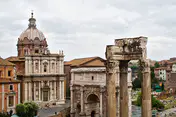
What could a foreign visitor to ancient Rome expect to see in the Forum?
a)
a track for chariot races
b)
a central gathering place
c)
a wealthy country house
d)
a site of fights with lions
3.
What was a common way to become a Roman slave?
a)
having skill at a craft
b)
doing poorly in school
c)
being captured in a war
d)
losing a political election
4.

Why did the Roman emperors give the poor “bread and circuses”?
a)
so the poor would not rebel
b)
so the poor could learn to read
c)
so the poor would not eat meat
d)
so the poor could make more money
5.
What is one example of the rule of law in the Roman Empire?
a)
The emperor had to obey the Senate.
b)
Senators carried an ax to protect themselves.
c)
The punishments were the same for rich and poor.
d)
Any Roman could accuse someone of a crime.
6.

Who made the decisions at Roman trials?
a)
a jury
b)
a senator
c)
the victim
d)
the emperor
7.
Why did Rome have many different forms of worship?
a)
There was an altar in each home.
b)
The emperors claimed to be gods.
c)
Foreigners brought their religions.
d)
Festivals were popular with the poor.
8.
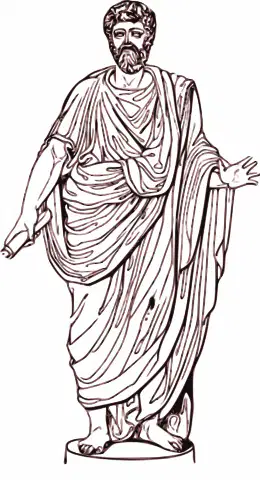
When did a man become a paterfamilias?
a)
when he got married
b)
when his own father died
c)
when he became a grandfather
d)
when he gave his toys to the gods
9.

The poor often ate food that was
a)
bought at "fast-food" shops.
b)
prepared for them by slaves.
c)
cooked in their kitchen at home.
d)
from a fancy, expensive market.
10.

Where would one most likely see the foods listed below? • mice cooked in honey• roasted parrots stuffed with dates• salted jellyfish• snails dipped in milk
a)
in a major offering to the gods
b)
at a poor Roman's breakfast
c)
at a wealthy Roman's dinner
d)
in the stands at a chariot race
11.
Why was the home of a wealthy Roman unlikely to burn down?
a)
It had a chimney.
b)
It did not have kitchen.
c)
It had small rooms.
d)
It was built of stone.
12.
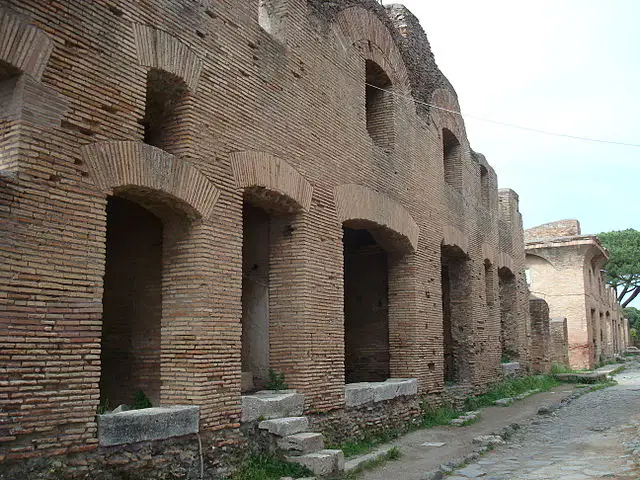
What was a typical home for a poor Roman city-dweller?
a)
a villa outside the city walls
b)
a house made of mud bricks
c)
a large room with thick walls
d)
an apartment in a tall building
13.
Which of the following might have been a student in ancient Rome?
a)
a slave girl training to be a midwife
b)
a rich boy studying leatherworking
c)
a 16-year-old girl going to school
d)
a poor boy studying science
14.
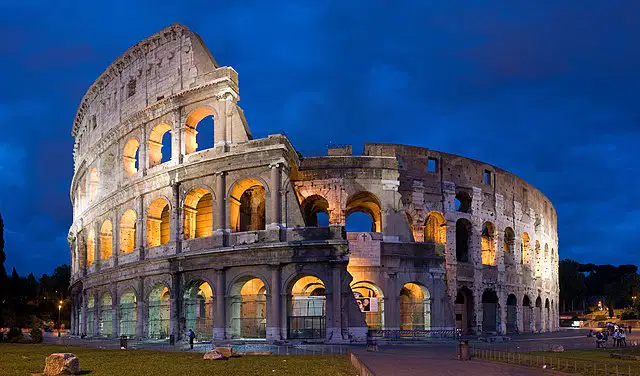
Why was fighting a regular event in the Colosseum?
a)
to protect the city from raids
b)
to entertain the audience
c)
to express the anger of the poor
d)
to decide who should be emperor
15.

Why did thousands of Romans go to the Circus Maximus?
a)
to eat a free meal
b)
to watch chariot races
c)
to enjoy the dancing bears
d)
to shop for everyday clothing
16.
What did many wealthy Romans do when the city got hot in the summer
a)
covered their skin with fresh mud
b)
slept in rooms below ground level
c)
moved to their estates in the country
d)
limited their diet to bread and milk
100 %

