
 Worksheets
3G SCIENCE REVISION- FINAL REVISION - JOSEPH MANSO
Total questions: 84
Worksheet time: 1hrs 23mins
The water cycle starts with the energy from the______
oceans
plants
sun
wind
Evaporation is when _________________________________________________________
water freezes
water changes
from a gas to a
liquid
water changes
from liquid to a
gas
plants use the
water from the rain
Constant movement of water is called________
water runoff
precipitation
condensation
the water cycle
The water that falls from the clouds is_____
evaporation
condensation
transpiration
precipitation
What happens when the sun heats the earth's water?
it turns to a solid
it turns to a gas
it turns into a liquid
nothing

The stages of the water cycle are...
(think of the first stage)
evaporation
condensation
precipitation
condensation
water vapor
precipitation
wind
transpiration
sun
clouds
precipitation
evaporation
Puddles that disappear on a hot day is an example of......
transpiration
condensation
evaporation
precipitation
Dew is a form of __________
gas
liquid
solid
What happens when warm air with water droplets meet cold air and become visible?
precipitation
evaporation
transpiration
condensation

These are examples of what?
precipitation
evaporation
transpiration
condensation

This is an example of ......
precipitation
evaporation
condensation
transpiration

What is this an example of?
condensation
evaporation
precipitation
transpiration

What is this an example of?
precipitation
evaporation
transpiration
condensation
the state of the atmosphere, including temperature, atmospheric pressure, wind, humidity, precipitation
weather
Any liquid or frozen water that forms in the atmosphere and falls back to the earth. It comes in many forms, like rain, sleet, and snow.
Precipitation
the regular pattern of weather conditions of a particular place.
Climate
a mass of water drops or ice crystals suspended in the atmosphere.
Cloud
process by which an element or compound transitions from its liquid state to its gaseous state below the temperature at which it boils
Evaporation
Match the following
the movement of air, caused by the uneven heating of the Earth by the sun and the Earth's own rotation.
1. Wind
when a gas turns to a liquid.
2. Condensation
the force exerted by air, whether compressed or unconfined, on any surface in contact with it.
3. Air pressure
the cycle of processes by which water circulates between the earth's oceans, atmosphere, and land, involving precipitation as rain and snow, drainage in streams and rivers, and return to the atmosphere by evaporation and transpiration.
4. Water cycle

The moon cycle lasts about
(a) .

What is the source of the moon's light?
the Sun
the moon
glowing rocks
heat

Which moon phase is this?
new moon
waxing gibbous
waning crescent
full moon

When the moon appears to be illuminated on the RIGHT side it is ____.
Waxing
Waning

When the moon appears to be illuminated on the LEFT side it is ____.
Waxing
Waning

How many phases are in the moon cycle?
8
10
12
16

waxing crescent

full moon

new moon

Which moon phases is this?
waxing crescent
first quarter
new moon
full moon

first quarter

third quarter

waning crescent
Match the following

waxing gibbous

waning gibbous

new moon

Is this a first OR third quarter moon?
first quarter moon
third quarter moon

Is this a waxing OR waning crescent moon?
waxing crescent
waning crescent

Is this a waxing OR waning gibbous moon?
waxing gibbous moon
waning gibbous moon

The earth spins. It goes around its .....
axis
night
day

The earth axis is....
a short line
a wavy line
an imaginary line

The axis goes from the ..... at the top.
Sun
North Pole
South Pole

The axis continues through the centre of the Earth to the ..... at the bottom.
globe
direction
south pole

The earth spins in .... direction.
three
two
one

The earth takes ..... day to rotate (spin) on its axis.
365
24
1

The earth spins .....
anticlockwise
clockwise
one clock

Another name of the south pole is ...
arctic
antarctic
penguin

You can find polar bears in the ....
Arctic
Indonesia
river

The spin of the earth is what gives us .......
sun
day and night
space

The ... does not move.
venus
earth
sun

When part of the earth faces the sun, it is ......
day time
night time
no time

When part of the earth faces AWAY from the sun, it is....
no time
day time
night time

The earth spins ..... every 24 hours.
once
twice
thrice

In your opinion, the temperature in the Arctic or North Pole is ....
very hot (above 38o Celsius)
freezing (can be -50o Celsius)
average (around 23o Celsius)

Mr. Jumble is showing Miss Sunshine how we get day and night. What should he choose to represent the earth?


What do they want to experiment?
How the Moon orbits the earth.
How the Earth orbits the Sun.
How we get day and night.

Which part of the Earth has daylight?
A
B
C

Which part of the Earth is in total darkness
A
B
C
How do you spell this word?
Antartic
Enterctic
Antarctic
How many planets are in the solar system?
10
8
6
4
The sun is a...
star
planet
What is the closest planet to the sun?
Neptune
Jupiter
Earth
Mercury
The Inner planets receive the name of _________ because they are made of hard rock.
rocky planets
gas giants
The Outer planets receive the name of
rocky planets
gas giants
What is the largest planet in the solar system?
Earth
Venus
Jupiter
Mars
Mercury takes only _________ days to complete one revolution.
88
98
108
118
The planet that rotates in the opposite direction as its orbit is:
Mercury
Earth
Mars
Venus
The planet that has hundreds of rings around is:
Jupiter
Saturn
Uranus
Neptune
Pluto is considered a major planet in the solar system.
True
False

Are forces balanced or unbalanced when a marble rolls down a ramp?
Balanced
Unbalanced
Are forces balanced or unbalanced when a plane is speeding up to take off into the sky?
Balanced
Unbalanced

Are forces balanced or unbalanced when skateboarding down a ramp?
Balanced
Unbalanced
What will causes an object to move?
unbalanced forces
balanced forces
net force
potential energy

A seesaw is an example of a
wedge
lever
inclined plane
pulley

Stairs is a kind of a/an
wedge
pulley
inclined plane
wheel and axle

Lightbulb is a kind of a/an
wedge
pulley
incline plane
screw

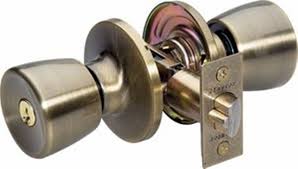
This device is a kind of a/an
wedge
lever
incline plane
wheel and axle

The fixed point on the lever is called
load
resistance
bar
fulcrum

The device used to raise a flag up a flag pole is an example of a
wheel and axle
lever
inclined plane
pulley

Identify this simple machine
Lever
Wheel & Axle
Inclined Plane
Screw

What is an inclined plane?
wheels that turn on a post
made from two or more simple machines
flat surface that is higher at one end
uses a wheel and a rope to lift a load



