
 Worksheets
AP Human Geography practice quiz 2023
Total questions: 22
Worksheet time: 12mins
The demographic transition model states that stage 3 societies differ from stage 2 societies primarily in that
A stage 3 economy is agricultural, not manufacturing
A stage 3 birth rate is decreasing not increasing.
A stage 3 death rate is increasing, not decreasing
A stage 3 total population has leveled off
A stage 3 gender imbalance has rebalanced itself
Countries that are near or below zero population growth will often
Eliminate guest worker programs
Elect nativist or authoritarian leaders
Experience reduced levels of manufacturing
Offer incentives to citizens with more children
Exhibit an increased death rate
The primary reason that humanity has been able to escape the Malthusian trap is
Changing weather patterns
Improvements in human digestion
Increased government intervention
Reduced open-border policies
Improved agricultural technology
An example of cyclic movement is
a Polish woman working as a housekeeper in Ireland each summer.
a Chinese software entrepreneur opening a branch of his businesses in Ethiopia.
a French woman with dual citizenship retiring to her parents' homeland of Tunisia
a Syrian refugee seeking refuge with his family in Germany
A young Colombian moving from the countryside to Bogota to attend university
An example of an officially multilingual society is
Canada
the United States
Bolivia
France
South Korea
A Bangladesh immigrant to France, who has limited grammar and few vocabulary words in French speaks a
lingua franca
pidgin language
creole
patois
dialect
The Influence of German music upon the norteno ranchera, and banda forms music in Northern Mexico is an example of
contagious diffusion
stimulus diffusion
hierarchical diffusion
expansion diffusion
relocation diffusion
All of the following are differences between monotheistic and polytheistic traditions EXCEPT
monotheistic traditions emerged in what is now the Middle East, while polytheistic traditions emerged in the Far East
monotheistic traditions grew out of the visions of a single founder, while polytheistic traditions grew out of collective culture
monotheistic traditions believe in one divine being, while polytheistic traditions believe in many divine beings
monotheistic traditions maintain an egalitarian structure, while polytheistic traditions maintain hierarchical structure
monotheistic traditions practice moral absolutism while polytheistic traditions practice moral relativism
The difference between a site and situation is defined as the difference between
the physical characteristics of a place versus the interconnectedness of that place with other places
the investment in historical renovation versus the investment in new construction
the fixed characteristics of a place versus the changing characteristics of a place
the tendency for a place to retain its own unique characteristics over time versus the tendency for a place to lose those unique characteristics over time
the power of a group effort versus the strength of individual effort
in 1920 what was the primary obstacle preventing working class people living in apartments close to the city from moving to rural home areas
Racist housing policies
Prejudice against immigrants
Cost of transportation
Fervent religiosity
Lack of Employment
Unlike the concentric zone model the sector model of urban structure takes into account which of the following factors?
Ethnicity
Gender
Socioeconomic class
Transportation
Religion
The perception of Mexicans as wearing large sombreros and eating tacos is an example of Mexico as a(n)
political region
environmental region
absolute location
relative location
vernacular region
The concept of sequent occupane is best illustrated by which of the following situations?
The arrival of a Somali family into a white Minnesota neighborhood
The discovery by construction workers in Rome of perviously known ancient ruins
A young girl who is sharing an apartment with her parents and two sets of grandparents
The laws that allow squatters legal rights to a property after a set period of time has elapsed
The construction of Las vegas on flat untouched deser
The scientific idea that a culture's physical traits are decided by the physical geography of its hearth region is known as
external identity
environmental determenism
ethnic cleansing
syncretism
appealiations
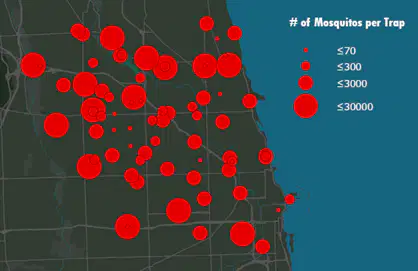
This is a..
cartogram map
flowline map
graduated symbol map
isoline map
choropleth map
The spread of the spanish influenza is most analogous to
absolute location
contagious diffusion
relocation diffusion
orthomorphic projection
choropleth map
Two neighboring villages with populations of 300 and 400 are seperated by 10 miles. What is their gravity model?
12
24
120
240
1,200
GIS ( geographic information system ) would be LEAST useful in which of the following situations?
plotting the affects of an economic crash on immigration
Dialling 911 from a landline
Using in-car navigational systems
Assessing crop damage after a flood
Planning the construction of roads and bridges
The racist method for real estate agents encouraging white homeowners to sell their homes at a loss by implying that minorities were moving in and reselling them for higher prices to minority groups is called?
gentrification
blockbusting
functional zonation
redlining
new urbanism
The heartland theory holds that
the American Midwest is the center of the United States because of its agricultural bounty
Eurasia is the core of global influence owing to its size, population, and resources
all national cultural identity can be traced to a central region in that nation
far more important than the geographic expression of culture is the internal possession of that culture's norms
the Middle East, and Jerusalem in particular, is the center of the worlds' monotheistic religions
The type of world order in which one state is dominant over the others, issuing orders for allies to follow instead of pursuing a joint decision-making process, is known as
unilateralism
absolute monarchy
totalitarianism
First World
neo-multilateralism
Which of the following has NOT been a challenge to pastoral nomadic herders?
Changes in economic relationships within regional contexts
Domination of political relationships by central states
Climatic change resulting in loss of resources for animals, such as food
reduced number of livestock
Erosion of resource base

