
 Worksheets
Science Review 2
Total questions: 46
Worksheet time: 30mins
To make an electromagnet, a conductor should be coiled around—
a glass tube
an iron nail
a roll of paper
a wooden stick
Which picture shows an object that has kinetic energy?


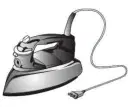
Which energy transformation most likely occurs in a steam iron?
electrical energy changes to heat energy
electrical energy changes to sound energy
mechanical energy changes to heat energy
mechanical energy changes to light energy
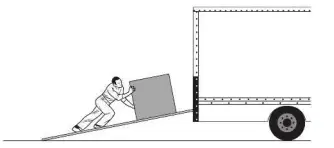
The box would be easier to move if the surface of the ramp was smoother because there would be less—
mass in the box
friction opposing the box
gravity pulling on the box
distance to push the box

An ice cube melted, turned into liquid, and then evaporated into a gas. Which of the
following best describes the motion of the water particles in each phase?
The solid particles moved fastest because they had more energy.
The gas particles moved fastest because they had more energy
The liquid particles moved slowest because they had no energy.
All particles moved at the same speed for every phase of matter

What is a push or a pull acting on an object?
force
mass
gravity
when one force is stronger than the other, the result is motion
balanced forces
friction
net forces
inertia
Which two measuring instruments would you need to calculate the speed of a runner?
A meter stick
A stop watch
A scale
A thermometer

Based on the diagram, select ALL true statements.
The forces on the cart are balanced.
The forces on the cart are unbalanced.
The cart will move to the left.
The cart will move to the right.
The cart will not move
What causes day and night on the Earth?
rotation of the Earth
revolution of the moon
revolution of the Earth

What caused the formation of trenches on the ocean floor?
movement of air currents
movement of tectonic plates
movement of glaciers
movement of ocean waves and currents
Compacting of sediment causes this to form?
Igneous rock
Sedimentary rock
Lava rock
All of the above

Which layers of the earth is thinnest?
inner core
crust
outer core
mantle
What do we call a scientist who studies and predicts the weather?
Meterologist
Geologist
Astronomer
Batman
When very warm, moist air masses are created over the ocean, what storm may be forming?
hail storm
twister
hurricane
Cloudy with a chance of meatballs
Snow, Rain, Sleet and Hail are all best describe as:
Precipitation
Air pressure
Humidity
Fronts
What is the smallest planet in the solar system?
Asteroid
Mars
Uranus
Mercury
What is at the center of the solar system?
Mars
Earth
Moon
Sun

How long does it take for the Earth to Revolve around the Sun?
24 hours
24 days
365 days
28 days
The flow of energy as a current is called ________________.
electricity
heat
light
sound
Materials that do not allow electricity to flow easily through them are _____________________.
circuits
conductors
inhibitors
insulators
Which of these is NOT an insulator?
plastic straw
metal paper clip
rubber band
piece of paper
True or False: An electrical current WILL flow through an open circuit.
true
false

Your teacher created a model of an electrical circuit, as shown on the picture. Which of the following statements best explains why the light bulb does not turn on when the switch is open?
The light bulb is too big.
The electricity moves backwards.
The electricity cannot flow.
It is a closed circuit.

When using a toaster, electrical energy is transformed into _______________________ energy.
mechanical
radiant
thermal

When using a lamp, electrical energy is transformed into _________________ energy.
mechanical
radiant
thermal

When an electric current flows through a wire wrapped around an iron nail, what is formed?
lightning
open circuit
electromagnet
Light bounces off when it is
reflected
absorbed
refracted
transmitted


This is an example of?
Absorb
Reflection
Refraction
Transmition


