
 Worksheets
Band Final Super Study Exam 24-25
Total questions: 130
Worksheet time: 3hrs 45mins
1. Name the instrument from the woodwind family
Trumpet
Clarinet
Xylophone
Euphonium
Which term means to play “loud and Separated”?
Marcato
Da Capo
Simile
Dal Segno
Tenuto
What is the definition of dimenuendo?
Get louder and faster
gradually get more quiet
With life
Very Quick
gradually slow down
Which term means to gradually get faster?
Accelerando
Timbre
Ritardando
Marcato
Detache
What is the definition of legato
March like
In a smooth, connected style
In a song-like manner
Sweetly
Which term indicates "loud then immediately softer?"
Decrescendo
Crescendo
Forte Piano
Allargando
Notes with the same pitch but different names are known as__________.
Staccato
Enharmonic
Chromatically Adjacent
Marcato
The distance between two notes is called
Harmony
An interval
Melody
Active
Which term means less
Molto
Meno
poco a poco
subito
What does subito mean?
Softly
Sweetly
Suddenly
Swiftly
What does fermata mean?
Release
Loud
Smooth
Hold
Gradually increase in sound:
Foret piano
decrescendo
crescendo
What does the C in the time signature mean
2/4
Key of C
Common time
Chromatic
How many eighth notes are in a dotted quarter?
2
3
4
6
What does a dot after a note do?
adds one beat
adds half of the value of the note
indicates a style change
adds two beats
The correct order of dynamics (softest to loudest) is:
pp p mf mp f ff
ff f mf mp p pp
pp p mp f mf ff
pp p mp mf f ff
Spell Bb enharmonically
A#
G#
B
F#
A-sharp is enharmonically equivalent to what note?
B#
Bb
G#
Gb
Respell Db enharmonically
E#
D#
C#
Fb
If your instrument registers as FLAT, what should you do?
Leave it.
Push in/ Tighten String
Talk
Pull out / loosen string

What does this top number tell you?
What notes to play sharp or flat
That quarter note = 1
There are 4 measures in the song
There are 4 beats in the measure

What does the bottom number tell you?
That quarter note = 1 beat
There are 4 beats per measure
What notes to play sharp or flat
There are 4 measures in the song
What is a key signature?
The two numbers that look like a fraction at the beginning of the song
It tells you what notes to play sharp or flat
The clef
Where the notes go on the music staff

Is the curved line connecting the notes in the picture a slur or a tie?
Tie
Slur
What is articulation?
How loud or soft you play
How fast or slow you play
How you tongue/play something
A rest

The short lines above and below the staff are called…
Rests
Notes
Staff
Ledger Lines

How many letters are in the musical alphabet?
27
17
7
10
When two flute/voilin players play the same note and they begin to sound like a wave, that means...
They are in tune
They are matching tone
They are slightly out of tune with each other
They are not matching tone.

What is this called?
Sforzando
Subito
Fortissimo
subissimo
Molto means
Much/Very
Hot
Slow
Fast

What type of articulation is this?
Tie
Staccato
Tenuto
Marcato

What type of articulation is this?
Tenuto
Accent
Marcato
Slur

What type of articulation is this?
Staccato
Marcato
Tenuto
Tie

What is the name of this articulation?
Tenuto
Slur
Tie
Legato

What is the name of this articulation?
Legato
Tenuto
Slur
Tie

What is the name of this rest?
quarter rest
half rest
eighth rest
sixteenth rest

What is the name of this note?
eighth note
quarter note
half note
sixteenth note

How many beats does this note receive?
1/2
1/4
1/8
1

This is a
Staccato
Dotted Note
Tenuto
Accent

What is the name of this note?
quarter note
half note
whole note
eighth note

How many beats does this note receive?
2
3
1.5
1/2

How many beats does this note receive?
2
3
1.5
1/2
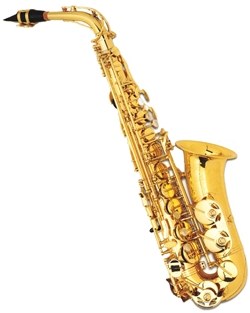


What does "timbre" mean?
How high the note is
How loud the note is
The distinct sound/tone the note has
how long or short the note is
Which of these is NOT an instrument family
Woodwind
Brass
Low Brass
Percussion
Timbre
The first S. in S.T.A.R.S. stands for
Signs and Symbols
Signatures
Slow Down
Sound
The R in S.T.A.R.S. stands for
Rhythms
Right Note
Right Time
Ritardando

Identify this key signature
Bb Major
Gb Major
Eb Major
Ab Major

Identify this key signature
Ab Major
Eb Major
Gb Major
Cb Major

Name the key signature
F Major
G Major
C Major
D Major
To play sweetly
Dolce
transpose
Harmonize
Trill
What does a key signature tell you?
when to play
how to play
which notes to flat, sharp or leave natural
which notes to skip
Embouchure
how you hold the shape of your mouth
Syncopation
displacing the strong beats of music
Rubato
to steal time
Interval
the vertical distance between notes on a staff
Meno
less
Molto
More
Subito
Suddenly
Trill
quickly go between two notes
Ledger Lines
lines that help you read notes above or below the staff
Score
Sheet of music with all parts on it.
Draw a sharp!

Draw a Treble Clef

Draw a Bass Clef
Draw a flat!

What is this symbol called?
Flat
Sharp
Natural
Hash tag

What is this?
Flat
Sharp
Lower case b
Natural

What does a flat do to a note?
Make the note lower by a half step
Make a note higher by a half step
Makes no difference at all
Squishes the note

What does a sharp do to a note?
Make it higher by a half step
Make it lower by a half step
Makes no difference at all
Activates a google search
What does a natural do to a note? Choose all that apply.
Makes it higher by a half step
Makes it lower by a half step
Makes no difference at all
brings a note back to it's natural form
Cancels out a flat or sharp

What notes are flat in the key signature?
B, E
F, A
D, F
none

What notes are flat or sharp in the key signature?
none
B
E, B
A

What notes are sharp in the key signature?
F, C, G
G, C
F, C
B, E

What note is flat in the key signature?
D
E
A
B

What note is sharp in the key signature?
F
A
C
E

Name the RED note
B♯
B♭
B♮
Write the letters to the C Scale.
Use all UPPERCASE letters with a space between. Accidentals are directly after their letter.
ex. the A Scale: A B C# D E F# G# A
(a)
Write the letters to the F Scale.
Use all uppercase letters with a space between. Accidentals are directly after their letter.
ex. the A Scale: A B C# D E F# G# A
sharps are # and Flats are b
(a)
Write the letters to the Db Scale.
Use all uppercase letters with a space between. Accidentals are directly after their letter.
ex. the A Scale: A B C# D E F# G# AD
sharps are # and Flats are b
(a)
Write the letters to the B Scale.
Use all uppercase letters with a space between. Accidentals are directly after their letter.
ex. the A Scale: A B C# D E F# G# AD
sharps are # and Flats are b
(a)

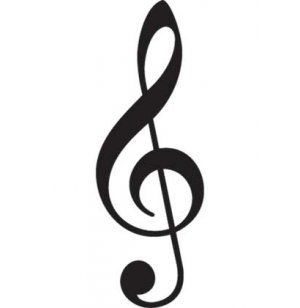
What is other name of this symbol?
F Clef
G Clef
C Clef
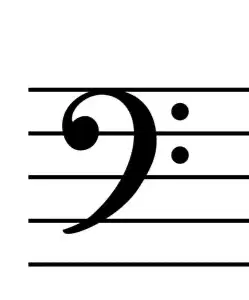
What is other name of this symbol?
F Clef
G Clef
C Clef

This symbol tells us to hold the note until the conductor cuts us off. What is it called?
Rests
Notes
Fermata
Tie

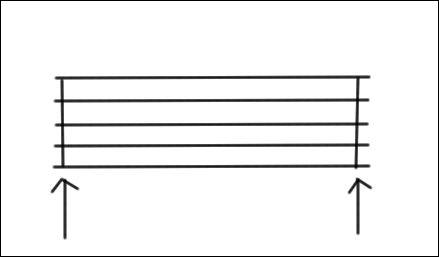
What is the name of this symbol?
Bar Lines
Measures
Staff
Repeat Signs


What is this symbol's name?
Fermata
Get Softer
Decrescendo
Crescendo

What music term means ‘to get gradually louder’?
Forte
Crescendo
Decrescendo
Piano
What does concert mean? (as in everyone play CONCERT F
play together
sound the same
play all parts
Dynamics are
suggestions
challenging
difficult
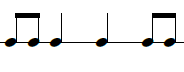
How do you count this rhythm?
1 2 3 4
1+ 2 3 4+
1 2+ 3+ 4
1 (2) 3 (4)

How do you count this rhythm?
1+ 2+ 3+ 4+
1+ 2 3+ (4)
1+ 2 3+ 4+
1 2+ 3 4

How do you count this rhythm?
(1) 2+ 3+ (4)
1 2+ 3+ 4
1+ (2) (3) 4+
1 2 3 4+

How do you count this rhythm?
1 (2) (3) (4)
(1) 2+ 3 4
1+ 2+ (3) (4)
1+ (2) (3) (4)

How do you count this rhythm?
5 (6) (7) 8
(1) 2+ 3 (4)
1 (2) (3) 4
1 2 (3) (4)

Which rhythm is counted: "1 2 3 4+"
A
B
C
D

Which rhythm is counted: "1 2+ 3 4"
A
B
C
D


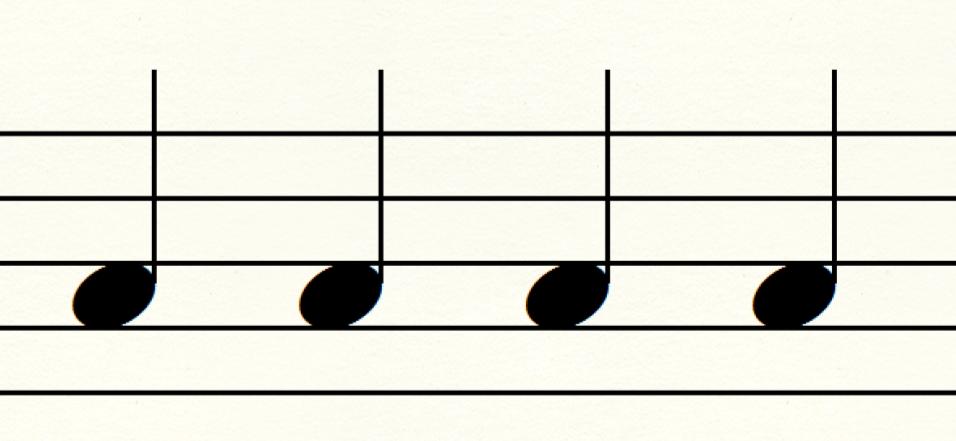


What are these notes names?


What is the name of this note?
Half note
Sixteenth Note
Eighth Note
Whole Note


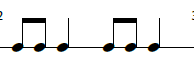
How do you count this rhythm?
1 2 3 4
1+ 2+ 3+ 4+
1+ 2 3+ 4
1 2 (3) 4+

How do you count this rhythm?
1 2+ 3 4
1 2 3 4
1+ 2+ 3+ 4
5 6+ 7+ 8
How do you count this rhythm?
5 (6) (7) 8
(1) 2+ 3 (4)
1 (2) (3) 4
1 2 (3) (4)

Which rhythm is counted: "1e+a 2 3e+a 4"
A
B
C
D
Which of these rhythms equal 1 1/2 beats?


None of these.

Find the correct answer for the rhythm.
1 2+ 3+ 4+
1 2+ 3e+a 4+
1 2,3 3e+a 4+
1,2+ 3+ 4

What is the name of this note?
sixteenth note
eighth note
quarter note
whole note

How do you count this?
1 e + a 2 (3) 4 +
1 e + a 2 + 3 4
1 e + 2 (3) 4
1+2 + 3 4+

How do you count this?
1 e + a 2 (3) 4 +
1 e + a 2 + 3 4
1 e + (2) 3e+a 4
1+2 + 3 4+

How do you count this?
1e+ 2e+ 3+ 4
1 e + a 2 + 3 4
1 e + (2) 3e+a 4
1+2 + 3 4+

How do you count this?
(1)+ (2) 3e+a 4
(1)+ 2 3 4e+a
1+ 2 3 4
12 + 3e+a (4)

How do you count this?
1e+a 2 3 4+
1e+a (2)+ 3 4
1e+a (2)+ (3)+ 4
1e+a (2)+ (3)+ (4)+
Balance
Being in tune
being at the right volume in your section
being at the right volume as an ensemble
the quality of the sound your instrument is producing
Blend
Being in tune
being at the right volume in your section. Sounding like one instrument
being at the right volume as an ensemble.
the quality of the sound your instrument is producing
Intonation
Being in tune
being at the right volume in your section. Sounding like one instrument
being at the right volume as an ensemble.
the quality of the sound your instrument is producing
Tone
Being in tune
being at the right volume in your section. Sounding like one instrument
being at the right volume as an ensemble.
the quality of the sound your instrument is producing
Match the following
Tone
The quality of the sound you are playing
Intonation
being in tune
Balance
playing the volume in the ensemble
Blend
Section sounding like one instrument

