
Font size
 Worksheets
AP EUROPEAN HISTORY REVIEW
Total questions: 500
Worksheet time: 8hrs 20mins

Charles I of England faced a revolt against royal authority led by
Parliament
the Anglican Church
peasants
French agents
Which of the following is the most significant outcome of Charles I's execution in 1649?
It was the first time in history that a Parliament had voted for the execution of a monarch.
The execution restored the Tudors to the throne.
The execution led to the abolition of the monarchy.
England was invaded and conquered by the Scots and Ireland gained independence.
Which of the following is NOT a characteristic of the Italian Renaissance?
emphasis on the individual
glorification of human achievement
steadfast support for the church's leading role in society
new attempts to reconcile the pagan philosophy of the Greco-Roman world with Christian thought
Italian humanism gave rise to
Greek becoming the official literary language of the Renaissance writers
the welfare state
the movement toward writing in the vernacular in Europe
the movement known as liberation theology
Which of the following most clearly distinguishes the northern Renaissance from the Italian Renaissance?
interest in science and technology
greater concern with religious piety
cultivation of a Latin style
growth of national language in literature
Which of the following states proved to be the exception to the trend of centralization?
England
the Holy Roman Empire
France
Spain
Charles V was on of along line of Austrian rulers of the Holy Roman Empire (1452-1806) from which family?
Habsburg
Tudor
Valois
Hohenzollern
All of the following were methods that monarchs in Russia, France, and Spain employed to consolidate their rule EXCEPT
promoting ethnic and religious nationalism
breaking the independent power of the nobility
securing control over levying taxes
establishing a close but dominant relationship with the Christian Church in their lands
Identify the nation by the list of ruling families
-Aragon
-Castile
-Trastamara
-Habsburg
England
France
Spain
Holy Roman Empire
Identify the nation by the list of ruling families.
-Lancaster
-York
-Tudor
-Stuart
England
France
Spain
Holy Roman Empire
Identify the nation by the list of ruling families.
-Valois
-Bourbon
England
France
Spain
Holy Roman Empire
Identify the nation by the list of ruling families.
-Hapsburg
-Hapsburg-Lorraine
England
France
Spain
Holy Roman Empire
The Spanish financed the voyages of Christopher Columbus because
they wanted to get to India before the Portuguese.
they wanted to get to America before the Portuguese.
Spanish clergy wanted to prove the world was flat.
the English had announced their plan to explore the Atlantic.
The typical family in 16th century Western Europe
was an extended household of parents, children, and grandparents
was a broken family caused by a high divorce rate
toiled in the urban factories for miserable wages
was a nuclear family comprised of husband, wife and their children

Habsburgs
Fugger
Medici
Tudors

Which city was one of the earliest centers of the Renaissance?
Athens, Greece
Rome, Italy
Florence, Italy
Sparta

Who was the famous playwright that wrote Romeo & Juliet, Macbeth, Sonnets, etc.?
Leonardo da Vinci
William Shakespeare
Michalangelo
Rafael
Which of the following would be most adversely affected by the increase in the price of food?
urban workers
wealthy merchants
the clergy
the nobility


Which of these statements describes a change brought about by the Renaissance?
Society was dominated by the church.
Society began to value individualism.
Society was focused on warfare.
Society was dominated by lords.

Which of these famous structures did Michelangelo paint?
the Louvre
the Coliseum
the Sistine Chapel
the Eiffel Tower
Developments in cartography made it easier for explorers in their travels to new lands. Which of the following best describes cartography?
the study of the Earth's natural processes
the study of the Earth's weather patterns
the study and practice of making maps
the study of past human societies
• Botticelli • Michelangelo
• Raphael • Titian
All of the above were famous Renaissance
scientists.
philosophers.
priests.
artists.
During the Renaissance, a new intellectual movement known as humanism evolved. What was the significance of the humanist movement?
Humanists felt formal education was impractical and unnecessary; therefore, many schools were closed.
Humanists spread the teachings of Eastern philosophers such as Confucius throughout Europe.
Humanists were very interested in religious studies and sought to increase the influence of the Church.
Humanists were inspired by classical texts and emphasized the dignity and worth of the individual.
Which of these men of the Renaissance was known equally for his art as well as inventions?
Rueben
Leonardo da Vinci
Michelangelo
Aristotle
? --->Literature printed for quickly --> literature printed for less money----> Greater spread of ideas
Which of these would complete the diagram?
the Book of Common Prayer
the Italian university system
the Gutenberg printing press
the Petrarchan style sonnet
Which of these changes occurred during the Renaissance?
The Church was all-powerful.
The Church’s power declined.
Factories began using electricity.
Women gained equal rights with men.
What was Niccolò Machiavelli's main argument in his work The Prince?
A ruler should do whatever is necessary to maintain power.
A ruler should follow all of the teachings of the Catholic Church.
A ruler should make his subjects as happy as possible.
A ruler should strive to maintain equality and fairness.
Which of these statements reflects an influence of the Renaissance?
dominance of the church
constant feudal warfare
lack of any governance
increased interest in the arts

What is an aristocrat?
A type of greek cat
A poor citizen of Rome
A king or queens relatives
Upper-class noblesmen
What best describes the nature of the cultural changes that followed the European presence in the Americas?
Native cultures were essentially destroyed by warfare.
Native cultures were transformed by disease and warfare, but those societies also influenced European development.
Native cultures were transformed by contact, while European cultures remained essentially unchanged.
Both European and native cultures were devastated by disease and conflict related to their contact.
Which did NOT travel from the Old World to the New?
Horses
Pigs
Wheat
Corn
Dogs
Which did NOT travel from the Old World to the New?
Horses
Pigs
Wheat
Corn
Dogs


Which of the following is NOT a characteristic of the Italian Renaissance?
emphasis on the individual
glorification of human achievement
steadfast support for the church's leading role in society
new attempts to reconcile the pagan philosophy of the Greco-Roman world with Christian thought
Italian humanism gave rise to
Greek becoming the official literary language of the Renaissance writers
the welfare state
the movement toward writing in the vernacular in Europe
the movement known as liberation theology
According to Baldassare Castiglione, the goal of the education system in the 16th century was to
provide a practical education in construction and commerce
offer the same learning opportunities to boys and girls
phase out the study of the classics in favor of more practical "career" and technical disciplines
provide a young man with a well-rounded education including knowledge of the arts, mathematics, and oration skills
Nicholas Copernicus' major contribution to scientific knowledge was
the discovery of the laws of gravitational pull
the universe was heliocentric
the development of calculus
the development of the period table of elements
What effect did the Scientific Revolution have on the authority of the Catholic Church?
It strengthened its intellectual authority since most scientists of the 16th century were Catholic.
It weakened its authority since more natural phenomena that had been traditionally left to the clerical leaders were now being explained through scientific inquiry.
The Catholic Church worked closely with the scientific community to develop methods that would alleviate suffering on earth.
It led to the Protestant Reformation.
Which of the following states proved to be the exception to the trend of centralization?
England
the Holy Roman Empire
France
Spain
Charles V was on of along line of Austrian rulers of the Holy Roman Empire (1452-1806) from which family?
Hapsburg
Tudor
Valois
Hohenzollern
As a result of the Peace of Augsburg, the Holy Roman Emperor agreed that German princes should
become Protestant
execute anyone who had fought in the Peasants' Revolt
burn all copies of the Ninety-Five Theses
be able to choose whether their lands would be Catholic or Lutheran
Why did France support the Protestant rebels fighting against the Catholics in the Holy Roman Empire?
It wanted to weaken and fragment the Holy Roman Empire.
King Henry IV of France was a Huguenot and, therefore, a supporter of German Protestants.
The German Protestants had helped King Henry IV, a Huguenot, assume the throne in France.
Revenge was sought for the pope excommunicating the entire French clergy.
The main result of the Edict of Nantes (1598) was that
it led to the disintegration of the Holy Roman Empire
Calvinists recognized Geneva s their capital
it established the principles of religious toleration and equal civil rights for French Protestants and Catholics
it led to the arrest of those responsible for the St. Bartholomew's Day Massacre
"Christians should be taught that, if the Pope knew the exactions of the preachers of Indulgences, he would rather have the basilica of St. Peter's reduced to ashes than built with the skin, flesh and bones of his sheep."
This passage was contained in which of the following works?
Thomas More's Utopia
Erasmus' In Praise of Folly
Luther's Ninety-Five Theses
Calvin's Institutes of the Christian Religion
Besides religious issues, the other major cause of the Protestant Reformation and the religious wars that followed was
the political struggle between monarchs imposing their centralized rule over their subjects and nobles fighting to keep their feudal independence.
the growing sense of belonging to a nation that has a common language, ethnicity, culture, and history.
the growing mercantilism competition for overseas colonies between the Holy Roman Empire, Spain, France, and Holland.
the bitterness that some European countries felt toward France for allying itself with the Ottoman Empire.
The parallel transfer of people, cultures, animals, food, and disease between Europe, Africa, and the Western Hemisphere as a result of the Spanish colonization of the New World is known as the
Cartesian swap
Faustian bargain
Columbian Exchange
Middle Passage


According to mercantilism, the primary goal of economics and trade is to -
accumulate resources in case of emergency
maximize gold and silver reserves
produce manufactured goods
educate the workforce
In France, the Edict of Nantes (1598) -
granted limited toleration to Calvinists
ended the state's Catholic ties
further persecuted religious minorities
made French-language bibles illegal

During the 30 Years’ War (1618-1648), France under Cardinal Richelieu pursued a policy of
Supporting the Hapsburgs against the Protestant princes and rulers
Allowing French Protestant princes and rulers to fight against the Hapsburgs
Supporting the Protestant princes and rulers against the Spanish Hapsburgs
Remaining neutral
Opposing England in order to recapture Normandy
Which of the following monarchs crafted religious tolerance and is known as a politique?
Maria Theresa of Austria
Elizabeth I of England
Elizabeth II of England
Mary I of England
The Peace of Augsburg did not allow for the practice of ____________________.
Catholicism
Calvinism
Lutheranism
The Jesuit order, founded by Ignatius of Loyola, is best known for -
Obedience to the pope
Obedience to the king
Promotion of biblical literacy
Burning of witches
The Thirty Years War marked a shift away from religious war to political war.
True
False
Which of the following advocated an evolutionary, as opposed to a revolutionary, theory of Marxism?
Eduard Bernstein
V. I. Lenin
Rosa Luxemburg
Joseph Stalin
Which of the Following was an economic belief of 19th century Liberalism?
Limited government
Free trade
Anarchism
Unions
In The Communist Manifesto (1848), Karl Marx and Friedrich Engels asserted that
capitalism was a necessary stage of economic and social development
a socialist revolution was most likely to occur in Russia
the goals of nationalism and socialism were inseparable
the working class was so oppressed that it was unable to help itself
European liberals in the first half of the nineteenth century typically supported
women’s suffrage
the right of workers to unionize and strike
a written constitution and wider suffrage
the establishment of overseas colonies to improve conditions at home
European feminists such as the Pankhursts had all of the following goals EXCEPT
eliminating poll taxes
opening up more professions to women
liberalizing marriage and divorce laws
broadening the franchise to include women
In the first half of the nineteenth century, which of the following was a field of employment that was exclusively male?
Agriculture
Teaching
The legal profession
Factory work
The first European country to develop a state social welfare system was
Sweden
France
Belgium
Germany
A major goal of English Chartists in the 1840's was
protective tariffs for farm products
war with France
abolition of the monarchy
the vote for all men
The British Great Reform Act of 1832 did which of the following?
Gave women the right to vote.
Limited the power of the monarchy.
Abolished the right of the House of Lords to veto legislation.
Increased the voting power of the middle class.
"The history of all hitherto existing societies is the history of class struggles."
The quotation above is from the writings of
Saint-Simon
Marx and Engels
Malthus
Bismarck
Who was the "Father" of socialism?
Kevin Systrom
Mark Zuckerburg
Robert Owen
Maude Barlow
What is the radical version of socialism?
Capitalism
Feminism
Nationalism
Communism
Socialism was an alternative to what movement?
Communism
Nationalism
Feminism
Capitalism
Who are the bourgeoisie?
Middle and upper classes
Working classes
A form of revisionism
A French form of fast food
Which of the following statements best reflects the ideas of Karl Marx?
Humans share a common ancestry with apes.
The market is governed by an invisible hand.
A classless society will emerge at the end of the dialectical process.
Happiness results from the greatest good for the greatest number.
Which of the following is accurate about late-nineteenth-century Socialist parties in western and central Europe?
They generally supported imperialist expansion.
They included members who emphasized electoral success and participation in government.
They were effectively controlled by the First International.
They publicly repudiated Marxism.
Which of the following was a common theme among nineteenth-century Utopian socialists?
Rejection of the institution of marriage
Advocacy of social and economic planning
Revolutionary overthrow of the existing order
Promotion of mass political parties
Which of the following best explains the movement of women into the teaching profession in the nineteenth century?
The increasing professionalization of nonindustrial jobs pushed men away from teaching positions.
The education of children in schools was increasingly seen as a respectable occupation for women.
The teaching profession was becoming increasingly open to working-class women.
The use of domestic paid labor declined over the course of the century.
Of the following, which was the central issue for nineteenth-century European advocates of women's rights?
The right of women to control their own property
Equal pay for equal work
The right to serve in the military
Alimony and child support in cases of divorce
Which of the following was a major demographic change in Western Europe between 1850 and 1914?
A dramatic shift of population to urban areas
A rapidly increasing birth rate
A rapidly increasing death rate
A pronounced trend toward larger families
which of the following goals of public education systems in the period before the First World War?
Instilling feelings of nationalism
Training bureaucrats for imperial posts
Greater appreciation of the Ottoman legacy in the Balkans
Heightening awareness of the dangers of international conflict

Which of the following developments within France during the nineteenth century is best understood as a reaction to the divisions shown on the map?
A gradual move toward industrialization
The modernization of transportation networks through railroad construction
The expansion of French colonies in North and West Africa
The development of a system of compulsory education
Which of the following was most central to the development of the early Industrial Revolution?
The replacement of iron by steel
The decline of individual enterprise
The shift from human and animal power to mechanical power
The decline of individual enterprise in favor of cooperative efforts
Between 1870 and 1914, the heavily industrialized nations of Western Europe earned the loyalty of their citizens by all of the following EXCEPT
extending the right to vote to almost all adult males
acquiring colonies to promote economic expansion and national pride
dividing farmland equally among peasants
increasing the availability of public education
The rebuilding of Paris during the 1850’s and 1860’s resulted in the
reduction of open spaces for recreation
improvement of military fortifications
prevention of popular uprisings in the city
destruction of much working-class housing

He instituted Glasnost and Perestroika
Gorbachev
Stalin
Lenin
Breshnev
Which event directly contributed to the end of the Cold War?
Several communist-based governments collapsed across Eastern Europe
The United States increased military aid to South Vietnam
The Marshall Plan
Senator McCathy's trials rooting out suspected communists
The Russian leader who was in office at the downfall of the Soviet Union
Gorbachev
Breshnev
Kruschev
Stalin
As a result of a struggling Soviet system
many of the countries in Eastern Europe staged revolutions against their communist governments
people increased their personal holdings in land
a majority of people started to see the Soviet nation as a power entity
their economy grew exponentially
Glasnost is best characterized as
a form of re-Stalinization
a restructuring of the economy
a form of central planning
a form of political liberalization
What was another reason for Soviet Union's external economic burdens in the 1980s?
Involvement in the Vietnam War
Involvement in the Soviet-Afghan war
Involvement in the arms race with the USA
Involvement in the nuclear disarmament talk
Which of the following was NOT an aim of Gorbachev's reforms?
To end military competition with the USA
To reform the Soviet economy
To abandon the communist system
To end the Cold War
Which of the following was NOT a consequence of Glasnost?
The Soviet citizens came to know about the economic problems in the country
The Soviet citizens realised that the quality of life in the USA and Western Europe was better
There was a increased wave of support for the Communist Party
Increased anger towards and criticisms of the government
Which of the following was NOT an example of economic reforms carried out under Perestroika?
Permitted private ownership of small businesses in service and manufacturing sectors
Prices of goods and services were set by a government council
Workers could elect their factory managers
State control of banking sector was decentralised
Which of the following was the main consequence of the Soviet government's decision to allow the Eastern European countries to decide its own political and economic system?
Integration of Soviet Union's sphere of influence in Eastern Europe
Collapse of the communist governments in Eastern Europe
Revival of Communist influence in the Soviet Union
Collapse of democratic parties in the Soviet Union
In the early days of independence, a major problem for many African nations was a
shortage of skilled technical workers
scarcity of natural resources
lack of water for hydroelectric power
reluctance to accept economic aid from the United Nations
Which is an accurate statement regarding modern African nations?
Most African nations have rejected membership in the United Nations.
For economic reasons, many African nations have maintained ties with their former colonial powers.
Most African nations are experiencing a decrease in urbanization.
Most African nations are miIitary allies of Russia.
Mohandas Gandhi’s protests during India’s independence movement were often successful because of his application of
an appeasement policy
civil disobedience
traditional caste beliefs
divide-and-conquer principles
What was the goal of the Algerian National LIberation Front?
create cultural independence from France
gain control over local economic resources
rapidly industrialize
join with the Communist bloc of countries
What did Gamal Abdel Nasser want for Egypt?
Control over Suez Canal
Join Communist bloc of countries
Become a Capitalist country
Develop a nuclear bomb for Egypt
Industrialization in the textile industry resulted in
better paying jobs
the establishment of factories
improved working conditions
more reliance on silk from China
In which of the following ways did Britain's colonial empire contribute to the country's industrialization?
Industrial technology was shared with the colonies, thus improving the empire's overall industrial output
Colonial laborers worked for much cheaper wages than unionized British Workers
The colonies provided a growing market for British manufactored goods
The colonies provided iron and coal, which Britain was lacking
Which of the following agricultural innovations is Charles Townsend most frequently associated with?
four crop rotation
the three field system
invention of the steel plow
heavy use of manure for fertilizer
The first factories in Britain's Industrial Revolution produced
textiles
tools
trains
car
As a consequence of mass produced cotton textiles
cotton goods became cheaper and more affordable for people of all classes
shortages of this key raw material were experienced
India became an industrial power
working conditions in the factories improved
James Watt's improvement of the original steam engine in 1769 was significant because
factories cold now use bulbs instead of candles for light
oil was no longer needed as an energy source
factories located near rivers now had an advantage over factories located away from water
new kinds of of power equipment could be used to aid people in their work
Britains Factory Act of 1833
monitored pollution levels in factories
addressed the issue of child labor by limiting their working hours
provided women with equal for equal work with men
required employers to pay workman's compensation for injuries sustained in the factory
The creation of what customs union among the German states in 1834 facilitated industrialization and became the basis of the political unification of the German states
the Reichstag
the Zollverein
the Bundestag
the Bundeswehr
Which of the following was the only European country to suffer a declining population in the 19th century
France
Ireland
Russia
Great Britain
The 19th century Chartists
were originally granted a charter to colonize India
favored equal membership for women in all trade unions
demanded universal male suffrage and political representation in Parliament for the working class
were Protestants looking to spread the faith to Britain's Caribbean colonies
Friedrich Engel's The Conditions of the Working Class in England 1844
brought attention to the appalling living conditions of the proletariat
lauded capitalism for raising the standard of living for regular workers
called for workers to return to agraian life
ordered workers to destroy machines in protest against industrialization
The Mines Act of 1842
prohibited underground work for all women and for boys under 10 years old
gave women the right to work in coal mines
allowed children to work in mines after school and during summer breaks
called for coal mining quotas
Who invented the spinning jenny?
Karl Marx
Thomas Edison
Jethro Tull
James Hargreaves
How did labor in British families change in the eighteenth century?
Family members shifted labor away from unpaid work for household consumption and toward work for wages.
Familly members stopped working on farms and worked at home
Family members became responsible for monitoring factory pollution levels
Family members who worked in factories had more leisure time
How did cotton transform the textile industry?
Cotton could be spun mechanically with much greater efficiency than wool or flax, helping to solve the shortage of thread for textile production
People realized how good it was to work with silk and began to use cotton less
goverment programs provided subsidies to worker's families that used cotton
raw materials were no longer needed for Russia
The tendency to hire family units in the early factories was
because recent immigrants from Russia had no where to live
usually a response to the wishes of the families
outlawed by the Combination Acts
a government sponsored response to urbanization
Why did eighteenth-century Britain have a shortage of wood?
The new Industrial pollution began to destroy traditional old growth forests
Wood had been over-harvested; it was the primary source of heat in all homes and a basic raw material in industry.
The wide spread building of canals and roads required large amounts of wood and caused many forests to be cut through
The vast expansion of the British Navy in the wars against France led to a problem of deforestation
Thomas Malthus argued in his Essay on the Principle of Population (1798) that
the productivity of the Industrial Revolution would result in a rise in the standard of living
population tends to increase beyond the means of subsistence.
capitalism will prevent distress through an increase in productivity
goverment programs are necessary to prevent distress
How did railroads affect the nature of production?
The speed of rail travel required manufacturers to adopt more regularized work routines
The availability of raw materials became more secure, supporting greater investment in machinery
Markets become broader, encouraging manufacturers to create larger factories with more sophisticated machines
Railroads permitted factories to be established anywere
What did Henry Cort develop?
The first locamotive, after much experimentation
The puddling furnace which allowed pig iron to be refined with coke
The first commerical steam ship, initially used in North America
The steam engine, which became a major factor in the Industrial Revolution
What was the result of the development of the British economy between 1780 and 1851?
The large increse in wages resulted in a vast increase in personal consumption
Average consumption per person decreased as industrial work drove down wages
The large growth in population caused the gross national product to remain stagnant
Much of the growth in the gross national product was eaten up by population growth
David Ricardo's iron law of wages states that
population growth creates more highly talented who produce greater profits
wages of the working class always rise as a percentage of the wages of the upper classes
wges always move in proportion to productivity in the workplace
the pressure of population growth will always sink wages to subsistence level
What was the major breakthrough in energy and power supplies that catalyzed the Industrial Revolution?
Jethro Tull's seed drill
The development of the internal combustion engine
The use of running water to power cotton spinning machinery
James Watt's development of the steam engine between the 1760s and the 1780s
How did industry grow in contintental Europe?
Belgium led continental Europe in adopting British technology for production.
Following the Napoleonic Wars, France experienced a boom in factory production as the economy shifted from wartime to peacetime production
Russia industrialized very rapidly once the serfs were emancipated in 1861.
Austria-Hungary made almost no progress in industrialization in the nineteenth century.
In 19th Century Germany Fritz Harkort sought
to demonstrate that wide spread economic growth could be achieved through agricultural development without having to develop industry
to develop a private academy that would train engineers for industrial production
to match English achievements in machine production as quickly as possible, even at great, unprofitable expense.
to lead a revolt by artisan craftsmen against the introduction of machine technology
In the 19th Century, Fredrich List believed that Industrial Revolution should be pursued
as part of a project of economic nationalism led by the state
only in those regions of the nation where natural resources were easily available
through the laissez-faire tradition of free trade and independence from government interference
as a supplement to agricultural development but never as a goal in itself.
How did class consciousness form during the Industrial Revolution?
Industrial workers were forced into ever larger factories that provided the opportunity for them to recognize their common plight
Forward thinking radicals educated the laboring classes in the Marxist doctrine
As modern industry created conflict between industrialists and laborers, individuals came to believe tha classes existed and developed a sense of class feeling
The government acted to protect the position and wealth of the new industrialists

The Great Exhibition of 1851 commemorated the
new model factories with great windows
labor union strikes regarding the combination acts
A new way to avoid pollution with great windows
industrial dominance of Britain.
How did the origins of Industrialization change as the Industrial Revolution progressed?
More industrialists emerged from the working classes as they became familar with the new machine technology
More industrialist emerged from the working classes as creditors recognized the vast profits in new enterprises and were willing to assume more risk in new ventures
Industrialists incresingly emerged from the migrant communities, who carried new technologies across borders
It became harder to form new firms, and instead industrialists were increasingly likely to have inherited their wealth

Who were the Luddites?
Irish peasants who formed secret societies against British landowners
Dutch agricultural workers who rebelled against their falling standard of living in comparison to the urban workers
British handicraft workers who attacked factories and destroyed machinary they believed were putting them out of work.
Scottish Highlanders who formed community groups that worked building railroads across Great Britain
What was the key development in the eighteenth century that allowed continental banks to shed their earlier conservative nature?
Industrialization of the Continent
Establishment of limited liability investment
Recruitment of bank deposits from the landed aristrocracy
Influx of British investment
Why were cottage workers, accustomed to the putting-out system, reluctant to work in the new factories even when they received good wages?
Cottage workers liked the paternalistic relationship they had with merchant capitalists.
In a factory, workers had to keep up with the machine and folloow its relentless tempo
Working in a factory meant getting up early every day
'the working class was itself responsible' for most of the problems its members faced
In The Condition of the Working Class in England, Friedrich Engels stated that
the British middle classes were guilty of 'mass murder' and 'wholesale' robbery'
in general the living conditions of the working class were 'slowly improving'
the working class was itself responsible for most of the problems its members faced
the class consciousness of the working class would lead to social revolution
How did older members of the population seek to control the sexuality of working-class youths?
They supported the establishment of sex segregated employment
They required women to offer proof of virginity in order to obtain a position in a factory
They established stiff fines and punishments for extramarital sex.
They required factory owners to build workers' dormitories with strick curfews and lockdowns
Which law outlawed labor unions and strikes in Britain?
Factory Act fo 1833
Mines act 1842
Coercive Act of 1766
Combination Acts of 1799
The reformer Robert Owens sought to
create a single large national union for British workers
defend the rights of private property against socialist claims
free laborers from the restrictions of the Factory Acts
form a committee of industrialists to advise the government on industrial policy

In the eighteenth century, railroad construction on the European continent
was much cheaper than it had been in Britain
featured varying degress of government involvement
was generally the work of private entrepreneurs
generally followed the British pattern
What major problem in the textile industry was solved by the inventions of James Hargreaves and Richard Arkwright?
Spinners were producing far more thread then weavers could use
A weaver required several spinners to stay steadily employed
Neither spinners nor weavers could keep up with the enormous demand for cotton cloth
Merrchants who ran the putting out system required a better system of transportation of raw materials and finished goods
How did iron become the basic building block of the British economy in the nineteenth century?
The spread of Coke smelting and the development of steam powered rolling mills increased production enormously and reduced the price of iron products
Government funded research led the way in the development of inexpsensive processes for the production iron products
British capitalists used new techniques developed in American foundries to increase the manufacture of inexspensive iron products
Breakthroughs in Russian iron production dramatically lowered the price of iron early in the nineteenth century
Why do many historians now believe that the continued concentration by the French on artisan production of luxury items made sense in an era of industrialization?
France after a generation of revolution and war, was not in a position to industrialize
France had long dominated that sector of production; it allowed France to capitalize on its know how and international reputation
The large British lead in industrial technology discouraged the French throughout most of the nineteenth century
The French economy, which was overwhelmingly agricultural and concentrated on small scale farming, did not lend itself to industrialization
Why were the young, generally unmarried women who worked for wages outside the home confined to certain "women's jobs"?
The sexual division of labor replicated a long standing pattern of gender segregation and inequality
Men, as breadwinners for their families, demanded the best and highest paying jobs
Governments, concerned that factory work would interfered with the growth of the national population
Most religions condemned work outside the home for women
Financial support of artists by cities, groups, or individuals to produce specific works of art
communes
popolo
patronage
bishopric
True or False: During the Renaissance Italy had more urban centers than most other areas of Europe
True
False
Emphasized the study of the classic languages and literature, as well as rhetoric and religion
Secularism
Theology
Naturalism
Humanism
14th century Italian writer known as the "father of humanism."
Lorenzo Valla
Petrarch
Leonardo Bruni
Machiavelli
Renaissance political theorist who believed that the function of a ruler was to preserve order and security by whatever means necessary, but not to the point the people resent him
Machiavelli
Donatello
Cesare Borgia
Lorenzo de Medici
Renaissance artist known for his sculptures, including the Pieta and David
Michelangelo
Leonardo da Vinci
Donatello
Raphael
Artists of the Northern Renaissance were more subtle with the religious themes of their art, preferring to show more landscapes, individuals, and scenes.
True
False
A major difference between the Northern and Italian Renaissance, in terms of artwork, was influenced by
the beginnings of the Protestant Reformation
Italy's proximity to Greece
more universities opening in northern Europe
the invention of the printing press in the 13th century
True or False: Women were given a lot more rights and educational opportunities during the Renaissance than they had during the Middle Ages
True
False
Author of Utopia, which discusses the economic problems in Europe.
Erasmus
Christopher Marlowe
Geoffrey Chaucer
Thomas More
Dutch writer, a Christian humansist, known for works such as Education of a Christian Prince
Thomas More
Erasmus
Ben Jonson
Albrecht Durer
The Concordat of Bologna was significant for the king of France because...
It created a permanent army
gave leniency to French Huguenots (Protestants) and created peace in the country
it allowed the king to choose bishops, and therefore control policy and the church
it gave French princes the right to determine the religion of their people
A secret council, under Henry VII of England, that dealt with the nobles...tried, tortured, punished those who went against the king.
Edict of Nantes
Star Chamber
War of the Roses
Inquisition
Spanish monarchs associated with the Inquisition
Charles VI and VII
Ferdinand and Isabella
Philip and Joanna
Ferdinand and Catherine
Which country by the mid 16th century had established an extensive trade network, including many trading posts along the African coast and in India
Spain
France
the Netherlands
Portugal
True or False: English exploration was financed by the Crown (monarch)
True
False
Spanish crown gave conquistadors the right to force indigenous people into slavery, while providing food, shelter and religious teaching (conversion)
encomienda system
reconquista
columbian exchange
viceroyalties
True or False: Spain directly ruled its colonies in the New World, while England allowed colonies to develop their own governments
True
False
When did the Renaissance occur?
1300s–1600s
1300s–1500s
1200s–1600s
none of these
During the Renaissance, people became interested in
mathematics.
the ancient Greeks and Romans.
Petrarch.
gold.
Who is considered the father of humanism?
Petrarch
Kepler
Galileo
Gutenberg
Why were the Medicis important to the Renaissance?
The commissioned many expeditions.
They started a university in Florence.
They believed in the teachings of Luther.
They were patrons of the arts.
What invention helped to spread the ideas of the Renaissance?
the printing press
the caravel
the telescope
eyeglasses
Who was Johann Gutenberg?
the inventor of the telescope
the inventor of the printing press
the founder of the laws of planetary motion
a religious reformer
Why were Copernicus’ proposals about the solar system so unique?
People believed that Earth was the center of the universe.
People believed that the Moon was the center of the universe.
People believed that the Sun was the center of the universe.
People believed that Earth was flat.
In what field is Vesalius famous?
astronomy (space)
anatomy (body)
Latin literature
sculpture (carved pictures)
What did an indulgence grant a person?
a pardon for sin
money for food
an interview with a priest
a guarantee into heaven
Why did Luther disapprove of indulgences?
He felt the church was not charging enough.
He felt that faith alone was the only path to salvation.
He believed the Pope was corrupt.
all of the these
What was the church's response to Luther's ideas?
Luther was excommunicated.
Luther was sainted.
Luther was stripped of his ministerial vestments.
Luther was put to death.
The movement to change the church during the Renaissance was called?
Counter-Reformation
Counter- Revolution
Revolution
Reformation
People who wanted the Catholic Church reformed (changed) were called?
Lutherans
Calvinists
protesters
Protestants
What was Bartolomeu Diaz the first to do?
circumnavigate the world
sail through the Strait of Magellan
sail to the Cape of Good Hope
sail to the Pacific Ocean
Where is the Strait of Magellan?
South America
the West Indies
Atlantic Coast of Africa
India
What was Triangular Trade connected to?
Columbus
Portugal
gold
enslaved Africans
This explorer, "discovered" America for Europe, and made 4 successful voyages.
Christopher Columbus
Ferdinand Magellan
Bartholomew Dias
Francisco Pizarro
This famous Spanish conquistador conquered the Aztec civilization.
Francisco Pizarro
Hernan Cortez
Amerigo Vespucci
Christopher Columbus
This Spanish conquistador conquered the Inca civilization.
Francisco de Gama
Ferdinand Magellan
Franz Ferdinand
Francisco Pizarro
What is the Columbian Exhange?
Exchange of ideas between America and Europe
Exchange of different plants, animals, diseases between the New and Old World.
Exchange of disease between colonists and Native Americans.
Exchange of money between the Wergild and Ordeal
If you were to draw a line that connected Africa to America to Europe what shape would you make?
A rhododendron
An Oval
A Square
A Triangle
A mercantile-based economy heavily focuses on imports and exports, this is called:
Balance of Trade
Mercantilism
Exchange Economy
The Emancipation of the Proletariate
What were the 3 major motivating factors for Explorers?
Gold, Silver, Treasure
God, Glory, Gold
God, Glory, Gallantry
Honor, Justice, Reinhardt!


Which civilization settled in the Andes Mountains of South America?
Maya
Aztec
Inca

Which civilization settled in modern day Mexico?
Maya
Aztec
Inca

Which civilization implemented this type of farming?
Maya
Aztec
Inca
Which of the following was an achievement made by the Maya?
calendar systems
floating gardens
quipu
terrace farming
During the Age of Absolutism, European monarchs looked to
Develop better relations with muslim rulers
Centralize political power in their nations
Encourage the growth of political farms
Increase human rights for citizens
Who was Peter the Great?
This man promoted Westernization campaigns to make his country more European
This man demonstrated absolutism by building the city Versailles as a way of distracting the French nobility
This man didn't believe that the average person was intelligent enough to participate in government, which led him to believe that enlightened monarchy was best
This man thought that humans were naturally greedy and chaotic and would need a large government to control them
Who was Louis XIV?
This man promoted Westernization campaigns to make his country more European
This man demonstrated absolutism by building Versailles as a way of distracting the French nobility
This man believed that humans were naturally good and would not need a large government to rule over them.
This man did not believe that the average person was intelligent enough to participate in government, which led him to believe that an enlightened monarchy was best.
The English Bill of Rights
created a constitutional monarchy.
resolved all of England's seventeenth-century religious questions.
reaffirmed the divine-right theory of kingship while limiting the king's power.
confirmed the king's right to raise standing armies without parliamentary consent.
The enlightened legal reforms expressed by Catherine the Great in her Instruction
succeeded in abolishing serfdom in all of Russia.
succeeded in establishing an equal system of law for all Russian citizens.
instigated changes in Russian government that sapped the power of the old nobility.
supported equality before the law, questioned serfdom, torture and capital punishment.
During the reign of Charles I of England,
the English Civil War occurred.
Oliver Cromwell emerged as the new military leader.
Parliament was dissolved.
All of the above
The economic theory based on a country's ability to export more goods than import which contributed to the rise of absolutism was
capitalism.
laissez faire economics.
mercantilism.
socialism.


Which of these events most directly led to the signing of the English Bill of Rights?
English Civil War
Glorious Revolution
Thirty Years War
Defeat of Spanish Armada
Which of the following was a problem with the age of absolutism?
Wars were fought for status, religion, territory, and power
Taxes were raised to build roads, canals, factories, and merchant ships
Countries gained vast territories of land throughout Europe
Tremendous wealth was gained by utilizing their colonies raw materials
Westernization means …
Traveling West in search of natural resources
To adopt or be influenced by the cultural, economic, or political systems of Europe
The following could be said about Phillip II’s legacy
It was a success because he spent his money wisely and left Spain wealthy
It was an economic failure because he left Spain poor after a lot of spending on wars.
He is relatively unknown as a monarch
His dad Charles V was more well known
Which monarchy started the Church of England and proclaimed himself the Supreme Head of the Church?
Phillip II
Henry VIII
Elizabeth I
Mary I
The English Bill of Rights ended the __________________________ in England.
Constitutional Monarchy.
Absolute Monarchy.
Totalitarian State.
westernized Russia.


The right to life, liberty, and property
natural rights
social contract
natural beauty
popular sovereignty
Enlightenment philosopher who believed in freedom of speech and freedom of religion
Locke
Hobbes
Montesquieu
Voltaire
An agreement between free individuals and government
natural rights
social contract
popular sovereignty
separation of powers
The idea that government power comes from the people.
natural rights
social contract
consent of the governed
salons
This philosopher believed that government power should be divided into three branches.
Locke
Montesquieu
Voltaire
Beccaria
Enlightenment ideas influenced American colonists to challenge British authority.
True
False
The deductive process that involves making conjectures (hypothetical explanations), deriving predictions from the hypotheses as logical consequences, and then carrying out experiments or empirical observations based on those predictions
scientific method
geocentric theory
catholic church
social contract
An intellectual movement focused on improving government and society using reason and thought.
natural rights
Scientific Revolution
Enlightenment
10 Commandments
This philosopher believed in a strong monarchy because people could not be trusted.
Locke
Hobbes
Voltaire
Mr. Salguero
Which is NOT true about the legacy of the Enlightenment?
destroyed freedom
inspired the American Revolution
questioned the church
focused on individual rights
The belief that the sun is the center of the universe.
heliocentric
geocentric
natural rights
social contract
This philosopher believed in education and jobs for women.
Locke
Wollstonecraft
Montesquieu
Hobbes
In the American Government, each branch has the power to prevent the other branches from abusing power.
separation of power
Declaration of Independence
checks and balances
popular sovereignty
What is one reason American colonists protested King George III & Parliament?
unfair taxes
too much representation
not enough tea
US Constitution
Developed the modern scientific method
Sir Francis Bacon
Isaac Newton
Descartes
Galileo Galilei

Who is the painter?
Jean-Antoine Watteau
Jean François De Troy
Jesse Mockrin
Jean François De Troy
revitalized the waning Baroque style, shifting it to the less severe, more naturalistic, less formally classical, Rococo. Is credited with inventing the genre of fête galantes
a founder of French Impressionist painting and the most consistent and prolific practitioner of the movement's philosophy of expressing one's perceptions before nature
a French Rococo easel and fresco painter, draughtsman and tapestry designer. One of France's leading history painters in his time, successful with his decorative paintings, genre scenes and portraits
Jean-Antoine Watteau
revitalized the waning Baroque style, shifting it to the less severe, more naturalistic, less formally classical, Rococo. Is credited with inventing the genre of fête galantes
One of France's leading history painters in his time, he was equally successful with his decorative paintings, genre scenes and portraits
A branch of Catholicism which resembled Protestantism. Louis XIV took special actions to restrict the rights of this group and force them underground.
Rococo
Artistic style of a general revival of interest in classical cultures
Artistic style of exaggerated motion and clear detail used to produce drama, exuberance, and grandeur
Artistic style of elaborate ornamentation
Evil twin of Coco Puffs
Which Estate included government and military leaders?
First
Second
Third
None
The bourgeoisie (middle class) belonged to which of the three Estates?
First
Second
Third
None
A bishop (city church leader) belonged to which Estate?
First
Second
Third
None
Select the choices that are causes of the French Revolution.
Inspiration from American Revolution
Enlightenment Ideas
Strong economy
Low food prices
Inequality among the 3 Estates
What was the Estates-General?
France's hospital system
A meeting of representatives from 3 Estates
France's military leader
the Assembly that executed the king
What was the purpose of the National Assembly's Tennis Court Oath?
To raise taxes of the the Third Estate
Write a constitution for France and limit the king's power
To make plans to storm the Bastille
In a constitutional monarchy...
Monarch shares power with lawmakers
Monarch shares power with all citizens who vote on all laws
Elected officials represent the citizen body
A monarch has all power
Declaration of the Rights of Man...
... explained why the British colonies should be free
... listed the natural rights of citizens in revolutionary France
... abolished the monarchy

July 14, 1789, a French mob stormed a prison. The mob successfully captured the gunpowder they were after.
Storming of the Bastille
The Great Fear
Storming of Pompei
Sandstorm
Which event marked the beginning of the Revolution?
The execution of King Louis XVI
The Storming of the Bastille
The execution of King Charles X
The Reign of Terror
In a republican form of government...
a party that favors limited government rules
a monarch shares power with lawmakers
Elected officials represent the citizen body
What organization was established by Robespierre to find and eliminate critics of the Revolution?
National Assembly
Committee of Public Safety
Estates General
Nickname for Robespierre's period of rule that ended when he was executed?
100 Days
National Assembly
Reign of Terror
Old Regime
Robespierre dies & the Reign of Terror ends. What government takes over?
The Directory
Napoleon Bonaparte's
The Parliament
The House of Bourbon
Who overthrew The Directory in a coup d'etat?
Robespierre
King Louis
Jean Valjean
Napoleon Bonaparte
Select all the correctly paired items
Robespierre & Reign of Terror
National Assembly & Republic
National Assembly & Constitutional monarchy
The Directory & overthrown by Napoleon
Reign of Terror & moderate
Select all the correctly paired items:
The Directory & weak, ineffective
Napoleon & coup d'etat
Reign of Terror & cooperation with monarchy
Reign of Terror & moderate
National Assembly & radical
What time period was Romanticism?
1750-1837
1600-1700
1850-1900
1890-1930
Of the options listed, which do you think was MOST emphasized during the Romantic Period?
Love
Math
Logic
Art and Beauty
Which of the following would NOT be important to a Romantic Artist
Intuition
Individualism
Industry
Idealism
Romanticism can be broadly referred to a
a movement in the scientific realm
a movement for singers
a movement across the wealthy
a movement across all the arts
Since this was also an artistic movement, do you think the painters of the Romantic Period more worried about being technically correct or inspired?
technically correct
inspired
Romantic Writers liked to focus on-
the community
the individual
the powerful
the people in love
Romantic artists loved
nature
reason
education
death
What was the name of the war where Britain sent navy to force China to allow Britain to sell opium in China
Opium War
War of 1812
War of the worlds
English war
What is domination by one country of the political, economic, or cultural life of another country or region
Imperialism
Industrialization
US entered war to gain control of Puerto Rico, Guam, Cuba, and the Philippines in this war...
Rico War
Spanish American War
War on terrorism
Island war
What is the name of the reform in education, military, and industrial changes made after Japanese studied western nations
Sushi
Tokyo
Western
Meiji
The view that a nations most "fit" to survive had the right to dominate others
Dominator
Survivalist
Social Darwinism
Winner
Britain took over Egypt to ensure access to this canal
Suez
Panama
Philipine
Spanish
What is a territory settled and ruled by people from another land
colony
territory
spoils
Island

1917, 1918


What was the invasion of France called?
Operation Sushi
D-Day
Operation Market Garden
Operation Barbarossa
Blitzkrieg means
lightning storm
lightning war
fire fight
bombing war
In the spring of 1940 at Dunkirk....
The British army escaped across the English Channel.
The Allies launched a massive invasion that became known as “D-Day.”
Mussolini surrendered and Rome fell to the Allies.
Stalin’s forces held their ground here at the turning point of the war.
What event marked the beginning of WWII?
The Austrian Anschluss (takeover)
The invasion of Nanking.
The invasion of Poland.
The annexation of the Sudetenland.
Although officially neutral, the United States increasingly helped Britain through actions like
the Neutrality Acts
the Lend-Lease Act
the America First committee
enforcement of the arms embargo
What international conference allowed Hitler to take over the Sudentenland of Czechoslovakia?
Versailles Conference
Congress of Vienna
Paris Conference
Munich Conference
What was the agreement between Germany and the Soviet Union?
The Versailles Treaty
The Treaty of Brest-Litovsk
The Non-Agression Pact
Union of Socialist States Agreement
Which country did Germany fail to successfully invade during World War II
Great Britain
Denmark
France
Poland
Name two policies the United States adopted to help Great Britain during World War II (multiple answers).
Cash and Carry
Neutrality Acts
Lend-Lease
Selective Service Act
Where did Allied forces under General Eisenhower invade to mark one of the turning points of World War II?
Dunkirk
Great Britain
North Africa
Stalingrad
What was the turning point of World War II on the Eastern Front?
Dunkirk
Great Britain
North Africa
Stalingrad
What was the name of Germany's last offensive of World War II?
Battle of the Bulge
D-Day
Battle of Dunkirk
Battle of Sicily
According to what children in the Soviet Union were taught about World War II, when did the Allies invade France?
After Stalin promised to go on the offensive in the East
When the Western Allies were ready to do the invasion with a good chance of victory
When it looked like the Soviet forces could defeat Germany alone
When Stalin begged the Western Allies to establish a second front
What technology did the British use to help win the Battle of Britain?
Radar
Radios
Enigma
Jet Fighters


28 countries have come together to form the ___________.
European Union
NAFTA
OPEC
none of the above
What is the advantage of participating in the European Union (EU)?
Eliminated tariffs and increase of free trade
Low tariffs and no embargos
High tariffs and no free trade
Embargoes, tariffs, and quotas
What is the European Union (EU)?
A union agrees upon the price of tea
A union to agree upon political leaders
A union of free trade among participating European countries
A union to set up boundaries of Latin speaking countries
the authority of a state or country to govern itself
independence
colonization
self-sufficiency
sovereignty
a common currency (money) used by several EU
Euro
Pound
Dollar
Franc
In Africa, a major result of World War II was
an increase in feelings of nationalism
a general decline in the standard of living
an increase in colonization by European nations
a rapid decline in population
Simón Bolívar, Ho Chi Minh, and Jomo Kenyatta are significant historical figures because they all
instituted theocratic reforms
formed international peacekeeping alliances
established worldwide trade networks
led independence movements
One similarity in the actions of Ho Chi Minh and Jomo Kenyatta was that both leaders
introduced Western ideas to their societies
established democratic forms of government
led nationalist movements
supported separation of church and state

In the timeline, independence was achieved by most African and Asian nations during the period represented by letter
A
B
C
D
The primary goal of the Indian National Congress (1885-1947) was to
reform the Hindu religion
partition India between Muslims and Hindus
create a socialist economy
gain independence from Great Britain
Which description best fits the Salt March conducted by Mohandas Gandhi?
an act of civil disobedience against the British
a statement of support for dividing India
a protest against the Sepoy Mutiny
a rally for the British during World War II
The purpose of Mohandas Gandhi’s actions such as the Salt March and the textile boycott was to
begin a cycle of armed revolution
draw attention to critical issues
increase the strength of the military
resist the power of religious leaders
Mahatma Gandhi and Jomo Kenyatta were similar in that both
supported nonviolent policies
sought to gain independence from Great Britain
led a worldwide boycott of British goods
used violent revolution to achieve their aims
Which segment of Chinese society gave the most support to the Communists during the Revolution?
peasants
religious leaders
landowners
bureaucrats

Who built the palace of Versailles as a symbol of his power?
King Louis XVI
King Henry VIII
Peter The Great
King Louis XIV

After King Charles I is beheaded, who becomes the dictator of England?
Oliver Cromwell
William & Mary
Charles I
Peter the Great

Who takes the throne during the Glorious Revolution?
Maximilian Robespierre
James II
Prince Henry
William & Mary
What was the result of the English Bill of Rights?
Parliament gains power
Parliament loses power
American Colonies gain independence
Tolerance is granted towards Catholics


The period of Charles II's rule over England, after the collapse of Oliver Cromwell's government is known as the
Restoration
Thirty Years' War
Renaissance
Cabinet
A system of governing in which the monarch's power is limited by law
Glorious Revolution
Constitutional Monarchy
Communism
Republicanism
A conflict in Europe, North America, and India, lasting from 1756-1763, in which the forces of Britain & Prussia battled Austria, France, Russia and other countries.
War of the Spanish Succession
Thirty Years' War
English Civil War
Seven Years' War
This political party supported the monarchy.
the Whigs
the Tories
This political party was against the monarchical rule.
the Whigs
the Tories
the opposition
The head of the Anabaptists and led a series of rebellions of peasants demanding the removal of serfdom.
Ulrich Zwingli
John Calvin
Thomas Munzer
Which Reformer was from Bohemia?
John Wycliff
John Huss
Martin Luther
Ulrich Zwingli
Which Reformer was from Switzerland?
John Calvin
Martin Luther
John Wycliffe
Ulrich Zwingli
Who translated the Bible into German?
John Wycliffe
Martin Luther
John Calvin
John Huss
The Thirty Years War began in 1618 in
Bohemia
Prussia
Denmark
Sweden
The third, or ____________ Phase of the Thirty Years' War began with ______________ invading the HRE to defend Protestantism
Bohemian; Ferdinand II
French; Richelieu
Swedish; Gustavus Adolphus
Danish; Wallenstein
The Fall of ___________ by the Ottomans in 1453 influenced the Europeans to find new trade routes
Constantinople
Paris
Moscow
Vienna
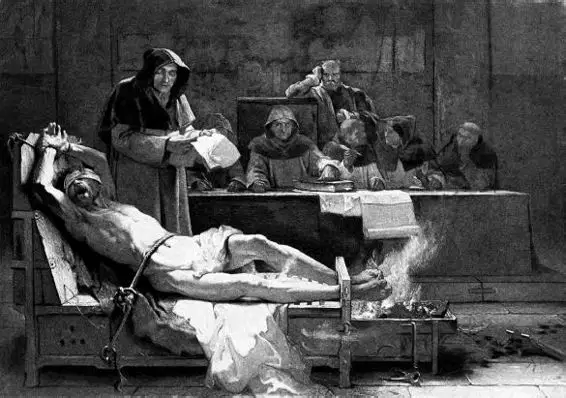
The illustration illustrates the draconian tactics at times used during which of the following state actions used to control religion and morality?
The Ecclesiastical reforms of the Russian Church in the mid-seventeenth century at the behest of the Patriarch Nikon and the tsar
Persecution of the French Huguenots during the late seventeenth century after Louis XIV issued his Edict of Revocation
The initiation of Ferdinand and Isabella's Inquisition in 1478 to test the faith of those non-Catholics whom had converted to Catholicism
Religious turmoil in England, during the Tudor dynasty, between Catholics and Protestants
First phase of the Thirty Years' War began when Holy Roman Emperor Ferdinand II attempted to force Roman Catholicism on his subjects
Bohemian
French
Swedish
Danish
The second phase of the Thirty Years' War, known as the ____________ phase, began when ___________ saw an opportunity to gain valuable territory in Germany
Danish;
King Christian IV
French;
King Louis XIII
Austrian;
Emperor Ferdinand II
Swedish;
Gustavus Adolphus

Which three artists were part of the High Renaissance?
Donatello
Leonardo da Vinci
Michelangelo
Raphael

What period is the art in the image from?
Reniassance
Roman
Neoclassical

What time period is the art to the image from?
Baroque
Renissance
Rococo

What period is the art in the image from?
Renissance
Greek
Medieval

What period is the image from?
Medieval
Baroque
Renaissance
Greek

This masterpiece entitled, Guernica was created using what particular art style?
Realism
Expressionism
Pop Art
Cubism

It is a 20th century art movement that explored the hidden depths of the "unconscious mind."
Surrealism
Realism
Impressionism
Dadaism

It is an art movement that focused on the effect of color and light in nature.
Expressionism
Dadaism
Impressionism
Cubism

Identify the art style.
Rococo
Baroque
Neoclassical
High Renaissance
Hellenistic
Which of the following dates might best incorporate the dates for the Romantic Art movement?
1650 - 1730
1710 - 1780
1750 - 1820
1780 - 1840

Which painting is most similar in style?


Which of the following composers might best represent Romantic art through German nationalism?
Tchaikovosky
Bach
Mozart
Wagner
Which was a major difference between Medieval and Renaissance Art?
Heavier influence on themes of morality and emotion
Subjects where more often Christian in nature.
Greater use of color
Better representations of perspective
Which of the following styles of art would most likely have been commissioned by the Catholic Church during the Counter Reformation?
Northern Renaissance
Romanticism
Neoclassicism
Baroque
Which of the following paintings represents the influence of Sigmund Freud in art?


Which architectural style might be best associated with the picture above?
Baroque
Neo-gothic
Bauhaus
Neoclassical
Put the art movements in chronological order.
Rococo, Romanticism, High Renaissance, Realism
Baroque, Neoclasscism, Futurism, Romanticism
Cubism, Futurism, Dadaism, Neoclassicism
High Renaissance, Northern Renaissance, Rococo, Romanticism
Which of the following correctly associates the artist with the art style?
El Greco / Mannerism
Michelangelo / Baroque
Artemisia Gentileschi / Romanticism
Salvador Dali / Dadaism
Which of the following does not correctly link the artist/composer with the art style?
Beethoven / Romanticism
Delacroix / Neoclassical
Bach / Baroque
Titian / High Renaissance
Monet / Impressionism
Which style of art is often associated with Italian Fascism?
Realism
Romanticism
Dadaism
Futurism
Surrealism
In which century did patronage begin play an increasingly less important role in funding European art?
17th
18th
19th
20th
Patronage has always played a dominate role in funding artists

The image above might best be characterized by which style of art?
Romanticism
Rococo
Neoclassicism
High Renaissance
Realism

A historian might best use the above image to argue that
Women experienced relatively expanded rights in the Renaissance
There was a greater focus on the individual in the Renaissance
Women increasingly were becoming artists in the Renaissance
Religiosity was playing a greater role for many in the Renaissance
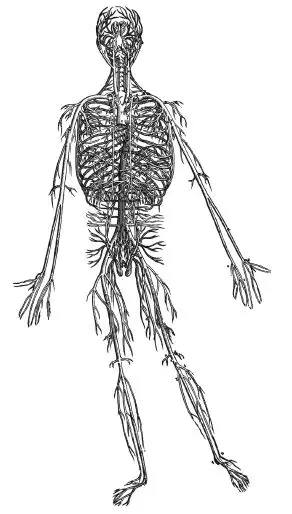
This print clearly illustrates which of the following truths about scientific advances in this era?
They led to significant declines in mortality rates from disease during the sixteenth and seventeenth centuries.
They created the experimental proof for the theories of ancient Greeks such as Aristotle and Galen.
They occurred as a result of the rediscovery of ancient Greek and Roman texts.
They occurred as a result of the accumulation of information from dissection and led to conceptualizing the human being as a set of integrated systems.
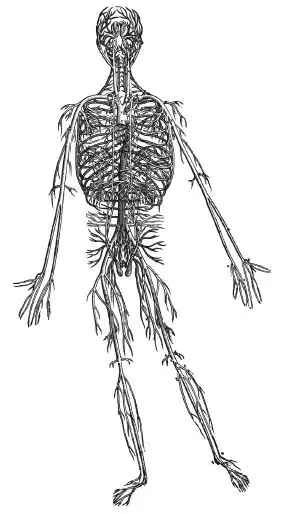
The understanding of the human body that Vesalius displays is most similar to which of the following?
The mechanical universe explained by Sir Isaac Newton
The notion, espoused by astrology, that celestial bodies could affect events on Earth
The Enlightenment view that all problems can be solved through reason
The idea of subatomic quanta explained by Max Planck
What was Germany like after World War I?
*Choose all that apply*
Germany's economy rebounded and the country quickly recovered.
Germany was in severe debt from the Versailles Treaty.
Germans were blamed entirely in Europe for the war.
Germany's political system was weakened leaving it open to the rise of a dictator.
A major goal of Joseph Stalin’s five-year plan was to...
encourage communist revolutions in the
colonies of the European powers
transform the Soviet Union into an
industrial power
expand the Soviet Union’s borders to
include warm-water ports
reduce the amount of foreign aid coming
from the Western Hemisphere
17th-century French philosopher and mathematician; his discourse on method states that all assumptions had to be proven on the basis of known facts; wrote "Discourse on Method" and "Mind over Matter"; "I think, therefore I am"; believed mind and matter were completely separate; known as the father of modern rationalism. Deductive reasoning: based on a series of occurrences and/or patterns
Descartes
Jean-Jacques Rousseau
Montesquieu
Voltaire