
 Worksheets
Sound Review
Total questions: 24
Worksheet time: 14mins
Name
Class
Date
1.
A kind of energy that travels in waves that you hear
a)
Sound
b)
Crest
c)
Light
d)
Pitch
2.
The number of crests or troughs that pass by over a certain amount of time
a)
Frequency
b)
sound
c)
amplitude
d)
volume
3.
The distance between one crest or trough to the next
a)
volume
b)
acoustics
c)
sound
d)
wavelength
4.
How high or low a sound is
a)
pitch
b)
volume
c)
sound
d)
acoustics
5.
Hearing your brother's music playing from down the hall is an example of what type of wave interaction?
a)
reflection
b)
interference
c)
refraction
d)
diffraction
6.
You and your father inspect an empty house with the hopes of buying it. You walk through the rooms talking to one another, and you notice that your voices and footsteps are echoing in the big, empty house. What causes the echo?
a)
sound
waves reflecting off smooth, flat surfaces throughout the house
b)
sound
waves moving around the large rooms
c)
sound
waves moving slowly through air
d)
sound
waves refracting around corners in the empty rooms
7.
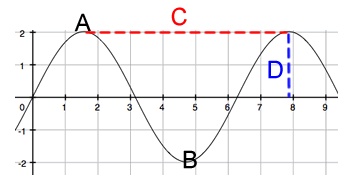
If distance C on the diagram increased, what would happen to the pitch?
a)
The pitch would be louder.
b)
The pitch would be softer.
c)
The pitch would be higher.
d)
The pitch would be lower.
8.
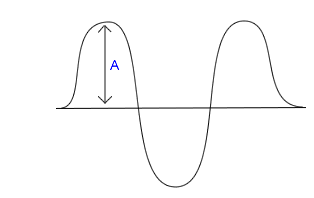
If the distance represented by the letter A were increased, how would it change the way the sound was heard?
a)
The sound would be higher.
b)
The sound would be lower.
c)
The sound would be softer.
d)
The sound would be louder.
9.
______ is how high or low a sound is; depends on the frequency.
a)
pitch
b)
frequency
c)
sound
d)
medium
10.
A soft, low pitch sound would have which of the following....
a)
low frequency
high amplitude
high amplitude
b)
high frequency
high amplitude
high amplitude
c)
low frequency
low wavelength
low wavelength
d)
low frequency
low amplitude
low amplitude
11.
A reflected sound wave is know as a/an ___________.
a)
frequency
b)
pitch
c)
echo
d)
rarefaction
12.
A soft, high pitch sound would have which of the following....
a)
low frequency
high amplitude
high amplitude
b)
low frequency
low wavelength
low wavelength
c)
high frequency
low amplitude
low amplitude
d)
high frequency
high amplitude
high amplitude
13.
______ is how loud or soft a sound is; depends on the amplitude.
a)
pitch
b)
frequency
c)
loudness
d)
medium
14.
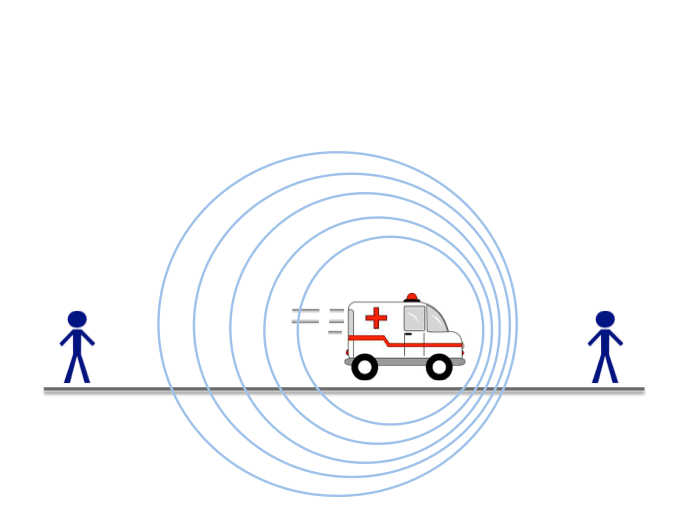
When the car moves AWAY from you, its horn seems...
a)
Low pitched
b)
High pitched
c)
Normal
15.
If you want to change the pitch of a sound, you have to change the ___
a)
frequency
b)
amplitude
c)
speed
d)
volume
16.
What happens when you increase the amplitude of a sound?
a)
it makes the sound louder
b)
it makes the sound travel faster
c)
it increases the wavelength of the sound
d)
it increases the frequency of the sound
17.
This is the unit used to measure the volume of a sound.
a)
Decibel
b)
Medium
c)
Vibration
d)
Oscilloscope
18.
True or False: Sound travels better through solids than through liquids
a)
True
b)
False
19.
What is a pitch?
a)
highness or lowness of a sound
b)
the intensity of a vibration
c)
the amplitude of the sound wave
d)
volume of sound
20.
The Doppler effect can cause an apparent change in...
a)
loudness
b)
intensity
c)
pitch
d)
reasonance
21.
Sound waves move more quickly through _________________ matter
a)
dense
b)
light
22.
Why is sound able to travel faster through a solid than a gas?
a)
Gas molecules are packed tightly.
b)
Sound does not travel faster through a solid than a gas.
c)
Solid molecules are packed tightly.
d)
Gas molecules move slowly.
23.
How does a sound wave interact with a human ear?
a)
vibrates the ear drum
b)
bounces off the ear canal
c)
rotates the ear drum
d)
vibrates the ear canal
24.
What is the cause of any sound wave?
a)
vibrations
b)
decibel
c)
loudness
d)
pitch
100 %

