
 Worksheets
Vocabulary Mastery Test
Total questions: 20
Worksheet time: 30mins

Please read the following text for number 1-4.
Find the correct answer regarding the definition, synonyms, and antonyms of the words in the text.
1. "However, being a practical person,..."
The underlined word can be defined as...
concerned with or involving the theory of a subject or area.
manifested in practice or action.
a thought or suggestion as to a possible course of action.
the reason for which something is done.
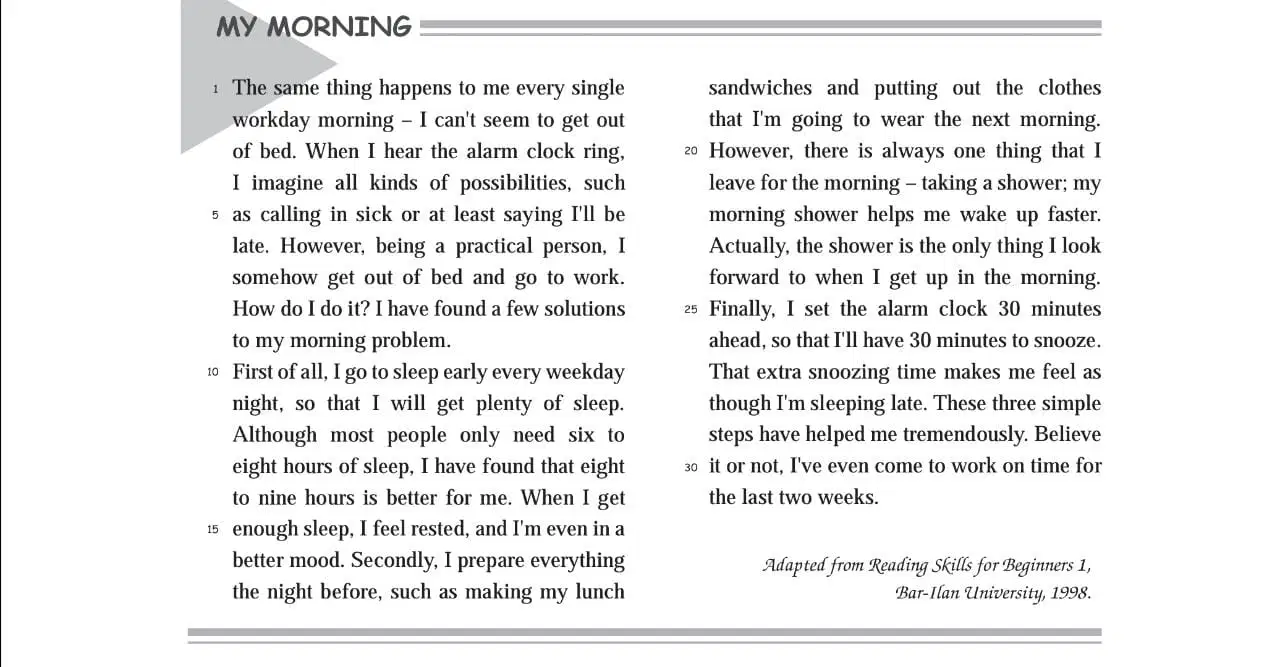
2. “When I hear the alarm clock ring, I imagine all kinds of possibilities... ”
What is the definition of the word “possibilities”?
the regard that something is held to deserve.
the accomplishment of an aim or purpose.
omission of occurrence or performance.
a chance that something may happen or be true.

3. "These three simple steps have helped me tremendously"
Which word is similar in meaning to "tremendously"?
small
slightly
enormously
minimally
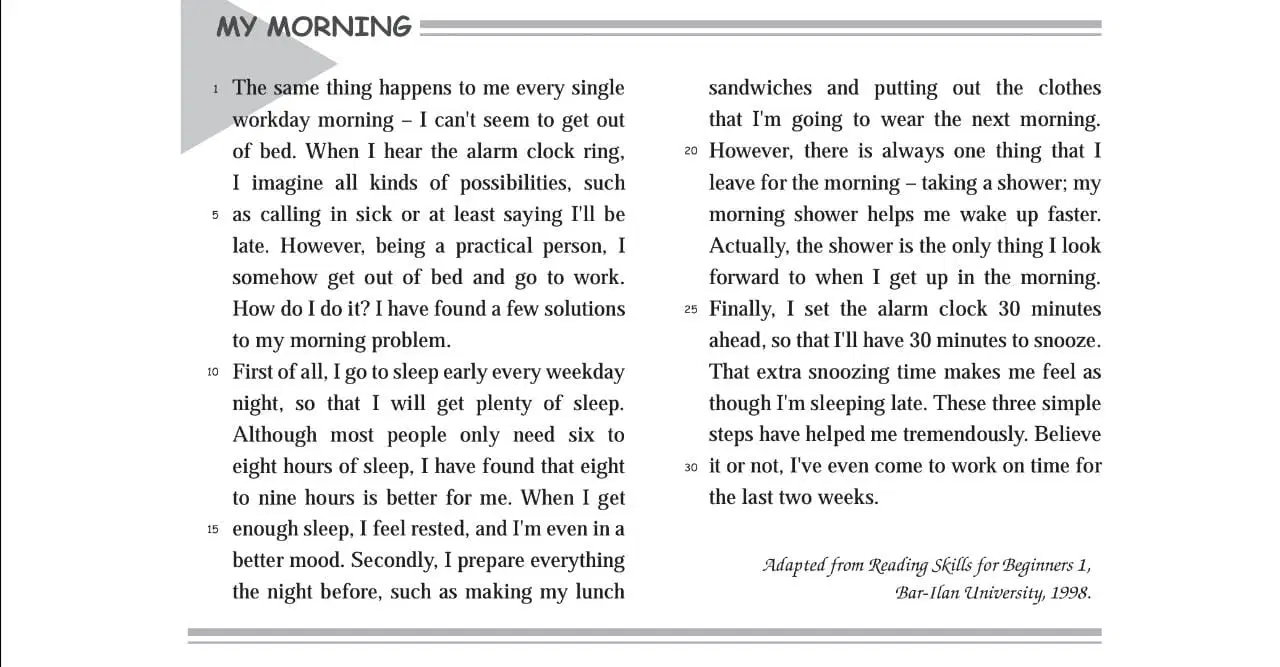
4. "Actually, the shower is the only thing I look forward to when I get up in the morning."
Which word is the opposite meaning of "actually"?
doubtfully
truthfully
supposedly
apparently
Please read the following text for number 5-7.
Sutton-Smith is betting that neuroimaging studies of the brain will eventually reveal a ludic center in the brain. And he locates it somewhere in the frontal lobes. What play does, he says, is simulate and make more flexible fear responses that are reflexes in the more primitive organism or in more primitive parts of the brain. "What we have in play is a simulation of an anxiety attack," he says. With one all-important difference. It's anxiety—complete with uncertainty— but without the adrenaline and endocrine response. Studies in dogs show that "they're rushing around as if they're in extremity, but adrenaline is not being pumped into the system. Play looks like an emergency but isn't. It's a simulated emergency. The frontal lobes win out over the reflexive phenomena in the back of the brain." In the simulated explosions and aggressions of play, we get to explore and experiment with feelings. It is one of the few times we are in charge of circumstances. We have much more autonomy than usual, and exchange habit and boredom for novelty and the exercise of our own competencies. And that creates excitement.
5. “It's anxiety—complete with uncertainty— but without the adrenaline and endocrine response.”
We can define “anxiety” as…
a headache that can cause severe throbbing pain.
a feeling of fear, dread, and uneasiness.
an intense feeling of deep affection.
a feeling frightened.
6. " In the simulated explosions and aggressions of play, we get to explore and experiment with feelings.”
The word experiment can be defined as …
make an attempt or effort to do something.
bring (something) into existence.
to make information available to people.
a scientific procedure undertaken to make a discovery, test a hypothesis, or demonstrate a known fact.
7. “It is one of the few times we are in charge of circumstances.”
The synonym of the underlined word is ...
conditions
debt
poorness
poverty
Please read the following text for number 8-10.
Because of their considerable contact with children, teachers can provide a valuable perspective on children's behavior. French and Waas (1988) obtained teacher ratings on popular, rejected and neglected 2nd- and 5th-grade children. Rejected children were characterized as aggressive, hostile and task avoidant, while neglected children were described as having more school behavior problems than popular children. Coie and Dodge (1988) asked teachers to rank 1st and 2nd- grade boys of different sociometric statuses on a variety of peer aggression items. Well-accepted and neglected children were described as the least aggressive, whereas rejected children were described as the most aggressive. Rejected children also scored low in conformity to rules and interpersonal sensitivity. In general, teacher assessments coincided with children's perceptions.
8. “… while neglected children were described as having more school behavior problems than popular children.”
The word “neglected” can be defined as…
to feel interest or concern.
not receiving enough care or attention.
the quality of not being willing to work or use any effort.
having or showing the ability to learn.
9. “Rejected children were characterized as aggressive, hostile…”
The underlined word means …
a sympathetic attitude toward others.
ready or likely to attack or confront.
unfriendly and not liking something.
describes people who are kind.
10. “In general, teacher assessments coincided with children's perceptions.”
The underlined word has the same meaning with….
insight
misunderstanding
thing
misperception
Please read the following text for number 11-13.
When there are fewer students in the class, each one has more opportunity to be heard. Discussions can be held without the age-old practice of raising hands. Students learn to allow classmates to finish speaking, and they respond in a relevant way. The exchange of thoughts, philosophies, and opinions becomes a foundation for a classroom based on mutual respect and regard. Self-esteem rises, social interactions are more positive, and skills of compromise and consensus develop.
11. “Self-esteem rises, social interactions are more positive, and skills of compromise and consensus develop.”
The word self-esteem can be defined as …
a feeling of trust in one's abilities, qualities, and judgment.
how we value and perceive ourselves.
to care for oneself through awareness.
the ability to control oneself.
12. “Self-esteem rises, social interactions are more positive, and skills of compromise and consensus develop.”
We can define “compromise” as … about something.
accept standards that are lower than is desirable
feel sorrow for the loss or absence
throw away as useless or unsatisfactory
the action of consenting to receive or undertake
13. The word consensus in “Self-esteem rises, social interactions are more positive, and skills of compromise and consensus develop.” has the opposite meaning with ….
concurrence
agreement
consent
disagreement
Please read the following text for number 14-17.
Researchers (Camp, Blom, Herbert & Van Doornick, 1977) have taught children to reinforce themselves directly by following a thinking-out-loud strategy that was found to reduce disruptive behaviors and increase prosocial behaviors. When using the thinking-out-loud strategy, children are trained to say to themselves, first out loud and then silently, "What is my problem? What is my plan? Am I using my plan? How did I do?" The process helps children interrupt their impulsive behavior, keeps them on task and reminds them of the necessary steps to take when carrying out their task. This training often includes social problem-solving skills, whereby children are encouraged to suggest and evaluate solutions to problems (Spivak, Platt & Shure, 1976).
14. “Researchers (Camp, Blom, Herbert & Van Doornick, 1977) have taught children to reinforce themselves directly by following a thinking-out-loud strategy that was found to reduce disruptive behaviors and increase prosocial behaviors.”
We can define the underlined word as …
providing love or other emotional support.
the action of owning, maintaining, or protecting something.
causing difficulties that interrupt something.
giving rendering aid or assistance.
15. This training often includes social problem-solving skills, whereby children are encouraged to suggest and evaluate solutions to problems (Spivak, Platt & Shure, 1976).
The word encouraged can be defined as …
to give advice to someone to do something.
seek to harm, intimidate, or coerce (someone perceived as vulnerable).
a practical recommendation as to action or conduct.
to make desirable or attractive.
16. This training often includes social problem-solving skills, whereby children are encouraged to suggest and evaluate solutions to problems (Spivak, Platt & Shure, 1976).
The word "evaluate" in the sentence above also means...
neglect
criticize
assess
ignore
17. “Researchers (Camp, Blom, Herbert & Van Doornick, 1977) have taught children to reinforce themselves directly by following a thinking-out-loud strategy that was found to reduce disruptive behaviors and increase prosocial behaviors.”
The antonym of underlined word above is …
increase
decrease
boost
build up
Please read the following text for number 18-20.
The students shared that it wasn't fair for the noisy readers to disturb others who were trying to concentrate. There were a few punitive suggestions, like having the disruptive team members do their reading at recess time; in the end, though, we decided to set down some quick rules for partner reading time. The offenders apologized, and we went back to our reading block. It took a few minutes to sort out the problem, but what it accomplished was well worth it. We worked out the problem as a group, emphasizing important skills needed to be part of a community. If a student slipped up during the school year, a nod to the posted rules was all it took to get back on track. And it wasn't just me giving the reminder; the students helped monitor one another.
18. “The students shared that it wasn't fair for the noisy readers to disturb others who were trying to concentrate”
The word “concentrate” can be defined as …
not having a central subject or aim.
focus one's attention or mental effort on a particular object or activity.
unable to remember a fact, something that happened.
the center of interest or activity.
19. “…. like having the disruptive team members do their reading at recess time…”
The underlined word in the sentence above can be defined as…
describe something that has existed or been a particular thing for a long time.
having a great deal to do.
additional to what is required for ordinary use.
a brief period for relaxation between periods of work.
20. “The offenders apologized, and we went back to our reading block. It took a few minutes to sort out the problem, but what it accomplished was well worth it.”
Which word is similar in meaning to "accomplished"?
incapable
inable
clumsy
fulfilled

