
 Worksheets
Semester 2 Exam - Keyboarding
Total questions: 50
Worksheet time: 51mins


Solve the equation. How many beats?
4
12
13
5

Solve the equation. How many beats?
1
10
7
3

What do we call this curved line above the notes?
Tie
Slur
Which dynamic marking means "soft?"


Which dynamic marking means "loud?"


Which dynamic marking means "medium soft?"


Which dynamic marking means "medium loud"?


What is the name of a group of 3 or more pitches played at the same time?
Chord
Scale
Interval
Pitch
What is the interval name for C4 to C5
5th
3rd
Octave
7th

What are these examples of?
Time signatures
Key Signatures
Measures
Dynamics

What do we call this curved line connecting 2 notes?
Tie
Slur

Name this note
A
C
E
G

Name this note
G
B
D
F

Name this note
G
B
D
F
A

Name this note
A
C
E
G

Name this note
E
G
B
D
F

Name this note
F
A
C
E

Name this note
E
G
B
D
F

Name this note
F
A
C
E
What is the term used to describe the speed of the steady beat in music?
Scale
Beat
Tempo
Intonation

This symbol means to hold a note longer than its original value
Fermata
Sengo
Marcato
accellerando

What clef is this?
Soprano Clef
Alto Clef
Treble Clef
Bass Clef

What clef is this?
Soprano Clef
Alto Clef
Treble Clef
Bass Clef

What is this symbol called?
Time Signature
Measure
Breve
Coda

What is this symbol called?
Clef
Sign
Coda
Staff

How many beats is this worth? (in 4/4 time)
1
2
3
4

What type of rest is this?
Quarter Rest
Half Rest
Whole Rest
Eighth Rest

What type of note is this?
Whole note
Half note
A pair of eight notes
A pair of 16th notes
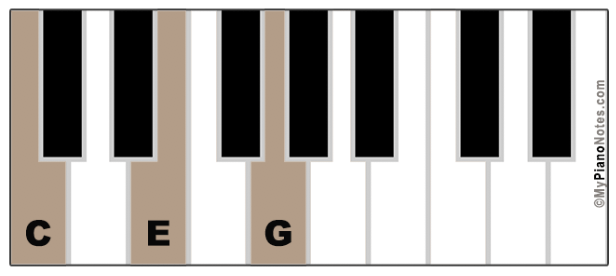
What is the chord on the piano above?
C major
C minor
D major
E major
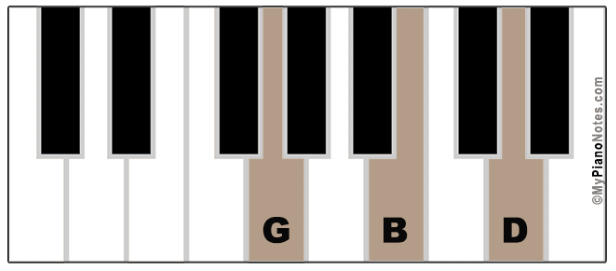
What is the triad being played on the piano above?
G minor
A minor
A major
G Major

What chord is this?
C
D7
F
G7
Match the following C Position chords

C Major

G7 (treble)

F Major (treble)

G7 (bass)

F Major (bass)
Match the following G Position Chords

G Major

C (treble)

D7 (treble)

C (bass)

D7 (bass)
Listen to the recording. Which rhythm matches what was performed?
1& 2 3& 4
1 2& 3& 4
1 2 3& 4
1& 2& 3 4
Listen to the recording. Which rhythm matches what was performed?
1 2 3& 4
1& 2& 3& 4
1& 2 3& 4
1 2& 3& 4
Listen to the recording. Which rhythm matches what was performed?
1& 2 3 4&
1 2& 3& 4
1& 2& 3 4&
1& 2& 3 4
Listen to the recording. Which rhythm matches what was performed?
1 2& 3& 4
1& 2 3& 4&
1 2 3& 4&
1& 2& 3 4
Listen to the recording. Which rhythm matches what was performed?
1& 2& 3& 4
1 2& 3 4
1& 2 3 4&
1 2 3 4&

