
 Worksheets
Second Semester Science Review
Total questions: 22
Worksheet time: 44mins
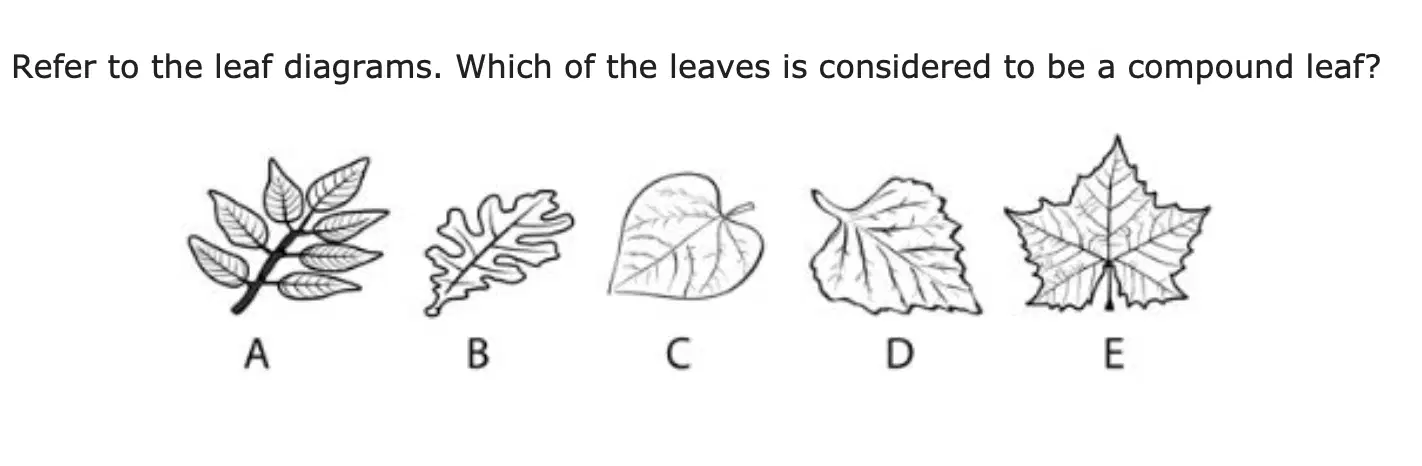
Which of the leaves is considered to be a compound leaf?
A,B
C, D, E
A
B

Use the dichotomous key to identify the picture that best represents the Camarhynchus. Type the letter of the correct bird that best represents a Camarhynchus.
(a)
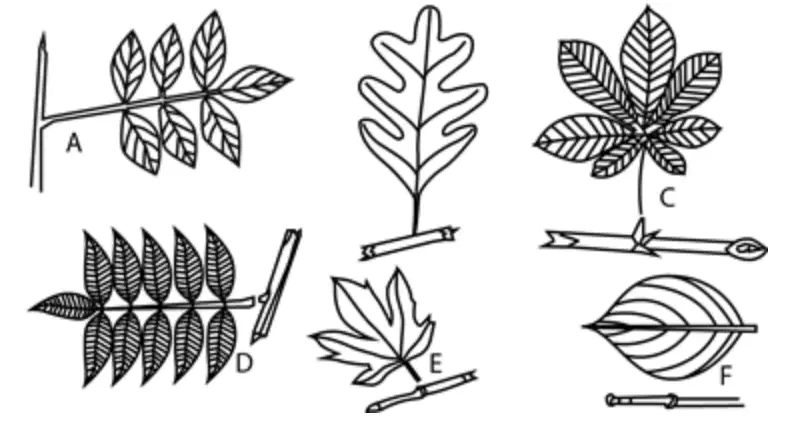
A group of 7th grade science students have been asked to create a dichotomous key that can be used to identify the plants shown in the diagram. Which of the following specifications should not be used when making this dichotomous key?
Leaves symmetrical on a stem -- Leaves asymmetrical on a stem.
Leaves found in a deciduous forest --Leaves found in a tropical forest.
Leaves bunched on a stem -- Single leaf on a stem.
Circular shaped leaves -- Irregular shaped leaves.
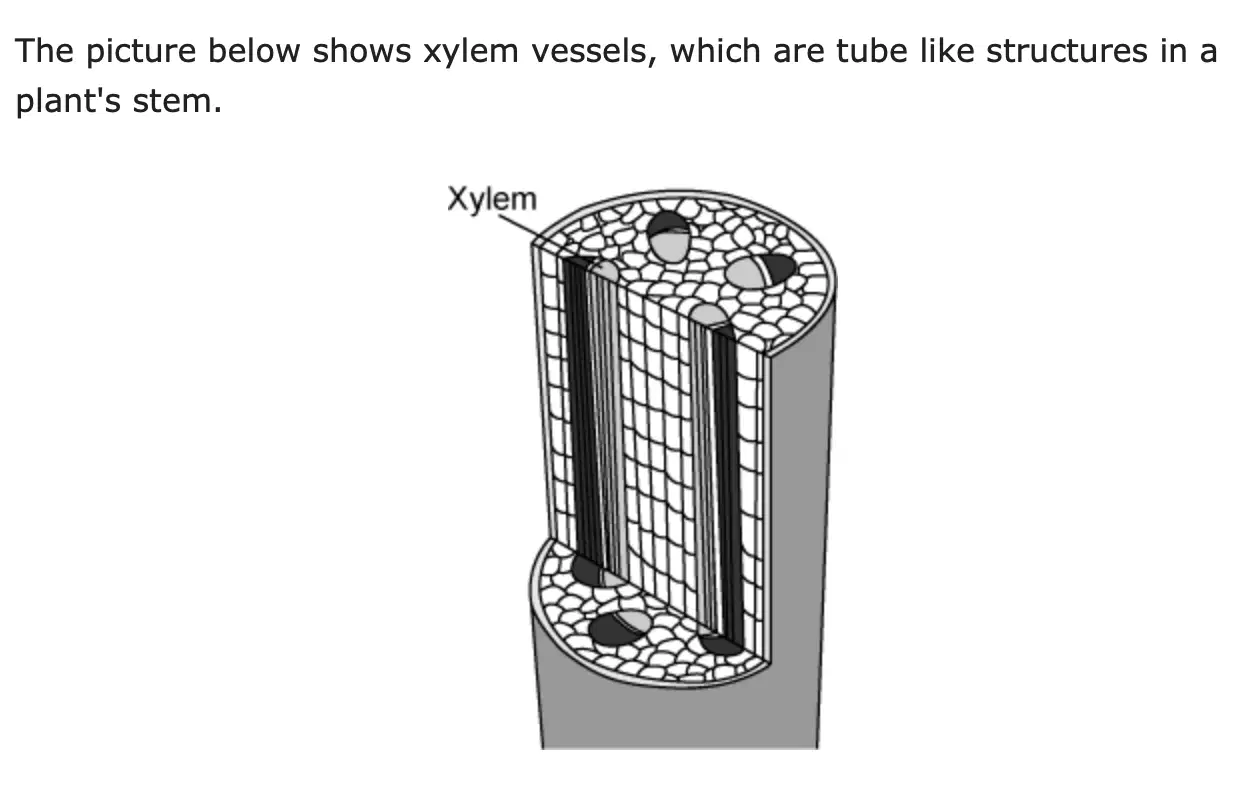
The picture shows xylem vessels, which are tube like structures in a plant's stem. Using the image, how have xylem vessels allowed plants to adapt to living on land?
They allow plants to transport water far above the ground to other plants structures.
They allow land plants to store water for a long period of time.
They allow plants to make food internally without needing sunlight.
They allow land plants so sense herbivores they can release toxins through the vessels.
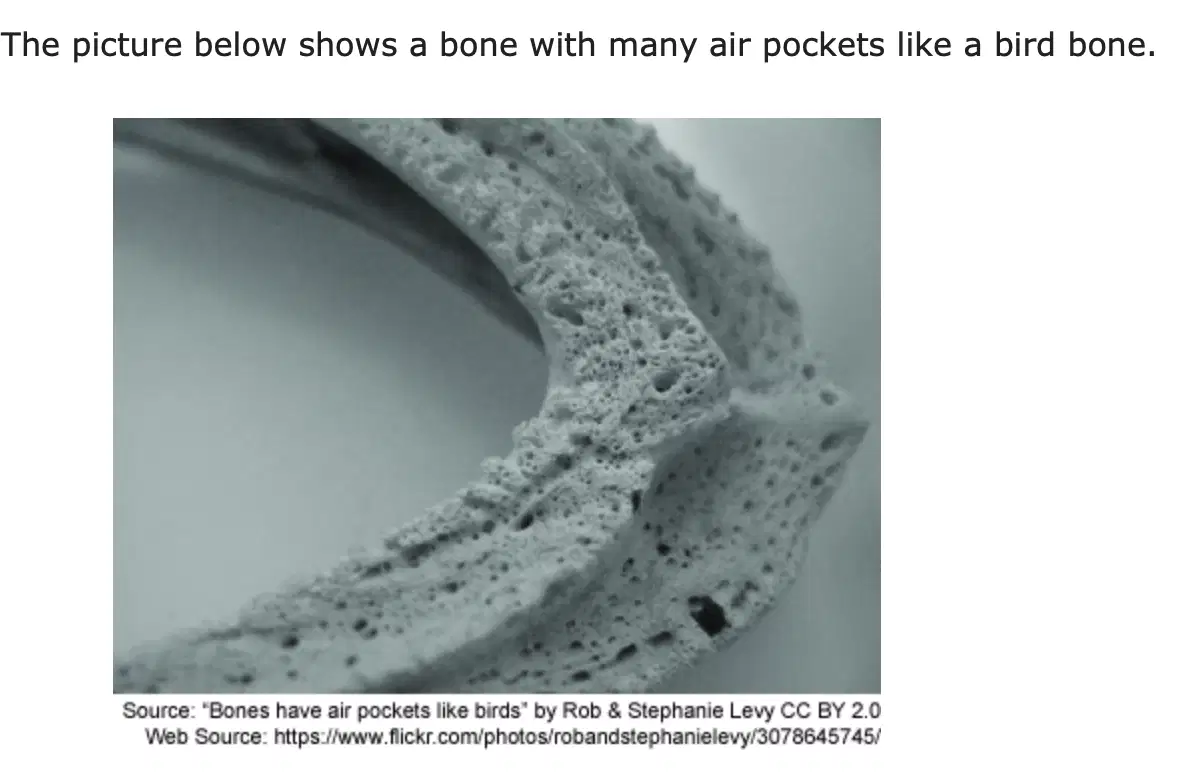
The picture shows a bone with many air pockets like a bird bone. How do these pockets of air allow birds to fly in the air?
They keep the bird very light.
They allow wind to flow through their bones.
They allow the birds to absorb more oxygen.
They produce helium for lift.
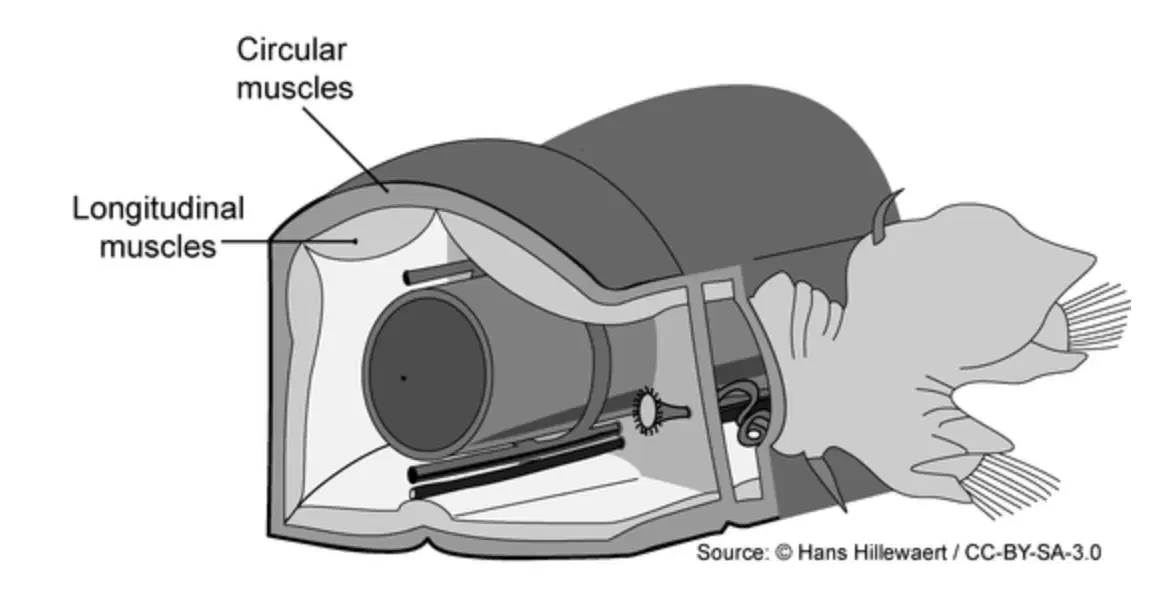
The picture shows the internal muscles of an earthworm. Earthworms have circular muscles and longitudinal muscles. How might the muscle adaptation help the earthworms to live in the soil.
The muscles support the bones in the earthworm.
These muscles help the earthworm pull and move through the soil.
These muscles help the earthworm break down food.
These muscles help the earthworm lift up to fight predators.
Many people prefer dog breeds that have specific traits. Recently there has been a surge in business of breeding dogs in order to produce a dog that does not shed. This would be an example of
Natural breeding
Selective breeding
Random breeding
Trait breeding
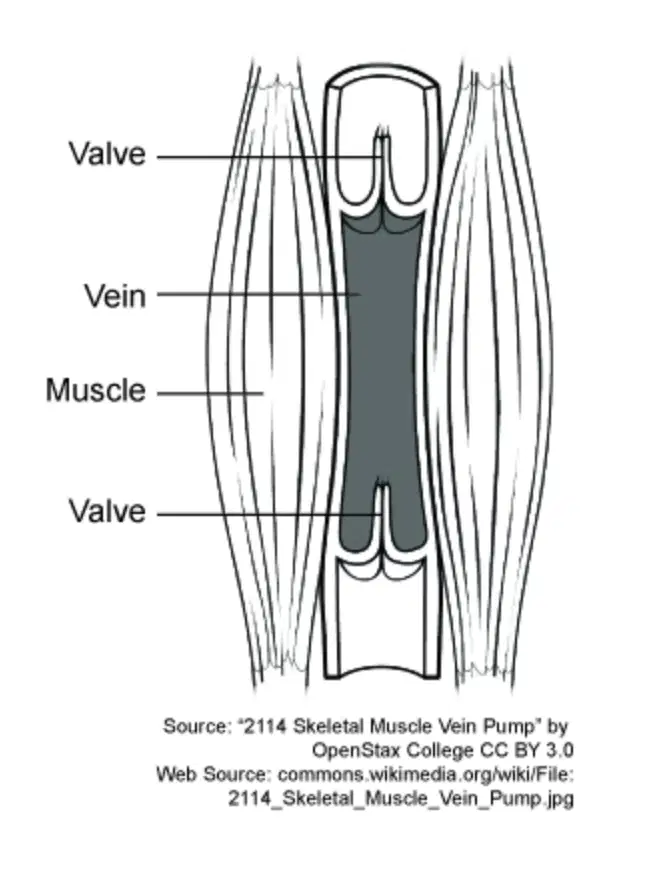
The image shows veins in the leg that open and close. How could the adaptation of valves in the leg help allow a human to better survive in its environment?
Valves prevent blood from running backward, away from the direction of the heart.
Valves stir the blood and remove toxins.
Valves allow blood to pool and stay stored.
Valves take carbon dioxide out of blood, so the blood returns to the heart, clean.

Students are visitant a zoo. They see a poison dart frog about 2 cm long. The poison dart frog secretes a poisonous chemical from its skin. It lives around green tropical plants. What is the advantage of the frog having a bright red color in a green environment?
It helps it to hide among the leaves.
It helps it to sneak up on small insects.
It serves as a warning to hungry predators.
It prevents overheating in a tropical environment.

An acorn is a seed. Its shape is very different from the shape of a dandelion seed. Which TWO statements describe advantages of the shape of the acorn?
The acorn is more likely to stick to animal fur.
The acorn is likely to attract hungry animals.
The acorn can be blown to a better growing location.
The acorn stores more materials to help it start growing.

Why is it necessary to have sunlight in the equation pictured?
Sunlight uses carbon dioxide and water to form sugar.
The arrow represents the specific direction of sunlight.
The process cannot occur without energy from the Sun.
The arrow tells the equation to yield.
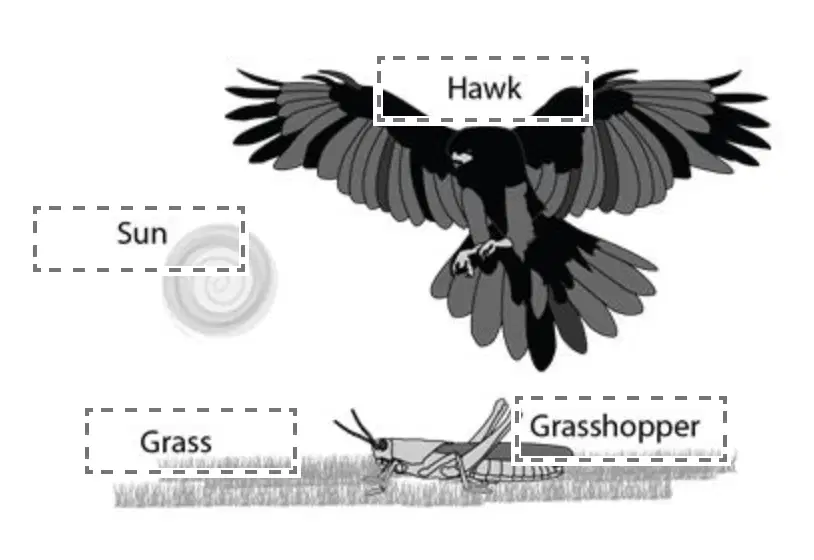
In the diagram, where is light energy converted to chemical energy?
Grass
Grasshopper
Sun
Hawk
What abiotic source of energy would start this food chain? Type your answer.
Grass -----> Cricket ----> Bird
(a)
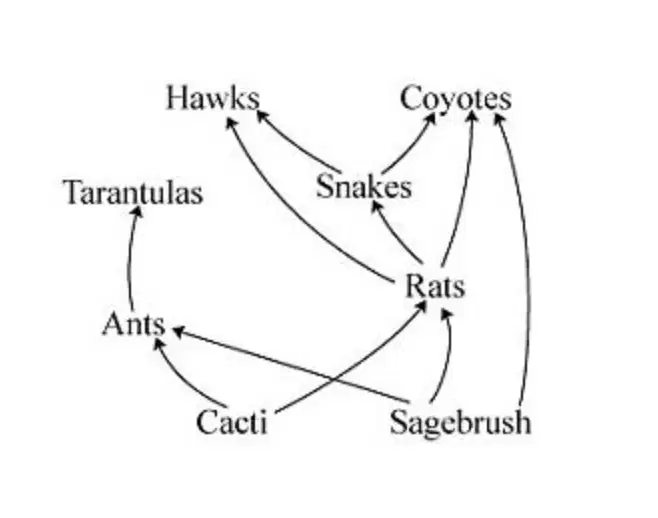
The diagram shows a desert food web. Which 2 organisms represent the producers in the diagram?
Coyote, Hawk
Snake, Tarantulas
Ants, Rats
Cacti, Sagebrush
Plants get their energy from the Sun through photosynthesis. This energy is trapped in the bonds of the complex compounds the plants create from carbon dioxide and water. The plants are then eaten by animals, and the energy is used for heat and movement. Which of the following is an energy transfer that is conducted inside an animal in the above scenario?
Radiant energy to chemical energy
Radiant energy to mechanical energy
Chemical energy to mechanical energy
Chemical energy to radiant energy

A student rolled over a wooden log and made the following observations. Which observations support the student’s claim that the log represents a microhabitat?
Observations 1 and 2
Observation 1, 2, and 3
Observation 1, 2, and 4
Observation 3 and 4
What provides the body with the energy it needs for growth, movement, response, and repair?
fiber
vitamins
glucose
water
Which statement best describes the comparison of lake and ocean environments?
The lake and ocean environments support the same organisms because they are both water and are made up of the same elements.
The lake and ocean environments support different organisms because most freshwater organisms cannot live in saltwater.
The lake and ocean environments support the same organisms, but they will look different because of the type of water.
The lake and ocean environments support different organisms because ocean organisms are blocked by land from getting into lakes.

Students in two different schools created gardens at their campus. They only planted native plants that do not require extra care. Students from each of the schools were asked to sketch some of the native plants included in their gardens. Sample images from each school are pictured. Which of the following characteristics of the garden environments pictured above has the greatest effect on the types of plants that grow in them?
Temperature
Amount of rainfall
Amount of light
Space
When producers inhabit bare ground in an ecological community it is known as —
Climax community
Secondary succession
Primary succession
Deciduous Forest
A rainforest ecosystem supports a variety of plant and animal species. This variety of life helps to maintain a balance within the ecosystem. What is one possible explanation relating a variety of species within an ecosystem to the overall balance of the ecosystem?
The variety of species helps support more abiotic factors.
Each species fulfills a particular niche in the ecosystem.
The variety of life allows for competition for resources among different species.
The varied organisms increase the available space in the ecosystem.
Frederick is studying how ecological succession will change a freshly-plowed piece of land. Which data table represents what Frederick is most likely to record about the plant life in each stage of ecological succession?



