
 Worksheets
Painting Final Exam
Total questions: 51
Worksheet time: 36mins

What relationship do these colors share? They are opposite on the color wheel.
Complementary
Analogous
Triadic
Warm
When using oil paint, what must your paper/ canvas be coated with prior to use?
Acrylic paint
Gesso
Matte Medium
Acrylic paint is better suited than Oil for creating hard, crisp lines
True
False
A strong focal point is created by
Color
Size
Lines
All of the above

A single color plus its tints and shades is considered to create a.....
Monochromatic color scheme
Neutral color scheme
Analogous color scheme
Complementary color scheme


To create a TINT, which do you mix with a color?
Black
Grey
White
Yellow

Another name for color is?
colores
light spectrum
rainbow
hue

To create a SHADE, which do you mix with a color?
Black
Grey
White
Yellow

This image is a good example of which element? It is 1-Dimensional and may be measured by its length.
movement
pattern
line
form
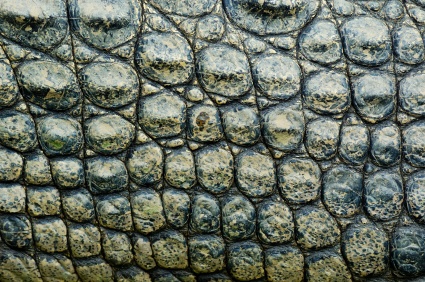
This Element deals with surface treatments of objects?
pattern
texture
shape
emphasis
Tone is ____ + ____ mixed together.
white + hue
hue + black
white + black
primary + neutral
Tone is used to change the ____ of a color.
lightness
darkness
dullness
intensity

What is VALUE in art?
The lightness or darkness of something
Black and white only
Grays only
How much money art is worth
Where would you find triadic colors on the color wheel?
3 evenly spaced colors
colors across from one another
one color plus the 2 colors split out from its opposite color
3 colors next to each other
___ is the visual path left by a moving point; also, a mark, guide, or boundary that leads the eye in an artwork.
Value
Line
Blend
Texture
A ___ is not drawn, but suggested by the way the elements have been combined in an artwork.
diagonal line
vertical line
implied line
horizontal line

A contour line defines the outline of a form, as well as interior structure, without the use of shading
True
False
proportion
The elements of art are
The vocabulary created by Isaac Newton to describe art
Concepts used to organize or arrange the structural elements of design
What Leonardo da Vinci had written about in his sketchbooks
Ingredients used to create an artwork. Line, shape, form, texture, space, color, and value
The principles of design are
The ingredients used to create an artwork
Concepts used to organize or arrange the structural elements of art/design
What Leonardo da Vinci used to become famous
The vocabulary created by Isaac Newton to describe art

Radial balance is
not a mirror image but equal weight
mirror image if split down the middle
extending out from a center point

Shape is
2 dimensional
Flat
3 dimensional
What do you do when you're finished with a paintbrush?
Throw it in the sink
Put it in the brush cup
Rinse it and then put it bristles-down in the brush cup
Wash it out until the water runs clear, then put it bristles-up in the brush cup.
What is the focal point?
The center of focus or the most important part of a work of art,
Where the viewer is visually in the composition—above, below, or with a head-on view of a scene
Sculpture that projects into space from a base
A three-dimensional sculpture
What the artwork is all about is the question that describes?
Materials
Subject matter
Arts elements and principles
Authors' background
Subject matter is:
the main idea of an artwork
a repeating design
a collection of art materials
Lines that run parallel or follow the shape of other lines are..
Contour
Outline
Concentric
Way
The direction of the paper (i.e. landscape or portrait)
Outline
Format
Layout
View Finder
The Materials used to make art. Plural is media.
Medium
Color
Principle of Design
Credit Line

When artists use the element of color to create a mood of feeling in their artwork.
expressive color
descriptive color
neutral colors

________________is a way to create the illusion of depth in an artwork. Objects that are in front of other objects look closer to the viewer.
linear perspective
atmospheric perspective
overlapping
horizon line

Area in a work of art that catches and holds the viewers attention.
space
unity
emphasis
balance

A flower, a daisy specifically, is said to have what type of balance?
Imaginary
radial
symmetrical
asymmetrical

How did this artist create emphasis?
Isolation
Placement
Contrast
Patterns

What type of balance is seen in this image?
Symmetrical
Asymmetrical
Radial
Formal
proportion

Principle of art which refers to the decoration of the surface of art with repeated units.
contrast
pattern
rhythm
balance
movement
This medium is a quick-drying water-based synthetic paint.
Oil
Acrylic
Watercolor
Encaustic
The solvent for this medium is paint thinner.
Oil
Fresco
Acrylic
Tempera
What paint ingredient is a liquid that controls the thickness or thinness of the paint? They are also used to clean paintbrushes and other applicators. (Examples: water, turpentine or odorless mineral spirits)
Pigments
Binder
Solvent
The painting media that was first used in the 1400s, uses linseed oil as its binder and turpentine as its solvent. It is considered paint that dries slowly. (a)
What kind of art does not depict objects in the natural world, but instead uses shapes and colors in a
representational way?
abstract
non-objective
What type of shape can you precisely measure and use mathematical equations to find information about?
Organic
Geometric
What type of shape is often found in nature?
organic
geometric
Shapes that are often found in nature and are irregular sizes are called shapes.
Organize
Origami
Neutral
Organic

