wayground logo

Free Printable Worksheets

Font size

S
M
L
XL
Worksheets

CPO Science Final Review

Total questions: 81

Worksheet time: 4hrs 3mins

Name
Class
Date
1.

What is the base metric unit for mass?

a)

meters

b)

liters

c)

grams

d)

g/mL

2.

What is the base metric unit for distance?

a)

meters

b)

liters

c)

grams

d)

g/mL

3.

What are the three standard metric units?

a)

meter, centimeter, gram

b)

feet, inch, mile

c)

meter, liter, gram

d)

ounce, liter, pints

4.

A push/pull exerted on an object is called

a)

Force

b)

Momentum

c)

Speed

d)

Net force

5.
What force holds the planets in motion around the sun?
a)
Magnetic
b)
Electrical
c)
Gravitational
d)
Air Resistance
6.

What can force do to an object?

a)

Accelerate an object

b)

Slow down an object

c)

Have the object remain in place

d)

Have the object change shape

e)

All of the above

7.

Particles of a liquid

a)

are tightly packed together and stay in a fixed position.

b)

are free to move around one another but still touch.

8.

What is the unit for FORCE?

a)

N (Newtons)

b)

lbs (pounds)

c)

g (grams)

d)

m/s (meters per second)

9.

What is the base metric unit for volume?

a)

meters

b)

liters

c)

grams

d)

g/mL

10.
This type of force resist motion between two surfaces that are pressed together
a)
contact
b)
gravity
c)
friction
11.
Everything is made of...
a)
solid
b)
liquid
c)
gas
d)
matter
12.

Which state of matter is represented by the particles in this image?

a)

Solid

b)

Liquid

c)

Gas

13.

Which kind of matter has its own shape?

a)

solid

b)

liquid

c)

gas

d)

matter

14.

Which state of matter has a definite volume, but not a definite shape?

a)

solid

b)

liquid

c)

gas

15.

Which laboratory activities involve chemical changes?

a)

leaving a copper penny in vinegar until it turns green

b)

boiling saltwater for several minutes until only solid salt remains

c)

extracting iron filings from a sand mixture using a magnet

d)

crushing a rock with a hammer to extract mineral deposits

16.
Boiling Point: Chemical or Physical Property
a)
Chemical Property
b)
Physical Property
17.

Making a pancake from batter is an example of a ___________ change.

a)

chemical

b)

physical

18.

The diagram shows arrangement of particles in a

a)

Solid

b)

Liquid

c)

Gas

19.

Which is an example of a chemical change?

a)

frying an egg

b)

boiling water

c)

melting butter

d)

chopping onions

20.

What are the three states of matter?

a)

solid, matter, liquid

b)

solid, liquid, gas

c)

liquid, matter, solid

d)

matter, liquid, gas

21.

______________________ can only be recognized when substances react or do not react chemically with one another.

a)

Physical properties

b)

Chemical properties

c)

Flammable properties

d)

Colorful properties

22.
Solubility (dissolves): Chemical or Physical Property
a)
Chemical Property
b)
Physical Property
23.
Reacts with Acid: Chemical or Physical Property
a)
Chemical Property
b)
Physical Property
24.
Melting Point: Chemical or Physical Property
a)
Chemical Property
b)
Physical Property
25.
Density: Chemical or Physical Property
a)
Chemical Property
b)
Physical Property
26.

Physical properties....

a)

change the matter when studied

b)

can be observed and measured without changing the matter being studied

c)

include the ability to burn and rust

d)

are useless unless studied in a lab

27.
Which of the following is not a chemical property? 
a)
rusting 
b)
boiling 
c)
rotting 
d)
burning 
28.

The smallest particle of matter that an element can be broken down into and still have the characteristics of the original element is called:

a)

a compound

b)

a molecule

c)

a proton

d)

an atom

29.
Which of the following is not a chemical property? 
a)
rusting 
b)
boiling 
c)
rotting 
d)
burning 
30.
Is "sugar dissolves in water" a chemical or physical change?
a)
Chemical change
b)
Physical change
31.
A brass door knob tarnishes.  Physical or chemical change?
a)
Chemical change
b)
Physical change
32.

What is compound?

a)

Two or more kinds of elements that are mixed chemically

b)

Elements and compounds mix physically

c)

One type of element exists

d)

Two kinds of elements mix physically

33.
Flammability (burns): Chemical or Physical Property
a)
Chemical Property
b)
Physical Property
34.

An element can be broken down into other substances.

a)

True

b)

False

35.

Which of the following is NOT a chemical property?

a)

Solubility

b)

Reactivity

c)

The ability to rust

d)

Flammability

36.

Weight is _________.

a)

the quantity of matter in an object.

b)

the measure of an object's inertia.

c)

the force exerted by gravity on an object's mass.

d)

equal to the mass of an object.

37.
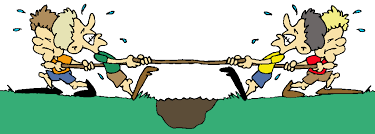
If these teams are pulling with the same amount of force what will happen?
a)
The boy in blue will win.
b)
They will not move at all.
c)
The boy in red will win.
d)
Both will fall down.
38.
A person would weigh less on on the Moon than on the Earth because . . .
a)
Moon has more mass, and therefore more gravity
b)
Moon has less mass, and therefore more gravity
c)
Moon has more mass, and therefore less gravity
d)
Moon has less mass and therefore less gravity
39.

What statement is true?

a)

Mass never changes. Weight does.

b)

Weight never changes. Mass does.

c)

Both mass and weight change because they are affected by gravity.

d)

Neither mass nor weight change. They are always the same.

40.
The amount of matter in an object is 
a)
pressure
b)
weight
c)
mass
d)
force
41.
What is a measure of the change of velocity of a moving object?
a)
speed
b)
acceleration
c)
motion 
d)
velocity 
42.
The bottom picture is an example of 
a)
balanced forces 
b)
unbalanced forces
43.
Force is a vector because 
a)
it has size
b)
it has direction
c)
it has both size and direction
44.
Which is not an example of acceleration?
a)
Driving at a constant speed 
b)
A bat hitting a ball
c)
Throwing a football 
d)
Kicking a soccer ball
45.
Acceleration is 
a)
a change in direction
b)
a change in speed 
c)
a change in direction and speed 
d)
All of the above 
46.
What is the mass number defined as?
a)
the number of protons
b)
the number of protons and neutrons
c)
the number of neutrons
d)
the number of protons and electrons
47.

Which subatomic particle has a negative charge in the atom?

a)

proton

b)

neutron

c)

electron

d)

quark

48.
What is the atomic number?
a)
the number of protons
b)
the number of protons and neutrons
c)
the number of neutrons
d)
the number of protons and electrons
49.

Which of the following describes an element?

a)

It is the simplest substance.

b)

It is composed of two or more types of atoms.

c)

It can be separated through a chemical process.

d)

It can be broken down into other types of substance.

50.

TIN CAN

a)

INSULATOR

b)

CONDUCTOR

51.

Pure substance that are made up of two or more molecules are called

a)

atoms

b)

compounds

c)

elements

d)

mixtures

52.

A new substance with unique chemical and physical properties formed when two or more elements are chemically bonded during a chemical reaction.

a)

Compound

b)

Periodic Table

c)

Matter

d)

Volume

53.
A jacket is a good example of an . . .
a)
Insulator
b)
Investigator
c)
Conductor
d)
Interrogator
54.

___________________ are materials that ALLOW heat and electricity to move easily through them.

a)

Conductors

b)

Insulators

55.
A roller coaster has a mass of 250 kg, and is 50 meters above the ground, what is the potential energy?
a)
122,625 Joules
b)
5,600 Joules
c)
234,799 Joules
56.
Isotopes are atoms of the same element that have the same number of __________ but different number of __________ . Therefore, isotopes of the same element have different masses. 
a)
protons, neutrons
b)
protons, electrons
c)
neutrons, protons
d)
electrons, protons
57.
What is a insulator?
a)
a material that slows the transfer of heat
b)
a material that transfers heat easily
c)
a material that is fluffy
d)
a material that is temperature controlled
58.

What is a conductor?

a)

Material that does NOT transfer energy.

b)

Materials that are connected to circuits.

c)

Materials that transfer energy.

d)

Materials that

59.
Heat always travels from ______________ to ____________ objects.
a)
hot to cold
b)
cold to hot
c)
cold to cold
d)
hot to hot
60.
What is an ion?
a)
A Charged Atom
b)
A Large Atom
c)
A Small Atom
d)
A Cute Atom
61.
Stored energy.
a)
Potential Energy
b)
Kinetic Energy
62.
The energy of motion.
a)
Potential Energy
b)
Kinetic Energy
63.

What happens when unbalanced forces act on an object at rest?

a)

the object remains at rest

b)

the object begins moving in an unpredictable direction

c)

the object begins moving in the direction of the net force

d)

the object begins moving opposite to the direction of net force

64.
Kinetic energy is related to 
a)
position or height of an object
b)
speed of an object
65.
What kind of energy is in a moving skateboard?
a)
Potential
b)
Kinetic
66.

Which choice below best defines gravity?

a)

A force that pushes away

b)

an objects ability to accelerate

c)

An objects mass attracting other objects towards it

d)

The ability to change the speed and direction of an object

67.

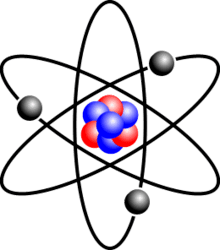
How many Sub Atomic Particles are there in an atom?

a)

1

b)

2

c)

3

68.
For every action, there is an equal and opposite reaction.
a)
Newton's
1st
Law of Motion
b)
Newton's
2nd
Law of Motion
c)
Newton's
3rd
Law of Motion
69.

How much does 1 proton weigh?

a)

1 AMC (atomic mass count)

b)

1 AMU (atomic mass unit)

c)

Depends on the proton

d)

They are so small that their mass is insignificant.

70.

In the nucleus you can find the

a)

Protons, neutrons and electrons

b)

Protons and neutrons

c)

Protons and electrons

d)

Neutrons

71.

Which of Newton's laws is shown

a)

1st law

b)

3rd law

c)

2nd law

72.

Ability of an object to resist change of motion

a)

gravity

b)

force

c)

net force

d)

inertia

73.

If there is a big mass, it would need a stronger force to accelerate it. Which law does this describe?

a)

3rd law

b)

1st law

c)

2nd law

74.
Potential energy is related to 
a)
position or height of an object
b)
speed of an object
75.
The unit used to measure power is the 
a)
Watt
b)
Newton
c)
Joule
d)
Newton*meter
76.

Identify Name of subatomic particles in an atom.

a)

Electrons

b)

Protons

c)

Neutrons

d)

All of them

77.

Isotopes are atoms of the same element with different ____________.

a)

Number of Neutrons & Mass Number

b)

Number of Protons & Atomic Number

c)

Number of Protons, Neutrons, and Electrons

d)

Number of Electrons & Mass Number

78.

The unit used to measure work/energy is the 

a)

Watt

b)

Newton

c)

Joule

d)

meter

79.
If an atom gains an electron it is a(n)
a)
Positive ion
b)
Negative ion
c)
Isotope
d)
Neutral Atom
80.
If an atom loses an electron it is a(n)
a)
Positive ion
b)
Negative ion
c)
Isotope
d)
Neutral Atom
81.
_____ is the SI unit used to express the masses of particles in atoms.
a)
Mass number
b)
Atomic mass
c)
Atomic number
d)
Atomic mass unit