
 Worksheets
The Great Gatsby Vocabulary Chpts 6-9
Total questions: 15
Worksheet time: 8mins

When Gatsby successfully refutes Tom's questioning that he "is an Oxford man," Nick find's Gatsby's rebuttal ____________ and says that he wanted to "slap him on the back" (Fitzgerald 129).
ineffable
meretricious
laudable
portentious

Gatsby attempts to create a backstory of his wealth that is _____________; however, gaps in details (such as being from the "middle West...San Francisco") make it difficult for those who really want to dig into his past to believe him.
laudable
meretricious
ineffable
portenttous

Nick's emotions are __________ when he realizes that "no one" was coming to Gatsby's funeral (Fitzgerald 174).
portentous
meretricous
ineffable
laudable

Gatsby's comments such as, "What time would suit you," are attempts to _____________ himself into the good standing of others (Fitzgerald 58).
ingratiate
indiscernible
forlorn
redolent

Like the previous one, the New York room scene in Chapter 8 contains a _________ when Tom laughs at Gatsby and tells Gatsby , "You're crazy!" (Fitzgerald 131). '
rancor
tumult
pasquinade

"So we drove on toward death and through the cooling night" (Fitzgerald 136). The line above come mid-way through Chapter 8 and is very _____________. Those unaware of the ending of The Great Gatsby often skip over the idea of driving "toward death," but it foreshadows the ending of the chapter.
portentous
indiscernible
garrulous
redolent

As Tom's antagonism towards Gatsby builds within the room at the Plaza, Gatsby's face fills with ________; it is clear that he hates Tom. It is also clear that the rumor that Gatsby "looks as if he killed a man" could be true.
pasquinade
tumult
rancor
laden

Daisy's confession to Gatsby that she "did love [Tom] once -- but I loved you too" is ___________ to Gatsby (Fitzgerald 132). It shatters his dream and is an aspect that he never considered possible.
garrulous
redolent
forlorn
indiscernible
At the Buchanan mansion, Daisy goes on __________ about what the group should do on the hottest day of the year. She wants to "go to town," she wants to "smoke," she wants to "see a movie" (Fitzgerald 118, 121). She seems to continue to speak without really making a point.
indiscernibly
garrulously
redolently
ladenly

Nick's bungalow was __________ from the numerous bouquets of flowers Gatsby sent over for the tea with Daisy.
laden
garrulous
forlorn
redolent
After numerous calls and pleading with Wolfsheim to come to Gatsby's funeral, a ________ Nick realizes that "no one" will come. His hope at "finding someone" for Gatsby is all in vain.
ceasless
superflous
forlorn
laden

While Gatsby stands vigil outside the Buchanan home, a __________ Daisy is inside at the kitchen table with Tom. It is unclear if she completely unloads her burden to him, but it is evident that the two are conspiring their next move.
indiscernible
garrulous
redolent
laden
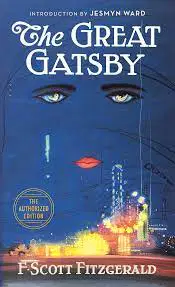
Fitzgerald's The Great Gatsby is labeled literary realism and not a ____________; however, it is true that within the novel, Fitzgerald creates a satire of the wealthy, upper class as "careless people."
portentous
tumult
pasquinade
When writing to Meyer Wolfsheim of Gatsby's death, Nick first thought his request of Wolfsheim to attend Gatsby's funeral was ____________ and unneeded; if anyone was to attend, it would surely be him.
superfluous
ceaselessly
forlorn
portentous

Fitzgerald ends his novel on a metaphor of boats that "beat on...against the current, borne back ___________ into the past" (180). This metaphor is a final commentary on Gatsby's belief that one could repeat the past; however, the image of that final metaphor also serves as a warning to those trying to do so.
superfluously
garrulously
portentously
ceaselessly

