NEW
Font size
 Worksheets
Stars and the moon
Total questions: 51
Worksheet time: 29mins
The universe is approximately 13.8 billion years old. Compared to the age of the solar system, the age of the universe is approximately
the same age as the solar system
2x older than the solar system
3x older than our solar system
4x older than our solar system
Planets that are closest to the Sun are identified as
low-density jovian planets
low-density terrestrial planets
high-density jovian planets
high-density terrestrial planets

The diagrams below represent the constellations seen by an observer in New York State while looking toward the southern horizon at midnight on July 9 and January 8.
Which motion is mainly responsible for the difference in the constellations visible at midnight on these two dates?
The Sun orbits Earth
Earth orbits the Sun
The stars in the constellations orbit Earth
Earth orbits the stars in the constellations
Most clouds form in the atmosphere when moist
air
rises, expands and cools to the dewpoint
rises, expands, and warms to the dewpoint
sinks, compresses and cools to the dewpoint
sinks, compresses and warms to the dew point


The joining of nuclei to form a "heavier" nucleus is referred to as ______________
chemical reaction
fission
fusion
radiation

This is a picture of
a chemical reaction
the electromagnetic spectrum
chemical energy
wind energy
Which one below is NOT an example of electromagnetic radiation
radio wave
conduction
microwave
visible light
Which nuclear process takes place in the core of stars, where hydrogen is joined to produce helium?
fission
fusion
Which stage of the star life cycle does fusion occur and the star is most stable?
Birth - protostar(s)
Main Sequence - star
Old Age - red giant
Death - white dwarf
Which stage of a star's life cycle does fusion stop, the core is crushed by gravity and it glows bright white?
Birth - protostar(s)
Main Sequence - star
Old Age - red giant
Death - white dwarf
Which stage of a star's life cycle does fusion slow down, the star expands and glows red?
Birth - protostar
Main Sequence - star
Old Age - red giant
Death - white dwarf
Which of the following will give the best indication of a star's temperature?
the distance of the star
the radius of the star
the color of the star
the age of the star
Which of the following stages represents a dying star?
Main sequence
Protostar
Nebula
Red Giant
Which of the following is the most abundant element in the Sun?
Hydrogen
Helium
Carbon
Oxygen
Which of the following earliest stage of a star (where is it "born")?
Nebula
Protostar
Main sequence
Neutron star
Bright and hot stars live longer than cool and dim stars
True
False
The portion of the earth to the right faces the sun, it experiences.....
day
night
day and night

The portion of the earth to the left, it is in darkness which experiences...
day
night
day and night
Revolution has to do with the motion around the.....
moon
Earth
sun
Mars
One revolution around the sun takes
one day
one week
one month
one year
How long does it take for 1 rotation of Earth
around 24 hours
12 hours
1 year
1 month
the phase of the moon is caused by its... in its... relative to the Earth and the Sun.
position, orbit
orbit, position
The phases occur because, as the moon.. around the Earth, we observe different amounts of the side of the moon that is.....by the sun.
revolve, lit
rotate, darkened
rotate, lit

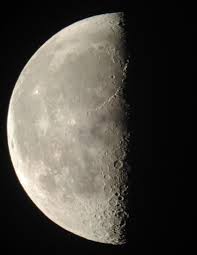
Moon phase:
New Moon
Full Moon
Waxing Gibbous
First Quarter

waxing crescent
waning crescent
first quarter
third quarter

waning crescent
waxing crescent
new moon
waning gibbous
what does waning mean?
when it is in the phase in which its visible surface area is getting smaller.
when it is in the phase in which its visible surface area is getting bigger.
what does Waxing mean?
when it is in the phase in which its visible surface area is getting smaller
when it is in the phase in which its visible surface area is getting bigger
what does gibbous mean?
more than half but not all of the apparent disk illuminated(is lit)
less than half but not all of the apparent disk illuminated(is lit)
more than 1/4 but not all of the apparent disk illuminated(is lit)
How many moon phases are there?
10
9
8
7


Regular eclipses of the Sun and the Moon are best explained by which of the following?
Th relative masses of the Sun, Earth and the Moon
The different compositions of the Sun and the Moon
The rotation of Earth and Moon on their axes
The movement of Earth and the Moon around the Sun


Which of the following is most responsible for the changing of seasons on Earth?
Orbit of the Earth around the Sun
Tilt of the axis of Earth
Rotation of the Sun
Rotation of the Earth